Love this? Save it for later!
Share the inspiration with your friends
The pan came back to the kitchen empty. Not a single corner of baked egg left, not even the crispy bits around the edges that I always sneak while cleaning up. My sister-in-law, who had sworn she wasn’t hungry, was scraping the side with her fork. “You need to make this for Christmas morning,” she said, mouth still half-full. I’d thrown it together the night before out of pure necessity—family visiting, a fridge full of breakfast stuff, and zero desire to stand at the stove while everyone else drank coffee in their pajamas. I didn’t think much of it at the time. I just wanted to sleep in.
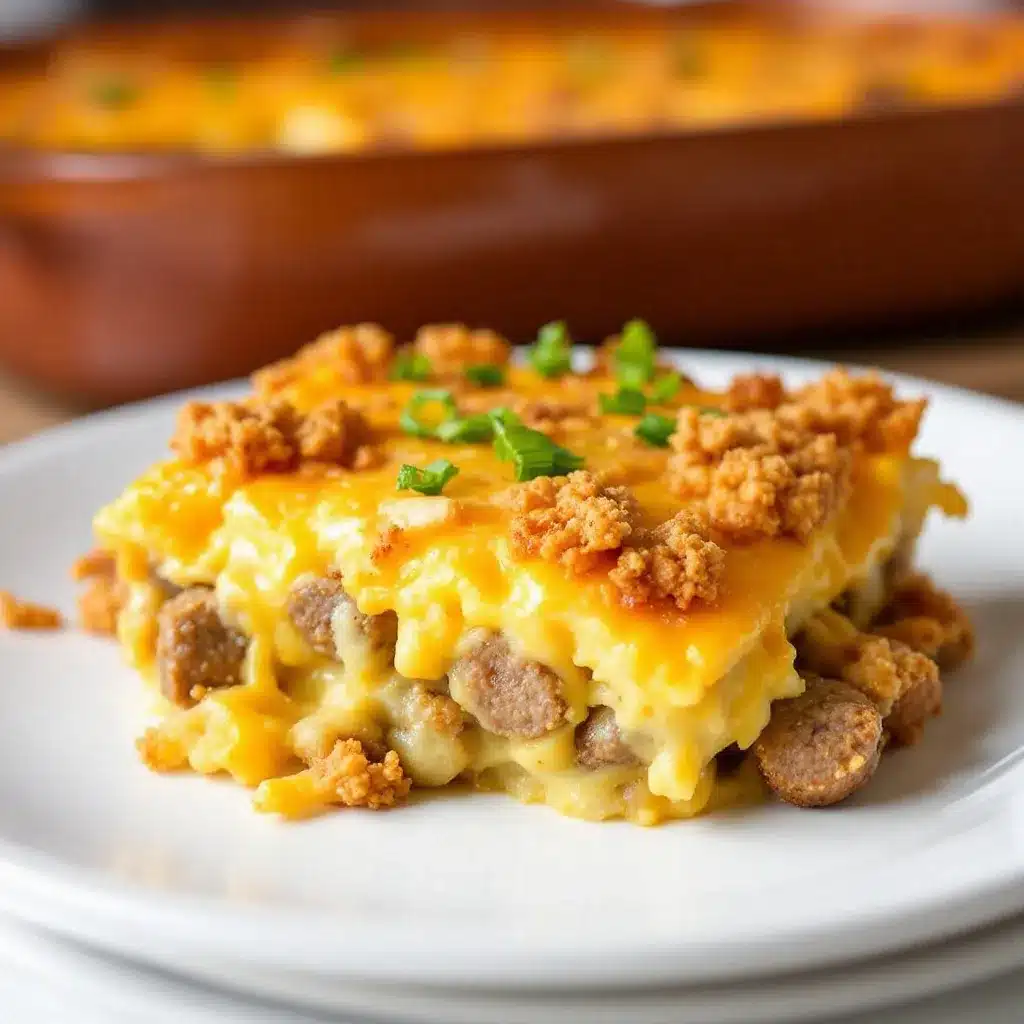
Turns out, that’s exactly what this easy make-ahead breakfast casserole with sausage and cheese delivers. It’s the kind of recipe that feels like you planned it for days, but honestly, it’s about fifteen minutes of actual work. You toss everything in a dish, let it sit overnight, and bake it off when you’re ready. The sausage gets all savory, the cheese melts into every layer, and the bread soaks up the eggs until the whole thing is custardy on the inside and golden on the outside. It’s not fancy. It’s just really, really good.
I’ve made this for Easter brunch, for lazy Saturday mornings when the kids have friends over, and for those chaotic holiday mornings when everyone’s opening presents and you just need food to appear. It always works. And the best part? You can prep it, forget about it, and wake up to a breakfast that makes you look like a hero. That’s the kind of recipe worth keeping around.
Why You’ll Love This Recipe
I’m not going to tell you this is the most complicated breakfast casserole you’ll ever make. It’s not. That’s the whole point. But after testing this recipe about six times (my family was very patient), I can tell you exactly why it works and why you’ll keep coming back to it.
- Make-Ahead Magic : Assemble it the night before, pop it in the fridge, and bake it the next morning. No early morning chopping, no scrambling eggs at the stove, no stress. Just pull it out, preheat the oven, and go.
- Simple, Affordable Ingredients : You probably already have eggs, milk, and cheese in your fridge. Add some breakfast sausage, bread, and a few pantry staples, and you’re done. No specialty grocery runs required.
- Perfect for Feeding a Crowd : This casserole serves 8-10 people easily. It’s ideal for holiday mornings, brunch gatherings, or weekend house guests. One dish, zero fuss.
- Kid-Approved and Adult-Friendly : My kids devour this. My picky-eater nephew asked for seconds. And the adults? They go back for thirds. It’s cheesy, savory, and satisfying in a way that appeals to every age.
- Endlessly Customizable : Swap the sausage for bacon or ham. Add mushrooms, bell peppers, or spinach. Use a different cheese. This recipe is a template, not a rulebook.
What makes this recipe different from all the other breakfast casseroles out there? It’s the texture. The bread-to-egg ratio is perfect—not too bready, not too eggy. The sausage is pre-cooked and crumbled, so every bite has a little pocket of savory goodness. And the cheese? I use a mix of sharp cheddar and Monterey Jack because that combo melts into something truly special. It’s not just another casserole. It’s the one you’ll make again and again.
This is comfort food at its best. It’s warm, filling, and made with love—even if that love is just you tossing ingredients in a dish at 10 PM while watching TV. That counts too.
What Ingredients You Will Need
This recipe uses simple, everyday ingredients that come together to create something genuinely delicious. Here’s what you’ll need and why each one matters.
For the Casserole Base
- 1 pound breakfast sausage (I prefer Jimmy Dean’s mild or sage sausage for that classic breakfast flavor. You can use hot sausage if you want some heat.)
- 8 large eggs (room temperature if you remember, but straight from the fridge works fine too. They’re going to sit overnight anyway.)
- 2 cups whole milk (2% works if that’s what you have. Please don’t use skim—the casserole needs the fat for richness and structure.)
- 1 teaspoon dry mustard powder (This is the secret ingredient that gives the eggs a subtle savory depth. Trust me on this one.)
- ½ teaspoon salt (I use fine sea salt. Adjust based on how salty your sausage and cheese are.)
- ¼ teaspoon black pepper (Freshly ground is always better, but pre-ground works in a pinch.)
- ¼ teaspoon smoked paprika (Optional, but it adds a lovely warmth and color to the finished dish.)
For the Bread and Cheese Layer
- 6 cups cubed bread (Day-old French bread, sourdough, or even a hearty white bread works best. The staler the bread, the better it absorbs the egg mixture without turning to mush. I’ve used leftover croissants too, and that was incredible.)
- 2 cups shredded sharp cheddar cheese (Shred it yourself from a block. Pre-shredded cheese has anti-caking agents that prevent it from melting as smoothly. It matters here.)
- 1 cup shredded Monterey Jack cheese (This adds that stretchy, gooey texture that makes the casserole so satisfying. You can use all cheddar if you prefer.)
For the Topping (Optional but Recommended)
- 2 tablespoons melted butter (Brushed on top before baking for that golden, crispy crust.)
- Fresh chives or parsley (For garnish. It makes the dish look pretty and adds a little freshness.)
That’s it. Eight main ingredients, plus a couple of optional extras. You probably have most of these in your kitchen right now. If you don’t have dry mustard, you can skip it, but I really recommend picking some up—it’s cheap and lasts forever in your spice drawer.
Equipment Needed
You don’t need a fully stocked professional kitchen for this recipe. Here’s what you’ll actually use:
- 9×13-inch baking dish (Glass or ceramic works best. I use a Pyrex dish and it’s never let me down. Metal can work too, but you might need to adjust the baking time slightly.)
- Large skillet (For cooking the sausage. Any non-stick or stainless steel skillet will do.)
- Large mixing bowl (For whisking the eggs and milk together. A standard 4-quart bowl is plenty big.)
- Whisk (A fork works in a pinch, but a whisk makes the eggs smooth and evenly blended.)
- Cutting board and knife (For cubing the bread. If you’re using pre-cubed stuffing bread, you can skip this.)
- Spatula or wooden spoon (For crumbling and stirring the sausage.)
- Aluminum foil (For covering the casserole during the first part of baking so the top doesn’t burn.)
If you don’t have a 9×13 dish, you can use two 8×8 dishes or even a large cast-iron skillet. Just keep an eye on the baking time—smaller dishes will cook faster. I’ve also made this in disposable aluminum pans for potlucks, and it works perfectly.
Preparation Method
Let’s walk through this step by step. I promise it’s easier than it looks.
Step 1: Cook the Sausage
Heat your large skillet over medium-high heat. Add the sausage and break it apart with a spatula as it cooks. You want small, crumbly pieces—not big chunks. Cook for 6-8 minutes until the sausage is browned and fully cooked through. Drain off any excess grease (I usually leave just a tablespoon or two for flavor, but that’s personal preference). Set the sausage aside to cool slightly.
Pro tip: Don’t rush this step. Well-browned sausage has way more flavor than pale, undercooked sausage. Let it get those crispy brown bits on the bottom of the pan.
Step 2: Prepare the Bread
Cut your bread into 1-inch cubes. If the bread is fresh, spread the cubes on a baking sheet and toast them in a 300°F oven for about 10 minutes. This dries them out so they absorb the egg mixture without getting soggy. If you’re using day-old bread, you can skip this step.
Personal note: I forgot to toast the bread the first time I made this. It was still good, but the bottom was a little mushy. Toasting makes a real difference.
Step 3: Whisk the Egg Mixture
In your large mixing bowl, crack all 8 eggs. Add the milk, dry mustard powder, salt, pepper, and smoked paprika. Whisk vigorously until everything is completely combined and slightly frothy. This takes about 30 seconds of solid whisking. You want the dry mustard fully dissolved—no yellow specks floating around.
Honest moment: Sometimes I skip the whisking and just shake everything in a mason jar. It works fine. Don’t overthink it.
Step 4: Layer the Casserole
Grease your 9×13 baking dish with butter or non-stick spray. Spread half of the bread cubes evenly across the bottom. Sprinkle half of the cooked sausage over the bread. Sprinkle half of both cheeses over the sausage. Repeat the layers: remaining bread, remaining sausage, remaining cheese.
Pour the egg mixture evenly over the entire dish. Press down gently with a spatula to make sure all the bread gets soaked. The bread should look wet, not dry. If some pieces are sticking up, push them down into the liquid.
Step 5: Refrigerate Overnight
Cover the dish tightly with aluminum foil or plastic wrap. Refrigerate for at least 4 hours, but overnight is best (8-12 hours). This gives the bread time to fully absorb the egg mixture, which is what gives the casserole its soft, custardy texture.
Trust me on this: Don’t skip the overnight rest. I’ve tried baking it right away, and it’s just not the same. The overnight soak is what makes this recipe special.
Step 6: Bake the Casserole
When you’re ready to bake, preheat your oven to 350°F. Remove the casserole from the fridge and let it sit on the counter while the oven heats up (about 15-20 minutes). This takes the chill off so it bakes more evenly.
Bake covered with foil for 30 minutes. Remove the foil and bake for another 20-25 minutes, until the top is golden brown and the center is set. You’ll know it’s done when a knife inserted in the middle comes out clean and the edges are bubbling. If the top is browning too quickly, tent it loosely with foil for the last 10 minutes.
Sensory cue: Your kitchen will smell like breakfast heaven. The cheese will be bubbly and golden, and the edges will be crispy and caramelized. That’s how you know it’s ready.
Step 7: Rest and Serve
Let the casserole rest for 5-10 minutes before cutting. This helps it set up so you get clean squares instead of a messy scoop. Garnish with fresh chives or parsley if you’re feeling fancy. Serve warm.
Cooking Tips & Techniques
After making this casserole more times than I can count, I’ve learned a few things the hard way. Here’s what I wish someone had told me.
Don’t over-soak the bread. I know I just told you to let it sit overnight, but there is such a thing as too long. If you let it sit for more than 24 hours, the bread can break down and turn the casserole into a dense, heavy brick. 8-12 hours is the sweet spot.
Use a meat thermometer if you’re unsure. The casserole is done when the internal temperature reaches 165°F. This is especially helpful if you’re making a deep dish or a larger batch. I’ve pulled mine out too early before, and the center was still liquidy. Not fun.
Let the casserole come to room temperature before baking. I know it’s tempting to throw it straight from the fridge into the oven, but that cold dish will throw off your baking time. Give it 20 minutes on the counter. Your patience will be rewarded.
Don’t skip the foil cover. The first time I made this, I forgot the foil and the top was burnt while the center was still raw. The foil traps steam and helps the casserole cook through evenly. Remove it for the last 20 minutes to brown the top.
Multitasking tip: While the casserole bakes, make a pot of coffee, set the table, or toss together a quick fruit salad. This recipe gives you back your morning—use it wisely.
My biggest failure: I once used low-fat milk and reduced-fat cheese in an attempt to make this “healthier.” It was sad. The casserole was dry, bland, and didn’t set properly. Use the full-fat versions. This is comfort food, not a diet meal.
Variations & Adaptations
This recipe is incredibly flexible. Here are some of my favorite variations.
Vegetarian Version
Skip the sausage and add 2 cups of sautéed mushrooms, bell peppers, onions, and spinach. Cook the veggies until they’re soft and any liquid has evaporated before layering them in. You’ll miss the meat, but the veggies add their own savory depth.
Spicy Southwest Version
Use hot breakfast sausage or chorizo. Add 1 can of drained and rinsed black beans, 1 cup of corn kernels (frozen or canned), and ½ cup of diced green chiles. Swap the Monterey Jack for pepper jack cheese. Top with salsa and avocado when you serve it.
Bacon and Hash Brown Version
Replace the sausage with 1 pound of cooked, crumbled bacon. Add 2 cups of frozen hash browns (thawed and patted dry) to the bread layer. The hash browns add a crispy texture contrast that’s absolutely addictive.
Low-Carb / Keto Version
Replace the bread with 4 cups of cauliflower florets (roasted until tender and chopped small). Use heavy cream instead of milk. The texture is different—more like a crustless quiche—but it’s still delicious and satisfying.
Gluten-Free Version
Use gluten-free bread. That’s literally it. Everything else in this recipe is naturally gluten-free. Just make sure your sausage doesn’t have any hidden gluten fillers.
I’ve personally tried the bacon and hash brown version for a game day brunch, and it was a hit. The crispy hash browns on top were the star of the show.
Serving & Storage Suggestions
This casserole is at its best fresh from the oven, but it’s still pretty great the next day. Here’s how to handle both situations.
Serving: Cut the casserole into 8-10 squares. Serve it straight from the baking dish (it’s a breakfast casserole—no need for fancy plating). I like to put out hot sauce, ketchup, and salsa on the side so everyone can customize their plate. A side of fresh fruit or a simple green salad balances out the richness.
What to serve with it: This casserole is hearty enough to stand alone, but it pairs beautifully with creamy peanut butter banana overnight oats for a sweet contrast or a simple fruit salad. For a full brunch spread, add some crispy baked chicken wings if you’re going for a game day theme, or keep it classic with mimosas and coffee.
Storage: Leftovers keep in the fridge for up to 4 days. Store them in an airtight container or cover the baking dish tightly with foil. The casserole will absorb some moisture as it sits, so it’ll be a little softer the next day. Still delicious, though.
Reheating: The best way to reheat is in the oven at 300°F for 10-15 minutes. The microwave works in a pinch (60-90 seconds per serving), but the texture won’t be as good. If you’re reheating the whole dish, cover it with foil and warm it at 325°F for about 20 minutes.
Freezing: This casserole freezes beautifully. Assemble it completely but don’t bake it. Wrap the dish tightly in plastic wrap, then foil, and freeze for up to 3 months. When you’re ready to bake, thaw it in the fridge overnight and bake as directed. You can also freeze baked leftovers in individual portions for quick breakfasts.
Flavor development note: Honestly, this casserole tastes even better the next day. The flavors meld together overnight in the fridge, and the texture becomes even more cohesive. If you can resist eating it all fresh, save some for tomorrow’s breakfast. You’ll thank yourself.
Nutritional Information & Benefits
Let’s be real—this is not a health food. It’s a breakfast casserole made with sausage, cheese, eggs, and bread. But it does have some redeeming qualities.
Estimated nutrition per serving (based on 8 servings):
| Nutrient | Amount |
|---|---|
| Calories | 420 |
| Protein | 28g |
| Fat | 28g |
| Saturated Fat | 12g |
| Carbohydrates | 18g |
| Fiber | 1g |
| Sugar | 5g |
| Sodium | 780mg |
Health benefits: Eggs are a fantastic source of high-quality protein and contain important nutrients like choline (great for brain health) and vitamin D. The cheese provides calcium for strong bones. Sausage adds iron and B vitamins. And hey, starting your day with a solid protein-packed meal can help stabilize blood sugar and keep you full until lunch.
Dietary considerations: This recipe contains gluten (from the bread), dairy (from the milk and cheese), and eggs. For a gluten-free version, use gluten-free bread. For a dairy-free version, use plant-based milk and vegan cheese (though I can’t vouch for the texture). This recipe is not suitable for vegans or those with egg allergies.
My personal take: I don’t make this every day. It’s a treat—something I make for holidays, weekends, and special occasions. And that’s okay. Not every meal needs to be a superfood smoothie. Sometimes you just need cheesy, sausagey breakfast comfort. Balance is everything.
Conclusion
This easy make-ahead breakfast casserole with sausage and cheese has become my secret weapon for hosting. It’s the dish that lets me actually enjoy my morning instead of stressing over the stove. I can sip my coffee, hang out with my family, and pull a beautiful, golden-brown breakfast out of the oven like I spent hours on it. But we know the truth—it took me fifteen minutes the night before.
What I love most about this recipe is how forgiving it is. You can swap ingredients, tweak the seasonings, or add whatever vegetables are languishing in your fridge. It always works. It always tastes good. And it always makes people happy. That’s the kind of recipe that earns a permanent spot in your rotation.
I’d love to hear how this turns out for you. Did you add something unexpected? Did your kids clean their plates? Did you make it for a holiday brunch and watch it disappear? Drop a comment below and let me know. And if you have a favorite variation, please share it—I’m always looking for new ideas to try.
Go ahead, make this for your next lazy weekend morning. Your future self will thank you. And your present self gets to sleep in. That’s a win-win if I’ve ever heard one.
Frequently Asked Questions
Can I use frozen sausage instead of fresh?
Yes, absolutely. Just thaw it completely in the fridge overnight before cooking. Frozen sausage will release more water as it cooks, so make sure you drain it well after browning. Nobody wants watery casserole.
Do I have to use day-old bread?
Not necessarily, but it helps. Fresh bread can get mushy because it hasn’t had time to dry out. If you only have fresh bread, cube it and spread it on a baking sheet in a 300°F oven for 10 minutes. That dries it out enough to work perfectly.
Can I make this without meat?
Definitely. I’ve made a vegetarian version with sautéed mushrooms, bell peppers, and onions. You can also use plant-based sausage crumbles if you want that similar texture. Just cook them according to the package directions before adding them to the casserole.
How do I know when the casserole is fully baked?
The top should be golden brown and the edges should be bubbling. Insert a knife into the center—it should come out clean. For absolute certainty, use an instant-read thermometer. The internal temperature should reach 165°F. If the center still jiggles, give it another 5-10 minutes.
Can I double this recipe for a larger crowd?
Yes, and I do this all the time for big holiday brunches. Use a 12×18-inch half-sheet pan or two 9×13 dishes. You’ll need to increase the baking time by about 10-15 minutes because the casserole will be deeper. Keep an eye on it and use the thermometer method to check for doneness.
Pin This Recipe!
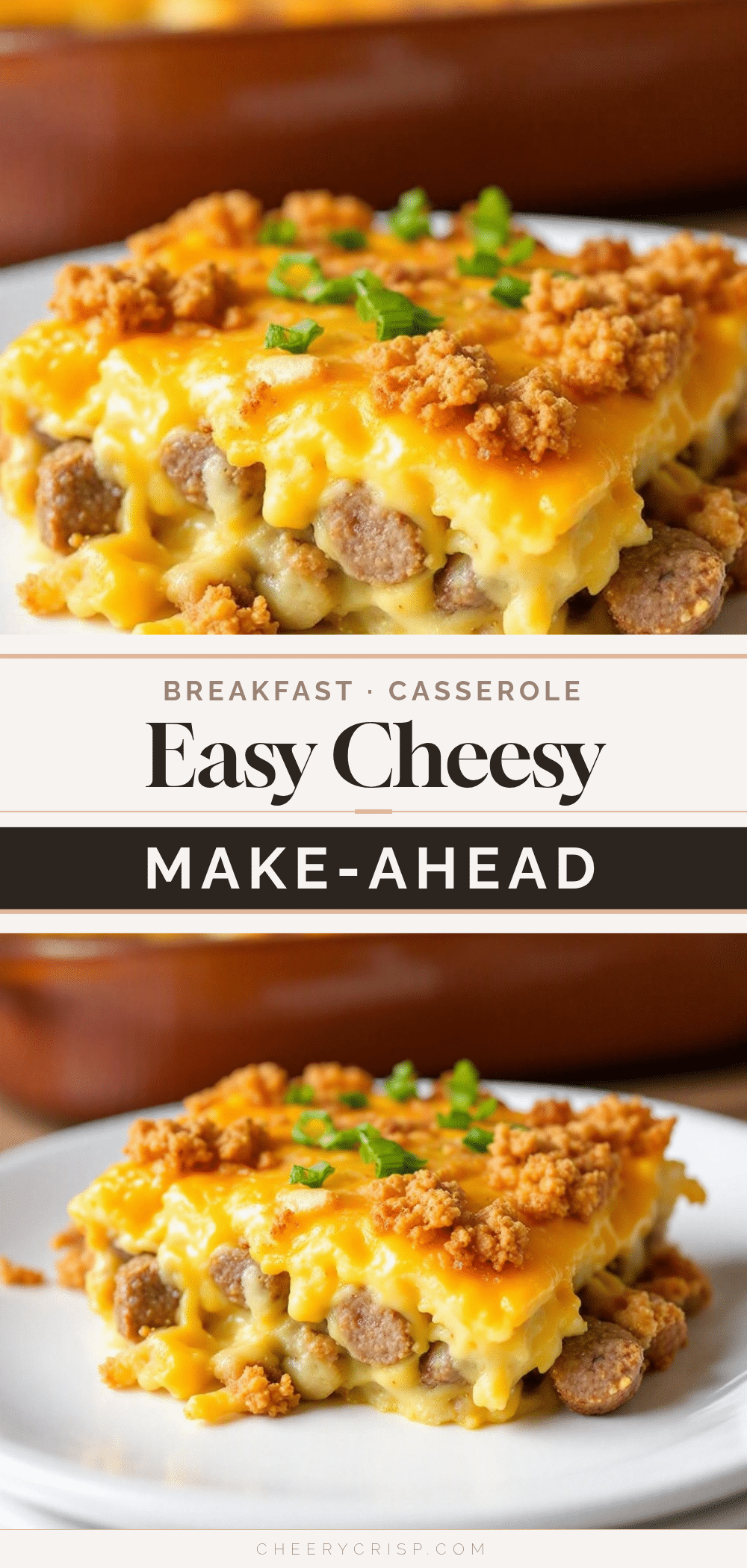
Easy Make-Ahead Breakfast Casserole with Sausage and Cheese

This easy make-ahead breakfast casserole with sausage and cheese is the perfect solution for stress-free holiday mornings or lazy weekends. Assemble it the night before, let it soak overnight, and bake it off in the morning for a golden, custardy, and cheesy breakfast that feeds a crowd.
- Prep Time: 15 minutes
- Cook Time: 50 minutes
- Total Time: 8 hours 5 minutes (includes overnight refrigeration)
- Yield: 8-10 servings 1x
- Category: Breakfast / Brunch
- Cuisine: American
Ingredients
- 1 pound breakfast sausage (mild or sage preferred)
- 8 large eggs
- 2 cups whole milk (2% works, but not skim)
- 1 teaspoon dry mustard powder
- ½ teaspoon fine sea salt
- ¼ teaspoon black pepper (freshly ground preferred)
- ¼ teaspoon smoked paprika (optional)
- 6 cups cubed day-old bread (French bread, sourdough, or hearty white bread)
- 2 cups shredded sharp cheddar cheese (shredded from a block)
- 1 cup shredded Monterey Jack cheese
- 2 tablespoons melted butter (for topping, optional)
- Fresh chives or parsley (for garnish, optional)
Instructions
- Cook the sausage: Heat a large skillet over medium-high heat. Add the sausage and break it apart with a spatula into small crumbles. Cook for 6-8 minutes until browned and fully cooked. Drain excess grease, leaving about 1-2 tablespoons for flavor. Set aside to cool slightly.
- Prepare the bread: Cut bread into 1-inch cubes. If using fresh bread, spread cubes on a baking sheet and toast in a 300°F oven for 10 minutes to dry them out. If using day-old bread, skip toasting.
- Whisk the egg mixture: In a large mixing bowl, crack 8 eggs. Add milk, dry mustard powder, salt, pepper, and smoked paprika. Whisk vigorously for about 30 seconds until fully combined and slightly frothy.
- Layer the casserole: Grease a 9×13-inch baking dish with butter or non-stick spray. Spread half of the bread cubes evenly in the dish. Sprinkle half of the cooked sausage over the bread. Sprinkle half of both cheeses over the sausage. Repeat layers: remaining bread, remaining sausage, remaining cheese.
- Pour the egg mixture evenly over the entire dish. Press down gently with a spatula to ensure all bread is soaked. The bread should look wet.
- Cover the dish tightly with aluminum foil or plastic wrap. Refrigerate for at least 4 hours, but preferably overnight (8-12 hours).
- When ready to bake, preheat oven to 350°F. Remove casserole from fridge and let sit on counter for 15-20 minutes to take off the chill.
- Bake covered with foil for 30 minutes. Remove foil and bake for another 20-25 minutes, until top is golden brown and center is set. A knife inserted in the center should come out clean, and edges should be bubbling. If top browns too quickly, tent loosely with foil for last 10 minutes.
- Let casserole rest for 5-10 minutes before cutting. Garnish with fresh chives or parsley if desired. Serve warm.
Notes
For best results, use day-old bread and let the casserole soak overnight (8-12 hours). Do not soak for more than 24 hours. Use full-fat milk and cheese for optimal texture and flavor. Let casserole come to room temperature before baking. Internal temperature should reach 165°F when done. Leftovers keep in fridge for up to 4 days and can be frozen for up to 3 months.
Nutrition
- Serving Size: 1 square (based on 8
- Calories: 420
- Sugar: 5
- Sodium: 780
- Fat: 28
- Saturated Fat: 12
- Carbohydrates: 18
- Fiber: 1
- Protein: 28
Keywords: breakfast casserole, make-ahead breakfast, sausage casserole, egg casserole, holiday breakfast, brunch recipe, overnight casserole