Love this? Save it for later!
Share the inspiration with your friends
Fourth time in ten days and I finally stopped overthinking the skillet. The first batch came out dry around the edges, second one stuck like cement, third was okay but the butter just pooled on top instead of soaking in. By round four, I stopped measuring with my eyes and started paying attention to the way the batter looked when it hit the hot cast iron—that sizzle, that immediate puff around the sides. That was the moment this honey butter skillet cornbread stopped being a project and started being the thing I craved at 10 p.m. with a bowl of chili.
I didn’t grow up making cornbread from scratch. My grandmother used a box mix and nobody complained. But there’s something about a cast iron skillet and a thick slab of cornbread with a crackly bottom and a tender, almost custard-like center that makes you feel like you actually know what you’re doing in the kitchen. Honestly, I chased that feeling for over a week before I got it right.
This honey butter skillet cornbread isn’t fancy. It uses ingredients you probably have right now. But the method—heating the skillet first, using real buttermilk, and brushing it with honey butter while it’s still hot—that’s what turns a simple side into the reason someone asks for the recipe. It’s the kind of cornbread that works with a bowl of smoky chipotle football chili or just eaten plain, torn apart while standing at the counter. I’m not judging.
I think what made it finally click was trusting the process. Cornbread is forgiving but it’s also particular. Too much stirring and it gets tough. Not hot enough pan and it won’t get that golden crust. But once you figure out the rhythm, it becomes one of those recipes you don’t even need to look up anymore. And that’s the best kind to have in your back pocket.
Why You’ll Love This Recipe
This isn’t just another cornbread recipe you’ll bookmark and forget. This is the one that makes you look forward to soup season, the one that disappears before the main course hits the table. I’ve tested this honey butter skillet cornbread more times than I care to admit, and every single batch confirmed what I suspected from the start—this is the version worth making.
- Quick & Easy: From start to finish, you’re looking at about 30 minutes. Most of that is hands-off baking time while you get the rest of dinner ready.
- Simple Ingredients: Cornmeal, flour, buttermilk, eggs, butter, honey. That’s it. No specialty flours or ingredients you’ll use once and forget about.
- Perfect for Any Occasion: Thanksgiving dinner, Tuesday night chili, weekend brunch, or just because you want something warm and buttery. This cornbread fits everywhere.
- Crowd-Pleaser: I’ve served this to picky kids, cornbread purists, and people who swore they didn’t like cornbread. Empty pan every single time.
- Unbelievably Delicious: The contrast between the crispy, buttery crust and the soft, slightly sweet interior is honestly addictive. And that honey butter glaze on top? It seeps into every crack and crevice.
What makes this honey butter skillet cornbread different from the dozens of other recipes out there is the technique. Preheating the skillet with butter until it’s sizzling creates that signature crust. Using real buttermilk gives it tang and tenderness that milk just can’t replicate. And brushing the warm cornbread with honey butter isn’t just for show—it sinks in and makes every bite taste like the best part of a Southern brunch.
This is the kind of recipe that makes you close your eyes after the first bite. It’s comfort food at its simplest and most satisfying. And honestly, it’s the reason I keep a cast iron skillet on my stove at all times, even when I’m not cooking anything else.
What Ingredients You Will Need
This honey butter skillet cornbread uses simple, everyday ingredients that come together to create something genuinely special. There’s nothing obscure here—just good, honest ingredients that do exactly what they’re supposed to do.
- Yellow cornmeal (1 cup / 160g): I prefer medium-grind cornmeal for texture. Fine cornmeal works too but gives a less rustic crumb. Avoid coarse polenta here—it won’t cook through properly. My go-to is Indian Head or Bob’s Red Mill.
- All-purpose flour (1 cup / 125g): This gives the cornbread structure and keeps it from being too crumbly. You can substitute with a gluten-free 1-to-1 blend if needed.
- Granulated sugar (1/3 cup / 65g): Just enough sweetness to balance the corn flavor without making it taste like cake. If you prefer less sweet cornbread, cut it back to 1/4 cup.
- Baking powder (1 tablespoon): Make sure it’s fresh—this is what gives the cornbread its rise. If your baking powder is older than six months, test it by adding a teaspoon to hot water. If it doesn’t bubble vigorously, get a new can.
- Baking soda (1/2 teaspoon): Works with the buttermilk to create a light, tender texture. Don’t skip it even if you think it’s optional.
- Salt (1/2 teaspoon): I use fine sea salt. It enhances all the other flavors without making the cornbread taste salty.
- Buttermilk (1 1/4 cups / 300ml): This is non-negotiable for the best texture and tang. If you don’t have buttermilk, you can make a quick substitute by adding 1 tablespoon of lemon juice or vinegar to 1 1/4 cups of whole milk and letting it sit for 5 minutes. It works in a pinch but real buttermilk gives better results.
- Large eggs (2): Room temperature eggs incorporate more evenly into the batter. If you forgot to take them out of the fridge, place them in a bowl of warm water for 5 minutes.
- Unsalted butter (1/2 cup / 113g, plus more for the skillet): I use unsalted so I can control the salt level. The butter that goes into the skillet for preheating is separate from the butter in the batter.
- Honey (3 tablespoons for the batter, plus 2 tablespoons for the glaze): Use a mild honey like clover or orange blossom. Strong flavored honey like buckwheat can overpower the corn flavor.
For the honey butter glaze, you’ll need an additional 3 tablespoons of unsalted butter, softened, and 2 tablespoons of honey mixed together. This gets brushed on right after the cornbread comes out of the oven while it’s still piping hot.
Equipment Needed
You don’t need a professional kitchen to make this honey butter skillet cornbread, but a few key tools make a real difference. Here’s what you’ll need:
- 10-inch cast iron skillet: This is the heart of the recipe. Cast iron holds heat evenly and creates that signature crispy crust. If you don’t have one, a 9-inch oven-safe skillet or an 8×8 baking dish will work, but the crust won’t be quite as dramatic. Lodge makes affordable, reliable skillets that last forever.
- Mixing bowls: One large bowl for the dry ingredients, one medium bowl for the wet ingredients. Nothing fancy needed.
- Whisk: For combining the dry ingredients and for mixing the wet ingredients. A wooden spoon works too but a whisk gives a smoother batter.
- Measuring cups and spoons: For accuracy. I cannot stress this enough—cornbread is forgiving but measuring by volume rather than estimation makes a difference. A kitchen scale is even better for the cornmeal and flour.
- Pastry brush: For brushing the honey butter glaze onto the hot cornbread. A silicone brush works best and doesn’t shed bristles. If you don’t have one, just spoon the glaze over and spread it with the back of the spoon.
- Cooling rack: Helps the cornbread cool evenly so the bottom doesn’t get soggy from steam. If you don’t have one, just tilt the cornbread slightly in the pan to let air circulate underneath.
I’ve made this recipe with a cheap skillet I found at a thrift store for five dollars and it worked perfectly. The key is making sure the skillet is well-seasoned and preheated properly. If your skillet is new or has spots where food sticks, give it a quick seasoning session in the oven before you start.
Preparation Method
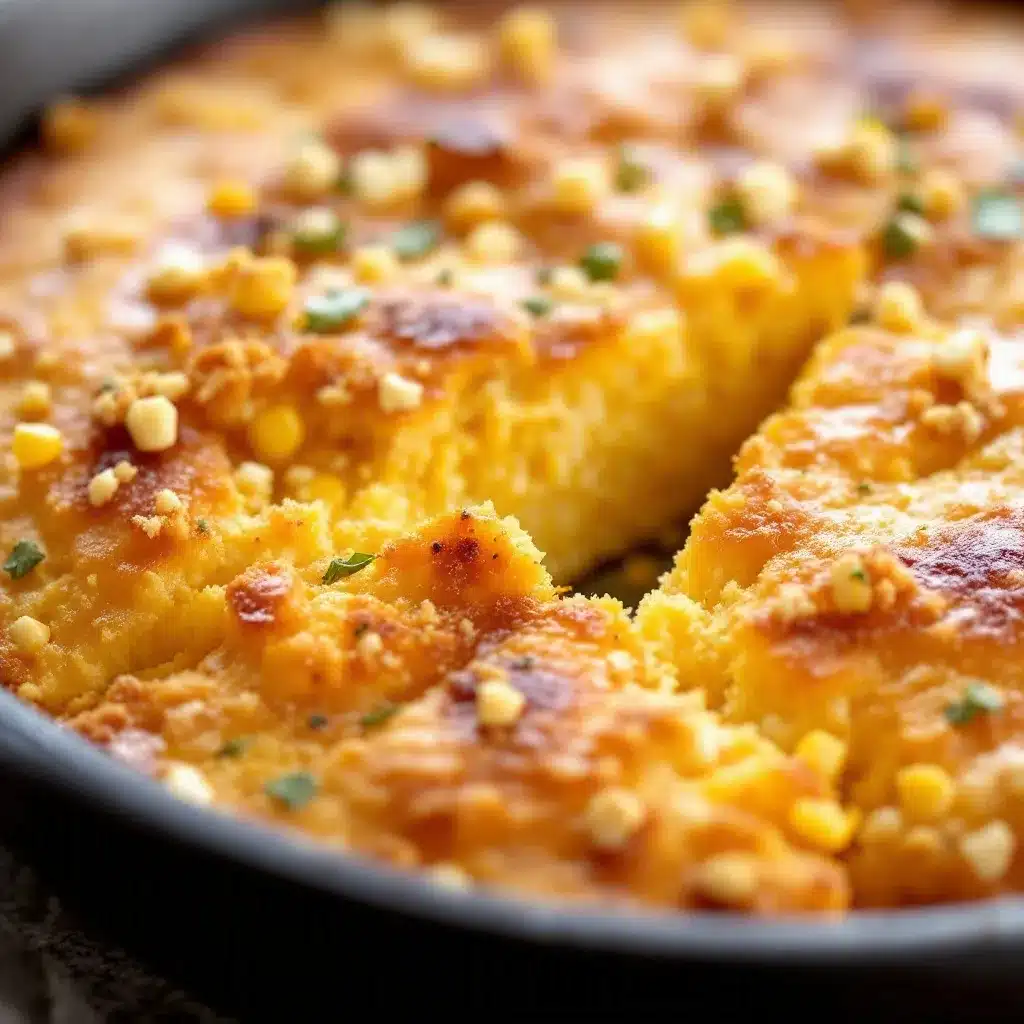
Let’s make this honey butter skillet cornbread. The steps are straightforward but the order matters, so follow along and you’ll get perfect results every time.
- Preheat your oven to 400°F (200°C). Place your 10-inch cast iron skillet inside the oven while it preheats. This is crucial—the skillet needs to be screaming hot when the batter hits it. Don’t rush this step. Give the skillet a full 15 minutes in the hot oven once it reaches temperature.
- Mix the dry ingredients. In a large bowl, whisk together 1 cup cornmeal, 1 cup all-purpose flour, 1/3 cup sugar, 1 tablespoon baking powder, 1/2 teaspoon baking soda, and 1/2 teaspoon salt. Whisk until everything is evenly distributed. Make a well in the center of the dry ingredients.
- Combine the wet ingredients. In a separate medium bowl, whisk together 1 1/4 cups buttermilk, 2 large eggs, 1/2 cup melted unsalted butter (cooled slightly so it doesn’t cook the eggs), and 3 tablespoons honey. Whisk until the mixture is smooth and the honey is fully incorporated. The mixture should look pale yellow and slightly thick.
- Combine wet and dry. Pour the wet ingredients into the well in the dry ingredients. Use a spatula or wooden spoon to stir gently. Here’s the most important part: stir only until the flour disappears. A few lumps are totally fine. Overmixing develops gluten and makes the cornbread tough and rubbery. You want about 12 to 15 strokes, no more.
- Prepare the skillet. Carefully remove the hot skillet from the oven using oven mitts. Add about 1 tablespoon of butter to the skillet and swirl it around until it melts and coats the bottom and sides. The butter should sizzle immediately. Work quickly but safely here.
- Pour the batter. Immediately pour the batter into the hot skillet. It should sizzle and start cooking around the edges right away. Spread it evenly with a spatula if needed. The batter will be thick—that’s normal.
- Bake. Place the skillet back in the oven and bake for 18 to 22 minutes. The cornbread is done when the top is golden brown, the edges have pulled away from the skillet slightly, and a toothpick inserted into the center comes out clean or with just a few moist crumbs. My oven usually takes exactly 20 minutes, but start checking at 18 minutes.
- Make the honey butter glaze. While the cornbread bakes, mix 3 tablespoons of softened unsalted butter with 2 tablespoons of honey in a small bowl. Stir until smooth and combined. Set aside.
- Glaze the cornbread. As soon as the cornbread comes out of the oven, brush the honey butter mixture over the top while it’s still hot. The heat will melt the butter and honey, allowing them to soak into the cornbread. Be generous here—this is what makes it special.
- Cool slightly before serving. Let the cornbread rest in the skillet for about 5 to 10 minutes. This allows it to set up a bit so it slices cleanly. Then slice into wedges and serve warm.
A few things to watch for: If your batter seems too thick after mixing, don’t add more liquid. Cornbread batter is supposed to be thick and scoopable, not pourable. If the top is browning too quickly but the center isn’t done yet, tent the skillet loosely with foil for the last 5 minutes of baking. And if you’re using a dark-colored skillet, check the cornbread a few minutes early—dark pans absorb more heat and can lead to overbrowning.
Cooking Tips & Techniques
I learned most of these tips the hard way—through batches that came out dry, dense, or just sad. Here’s what I wish someone had told me before I started my honey butter skillet cornbread journey.
Don’t skip preheating the skillet. I know it seems like an extra step, but this is what creates that golden, crispy crust that makes skillet cornbread so good. The batter starts cooking the second it hits the hot butter, creating a barrier that keeps the inside tender while the outside gets that perfect crunch. I once tried adding the batter to a cold skillet because I was in a hurry. The cornbread came out pale on the bottom and took longer to bake through. Never again.
Room temperature ingredients matter. Cold eggs and cold buttermilk can seize the melted butter, creating lumps in your batter. Take everything out of the fridge about 30 minutes before you start. If you forgot, place the eggs in a bowl of warm water for 5 minutes and microwave the buttermilk for 15 seconds on low power.
Mix the batter gently and minimally. This is the number one mistake I see people make. Cornbread batter should be stirred just until the dry ingredients are moistened. Lumps are fine—they’ll bake out. Overmixing develops the gluten in the flour and makes the cornbread dense and tough. Think of it like muffin batter: gentle, brief, and forgiving.
Let the cornbread rest before slicing. I know it’s tempting to cut into it right away, especially when it smells that good. But letting it rest for 5 to 10 minutes allows the structure to set so you get clean slices instead of crumbly messes. The honey butter also needs a few minutes to fully absorb into the cornbread.
Brush the glaze while the cornbread is hot. If you wait until it cools down, the honey butter just sits on top instead of soaking in. Work quickly when the cornbread comes out of the oven. The residual heat does all the work for you.
Variations & Adaptations
One of the best things about this honey butter skillet cornbread is how adaptable it is. Here are some variations I’ve tried and loved, along with a few I’ve learned from reader feedback.
Savory cheddar and jalapeño version: Reduce the sugar to 2 tablespoons and fold in 1 cup of shredded sharp cheddar cheese and 2 diced jalapeños (seeds removed for less heat) into the batter before pouring it into the skillet. The cheese gets melty and browned in spots, and the jalapeño adds just enough kick. This version is incredible with easy crockpot ground turkey taco bowls or a bowl of hearty chili.
Gluten-free adaptation: Substitute the all-purpose flour with a 1-to-1 gluten-free baking flour blend that contains xanthan gum. I’ve used Bob’s Red Mill and King Arthur with great results. The texture is slightly more delicate, so let it cool a bit longer before slicing. Everything else stays the same.
Vegan version: Use plant-based buttermilk (1 1/4 cups unsweetened almond or oat milk mixed with 1 tablespoon lemon juice), replace the eggs with 2 flax eggs (2 tablespoons ground flaxseed mixed with 6 tablespoons water, left to sit for 5 minutes), and use vegan butter. The texture won’t be quite as tender but it’s still delicious. I’ve made this for a friend’s vegan brunch and it disappeared fast.
Sweet maple pecan twist: Replace the honey in the batter with maple syrup and fold in 1/2 cup of toasted pecans. For the glaze, use maple syrup instead of honey. The maple flavor pairs beautifully with the corn and the pecans add a nice crunch. This version feels special enough for Thanksgiving or holiday brunch.
Add-ins to try: Fresh corn kernels cut from the cob (about 1 cup), crumbled cooked bacon, chopped fresh rosemary, or a handful of blueberries for a sweet-tart pop. Each add-in changes the character of the cornbread in a fun way. Just don’t overload the batter—stick to one or two additions at most.
Serving & Storage Suggestions
This honey butter skillet cornbread is best served warm, right out of the skillet, with extra honey butter on the side. Here’s how to make the most of it.
Serving temperature and presentation: Serve the cornbread directly from the cast iron skillet for that rustic, impressive look. Cut it into wedges like a pie, or for smaller servings, cut it into squares. A dollop of softened butter on top and an extra drizzle of honey never hurt anyone. It pairs beautifully with creamy roasted tomato soup with fresh basil or a simple green salad dressed with vinaigrette.
Complementary dishes and beverages: This cornbread is made for chili, soups, stews, and braised meats. It’s also fantastic alongside fried chicken, pulled pork, or a simple pot of beans. For breakfast, try it with scrambled eggs and bacon. For a sweet treat, warm up a slice and top it with a scoop of vanilla ice cream and a drizzle of caramel sauce. A cold glass of buttermilk or a hot cup of coffee are the perfect drinks to go with it.
Storage instructions: Store leftover cornbread in an airtight container at room temperature for up to 2 days. If your kitchen is warm or humid, store it in the refrigerator to prevent mold. The honey butter helps keep it moist, but it’s still best eaten within the first day or two.
Reheating methods: The best way to reheat cornbread is in a 350°F oven for 5 to 8 minutes, which restores the crispy crust. You can also reheat individual slices in a toaster oven or air fryer at 350°F for 3 to 4 minutes. The microwave works in a pinch but the texture gets soft and steamy—not ideal. If you’re microwaving, wrap the slice in a paper towel and heat for 15 to 20 seconds.
Freezing instructions: You can freeze this cornbread for up to 3 months. Let it cool completely, wrap it tightly in plastic wrap and then foil, and place it in a freezer bag. To thaw, leave it at room temperature for a few hours or reheat directly from frozen in a 350°F oven for about 15 minutes. The honey butter glaze might not be as glossy after freezing, but the flavor is still excellent.
How flavors develop over time: Honestly, this cornbread is best the day it’s made. The crust stays crisp and the interior is at its most tender. Day-old cornbread is still good but the texture softens. That said, day-old cornbread makes incredible bread pudding or croutons for salads and soups. So even leftovers have a second life.
Nutritional Information & Benefits
Here’s the honest truth about this honey butter skillet cornbread: it’s comfort food, not health food. But that doesn’t mean it’s without merit. Made with simple, whole ingredients, it offers more nutritional value than you might expect.
Estimated nutritional values per serving (1 wedge, serves 8): Calories: 320, Fat: 16g, Saturated Fat: 9g, Cholesterol: 75mg, Sodium: 420mg, Carbohydrates: 40g, Fiber: 2g, Sugar: 14g, Protein: 6g. These values are estimates and will vary based on specific ingredients and serving sizes.
Health benefits of key ingredients: Cornmeal is a whole grain that provides fiber, B vitamins, and iron. Buttermilk adds calcium and probiotics (if using cultured buttermilk). Eggs contribute high-quality protein and essential nutrients like choline and vitamin D. Honey offers antioxidants and natural sweetness without refined sugar.
Dietary considerations: This recipe contains gluten, dairy, and eggs. For a gluten-free version, use a 1-to-1 gluten-free flour blend. For a dairy-free version, use plant-based buttermilk and vegan butter. For an egg-free version, use flax eggs as described in the variations section. The texture will change slightly with each substitution but the cornbread will still be delicious.
Potential allergens: Wheat (in the flour), dairy (butter, buttermilk), and eggs. If you’re serving this to guests with allergies, always check your specific ingredient labels. Some cornmeal brands are processed in facilities that also handle wheat, so look for certified gluten-free cornmeal if that’s a concern.
My personal wellness perspective: I believe in eating real food and enjoying it. This cornbread is a treat, not an everyday food for most of us. But when you make it from scratch with quality ingredients and share it with people you love, that has its own kind of nutritional value. Balance, not restriction, is what makes a healthy relationship with food.
Conclusion
This honey butter skillet cornbread is the kind of recipe that becomes a staple—the one you make without thinking, the one you bring to potlucks and holiday dinners, the one your family requests by name. It’s simple enough for a Tuesday night but special enough for Thanksgiving. And honestly, that’s the sweet spot for any recipe worth keeping.
I hope you make this cornbread your own. Add the jalapeños if you like heat. Swap the honey for maple syrup if that’s what you have. Serve it with chili, eat it for breakfast, or just tear off a piece while it’s still warm and call it dinner. There are no rules here, just good cornbread and good butter and the kind of honey that makes everything better.
If you make this recipe, I’d love to hear about it. Leave a comment below and tell me how it turned out, what you served it with, or what variations you tried. Tag me in your photos on Pinterest so I can see your beautiful golden cornbread straight out of the skillet. And if you have questions, just ask—I’ve made this recipe enough times to troubleshoot just about anything.
Now go preheat that skillet. You’ve got cornbread to make.
Frequently Asked Questions
Can I make this cornbread without a cast iron skillet?
Absolutely. While a cast iron skillet gives the best crust, you can use a 9-inch round cake pan, an 8×8 baking dish, or any oven-safe skillet. Just make sure to preheat the pan with butter in the oven before adding the batter. The bake time might vary slightly, so start checking at 18 minutes. The crust won’t be quite as dramatic but the cornbread will still be delicious.
Why is my cornbread dry and crumbly?
Dry cornbread usually means one of three things: you overmixed the batter (which develops gluten and makes it tough), you baked it too long, or your measurements were off. Make sure you’re using the correct amount of buttermilk and butter. Also, check your oven temperature with an oven thermometer—many ovens run hot or cold, which can throw off baking times. And remember, the honey butter glaze helps keep the cornbread moist, so don’t skip it.
Can I use milk instead of buttermilk?
You can, but the cornbread won’t be as tender or tangy. Buttermilk’s acidity reacts with the baking soda to create a lighter texture and also helps tenderize the gluten in the flour. If you don’t have buttermilk, make a quick substitute by adding 1 tablespoon of lemon juice or white vinegar to 1 1/4 cups of whole milk and letting it sit for 5 minutes. It’s not exactly the same but it works well in a pinch.
How do I know when the cornbread is done baking?
The cornbread is done when the top is golden brown, the edges have pulled away from the skillet slightly, and a toothpick inserted into the center comes out clean or with just a few moist crumbs. You can also gently press the center—it should spring back slightly. Start checking at 18 minutes, even if your recipe says 20 to 22 minutes. Every oven is different and it’s better to check early than to overbake.
Can I double this recipe?
Yes, but you’ll need a larger skillet or pan. A 12-inch cast iron skillet can handle a double batch, but you’ll need to increase the baking time to about 25 to 30 minutes. You can also bake it in a 9×13 baking dish. Just make sure the pan is preheated with butter before adding the batter. The key with doubling is making sure the batter isn’t too deep in the pan, which can lead to a dense, undercooked center.
Pin This Recipe!
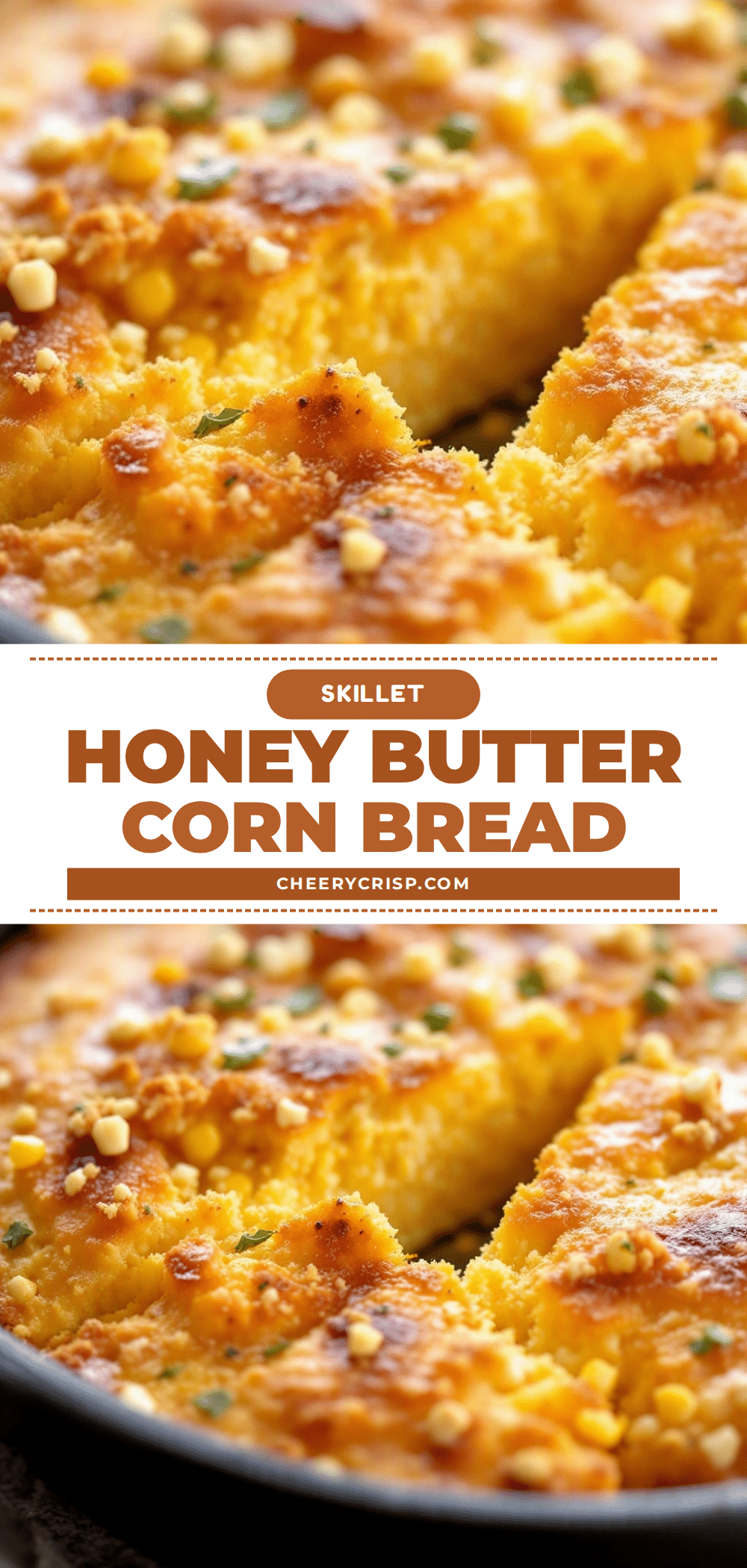
Perfect Honey Butter Skillet Cornbread (Easy Recipe)
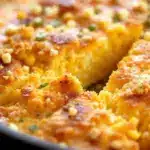
This honey butter skillet cornbread is the perfect side dish for chili, soups, or just eating plain. With a crispy, buttery crust and a tender, slightly sweet interior, it’s easy to make with simple ingredients and a cast iron skillet.
- Prep Time: 10 minutes
- Cook Time: 20 minutes
- Total Time: 30 minutes
- Yield: 8 servings 1x
- Category: Side Dish
- Cuisine: American
Ingredients
- 1 cup (160g) yellow cornmeal
- 1 cup (125g) all-purpose flour
- 1/3 cup (65g) granulated sugar
- 1 tablespoon baking powder
- 1/2 teaspoon baking soda
- 1/2 teaspoon fine sea salt
- 1 1/4 cups (300ml) buttermilk
- 2 large eggs, room temperature
- 1/2 cup (113g) unsalted butter, melted and cooled slightly, plus more for the skillet
- 3 tablespoons honey (for batter)
- 3 tablespoons unsalted butter, softened (for glaze)
- 2 tablespoons honey (for glaze)
Instructions
- Preheat your oven to 400°F (200°C). Place a 10-inch cast iron skillet inside the oven while it preheats. Give the skillet a full 15 minutes in the hot oven once it reaches temperature.
- In a large bowl, whisk together cornmeal, flour, sugar, baking powder, baking soda, and salt. Make a well in the center.
- In a separate medium bowl, whisk together buttermilk, eggs, melted butter (cooled slightly), and 3 tablespoons honey until smooth.
- Pour the wet ingredients into the well in the dry ingredients. Stir gently with a spatula or wooden spoon just until the flour disappears (about 12 to 15 strokes). A few lumps are fine.
- Carefully remove the hot skillet from the oven. Add about 1 tablespoon of butter and swirl to coat the bottom and sides. The butter should sizzle immediately.
- Immediately pour the batter into the hot skillet. Spread evenly with a spatula if needed.
- Bake for 18 to 22 minutes, until the top is golden brown, edges have pulled away from the skillet, and a toothpick inserted into the center comes out clean or with a few moist crumbs.
- While the cornbread bakes, mix 3 tablespoons softened butter with 2 tablespoons honey in a small bowl until smooth.
- As soon as the cornbread comes out of the oven, brush the honey butter mixture over the top while it’s still hot.
- Let the cornbread rest in the skillet for 5 to 10 minutes before slicing into wedges and serving warm.
Notes
Don’t skip preheating the skillet—it creates the crispy crust. Use room temperature ingredients for best results. Mix batter gently and minimally to avoid tough cornbread. Brush glaze while cornbread is hot so it soaks in. Let rest before slicing for clean wedges.
Nutrition
- Serving Size: 1 wedge
- Calories: 320
- Sugar: 14
- Sodium: 420
- Fat: 16
- Saturated Fat: 9
- Carbohydrates: 40
- Fiber: 2
- Protein: 6
Keywords: honey butter cornbread, skillet cornbread, easy cornbread recipe, cast iron cornbread, southern cornbread