Love this? Save it for later!
Share the inspiration with your friends
My husband took one bite, stopped chewing, and just stared at his fork for a solid five seconds. I honestly thought something was wrong—maybe the sausage was undercooked, or I’d accidentally dumped in way too much sage. But then he looked up and said, “This is the best thing you’ve made all month.” Which, coming from him, is basically a Michelin star review. That’s how this Easy One-Pan Fall Pasta with Sausage and Butternut Squash became our go-to weeknight meal the second the weather turns crisp.
I wasn’t trying to create anything special that night. I had a half-empty box of pasta, one lonely Italian sausage link left in the fridge, and a butternut squash that had been sitting on the counter for way too long. (You know those ingredients that just stare at you until you figure something out?) I figured I’d toss it all in one skillet and hope for the best. The kitchen smelled like autumn in a jar—earthy, sweet, a little smoky—and when I finally sat down, I realized I hadn’t used a single extra pot. No colander. No second pan. Just one skillet and a whole lot of flavor.
This is the kind of meal that makes you feel like you’ve got your life together, even if you’re eating it at 8:30 PM on a Tuesday while standing at the counter. It’s cozy without being heavy, fancy without being fussy, and it proves that you don’t need a dozen ingredients or an hour of prep to make something memorable. Honestly, I’ve made it four times since that first night, and it gets better every time.
Why You’ll Love This Recipe
Let me tell you why this one-skillet wonder has earned permanent rotation in my kitchen. It checks all the boxes for a busy weeknight dinner that still feels like a treat.
- One Pan, Zero Fuss: Everything cooks in a single skillet. No boiling pasta separately, no dirtying extra pots. You toss, simmer, and serve—then wash one pan. That’s it.
- Simple Ingredients You Already Know: Italian sausage, butternut squash, pasta, broth, and a few pantry spices. No weird specialty items or trips to three different stores.
- Perfect for Cozy Fall Nights: This is the meal you want when the leaves are changing and you’re craving something warm and satisfying. It’s like a hug in a bowl.
- Crowd-Pleaser Status: My kids gobbled it up without complaint (and one of them usually picks out squash). My husband asked for leftovers the next day. Even my neighbor, who I dropped a bowl off for, texted me for the recipe.
- Unbelievably Delicious Texture: The squash gets tender and almost creamy, the sausage adds savory richness, and the pasta soaks up all that flavorful broth. Every bite is different.
What makes this recipe different from every other fall pasta out there? It’s the cooking method. Instead of roasting the squash separately or boiling the pasta in another pot, everything simmers together in one pan. The squash breaks down slightly and creates this naturally silky sauce that coats every piece of pasta. No cream needed. No complicated roux. Just pure, simple comfort food that tastes like you spent way more effort than you actually did.
This is the kind of recipe that makes you close your eyes after the first bite. It’s fall comfort food reimagined—faster, easier, and with the same soul-soothing satisfaction. Perfect for impressing guests without breaking a sweat, or turning a random Tuesday into something worth remembering.
What Ingredients You Will Need
This recipe uses simple, wholesome ingredients that come together to deliver bold fall flavor without any fuss. Most of these are pantry staples or easy to find at any grocery store.
- Italian Sausage (1 lb, casings removed): I prefer mild or sweet Italian sausage for this dish. The fennel and garlic season the whole pan beautifully. If you like heat, go with hot Italian sausage. You can also use chicken or turkey sausage for a lighter option.
- Butternut Squash (2 cups, peeled and diced into ½-inch cubes): Look for squash that feels heavy for its size and has a firm, tan skin. Pre-cut squash from the store works in a pinch, but fresh tends to hold its shape better. (Pro tip: I buy whole squash and cube it myself—it’s cheaper and tastes better.)
- Short Pasta (8 oz, about 2 cups): I love using rigatoni, fusilli, or cavatappi for this recipe. Their shapes catch the sauce and bits of squash. Avoid long noodles like spaghetti—they don’t work as well with the one-pan method.
- Chicken or Vegetable Broth (2 cups): Low-sodium broth gives you control over the salt level. I’ve used both, and they work equally well. The broth is what cooks the pasta and creates the sauce, so don’t skimp here.
- Yellow Onion (1 medium, diced): Adds sweetness and depth. Shallots work too, but onions are cheaper and always on hand.
- Garlic (3 cloves, minced): Fresh garlic is non-negotiable here. The jarred stuff just doesn’t hit the same.
- Fresh Sage (6-8 leaves, chopped): Sage and butternut squash are a match made in heaven. Dried sage works in a pinch (use 1 teaspoon), but fresh really makes this dish sing.
- Fresh Thyme (2 sprigs, leaves stripped): Adds an earthy, slightly floral note. If you only have dried, use ½ teaspoon.
- Olive Oil (2 tablespoons): For browning the sausage and sautéing the aromatics. Avocado oil works too.
- Salt and Black Pepper (to taste): I use kosher salt and freshly cracked pepper for the best flavor.
- Red Pepper Flakes (¼ teaspoon, optional): Adds a gentle warmth without making it spicy. Leave it out if you’re serving kids.
- Parmesan Cheese (½ cup, freshly grated): For finishing. Please don’t use the green can. Freshly grated Parmesan melts into the sauce and adds salty, nutty goodness.
- Butter (1 tablespoon, optional): Stirring in a pat of butter at the end gives the sauce a silky finish. Not required, but highly recommended.
Equipment Needed
You don’t need a fancy kitchen to make this recipe. Here’s what I use:
- Large Skillet or Braiser (12-inch with a lid): A deep, wide skillet with a tight-fitting lid is essential. I use my trusty cast-iron Dutch oven sometimes, but a stainless steel or nonstick skillet works great too. The lid traps steam to cook the pasta and squash evenly.
- Sharp Chef’s Knife: Peeling and cubing butternut squash is the most labor-intensive part. A sharp knife makes it safe and fast. If your knife is dull, this step becomes a workout.
- Cutting Board: A sturdy board with a non-slip base is ideal. I use a large wooden board.
- Wooden Spoon or Silicone Spatula: For stirring and scraping up any browned bits from the bottom of the pan. Those bits are flavor gold.
- Measuring Cups and Spoons: For the broth and spices. Nothing fancy needed.
- Box Grater or Microplane: For grating fresh Parmesan. A microplane is faster and gives you fluffy, melt-in-your-mouth cheese.
If you don’t have a lid that fits your skillet, use a sheet of aluminum foil tightly crimped around the edges. It works perfectly as a makeshift lid.
Preparation Method
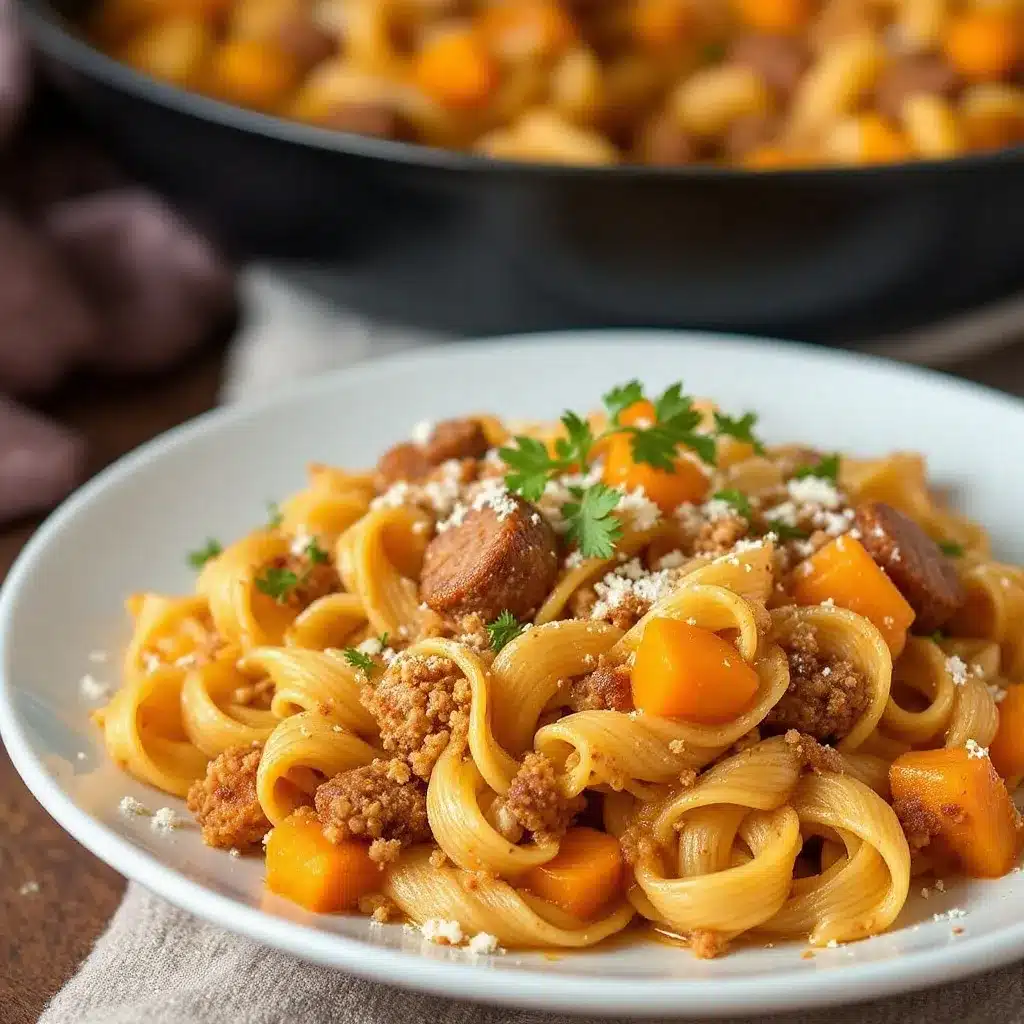
Let’s get cooking. This whole dish comes together in about 35 minutes, start to finish.
- Prep your ingredients: Peel and dice the butternut squash into ½-inch cubes. (I find it easiest to cut off both ends, slice off the skin with a sharp knife, then cut the flesh into cubes.) Dice the onion, mince the garlic, and chop the sage. Remove the casings from the sausage if they’re intact. Have your broth measured and ready.
- Brown the sausage: Heat 1 tablespoon of olive oil in your large skillet over medium-high heat. Add the sausage, breaking it up with a wooden spoon as it cooks. Cook for 5-6 minutes, until it’s browned and cooked through. Use a slotted spoon to transfer the sausage to a plate, leaving the rendered fat in the pan. (That fat is liquid flavor—don’t pour it out!)
- Sauté the aromatics: Reduce the heat to medium. Add the remaining 1 tablespoon of olive oil to the pan. Toss in the diced onion and cook for 3-4 minutes, stirring occasionally, until it softens and turns translucent. Add the minced garlic, chopped sage, and thyme leaves. Cook for 30 seconds until fragrant—don’t let the garlic burn.
- Cook the squash: Add the cubed butternut squash to the pan. Season with a pinch of salt and pepper. Cook for 4-5 minutes, stirring occasionally, until the squash starts to soften and get a little color on the edges. (It doesn’t need to be fully cooked yet—it will finish in the broth.)
- Add the pasta and broth: Pour the uncooked pasta directly into the skillet. Add the 2 cups of broth and 1 cup of water. (The liquid should mostly cover the pasta—if it doesn’t, add a splash more water.) Stir everything together, scraping up any browned bits from the bottom of the pan. Bring the liquid to a boil.
- Simmer with the lid on: Once boiling, reduce the heat to medium-low. Cover the skillet with the lid and let it simmer for 12-14 minutes. Stir once halfway through to make sure nothing is sticking. The pasta will absorb most of the liquid and cook through. The squash will become tender and slightly break down, thickening the sauce naturally.
- Check for doneness: After 12 minutes, remove the lid and check the pasta. It should be al dente—tender but with a slight bite. If it’s still too firm, add another ¼ cup of water, replace the lid, and cook for 2-3 more minutes. The sauce should be creamy and clinging to the pasta, not watery.
- Finish the dish: Return the cooked sausage to the skillet. Stir in the butter (if using) and half the grated Parmesan. Taste and adjust seasoning with salt, pepper, and a pinch of red pepper flakes if you want a little warmth. Stir gently until everything is combined and the cheese is melted.
- Rest and serve: Remove the skillet from the heat. Let it sit for 2-3 minutes—this allows the sauce to thicken even more. Serve directly from the pan (I love the rustic look of a skillet on the table) and top with the remaining Parmesan and a few fresh sage leaves for garnish.
Sensory cues to watch for: When you lift the lid after simmering, you should see a thick, slightly creamy sauce clinging to the pasta. The squash should be soft enough to break apart with a gentle press of your spoon. The kitchen should smell like a fall candle—savory, herbal, and sweet all at once.
Cooking Tips & Techniques
I’ve made this dish enough times to learn a few things the hard way. Here’s what I wish someone had told me:
Don’t skip browning the sausage well. Those deep brown bits stuck to the bottom of the pan after cooking the sausage? That’s called fond, and it’s pure flavor. When you add the broth later, scrape it up—it dissolves into the sauce and gives the whole dish a savory depth you can’t get any other way.
Cut the squash uniformly. I know it’s tedious, but ½-inch cubes are the sweet spot. If some pieces are bigger than others, they won’t cook at the same rate. You’ll end up with mushy bits and crunchy bits in the same bite. Not ideal.
Resist the urge to stir too much. Once you add the pasta and broth and put the lid on, let it do its thing. Stirring too often releases starch unevenly and can make the pasta gummy. One stir halfway through is plenty.
If the sauce seems too thin at the end, don’t panic. Remove the lid and let it simmer uncovered for 2-3 minutes. The excess liquid will evaporate, and the sauce will thicken naturally. If it’s too thick, add a splash of warm broth or water and stir.
My biggest failure with this recipe: The first time I made it, I used a nonstick skillet that was too small. Everything overflowed when I added the broth, and I spent 20 minutes scrubbing burnt pasta off my stovetop. Use a 12-inch skillet with high sides. Trust me.
Multitasking tip: While the pasta simmers (that 12-minute window), use the time to grate your Parmesan, chop any garnish, or wipe down your counters. You’ll have almost no cleanup by the time dinner is ready.
Variations & Adaptations
This recipe is endlessly flexible. Here are a few ways I’ve changed it up:
- Make it vegetarian: Skip the sausage and add a can of drained cannellini beans or chickpeas when you add the broth. They add protein and creaminess without the meat. You can also toss in a handful of baby spinach at the end for extra greens.
- Swap the protein: Diced chicken thighs work beautifully here. Brown them first, remove them, and follow the same steps. Ground turkey or pork are also great substitutes. If you want a quick weeknight twist, try my Easy Sheet Pan Sweet Potato and Chicken Sausage Dinner for another one-pan fall meal.
- Change the squash: No butternut squash? Use peeled and cubed sweet potato, acorn squash, or even pumpkin. The cooking time stays the same. In a pinch, frozen butternut squash works—just add it straight from the bag and increase the simmer time by 2-3 minutes.
- Add more veggies: Diced bell pepper, chopped kale, or sliced mushrooms are all delicious additions. Add them when you sauté the onion so they soften properly.
- Go gluten-free: Use your favorite gluten-free short pasta. Brown rice pasta or chickpea pasta work well. Just check the package for cooking time—gluten-free pasta often cooks faster, so start checking at 8 minutes.
- Make it dairy-free: Skip the butter and Parmesan. The sauce is still rich and flavorful without them. You can sprinkle on some nutritional yeast for a cheesy flavor if you miss it.
I once made this with andouille sausage and a pinch of cayenne for a spicy Cajun twist. It was completely different but equally delicious. Don’t be afraid to play around.
Serving & Storage Suggestions
This pasta is best served hot, straight from the skillet. I like to bring the pan to the table and let everyone serve themselves—it feels cozy and casual, like a proper family dinner.
Serving temperature: Hot, with a final sprinkle of Parmesan and a few fresh sage leaves on top. A drizzle of good olive oil right before serving adds a lovely fruity note.
What to serve with it: A simple green salad with a lemony vinaigrette cuts through the richness beautifully. Crusty bread is also a must—you’ll want to soak up every last bit of sauce from the pan. If you’re feeding a crowd, this pairs perfectly with my Cozy Slow Cooker Butternut Squash Soup with Sage for a full fall-themed dinner.
Storage: Leftovers keep well in an airtight container in the refrigerator for up to 4 days. The pasta will absorb more liquid as it sits, so don’t be alarmed if it looks drier the next day.
Reheating: The best way to reheat is in a skillet over medium-low heat with a splash of broth or water. Stir gently until warmed through—about 5 minutes. The microwave works in a pinch, but the stovetop method restores the creamy texture much better.
Freezer instructions: This dish freezes surprisingly well. Let it cool completely, then transfer to a freezer-safe container. Freeze for up to 3 months. Thaw overnight in the fridge and reheat on the stovetop with a splash of broth. The squash might be a bit softer after freezing, but the flavor is still fantastic.
Flavor development note: Honestly, this pasta tastes even better the next day. The flavors meld together overnight, and the sauce gets even more cohesive. I sometimes make a double batch just so we have leftovers for lunch.
Nutritional Information & Benefits
Here’s an approximate nutritional breakdown per serving (based on 4 servings):
- Calories: 520
- Protein: 28g
- Fat: 22g
- Carbohydrates: 55g
- Fiber: 6g
- Sugar: 8g
- Sodium: 780mg
Health benefits of key ingredients: Butternut squash is packed with vitamin A (great for eye health), vitamin C, and fiber. Italian sausage provides protein and iron. The sage and thyme add antioxidants and anti-inflammatory properties. This is comfort food that actually has some nutritional merit.
Dietary considerations: This recipe can be made gluten-free (with GF pasta) and dairy-free (by omitting the butter and Parmesan). It’s not low-carb due to the pasta, but you can swap in zucchini noodles or chickpea pasta for a lighter version. Contains dairy if using Parmesan and butter.
Personal wellness perspective: I love that this meal feels indulgent but isn’t loaded with heavy cream or excessive cheese. It’s satisfying without weighing you down—perfect for those transitional fall days when you want comfort without the food coma.
Conclusion
This Easy One-Pan Fall Pasta with Sausage and Butternut Squash has become the recipe I turn to when I want to feel like I’ve got dinner under control without actually trying very hard. It’s the kind of meal that makes you look forward to the season—warming you up from the inside out while filling your kitchen with those incredible autumn aromas.
I love that you can customize it based on what’s in your fridge, that it uses just one pan, and that it tastes like something you’d order at a cozy farm-to-table restaurant. But mostly, I love that it made my husband stop mid-bite and actually pay attention to what he was eating. That’s the kind of cooking I want to do more of.
I’d love to hear how this turns out for you. Did you add extra veggies? Swap the sausage for something else? Burn the garlic like I did the first time? (It happens.) Drop a comment below and let me know your version. And if you’re looking for another easy weeknight winner, don’t miss my Easy Ground Beef and Rice Skillet—it’s another one-pan dinner that saves the day when you’re short on time.
Happy cooking, friends. Go make some fall magic.
Frequently Asked Questions
Can I use pre-cut butternut squash from the store?
Absolutely. Pre-cut squash saves time and works perfectly in this recipe. Just make sure the pieces are roughly the same size—about ½-inch cubes—so they cook evenly. If they’re larger, give them an extra 2-3 minutes of sauté time before adding the broth.
What if I don’t have a lid for my skillet?
No problem. Use a sheet of aluminum foil tightly crimped around the edges of the skillet. It creates a seal that traps steam just as well as a lid. Just be careful when removing it—the steam is hot.
Can I make this recipe ahead of time?
Yes! This pasta is great for meal prep. Cook it completely, let it cool, and store it in the fridge for up to 4 days. The texture is best when reheated on the stovetop with a splash of broth or water to loosen the sauce. It actually tastes even better the next day as the flavors meld together.
My pasta came out undercooked. What went wrong?
This usually happens if the heat was too low during the simmering stage, or if you didn’t use enough liquid. Make sure the broth is at a gentle boil before reducing the heat and covering the pan. If the pasta is still firm after 14 minutes, add ¼ cup of water, replace the lid, and cook for another 3-4 minutes.
Can I freeze this pasta dish?
Yes, it freezes well for up to 3 months. Let the pasta cool completely, then transfer it to a freezer-safe container. Thaw overnight in the refrigerator before reheating. The squash will be a bit softer after freezing, but the flavor remains delicious. I like to freeze individual portions for easy lunches.
Pin This Recipe!
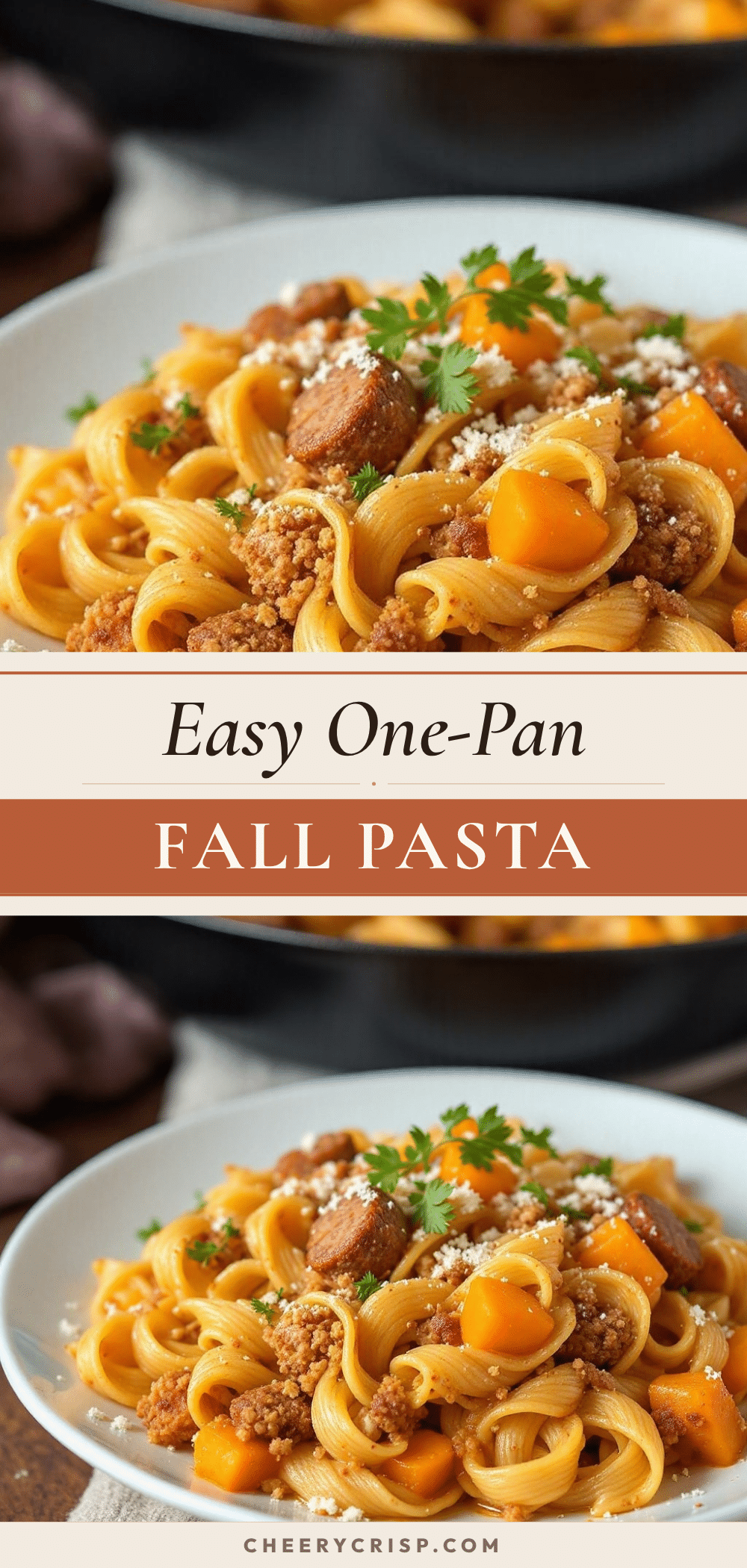
Easy One-Pan Fall Pasta with Sausage & Squash
A cozy one-skillet pasta dish featuring Italian sausage, butternut squash, and fresh herbs, all cooked together in a single pan for a quick and flavorful fall dinner.
- Prep Time: 15 minutes
- Cook Time: 20 minutes
- Total Time: 35 minutes
- Yield: 4 servings 1x
- Category: Main Course
- Cuisine: Italian-American
Ingredients
- 1 lb Italian sausage, casings removed
- 2 cups butternut squash, peeled and diced into ½-inch cubes
- 8 oz short pasta (such as rigatoni, fusilli, or cavatappi)
- 2 cups low-sodium chicken or vegetable broth
- 1 cup water
- 1 medium yellow onion, diced
- 3 cloves garlic, minced
- 6–8 fresh sage leaves, chopped
- 2 sprigs fresh thyme, leaves stripped
- 2 tablespoons olive oil
- Salt and black pepper to taste
- ¼ teaspoon red pepper flakes (optional)
- ½ cup freshly grated Parmesan cheese
- 1 tablespoon butter (optional)
Instructions
- Prep your ingredients: Peel and dice the butternut squash into ½-inch cubes. Dice the onion, mince the garlic, and chop the sage. Remove the casings from the sausage if they’re intact. Have your broth measured and ready.
- Brown the sausage: Heat 1 tablespoon of olive oil in a large skillet over medium-high heat. Add the sausage, breaking it up with a wooden spoon as it cooks. Cook for 5-6 minutes, until browned and cooked through. Use a slotted spoon to transfer the sausage to a plate, leaving the rendered fat in the pan.
- Sauté the aromatics: Reduce the heat to medium. Add the remaining 1 tablespoon of olive oil to the pan. Toss in the diced onion and cook for 3-4 minutes, stirring occasionally, until softened and translucent. Add the minced garlic, chopped sage, and thyme leaves. Cook for 30 seconds until fragrant.
- Cook the squash: Add the cubed butternut squash to the pan. Season with a pinch of salt and pepper. Cook for 4-5 minutes, stirring occasionally, until the squash starts to soften and get a little color on the edges.
- Add the pasta and broth: Pour the uncooked pasta directly into the skillet. Add the 2 cups of broth and 1 cup of water. Stir everything together, scraping up any browned bits from the bottom of the pan. Bring the liquid to a boil.
- Simmer with the lid on: Once boiling, reduce the heat to medium-low. Cover the skillet with the lid and let it simmer for 12-14 minutes. Stir once halfway through to make sure nothing is sticking.
- Check for doneness: After 12 minutes, remove the lid and check the pasta. It should be al dente. If still too firm, add another ¼ cup of water, replace the lid, and cook for 2-3 more minutes. The sauce should be creamy and clinging to the pasta.
- Finish the dish: Return the cooked sausage to the skillet. Stir in the butter (if using) and half the grated Parmesan. Taste and adjust seasoning with salt, pepper, and red pepper flakes if desired. Stir gently until combined and cheese is melted.
- Rest and serve: Remove the skillet from the heat. Let it sit for 2-3 minutes to allow the sauce to thicken. Serve directly from the pan, topped with remaining Parmesan and fresh sage leaves.
Notes
For best results, cut squash uniformly into ½-inch cubes. Don’t stir too much during simmering. If sauce is too thin, simmer uncovered for 2-3 minutes. Leftovers keep for up to 4 days in the fridge and taste even better the next day.
Nutrition
- Serving Size: 1 serving
- Calories: 520
- Sugar: 8
- Sodium: 780
- Fat: 22
- Saturated Fat: 8
- Carbohydrates: 55
- Fiber: 6
- Protein: 28
Keywords: one-pan pasta, fall pasta, butternut squash pasta, Italian sausage pasta, easy weeknight dinner, one skillet meal