Love this? Save it for later!
Share the inspiration with your friends
The crunch is the first thing you notice. Not the smell of sage, not the savory depth of the sausage, but the actual, audible snap of bread that has been toasted to a deep, nutty brown. It’s a sound that cuts through the clatter of dinner plates and the hum of conversation, demanding attention before a single forkful hits your tongue. I used to think stuffing was just the soft, soggy pillow of bread tucked inside a turkey cavity, steamed into submission by poultry juices. That version is fine if you’re in a hurry, but it lacks soul. It lacks texture. This version—crispy brown butter sage stuffing with sausage—is built for the edges. It’s built for the bits that caramelize in the pan, the little shards of golden crouton that hold onto the rich, toasted butter like they were made to.
I spent years making the mistake of under-toasting my bread. You know the type. It’s the kind of stuffing that falls apart into a mushy paste on your plate, heavy and dense. Honestly, it’s a waste of good sausage. The secret isn’t in the liquid; it’s in the dryness. You need bread that is stale, hard, and ready to soak up flavor without turning into porridge. When you toss those dry cubes in brown butter, the milk solids toast quickly, creating that distinct, almost popcorn-like aroma that signals something special is happening in the kitchen. It’s a specific kind of magic, one that requires patience and a watchful eye, but the payoff is worth every second of stirring.
This recipe started as an experiment born out of frustration with dry holiday meals. I wanted something that could stand on its own, even if the turkey ran out early (which, let’s be honest, it often does). The combination of crispy bread, fatty sausage, and earthy sage creates a dish that feels both rustic and refined. It’s not just a side; it’s the star of the table. The brown butter adds a layer of complexity that regular melted butter just can’t match, bringing a nutty sweetness that balances the salty, herbal notes of the sage and the savory punch of the meat. It’s the kind of dish that makes people ask for the recipe before they’ve even finished their second helping.
I remember the first time I served this, my brother-in-law, who usually claims he “doesn’t really like stuffing,” took three servings. He didn’t say much, just pointed at the pan and then at me, raising an eyebrow. That’s the highest praise I can imagine. It’s not about being fancy or using expensive ingredients. It’s about understanding how fat, heat, and time interact to create texture. Once you get the hang of browning that butter without burning it, you’ll find yourself using that technique everywhere. But for now, let’s focus on this dish, the one that changed how I think about bread, butter, and the importance of a good crunch.
Why You’ll Love This Recipe
There is a specific kind of satisfaction that comes from eating stuffing that actually has some bite to it. Most recipes fail because they prioritize moisture over structure, resulting in a dish that is more like bread pudding than stuffing. This recipe flips that script entirely. By starting with stale cornbread or sourdough and tossing it in nutty brown butter, we create a foundation that is sturdy enough to hold its shape but soft enough to be enjoyable. The addition of spicy sausage adds a meaty depth that makes the dish feel substantial, turning it into a meal in itself rather than just an accompaniment.
- Quick & Easy: While the bread needs to stale, the actual cooking process is straightforward. You sauté the sausage, brown the butter, mix, and bake. It comes together in under an hour, making it perfect for busy weeknights or last-minute holiday prep.
- Simple Ingredients: You likely already have most of these items in your kitchen. Bread, butter, sage, sausage, onions, and broth. No fancy grocery trips needed. If you have a loaf of day-old cornbread, you’re halfway there.
- Perfect for Fall Gatherings: Whether it’s a casual Tuesday dinner or a full-blown Thanksgiving feast, this stuffing fits right in. The warm, toasted flavors are inherently cozy and inviting.
- Crowd-Pleaser: Kids love the crunch, and adults love the complexity. It bridges the gap between comfort food and gourmet side dish effortlessly.
- Unbelievably Delicious: The texture and flavor combo is next-level comfort food. The nutty brown butter ties everything together, creating a savory profile that is rich without being heavy.
What makes this recipe different from the rest is the emphasis on the crust. I’ve tested this method dozens of times, and the difference between a good stuffing and a great one is almost always the browning. Using perfect honey butter skillet cornbread as a base adds a subtle sweetness that contrasts beautifully with the savory sage and sausage. It’s a balance that feels intentional, not accidental. This isn’t just another version of stuffing; it’s the one I make every year, the one that disappears first. It’s the kind of dish that makes you close your eyes after the first bite, savoring the mix of crisp and tender. It’s comfort food reimagined—healthier in the sense that you’re using real, whole ingredients, but with the same soul-soothing satisfaction as the heavy, greasy versions from the past.
What Ingredients You Will Need
This recipe uses simple, wholesome ingredients to deliver bold flavor and satisfying texture without the fuss. The key is quality over quantity. You don’t need twenty different spices; you need a few high-quality components that shine when combined. The bread should be dry, the sausage should be flavorful, and the butter should be unsalted so you can control the sodium. Here is what you’ll need to make this happen.
For the Base
- Stale Cornbread or Sourdough: 10-12 cups, torn into 1-inch cubes. Cornbread adds a nice sweetness, while sourdough adds a tangy chew. I recommend using day-old cornbread for the best texture, as it soaks up the butter without getting mushy.
- Unsalted Butter: 1 cup (2 sticks). This is the star of the show. You need enough to coat the bread thoroughly and create that brown butter flavor. Don’t skimp on the butter; it’s what creates the crisp edges.
For the Savory Elements

- Italian Sausage: 1 pound, casings removed. Sweet or hot Italian sausage works well. I prefer hot Italian sausage for a bit of kick, but sweet is great for kids.
- Fresh Sage Leaves: 1/2 cup, chopped. Fresh sage is non-negotiable here. Dried sage lacks the aromatic punch that defines this dish. Look for vibrant green leaves; if they’re yellowing, skip them.
- Yellow Onion: 1 large, finely diced. Adds sweetness and body.
- Garlic: 3 cloves, minced. Essential for depth.
For the Moisture & Seasoning
- Chicken or Turkey Broth: 1.5 to 2 cups, warm. Use a low-sodium version so you can control the salt level. Warm broth helps the bread absorb moisture faster.
- Eggs: 2 large, beaten. Acts as a binder to hold the stuffing together.
- Salt and Black Pepper: To taste. Remember, the sausage and broth already have salt, so taste before adding more.
- Thyme: 1 teaspoon, fresh or dried. Complements the sage beautifully.
If you need to substitute, you can use gluten-free bread if needed, but ensure it’s sturdy enough to hold up to the liquid. For a vegetarian version, swap the sausage for mushrooms or walnuts for texture. I’ve also tried this with turkey sausage, which is leaner but less flavorful, so you’ll need to add a bit more seasoning. The beauty of this recipe is its flexibility, but stick to the core components for the best results.
Equipment Needed
You don’t need a lot of fancy gear to make this stuffing, but having the right tools makes the process smoother. A large skillet is essential for browning the sausage and sautéing the vegetables. I use a cast-iron skillet because it retains heat well and helps get a good sear on the sausage, but a stainless steel pan works too. A large mixing bowl is needed for combining the ingredients, and a 9×13 inch baking dish is standard for baking the stuffing. I also recommend a wooden spoon or spatula for stirring the butter to prevent burning. If you don’t have a food processor, tearing the bread by hand is fine and actually helps create irregular shapes that crisp up better. Just make sure your baking dish is greased well with butter or oil to prevent sticking.
Preparation Method
- Prepare the Bread (10 minutes): Start by tearing your stale cornbread or sourdough into 1-inch cubes. Spread them out on a large baking sheet and let them air dry for at least an hour, or overnight if you have time. This step is crucial; dry bread absorbs the brown butter better and stays crispier. If you’re in a rush, you can toast the cubes in a 300°F oven for 10 minutes to dry them out.
- Cook the Sausage (10 minutes): Heat a large skillet over medium-high heat. Add the sausage, breaking it apart with a wooden spoon. Cook until browned and cooked through, about 5-7 minutes. Drain excess grease if there is a lot, but leave a little for flavor. Remove the sausage from the pan and set aside.
- Sauté Vegetables (5 minutes): In the same skillet, add a tablespoon of oil if needed. Add the diced onion and cook until translucent, about 3-4 minutes. Add the minced garlic and chopped sage, cooking for another minute until fragrant. Be careful not to burn the garlic; it turns bitter quickly. Remove the vegetable mixture and set it aside with the sausage.
- Brown the Butter (5 minutes): In a clean saucepan or the same skillet (if it’s large enough), melt the butter over medium heat. Stir constantly. The butter will foam, then clear, and finally turn amber-colored with nutty brown specks. This takes about 5-7 minutes. Watch it closely! Once it starts smelling like toasted nuts, it’s done. Pull it off the heat immediately to prevent burning.
- Combine Ingredients (5 minutes): In a very large bowl, combine the dried bread cubes, cooked sausage, sautéed vegetables, and beaten eggs. Pour the hot brown butter over the mixture, tossing gently to coat every piece of bread. The bread should look glossy and damp, but not soggy. Add the salt and pepper, tasting as you go.
- Bake (30-40 minutes): Preheat your oven to 375°F. Transfer the mixture to a greased 9×13 inch baking dish. Press it down gently with a spoon. Bake for 20 minutes, then remove and sprinkle with extra fresh sage if desired. Return to the oven and bake for another 10-15 minutes, or until the top is golden brown and crispy. If you want extra crispiness, broil for the last 2 minutes, but watch it like a hawk.
How to Make Crispy Brown Butter Sage Stuffing with Sausage?
To ensure maximum crispiness, the bread must be thoroughly dried before mixing. Don’t skip the toasting step if your bread isn’t already stale. Also, brown the butter until it’s deeply amber, not just melted. This nutty flavor is what distinguishes this recipe from standard stuffing. Finally, bake the stuffing uncovered to allow moisture to escape and the top to crisp up.
How to Store Crispy Brown Butter Sage Stuffing with Sausage?
Store any leftovers in an airtight container in the refrigerator for up to 3 days. For longer storage, freeze the unbaked stuffing mixture in the baking dish for up to 2 months. Thaw in the fridge before baking. Reheat in the oven at 350°F to restore crispiness, as microwaving will make the bread soft and chewy.
Cooking Tips & Techniques
Browning butter is a technique that scares many home cooks, but it’s actually quite forgiving if you pay attention. The butter goes through three stages: foaming, clearing, and browning. The key is to listen. When the foaming subsides and you hear a gentle sizzle, that’s when the milk solids are toasting. The smell will change from milky to nutty, almost like hazelnuts or popcorn. If you smell burning, you’ve waited too long. Pour the butter into a cool bowl immediately to stop the cooking process. This prevents the residual heat from burning the solids, which would ruin the entire dish.
Another common mistake is using fresh bread. Fresh bread is too soft and will turn into a gluey mess when mixed with broth. Always use day-old bread, or toast fresh bread in the oven to remove moisture. If you’re making this ahead of time, you can assemble the stuffing the night before and refrigerate it. Let it sit at room temperature for 30 minutes before baking to ensure even cooking. Also, don’t overcrowd the baking dish. If you’re making a large batch, use two dishes. Overcrowding steams the stuffing instead of baking it, leading to a soft, soggy texture rather than a crispy one.
Variations & Adaptations
While the classic combination of sage and sausage is hard to beat, there are plenty of ways to tweak this recipe to suit your taste. For a vegetarian version, substitute the sausage with sautéed mushrooms, walnuts, or roasted chestnuts. The mushrooms add a meaty texture, while the walnuts provide crunch and richness. If you’re looking for a lighter option, use turkey sausage instead of pork, though you may need to add a bit more butter to compensate for the lower fat content.
For a sweet and savory twist, add chopped apples or pears to the mixture. The fruit adds a juicy contrast to the dry bread and savory herbs. I’ve also experimented with adding crumbled blue cheese, which melts into the stuffing and adds a tangy punch. If you’re a fan of spice, use hot Italian sausage and add a pinch of red pepper flakes to the butter. For a gluten-free option, use gluten-free cornbread or sourdough, ensuring it’s sturdy enough to hold up to the liquid. These variations allow you to keep the recipe fresh and exciting, even if you make it regularly.
Serving & Storage Suggestions
Serve this stuffing hot, straight from the oven. It pairs beautifully with roast turkey, grilled chicken, or even roasted vegetables like the crispy parmesan butternut squash fries. The nutty brown butter flavor complements the sweetness of roasted squash and the richness of meat dishes. For a complete fall meal, pair it with a simple green salad dressed with apple cider vinaigrette to cut through the richness of the stuffing.
Leftovers can be stored in the refrigerator for up to three days. To reheat, place the stuffing in an oven-safe dish and cover with foil. Bake at 350°F for 15-20 minutes, or until heated through. For extra crispiness, remove the foil for the last 5 minutes of baking. Avoid microwaving, as it will make the bread soft and lose its desirable texture. You can also repurpose leftovers by frying them in a skillet with a little oil to make stuffing pancakes, a delicious breakfast idea.
Nutritional Information & Benefits
This stuffing is rich in calories due to the butter and sausage, but it also provides a good source of protein and carbohydrates. The sage offers antioxidant properties, while the sausage provides essential amino acids. For those watching their sodium intake, using low-sodium broth and turkey sausage can help reduce the salt content. The dish is naturally gluten-free if you use gluten-free bread, making it accessible for those with dietary restrictions. It’s a hearty, satisfying dish that provides energy and warmth, perfect for colder months. Just be mindful of portion sizes, as it is quite dense and flavorful.
Conclusion
This crispy brown butter sage stuffing with sausage is more than just a side dish; it’s a celebration of texture and flavor. The nutty brown butter, the savory sausage, and the crisp, toasted bread come together to create a dish that is deeply satisfying and utterly delicious. I hope you give this recipe a try, and I encourage you to experiment with the variations to find your perfect combination. Whether you stick to the classic recipe or add your own twist, this stuffing is sure to become a staple in your kitchen. Let me know how it turns out in the comments below, and don’t forget to share your photos! Happy cooking.
Frequently Asked Questions
Can I make this stuffing ahead of time?
Yes, you can assemble the stuffing up to 24 hours in advance. Store it covered in the refrigerator. Let it sit at room temperature for 30 minutes before baking to ensure even cooking. You may need to add a few extra minutes to the baking time if the stuffing is cold.
What type of bread is best for this recipe?
Stale cornbread or sourdough are the best options. Cornbread adds a subtle sweetness that pairs well with sage, while sourdough provides a tangy flavor and sturdy texture. Avoid soft, fresh bread as it will become mushy.
Can I use dried sage instead of fresh?
While fresh sage is preferred for its bright, aromatic flavor, you can use dried sage in a pinch. Use one-third the amount of dried sage compared to fresh, as dried herbs are more potent. However, the flavor won’t be as vibrant.
How do I prevent the brown butter from burning?
Keep the heat at medium and stir constantly. Watch for the color change to amber and the smell of toasted nuts. As soon as you see brown specks and smell the nuttiness, remove the butter from the heat immediately. The residual heat will continue to cook the solids, so pulling it off early prevents burning.
Can I freeze this stuffing?
Yes, you can freeze the unbaked stuffing mixture for up to two months. Thaw it in the refrigerator overnight before baking. If you have leftovers, they can be frozen for up to three months, but the texture may change slightly upon reheating.
Pin This Recipe!
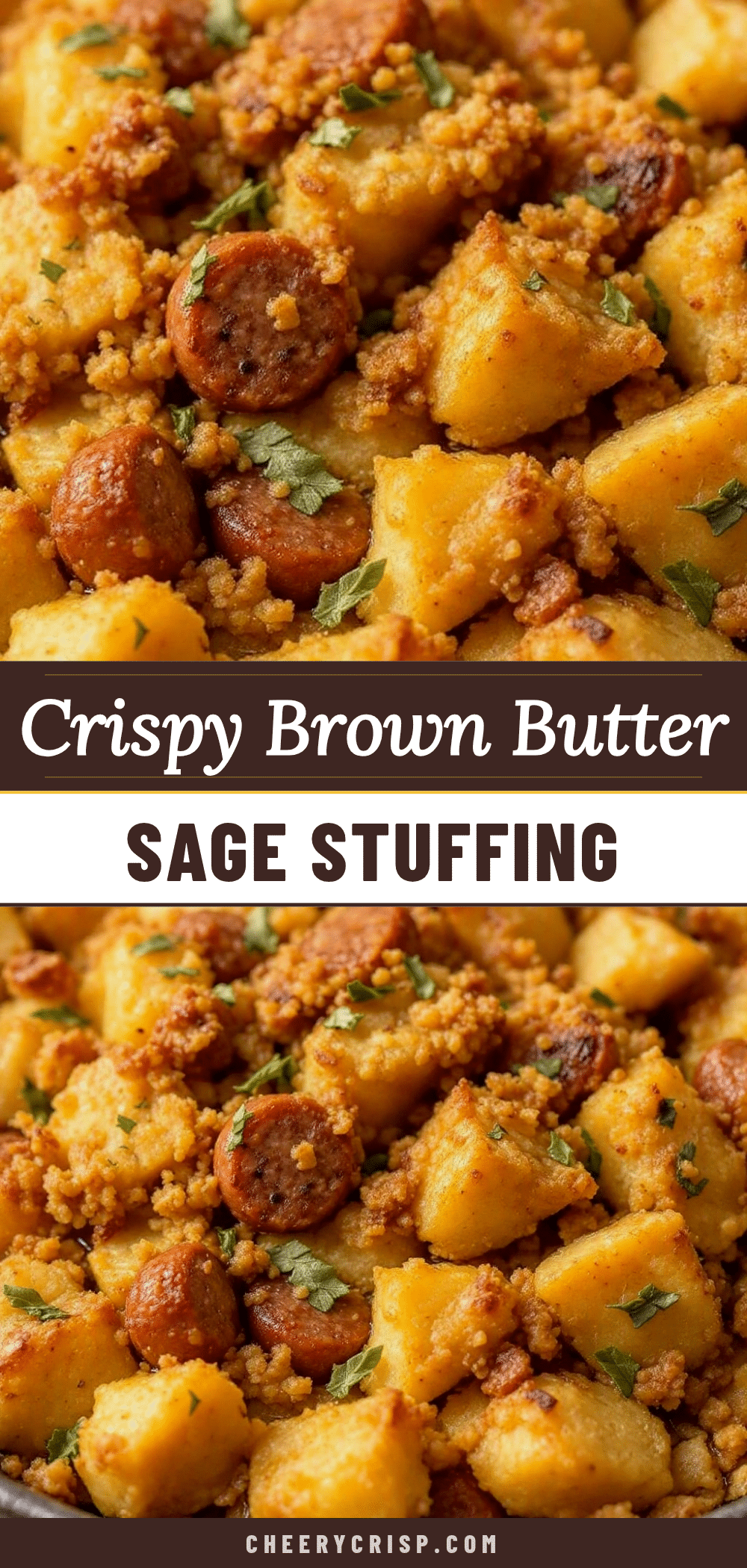
Crispy Brown Butter Sage Stuffing with Sausage

A rich and textured stuffing featuring stale cornbread or sourdough tossed in nutty brown butter, savory Italian sausage, and fresh sage, baked until golden and crispy.
- Prep Time: 10 minutes
- Cook Time: 30-40 minutes
- Total Time: 50-50 minutes
- Yield: 8 servings 1x
- Category: Side Dish
- Cuisine: American
Ingredients
- 10–12 cups stale cornbread or sourdough, torn into 1-inch cubes
- 1 cup (2 sticks) unsalted butter
- 1 pound Italian sausage (sweet or hot), casings removed
- 1/2 cup fresh sage leaves, chopped
- 1 large yellow onion, finely diced
- 3 cloves garlic, minced
- 1.5 to 2 cups warm chicken or turkey broth (low-sodium)
- 2 large eggs, beaten
- 1 teaspoon fresh or dried thyme
- Salt and black pepper to taste
Instructions
- Prepare the bread by tearing stale cornbread or sourdough into 1-inch cubes. Spread on a baking sheet and air dry for at least an hour or overnight. Alternatively, toast at 300°F for 10 minutes.
- Heat a large skillet over medium-high heat. Cook the sausage, breaking it apart, until browned and cooked through (5-7 minutes). Drain excess grease if necessary, then remove and set aside.
- In the same skillet, sauté the diced onion until translucent (3-4 minutes). Add the minced garlic and chopped sage, cooking for another minute until fragrant. Remove and set aside with the sausage.
- In a clean saucepan or large skillet, melt the butter over medium heat. Stir constantly until the butter foams, clears, and turns amber with nutty brown specks (5-7 minutes). Remove from heat immediately.
- In a very large bowl, combine the dried bread cubes, cooked sausage, sautéed vegetables, and beaten eggs. Pour the hot brown butter over the mixture and toss gently to coat. Season with salt and pepper to taste.
- Preheat oven to 375°F. Transfer the mixture to a greased 9×13 inch baking dish and press down gently. Bake for 20 minutes, then sprinkle with extra fresh sage if desired. Return to oven and bake for another 10-15 minutes until the top is golden brown and crispy. Optionally broil for the last 2 minutes for extra crispiness.
Notes
The key to this recipe is dry bread; fresh bread will result in a mushy texture. Brown the butter carefully until it smells like toasted nuts but before it burns. For best results, use day-old cornbread or sourdough. If making ahead, assemble the stuffing the night before and refrigerate; let it sit at room temperature for 30 minutes before baking.
Nutrition
- Serving Size: 1 cup
- Calories: 450
- Sugar: 2
- Sodium: 650
- Fat: 28
- Saturated Fat: 12
- Carbohydrates: 35
- Fiber: 2
- Protein: 15
Keywords: stuffing, brown butter, sage, sausage, cornbread, sourdough, holiday recipe, Thanksgiving, crispy stuffing, easy side dish