Love this? Save it for later!
Share the inspiration with your friends
The wind had picked up, rattling the back door, and I was staring into the fridge at a half-empty package of stew meat and a bag of carrots that had seen better days. Honestly, I hadn’t planned anything for dinner — classic move. I needed something warm, something that would fill the house with that unmistakable smell of comfort, and something that wouldn’t require me to wash a mountain of dishes afterward. That’s when the bag of pearl barley in the back of the pantry caught my eye.
I remember my grandmother used to make a version of this, though hers was more of a “clean out the fridge” situation than a real recipe. She’d toss in whatever root vegetables were around, let it bubble away on the stove, and we’d eat it with crusty bread while the rain tapped against the windows. This cozy one-pot beef barley fall stew is my grown-up homage to those nights. It’s not fancy, and it doesn’t try to be. It’s just honest, stick-to-your-ribs food that feels like a hug in a bowl.
This isn’t one of those stews that needs hours of babysitting. The beauty of this dish is that you do the heavy lifting upfront — browning the meat, sweating the veggies — and then you just let the pot do its thing. The barley thickens everything naturally as it cooks, creating this rich, velvety broth without any flour or cornstarch. By the time you’ve poured yourself a glass of wine and changed into sweatpants, dinner is pretty much ready. And honestly? That’s the kind of fall cooking I can get behind.
Why You’ll Love This Recipe
Over the years, I’ve tested a lot of stew recipes. Some were too watery. Some required a laundry list of ingredients I’d never use again. Some just didn’t have that deep, savory flavor that makes you want to go back for seconds. This one? It hits every single note.
- One Pot, Minimal Mess : Everything happens in a single Dutch oven or heavy-bottomed pot. No transferring, no extra pans. You brown the meat, sauté the vegetables, add the liquid and barley, and let it simmer. Cleanup is a breeze — and that’s a promise I don’t make lightly.
- Simple, Everyday Ingredients : You don’t need to hunt down anything obscure at the grocery store. Beef chuck, carrots, celery, onion, garlic, canned tomatoes, beef broth, pearl barley, and a few pantry spices. That’s it. If you have a well-stocked spice cabinet, you probably already have everything you need.
- Deep, Slow-Cooked Flavor in Under 2 Hours : A lot of beef stews require three or four hours to break down the meat properly. This one uses a clever technique — cutting the beef into smaller, uniform chunks and searing them in batches — to develop that same rich flavor in a fraction of the time. The barley also helps speed things along by thickening the broth as it releases its starch.
- Perfect for Meal Prep and Freezing : This stew actually gets better after a day in the fridge. The flavors meld together, and the barley absorbs even more of that savory broth. Make a double batch on Sunday, and you’ve got lunches or quick dinners ready to go all week. It also freezes beautifully for up to three months.
- Naturally Hearty and Satisfying : There’s no need for a side dish with this one. The barley adds a chewy, nutty texture that makes the stew substantial enough to be a complete meal. It’s the kind of bowl that leaves you full and content, not heavy and sluggish.
This isn’t just another beef stew recipe. It’s the one I turn to when I need something reliable, something that won’t let me down. The barley gives it a texture that you just don’t get with potatoes or rice, and the broth is so rich you’ll be sopping it up with bread until the bowl is clean. If you’ve ever had a stew that was bland or watery, this will change your mind.
What Ingredients You Will Need
This recipe relies on a handful of humble ingredients that work together to create something truly special. Each component plays a role, from building a deep savory base to adding texture and body. Here’s what you’ll need and why each one matters.
- 2 pounds beef chuck, cut into 1-inch cubes : Chuck is my go-to for stew. It has enough marbling to stay tender during the long simmer, and it breaks down beautifully without falling apart into mush. Look for pieces with some fat running through them — that’s where the flavor lives. Avoid lean cuts like sirloin, which can turn dry and tough.
- 2 tablespoons olive oil, divided : You’ll use half for browning the beef and half for sautéing the vegetables. A good-quality extra virgin olive oil works fine, but a neutral oil like avocado or grapeseed will also do the job.
- 1 large yellow onion, diced : Onion forms the aromatic backbone of the stew. Yellow onions are my preference here because they’re mellow and sweet when cooked, but a white onion will work in a pinch.
- 3 medium carrots, peeled and sliced into half-moons : Carrots add a subtle sweetness that balances the savory beef and umami-rich broth. I like slicing them into chunky half-moons so they hold their shape during the long simmer without turning to mush.
- 3 celery stalks, sliced : Celery brings a fresh, slightly peppery note that cuts through the richness of the beef. Don’t skip it — even if you’re not a celery fan, it melts into the background and adds complexity.
- 4 cloves garlic, minced : Fresh garlic is non-negotiable here. Pre-minced stuff from a jar just doesn’t have the same punch. Add it after the vegetables have softened to avoid burning it.
- 1 can (14.5 ounces) diced tomatoes, with their juices : The tomatoes add acidity and a touch of brightness that lifts the whole dish. I prefer fire-roasted diced tomatoes for a deeper, slightly smoky flavor, but regular ones work perfectly too.
- 6 cups low-sodium beef broth : Using low-sodium broth gives you control over the salt level. You can always add more later, but you can’t take it out. If you have homemade beef stock, this is the place to use it — the flavor will be next-level.
- 1 cup pearl barley, rinsed : Pearl barley is the star of this show. It’s not the same as hulled barley, which takes much longer to cook and has a chewier texture. Pearl barley cooks relatively quickly (about 40-45 minutes) and releases starch that naturally thickens the stew. Rinse it under cold water before adding to remove any dust or debris.
- 1 teaspoon dried thyme : Thyme is a classic pairing with beef. Its earthy, slightly floral flavor stands up well to the long simmer without becoming overpowering.
- 2 bay leaves : Bay leaves add a subtle herbal depth that you’ll miss if you forget them. Remember to fish them out before serving — they’re not pleasant to bite into.
- 1 teaspoon smoked paprika : This is my secret ingredient. Smoked paprika adds a layer of warmth and a hint of smokiness that makes the stew taste like it’s been simmering all day over an open fire.
- Salt and freshly ground black pepper, to taste : Season in layers. Add a pinch of salt when browning the beef, another when sautéing the vegetables, and adjust at the end. Freshly ground pepper makes a difference here — don’t use the pre-ground stuff.
- 2 tablespoons tomato paste : Tomato paste is a flavor bomb. It concentrates the tomato flavor and adds a rich, dark color to the broth. Cook it for a minute or two with the garlic to remove any raw taste.
- Fresh parsley, chopped, for garnish (optional) : A sprinkle of fresh parsley at the end adds a pop of color and a fresh, herbaceous finish that brightens the whole bowl.
Equipment Needed
You don’t need a kitchen full of fancy gadgets to make this stew, but a few key pieces will make the process smoother and the results better.
- Dutch oven or heavy-bottomed pot (5 to 6 quarts) : This is the most important piece of equipment. A Dutch oven distributes heat evenly and retains it well, which is crucial for browning the meat properly and maintaining a gentle simmer. Le Creuset or Staub are the gold standards, but a Lodge enameled cast iron pot is an excellent budget-friendly option that performs beautifully.
- Sharp chef’s knife : You’ll be doing a fair amount of chopping — beef, onions, carrots, celery. A sharp knife makes the job faster and safer. If your knife is dull, now’s the time to sharpen it.
- Cutting board : A sturdy wooden or plastic cutting board is essential. Avoid glass boards — they’re hard on your knives and slippery.
- Wooden spoon or spatula : You’ll need something sturdy to scrape up the browned bits from the bottom of the pot after searing the beef. A wooden spoon is ideal because it won’t scratch your enameled cookware.
- Measuring cups and spoons : Accurate measurements matter, especially for the broth and barley. Use dry measuring cups for the barley and liquid measuring cups for the broth.
- Large bowl : You’ll need a bowl to hold the browned beef while you sauté the vegetables. A metal or glass bowl works fine.
- Tongs : Tongs make it easy to flip the beef cubes while browning and to remove the bay leaves before serving. A good pair of spring-loaded tongs is a game-changer.
Preparation Method
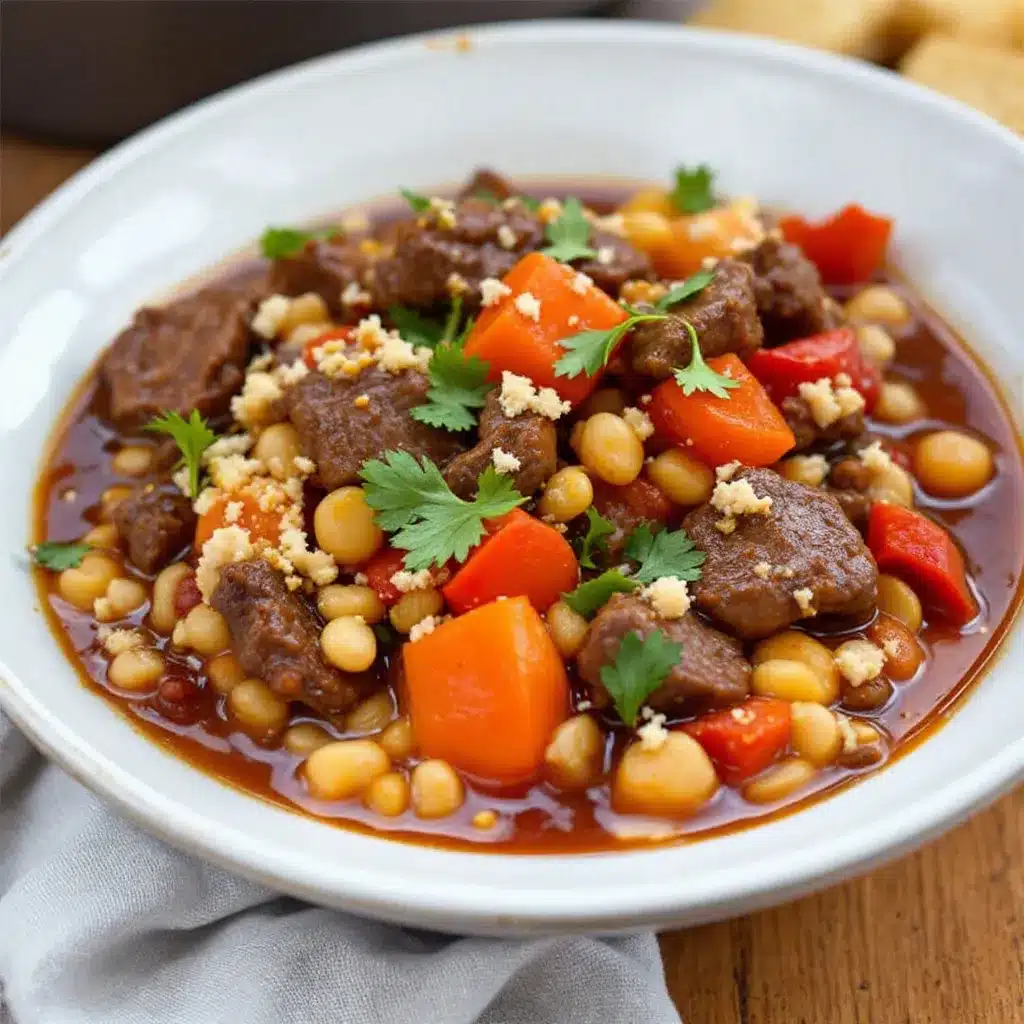
Alright, let’s get cooking. This recipe is straightforward, but there are a few key moments where paying attention makes all the difference. Follow these steps, and you’ll have a pot of stew that tastes like you spent all day tending it.
- Prep your ingredients (10 minutes) : Before you turn on the heat, get everything ready. Cut the beef chuck into 1-inch cubes. Dice the onion. Slice the carrots into half-moons and the celery into similar-sized pieces. Mince the garlic. Rinse the pearl barley under cold water in a fine-mesh strainer. Having everything prepped and within reach will make the cooking process smooth and stress-free.
- Season and brown the beef (15 minutes) : Pat the beef cubes dry with paper towels. This is crucial — wet meat won’t brown properly. Season generously with salt and pepper. Heat 1 tablespoon of olive oil in your Dutch oven over medium-high heat until it shimmers. Add the beef in a single layer, working in batches if necessary. Do not overcrowd the pot, or the meat will steam instead of brown. Let the cubes cook undisturbed for 3-4 minutes per side until a deep, golden-brown crust forms. Use tongs to flip them. Transfer the browned beef to a large bowl and set aside.
- Sauté the aromatics (8 minutes) : Reduce the heat to medium. Add the remaining 1 tablespoon of olive oil to the pot. Add the diced onion, sliced carrots, and celery. Cook, stirring occasionally, for 5-6 minutes until the vegetables begin to soften and the onion turns translucent. Scrape up any browned bits from the bottom of the pot — that’s pure flavor. Add the minced garlic and tomato paste, and cook for 1 minute more until fragrant. The tomato paste will darken slightly, which is exactly what you want.
- Deglaze and build the broth (2 minutes) : Pour in about 1 cup of the beef broth and use your wooden spoon to scrape up any remaining browned bits from the bottom of the pot. This process is called deglazing, and it’s essential for incorporating all that savory flavor into the broth. Let it simmer for a minute, then add the remaining 5 cups of broth, the diced tomatoes with their juices, the dried thyme, smoked paprika, and bay leaves.
- Add the beef and barley (1 minute) : Return the browned beef and any accumulated juices to the pot. Stir in the rinsed pearl barley. Bring the stew to a boil, then reduce the heat to low, cover the pot, and let it simmer gently.
- Simmer until tender (45-50 minutes) : Let the stew simmer undisturbed for about 45 minutes. The barley will absorb the broth and release starch, thickening the stew naturally. After 45 minutes, check the beef and barley for tenderness. The beef should be fork-tender, and the barley should be chewy but not hard. If either needs more time, continue simmering uncovered for another 10-15 minutes, checking every 5 minutes. The stew will thicken further as it sits.
- Season and serve (5 minutes) : Remove the bay leaves and discard them. Taste the stew and adjust the seasoning with salt and pepper. Remember that the flavors will continue to develop as the stew cools, so don’t over-salt. Ladle the stew into bowls, garnish with fresh parsley if desired, and serve hot with crusty bread or a simple green salad.
Cooking Tips & Techniques
I’ve made this stew more times than I can count, and I’ve learned a few things along the way. Here are my best tips to ensure your stew turns out perfect every time.
- Don’t skip the browning step : I know it’s tempting to just dump everything in the pot and save time, but browning the beef is where the magic happens. The Maillard reaction creates those deep, savory compounds that give the stew its rich flavor. Take the extra 10 minutes — it’s worth it.
- Use a heavy-bottomed pot : Thin pots create hot spots that can burn the bottom of your stew before the rest is cooked. A Dutch oven or a heavy-bottomed stockpot distributes heat evenly and maintains a consistent simmer. If you don’t have one, a thick stainless steel pot will work, just keep an eye on the heat.
- Rinse the barley : Pearl barley often has a fine dust or starch coating from processing. Rinsing it under cold water removes this and prevents the stew from becoming gummy or cloudy. It’s a small step that makes a noticeable difference.
- Season in layers : Don’t wait until the end to add all the salt. Season the beef before browning, add a pinch when sautéing the vegetables, and taste and adjust at the end. This builds complexity and ensures every component is properly seasoned.
- Let it rest : Stew always tastes better the next day. If you have the time, make it a day ahead, let it cool, and refrigerate overnight. The flavors meld and deepen, and the texture becomes even more luxurious. Reheat gently on the stovetop, adding a splash of broth or water if it’s too thick.
- Don’t rush the simmer : A gentle simmer — where you see small bubbles breaking the surface — is key. A rolling boil will toughen the beef and make the barley mushy. If your heat is too high, the liquid will evaporate too quickly, and you’ll end up with a dry, pasty stew. Keep it low and slow.
I once forgot to brown the beef when I was in a hurry, and the stew turned out pale and one-dimensional. It was edible, sure, but it lacked that deep, soulful flavor that makes this dish special. Learn from my mistake: take the time to sear that meat.
Variations & Adaptations
This recipe is wonderfully flexible. Here are some ways to make it your own, depending on what you have on hand or what you’re craving.
- Vegetarian Version : Skip the beef and use 2 cups of diced mushrooms (cremini or portobello) and an extra can of chickpeas or lentils for protein. Use vegetable broth instead of beef broth, and add a splash of soy sauce or tamari for umami. The mushrooms will provide that meaty texture and savory depth.
- Gluten-Free Adaptation : Replace the pearl barley with 1 cup of brown rice or quinoa. Keep in mind that brown rice will take about 40 minutes to cook, while quinoa will be ready in about 15 minutes. Adjust the simmering time accordingly. You can also use certified gluten-free oats for a similar texture, though the stew will be slightly thicker.
- Slow Cooker Method : Brown the beef and sauté the vegetables on the stovetop first, then transfer everything to a slow cooker. Add the broth, tomatoes, barley, and seasonings. Cook on low for 6-8 hours or on high for 3-4 hours, until the beef is tender and the barley is cooked. The slow cooker version will have a slightly thinner broth, so you can stir in a tablespoon of cornstarch mixed with cold water at the end if you prefer a thicker stew.
- Instant Pot Version : Use the sauté function to brown the beef and cook the vegetables. Add the remaining ingredients, close the lid, and cook on high pressure for 25 minutes. Let the pressure release naturally for 10 minutes before quick-releasing the rest. The barley will be perfectly tender, and the beef will be fall-apart soft. This is my go-to method on busy weeknights.
- Seasonal Add-Ins : In the fall, add 1 cup of cubed butternut squash or sweet potato along with the carrots. In the winter, stir in a handful of chopped kale or Swiss chard during the last 10 minutes of cooking. In the spring, swap half the carrots for chopped parsnips or turnips for a slightly different flavor profile.
- Herb Swaps : If you don’t have dried thyme, use 1 teaspoon of dried rosemary or 2 fresh sprigs of rosemary. Oregano also works, though it has a stronger flavor. For a completely different vibe, try 1 teaspoon of garam masala or curry powder instead of the smoked paprika — it’s not traditional, but it’s delicious.
I once made a version with leftover pot roast and added a splash of red wine instead of some of the broth. It was absolutely incredible. Don’t be afraid to experiment — this stew is forgiving and rewards creativity.
Serving & Storage Suggestions
This stew is a complete meal on its own, but a few thoughtful accompaniments can take it from great to unforgettable.
- Serving Temperature : Serve the stew piping hot, straight from the pot. Ladle it into deep bowls so nothing spills over the sides. A generous portion is about 1.5 to 2 cups per person.
- Perfect Pairings : Crusty sourdough or a warm baguette is ideal for sopping up every last drop of the savory broth. A simple green salad with a tangy vinaigrette provides a refreshing contrast to the rich stew. For a heartier meal, serve it over a bed of mashed potatoes or egg noodles — though honestly, the barley makes that unnecessary.
- Beverage Suggestions : A medium-bodied red wine like a Merlot, Malbec, or Côtes du Rhône complements the beef beautifully. If you prefer beer, a dark ale or a stout is a fantastic choice. For a non-alcoholic option, try a sparkling water with a squeeze of lemon to cut through the richness.
- Refrigerator Storage : Let the stew cool completely before transferring it to an airtight container. It will keep in the refrigerator for up to 5 days. The flavors will intensify, and the barley will continue to absorb liquid, so you may need to add a splash of broth or water when reheating.
- Freezer Storage : This stew freezes exceptionally well. Portion it into freezer-safe containers or zip-top bags, leaving about an inch of headroom for expansion. It will keep for up to 3 months. Thaw overnight in the refrigerator before reheating on the stovetop over medium-low heat.
- Reheating Tips : Reheat the stew gently on the stovetop over medium-low heat, stirring occasionally. Add a splash of beef broth or water if it’s too thick. You can also microwave individual portions in a microwave-safe bowl, covered, for 2-3 minutes, stirring halfway through. Avoid boiling the stew when reheating, as it can make the barley mushy.
One thing I’ve noticed is that this stew actually thickens quite a bit overnight as the barley continues to absorb liquid. If you’re planning to serve it the next day, you might want to add an extra half cup of broth when you reheat it. The texture will be perfect — rich and velvety, not pasty.
Nutritional Information & Benefits
This stew is not just delicious — it’s packed with nutrition that makes it a smart choice for a fall meal. Here’s a rough estimate of what you’re getting in a serving (about 1.5 cups).
- Calories : Approximately 475 per serving
- Protein : 35 grams — thanks to the beef chuck, which is an excellent source of high-quality protein and essential amino acids.
- Fiber : 8 grams — pearl barley is a fiber powerhouse. It contains both soluble and insoluble fiber, which supports digestive health and helps you feel full and satisfied.
- Iron : 25% of the daily value — beef is one of the best sources of heme iron, which is more easily absorbed by the body than the iron found in plants. This is especially beneficial for anyone prone to anemia.
- Vitamin A : 120% of the daily value — carrots are loaded with beta-carotene, which your body converts into vitamin A for healthy vision, immune function, and skin.
- Potassium : 15% of the daily value — from the carrots, celery, and tomatoes, potassium helps regulate blood pressure and supports muscle function.
This stew is naturally low in added sugar and contains no artificial ingredients. It’s also relatively low in saturated fat if you trim the beef well before cooking. The barley provides complex carbohydrates that release energy slowly, keeping your blood sugar stable and your energy levels steady throughout the afternoon. If you’re watching your sodium intake, use low-sodium broth and go easy on the added salt — you can always season individual bowls at the table.
Conclusion
This cozy one-pot beef barley fall stew is exactly what you need when the weather turns cold and you want something that feels like a warm blanket for your soul. It’s simple enough for a Tuesday night, but impressive enough to serve to company. The beef gets tender, the barley adds that perfect chew, and the broth is so rich and savory you’ll be scraping the pot clean.
I love that this recipe doesn’t demand perfection. If you forget to rinse the barley, it’ll still be delicious. If you use a different cut of beef, it’ll still work. It’s forgiving and adaptable, just like the best comfort food should be. Whether you serve it with a hunk of bread or a side salad, it’s going to hit the spot.
I’d love to hear how yours turns out. Did you add any twists? Did you serve it with something unexpected? Drop a comment below and let me know — I read every single one, and I’m always looking for new ideas to try. And if you loved this recipe, share it with a friend who needs a little extra warmth in their life. Happy cooking!
Frequently Asked Questions
Can I use a different type of barley?
Yes, but the cooking time will change. Pearl barley is the most common and cooks in about 40-45 minutes. Hulled barley, which is less processed, takes about 60-70 minutes and has a chewier texture. If you use hulled barley, you’ll need to add more broth and extend the simmering time. Quick-cooking barley is also an option, but it will break down more and won’t have the same satisfying chew.
Can I make this stew in advance?
Absolutely. In fact, it tastes even better the next day. Make the stew, let it cool completely, and refrigerate it in an airtight container for up to 5 days. Reheat gently on the stovetop, adding a splash of broth or water to thin it out if needed. The flavors will deepen and meld together beautifully overnight.
How do I thicken the stew if it’s too thin?
If your stew is thinner than you’d like, there are a few easy fixes. You can simmer it uncovered for an additional 10-15 minutes to let some of the liquid evaporate. Alternatively, mash a few of the cooked barley grains against the side of the pot with a spoon to release more starch. If you need a quick fix, mix 1 tablespoon of cornstarch with 2 tablespoons of cold water to make a slurry, stir it into the stew, and let it simmer for 2-3 minutes until thickened.
Can I add potatoes to this stew?
Yes, potatoes are a great addition. Dice 2 medium Yukon Gold or red potatoes into 1-inch cubes and add them along with the barley. Keep in mind that potatoes will absorb some of the broth, so you may want to add an extra half cup of beef broth to compensate. The potatoes will be tender and creamy, adding another layer of texture to the stew.
Is this stew freezer-friendly?
Yes, it freezes beautifully. Let the stew cool completely, then transfer it to freezer-safe containers or zip-top bags. Leave about an inch of headroom for expansion. It will keep for up to 3 months. Thaw overnight in the refrigerator and reheat gently on the stovetop. The barley may absorb more liquid during freezing, so you might need to add a splash of broth or water when reheating to restore the desired consistency.
Pin This Recipe!
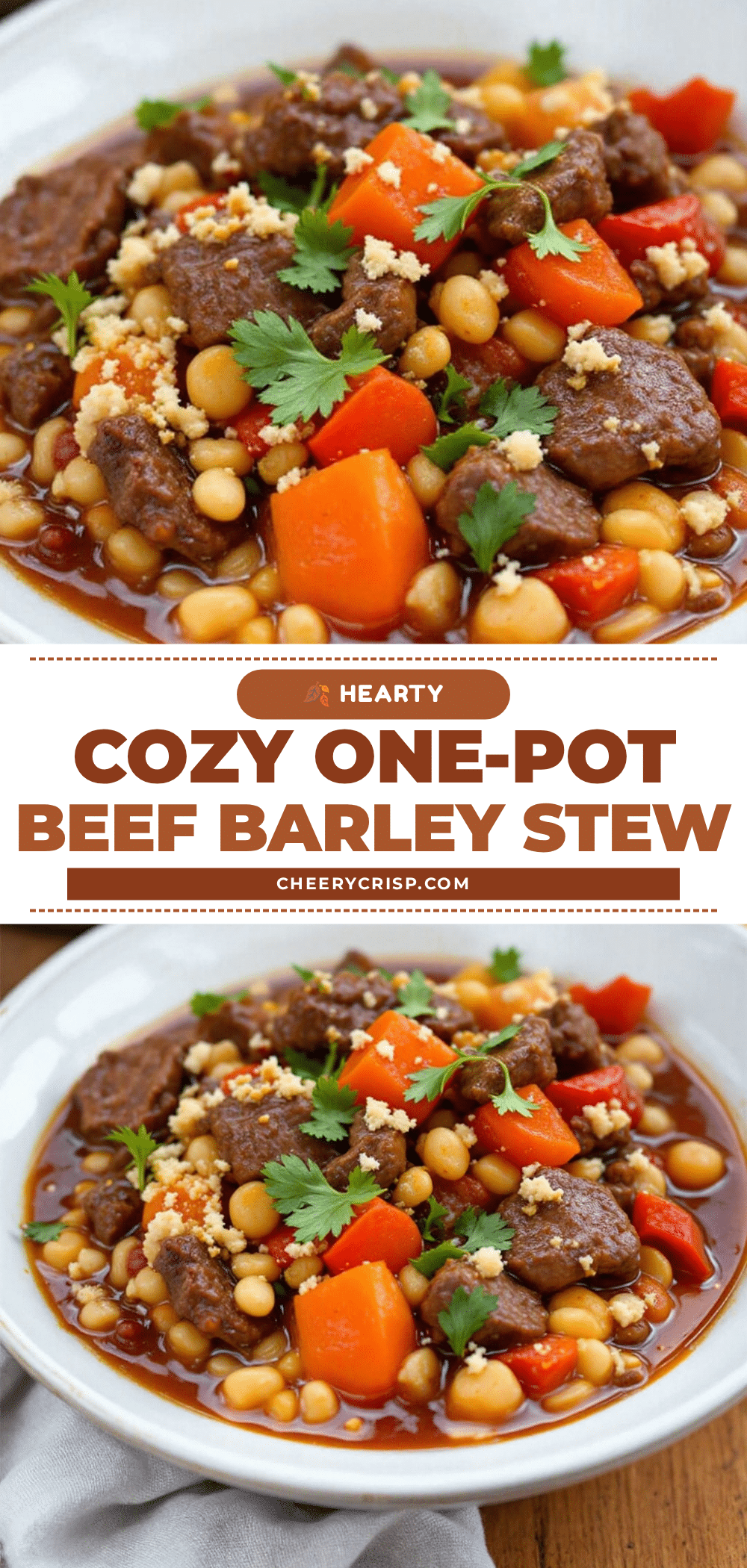
Cozy One-Pot Beef Barley Stew – Easy Fall Dinner

A hearty, one-pot beef barley stew that’s perfect for fall. Tender beef, chewy barley, and a rich, savory broth come together in under two hours for a comforting meal that feels like a hug in a bowl.
- Prep Time: 15 minutes
- Cook Time: 1 hour 10 minutes
- Total Time: 1 hour 25 minutes
- Yield: 6 servings 1x
- Category: Main Course
- Cuisine: American
Ingredients
- 2 pounds beef chuck, cut into 1-inch cubes
- 2 tablespoons olive oil, divided
- 1 large yellow onion, diced
- 3 medium carrots, peeled and sliced into half-moons
- 3 celery stalks, sliced
- 4 cloves garlic, minced
- 1 can (14.5 ounces) diced tomatoes, with their juices
- 6 cups low-sodium beef broth
- 1 cup pearl barley, rinsed
- 1 teaspoon dried thyme
- 2 bay leaves
- 1 teaspoon smoked paprika
- Salt and freshly ground black pepper, to taste
- 2 tablespoons tomato paste
- Fresh parsley, chopped, for garnish (optional)
Instructions
- Prep your ingredients (10 minutes): Before you turn on the heat, get everything ready. Cut the beef chuck into 1-inch cubes. Dice the onion. Slice the carrots into half-moons and the celery into similar-sized pieces. Mince the garlic. Rinse the pearl barley under cold water in a fine-mesh strainer.
- Season and brown the beef (15 minutes): Pat the beef cubes dry with paper towels. Season generously with salt and pepper. Heat 1 tablespoon of olive oil in your Dutch oven over medium-high heat until it shimmers. Add the beef in a single layer, working in batches if necessary. Do not overcrowd the pot. Let the cubes cook undisturbed for 3-4 minutes per side until a deep, golden-brown crust forms. Use tongs to flip them. Transfer the browned beef to a large bowl and set aside.
- Sauté the aromatics (8 minutes): Reduce the heat to medium. Add the remaining 1 tablespoon of olive oil to the pot. Add the diced onion, sliced carrots, and celery. Cook, stirring occasionally, for 5-6 minutes until the vegetables begin to soften and the onion turns translucent. Scrape up any browned bits from the bottom of the pot. Add the minced garlic and tomato paste, and cook for 1 minute more until fragrant.
- Deglaze and build the broth (2 minutes): Pour in about 1 cup of the beef broth and use your wooden spoon to scrape up any remaining browned bits from the bottom of the pot. Let it simmer for a minute, then add the remaining 5 cups of broth, the diced tomatoes with their juices, the dried thyme, smoked paprika, and bay leaves.
- Add the beef and barley (1 minute): Return the browned beef and any accumulated juices to the pot. Stir in the rinsed pearl barley. Bring the stew to a boil, then reduce the heat to low, cover the pot, and let it simmer gently.
- Simmer until tender (45-50 minutes): Let the stew simmer undisturbed for about 45 minutes. After 45 minutes, check the beef and barley for tenderness. The beef should be fork-tender, and the barley should be chewy but not hard. If either needs more time, continue simmering uncovered for another 10-15 minutes, checking every 5 minutes.
- Season and serve (5 minutes): Remove the bay leaves and discard them. Taste the stew and adjust the seasoning with salt and pepper. Ladle the stew into bowls, garnish with fresh parsley if desired, and serve hot with crusty bread or a simple green salad.
Notes
For best flavor, brown the beef well in batches. The stew thickens as it sits; add extra broth when reheating if needed. Make ahead for even deeper flavor.
Nutrition
- Serving Size: 1.5 cups
- Calories: 475
- Sugar: 8
- Sodium: 600
- Fat: 12
- Saturated Fat: 3.5
- Carbohydrates: 45
- Fiber: 8
- Protein: 35
Keywords: beef barley stew, one-pot stew, fall dinner, comfort food, easy stew recipe