Love this? Save it for later!
Share the inspiration with your friends
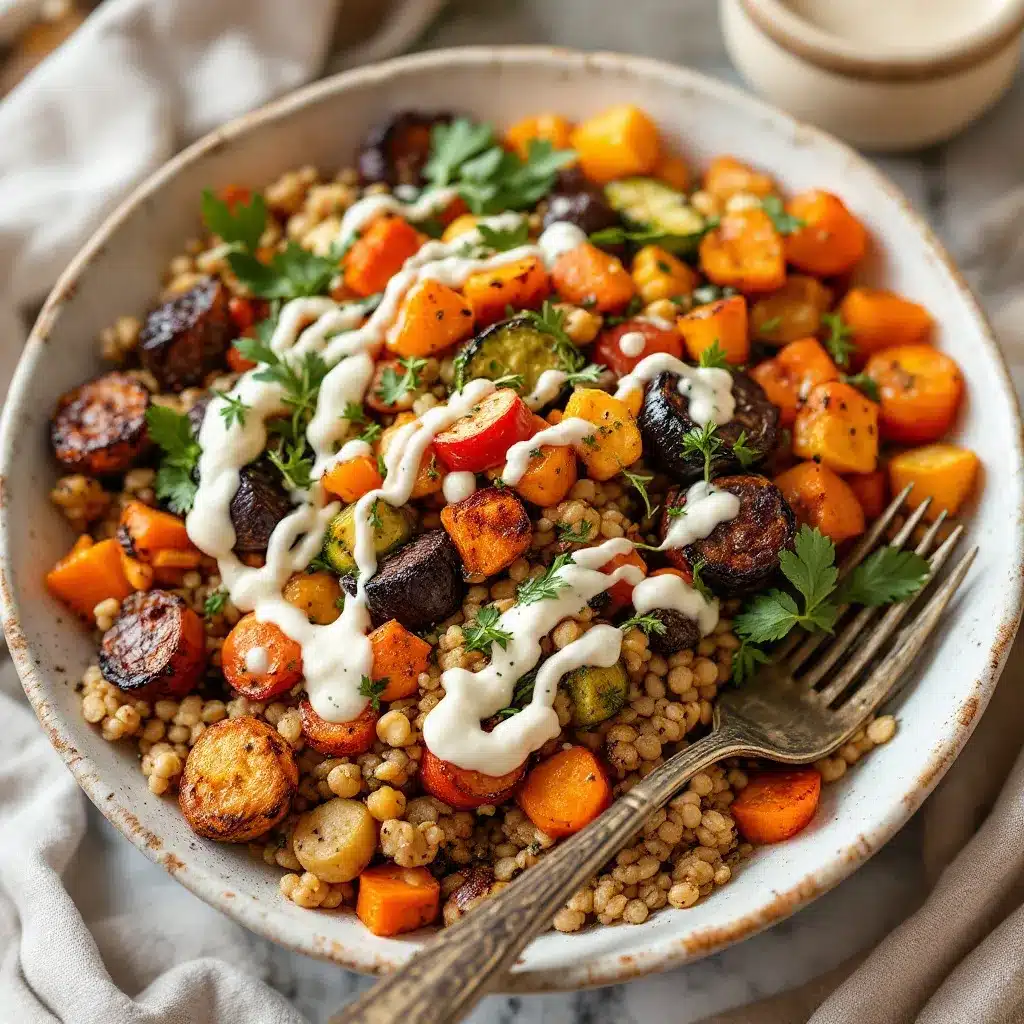
The first time I made this bowl, it was mid-October and the kitchen was cold. The kind of cold where you want to turn the oven on just to stand near it. I had a butternut squash sitting on the counter, a bag of Brussels sprouts in the fridge, and honestly, I was tired of eating soup every single night. I wanted something that felt like a meal — not a liquid in a mug. So I started chopping. Tossing things in oil. Roasting until the edges got dark and sweet. And then I threw it all over a bed of warm farro, drizzled something tangy on top, and sat down with a fork. That was the moment this cozy fall harvest grain bowl became my go-to answer for those chilly, not-quite-soup nights. It filled the space between comfort and health without trying too hard.
There’s no fancy backstory here. I wasn’t testing a recipe for a magazine or trying to impress anyone. I just wanted a bowl of food that felt like fall — earthy, warm, a little bit sweet, and completely satisfying. And after a few rounds of tweaking (and one very sad batch of undercooked quinoa), this version stuck. It’s the kind of meal you make when you want to eat something beautiful without spending an hour hovering over the stove. It’s forgiving. It’s flexible. And it somehow makes eating a pile of vegetables feel like a treat.
If you’ve been looking for a meal that actually delivers on the “cozy” promise — without relying on heavy cream or cheese — this is it. This bowl does the work. It feeds you well, and it doesn’t ask for much in return.
Why You’ll Love This Recipe
This isn’t just another grain bowl. I’ve made enough of those to know the difference between a sad desk lunch and a meal that makes you look forward to leftovers. This one falls firmly in the second category. Here’s why it works:
- Perfect for meal prep. Roast the vegetables and cook the grain ahead of time. Assemble when you’re hungry. It takes five minutes once everything is prepped.
- Simple, whole-food ingredients. No weird sauces, no processed shortcuts. Just vegetables, grains, a simple dressing, and maybe some cheese or nuts if you’re feeling fancy.
- Naturally vegetarian and easily vegan. Leave out the feta or swap it for a sprinkle of nutritional yeast. The bowl holds up either way.
- Great for using up odds and ends. Half a sweet potato? A single beet? A few stems of kale? Throw them in. This bowl doesn’t judge.
- Actually filling. Between the roasted vegetables and the chewy grain, you won’t be hunting for a snack an hour later. It’s a real meal.
I’ve brought this bowl to work for lunch and watched coworkers peer over my shoulder. I’ve served it to friends who claimed they “don’t like squash” — and watched them go back for seconds. It’s one of those recipes that quietly wins people over without making a big deal about it.
What Ingredients You Will Need
This recipe uses simple, wholesome ingredients to deliver bold flavor and satisfying texture without the fuss. Most of these are pantry or farmers market staples, especially during the fall months.
- Farro – 1 cup dry. I like the pearled variety for a quicker cook time. It’s chewy and nutty, and it holds up well to the roasted vegetables. You can also use spelt, wheat berries, or even brown rice.
- Butternut squash – 2 cups, peeled and cubed into 1-inch pieces. It gets sweet and caramelized in the oven. Look for one that feels heavy for its size.
- Brussels sprouts – 2 cups, halved. The outer leaves get crispy, and the insides turn tender. If they’re very large, quarter them so they cook evenly.
- Red onion – 1 medium, cut into wedges. It mellows out in the oven and adds a little sweetness.
- Olive oil – 3 to 4 tablespoons, divided. Use a good one for roasting and a lighter one for the dressing.
- Maple syrup – 1 tablespoon for the dressing. It balances the acidity and adds a subtle fall sweetness.
- Apple cider vinegar – 2 tablespoons. It gives the dressing a bright tang that cuts through the richness of the roasted vegetables.
- Dijon mustard – 1 teaspoon. It helps emulsify the dressing and adds a little kick.
- Garlic – 2 cloves, minced. One goes into the dressing, the other gets tossed with the vegetables before roasting.
- Fresh thyme – 4 to 5 sprigs. Toss them with the vegetables before roasting. They infuse everything with an earthy, herbaceous aroma.
- Feta cheese – ½ cup, crumbled. Optional, but highly recommended. It adds a salty, creamy contrast to the sweet squash.
- Toasted pumpkin seeds or pecans – ¼ cup for crunch. I’ve used both, and they each bring something different. Pumpkin seeds are more neutral; pecans add a buttery richness.
- Salt and black pepper – To taste. Don’t skimp on the salt when roasting. It makes the vegetables taste like themselves, only better.
I usually buy my butternut squash pre-chopped from the store when I’m in a hurry. No shame in that. Just make sure the pieces are roughly the same size so they roast evenly. For the farro, I’ve had good luck with the Rustichella d’Abruzzo brand — it holds its texture without getting mushy.
Equipment Needed
- Large baking sheet – 18×13 inches. A rimmed one works best to catch any juices. If you crowd the pan, the vegetables steam instead of roast, so use two sheets if needed.
- Medium saucepan – For cooking the farro. Any pot with a tight-fitting lid will do.
- Chef’s knife and cutting board – A sharp knife makes quick work of the squash. Be careful — butternut squash is dense and can be slippery.
- Mixing bowls – One for the dressing, one for tossing the vegetables.
- Whisk or small jar – For shaking up the dressing. A jar with a tight lid works perfectly and means less cleanup.
- Parchment paper – Optional, but it makes cleanup a breeze. The vegetables still caramelize nicely on parchment.
If you don’t have a baking sheet large enough, just use two smaller ones. Rotate them halfway through cooking so everything roasts evenly. I’ve also made this on a sheet pan that was slightly warped — still turned out fine. Don’t stress over perfect equipment.
Preparation Method
- Preheat the oven to 425°F (220°C). Line a large baking sheet with parchment paper for easy cleanup. While the oven heats, start the farro.
- Cook the farro. Rinse 1 cup of dry farro under cold water. Add it to a medium saucepan with 3 cups of water and a pinch of salt. Bring to a boil, then reduce the heat to low, cover, and simmer for 25 to 30 minutes, or until the grains are tender but still chewy. Drain any excess water and set aside. Fluff with a fork.
- Prep the vegetables. While the farro cooks, peel and cube the butternut squash into 1-inch pieces. Halve the Brussels sprouts. Cut the red onion into 8 wedges. Toss everything on the baking sheet with 2 tablespoons of olive oil, a few sprigs of fresh thyme, 1 minced garlic clove, and a generous pinch of salt and black pepper.
- Roast the vegetables. Spread them in a single layer on the baking sheet. Roast for 25 to 30 minutes, flipping halfway through, until the squash is fork-tender and the Brussels sprouts are crispy on the edges. The onions should be soft and slightly charred. Remove from the oven and let them cool slightly on the pan.
- Make the dressing. In a small bowl or jar, whisk together 2 tablespoons of olive oil, 1 tablespoon of maple syrup, 2 tablespoons of apple cider vinegar, 1 teaspoon of Dijon mustard, and the remaining minced garlic clove. Add a pinch of salt and pepper. Shake or whisk until emulsified. Taste and adjust — more maple if you like it sweeter, more vinegar if you want it tangier.
- Assemble the bowls. Divide the warm farro between four bowls. Top with the roasted vegetables. Sprinkle crumbled feta and toasted pumpkin seeds or pecans on top. Drizzle the dressing generously over everything.
- Serve immediately. The contrast between the warm grains, the cool feta, and the tangy dressing is best right after assembly. If meal prepping, keep the components separate and assemble just before eating.
A few things I’ve learned the hard way: don’t skip the flip halfway through roasting. The bottom of the squash can burn if it sits too long. And if your Brussels sprouts are on the smaller side, check them at the 20-minute mark. They cook faster than the squash.
Cooking Tips & Techniques
Roasting vegetables at the right temperature makes all the difference. 425°F is the sweet spot — hot enough to caramelize the natural sugars without burning the outsides before the insides are tender. If your oven runs hot, drop it to 400°F and add a few extra minutes.
I used to crowd my baking sheet because I didn’t want to wash two pans. Big mistake. The vegetables ended up steamed and pale, not roasted and golden. Give them space. If they’re touching too much, they release steam instead of browning. Use two sheets if you have to, and rotate them halfway through.
For the farro, don’t walk away and forget about it. I’ve done that. You end up with mushy grains that clump together. Set a timer. Taste a grain at the 25-minute mark. It should be tender but still have a little bite — like al dente pasta. Drain it as soon as it’s done.
One more thing: make the dressing first if you’re using a jar. That way, while the vegetables roast, the flavors have time to meld. It’s a small step, but it makes the dressing taste more cohesive.
Variations & Adaptations
Make it vegan. Skip the feta or use a dairy-free alternative. The dressing is already vegan. Add a sprinkle of hemp seeds for extra protein.
Swap the grain. Not a farro fan? Use quinoa, brown rice, or even freekeh. Each one brings a slightly different texture. Quinoa cooks faster, while brown rice takes a bit longer. Adjust the cooking time accordingly.
Change the vegetables. Sweet potatoes work beautifully in place of butternut squash. Cauliflower florets, chopped kale (tossed in oil and roasted until crispy), or even roasted beets add color and flavor. Use whatever looks good at the market.
Add protein. This bowl is hearty on its own, but if you want more staying power, add a fried egg, some roasted chickpeas, or leftover shredded chicken. I’ve even added crumbled chicken sausage on nights when I wanted something extra savory.
Try a different dressing. A lemon-tahini dressing works well here too. Just whisk together ¼ cup tahini, juice of one lemon, 1 tablespoon maple syrup, and enough water to thin it to a drizzle consistency. It’s creamier and nuttier than the maple-Dijon version.
I once made this with roasted delicata squash instead of butternut — didn’t even need to peel it. The skin is thin and edible, and it gets wonderfully crispy in the oven. If you see delicata at the store, grab it.
Serving & Storage Suggestions
Serve this bowl warm or at room temperature. I like it best right after assembly, when the farro is still warm and the feta is cool and crumbly. If you’re serving a crowd, set up a bowl bar — let everyone pick their own toppings. It makes for a fun, interactive meal.
For storage, keep the components separate. Roasted vegetables last about 4 days in an airtight container in the fridge. Cooked farro stays good for about 5 days. The dressing will keep for up to a week. When you’re ready to eat, reheat the farro and vegetables in the microwave or in a skillet with a splash of water, then add the fresh toppings.
I don’t recommend freezing this bowl. The vegetables get watery when thawed, and the farro loses its texture. It’s really best enjoyed fresh or within a few days of making it.
If you’re packing this for lunch, store the dressing separately and add it just before eating. Otherwise, the farro soaks it up and gets soggy. Learned that one the hard way.
Nutritional Information & Benefits
This bowl is packed with fiber, vitamins, and healthy fats. Butternut squash is rich in vitamin A and vitamin C, both of which support immune health — especially welcome during cold and flu season. Brussels sprouts are a great source of vitamin K and antioxidants. Farro provides complex carbohydrates and protein, keeping you full and energized.
Here’s an approximate breakdown per serving (based on 4 servings, with feta and pumpkin seeds):
- Calories: 420
- Protein: 12g
- Fat: 18g
- Carbohydrates: 58g
- Fiber: 10g
- Sugar: 12g (naturally occurring from vegetables and maple syrup)
This recipe is vegetarian and can easily be made vegan. It’s also gluten-free if you swap the farro for quinoa or brown rice. The main allergens are dairy (feta) and tree nuts (pecans), both of which are optional.
I personally love that this bowl doesn’t leave me feeling heavy. It’s satisfying without being greasy, and it actually makes me want to eat my vegetables — not just tolerate them.
Conclusion
This cozy fall harvest grain bowl is the kind of recipe you’ll come back to all season long. It’s flexible enough to adapt to whatever vegetables you have, forgiving enough to survive a busy weeknight, and satisfying enough to feel like a real meal. The roasted vegetables get sweet and caramelized, the farro adds a hearty chew, and the tangy maple dressing ties everything together without overpowering it.
I hope you make this bowl your own. Swap in your favorite vegetables, try a different grain, or pile on extra toppings. That’s the beauty of a bowl like this — it works with you, not against you. And if you do make it, I’d love to hear how it turned out. Drop a comment below or tag me in your photos. Happy fall cooking!
Frequently Asked Questions
Can I make this grain bowl ahead of time?
Yes, absolutely. Roast the vegetables and cook the farro up to 4 days in advance. Keep them in separate containers in the fridge. Assemble the bowls when you’re ready to eat, and add the dressing right before serving to keep everything fresh.
What can I use instead of farro?
Quinoa, brown rice, freekeh, or even couscous work well. Each one has a slightly different texture and cook time, so adjust accordingly. Quinoa cooks in about 15 minutes, while brown rice takes closer to 40.
Is this recipe gluten-free?
It can be. Farro is a type of wheat and contains gluten. To make this bowl gluten-free, swap the farro for quinoa, brown rice, or certified gluten-free oats. Everything else in the recipe is naturally gluten-free.
Can I add protein to this bowl?
Definitely. A fried egg, roasted chickpeas, grilled chicken, or even leftover ground turkey would be great additions. The bowl is hearty on its own, but extra protein never hurts if you’re feeding a hungry crowd.
How do I keep the vegetables from getting soggy when reheating?
Reheat them in a skillet over medium heat instead of the microwave. Add a tiny splash of water, cover, and let them steam for a minute, then uncover and let any excess moisture cook off. They’ll crisp back up nicely.
Pin This Recipe!
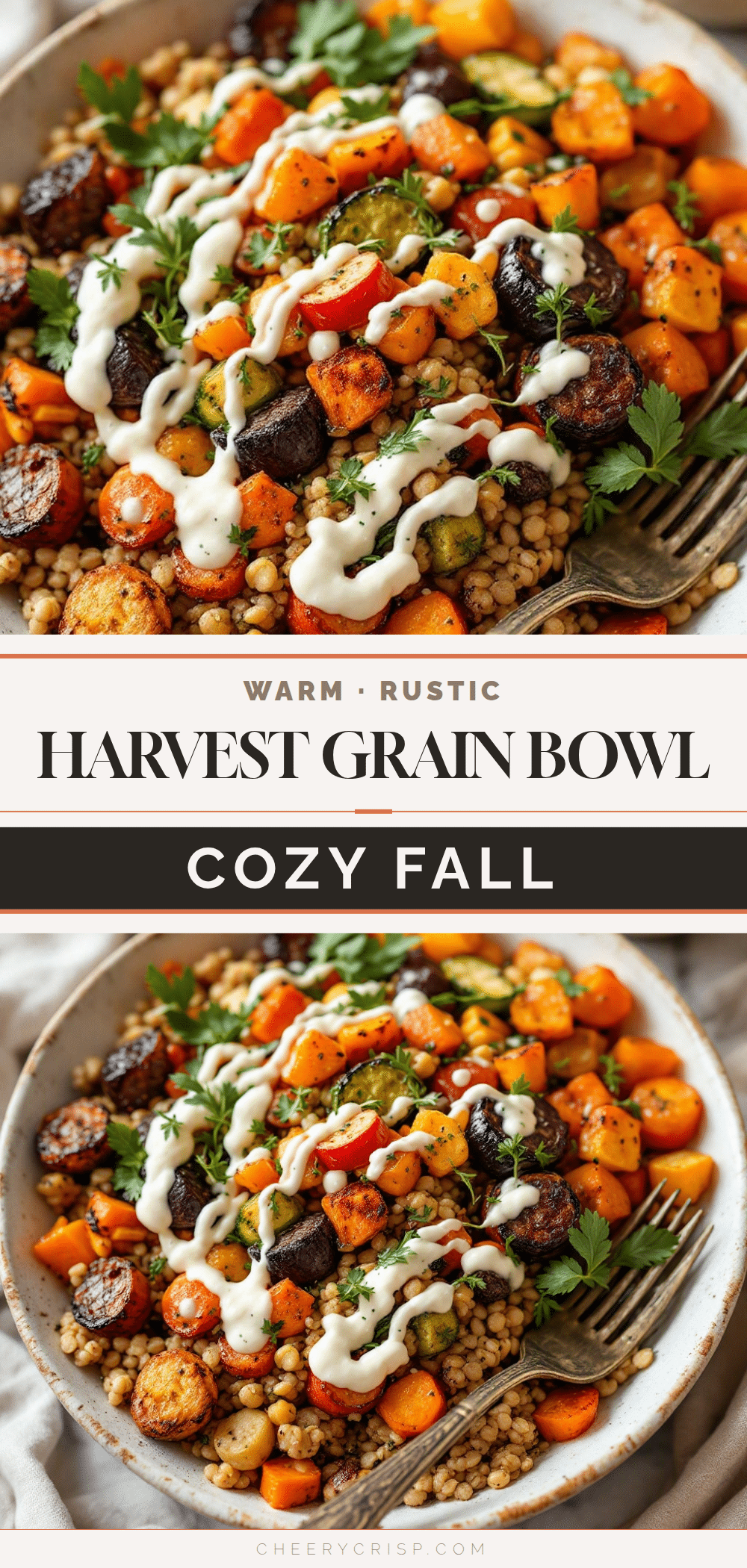
Cozy Fall Harvest Grain Bowl with Roasted Vegetables
A hearty and satisfying grain bowl featuring roasted butternut squash, Brussels sprouts, and red onion over warm farro, drizzled with a tangy maple-Dijon dressing. Perfect for meal prep and flexible enough to use whatever vegetables you have on hand.
- Prep Time: 15 minutes
- Cook Time: 30 minutes
- Total Time: 45 minutes
- Yield: 4 servings 1x
- Category: Main Course
- Cuisine: American
Ingredients
- 1 cup dry farro
- 2 cups butternut squash, peeled and cubed into 1-inch pieces
- 2 cups Brussels sprouts, halved
- 1 medium red onion, cut into wedges
- 3 to 4 tablespoons olive oil, divided
- 1 tablespoon maple syrup
- 2 tablespoons apple cider vinegar
- 1 teaspoon Dijon mustard
- 2 cloves garlic, minced
- 4 to 5 sprigs fresh thyme
- ½ cup crumbled feta cheese (optional)
- ¼ cup toasted pumpkin seeds or pecans
- Salt and black pepper to taste
Instructions
- Preheat the oven to 425°F (220°C). Line a large baking sheet with parchment paper.
- Rinse 1 cup of dry farro under cold water. Add it to a medium saucepan with 3 cups of water and a pinch of salt. Bring to a boil, then reduce the heat to low, cover, and simmer for 25 to 30 minutes, or until the grains are tender but still chewy. Drain any excess water and set aside. Fluff with a fork.
- While the farro cooks, peel and cube the butternut squash into 1-inch pieces. Halve the Brussels sprouts. Cut the red onion into 8 wedges. Toss everything on the baking sheet with 2 tablespoons of olive oil, a few sprigs of fresh thyme, 1 minced garlic clove, and a generous pinch of salt and black pepper.
- Spread the vegetables in a single layer on the baking sheet. Roast for 25 to 30 minutes, flipping halfway through, until the squash is fork-tender and the Brussels sprouts are crispy on the edges. Remove from the oven and let them cool slightly on the pan.
- In a small bowl or jar, whisk together 2 tablespoons of olive oil, 1 tablespoon of maple syrup, 2 tablespoons of apple cider vinegar, 1 teaspoon of Dijon mustard, and the remaining minced garlic clove. Add a pinch of salt and pepper. Shake or whisk until emulsified.
- Divide the warm farro between four bowls. Top with the roasted vegetables. Sprinkle crumbled feta and toasted pumpkin seeds or pecans on top. Drizzle the dressing generously over everything.
- Serve immediately. If meal prepping, keep the components separate and assemble just before eating.
Notes
Don’t crowd the baking sheet; use two sheets if needed to ensure vegetables roast instead of steam. For meal prep, store components separately and add dressing just before serving. Reheat vegetables in a skillet to maintain crispness.
Nutrition
- Serving Size: 1 bowl
- Calories: 420
- Sugar: 12
- Sodium: 480
- Fat: 18
- Saturated Fat: 4
- Carbohydrates: 58
- Fiber: 10
- Protein: 12
Keywords: fall harvest grain bowl, roasted vegetables, farro, butternut squash, Brussels sprouts, vegetarian, meal prep, healthy bowl