Love this? Save it for later!
Share the inspiration with your friends
I had a neighbor who swore she couldn’t can. For seven years. Every August, she’d watch me haul bushels of tomatoes into my kitchen, shake her head, and say, “Too much work. I’ll just buy the jarred stuff.” Then one Tuesday, I found her in my pantry, twisting the lid off a jar of my homemade tomato basil canning sauce. She was eating it cold with a spoon. “Okay,” she muttered, “I need to learn this.” That moment—catching someone mid-conversion—is exactly why I keep making this stuff year after year. Honestly, if you’ve ever stared at a mountain of garden tomatoes and felt a little overwhelmed, I get it. But this recipe? It’s the one that changes minds. It’s not fussy, it doesn’t require a dozen specialty ingredients, and it tastes like August in a jar. The smell of basil and garlic simmering on the stove is the kind of thing that makes you feel accomplished before you’ve even done the work. I’ve been making this sauce for almost a decade now, and I still get a little thrill when I see those jars line up on the shelf. Maybe you’ve been there—standing in your kitchen, wondering if all that chopping and stirring is worth it. Let me tell you, it is. Especially when you open that first jar in January and taste summer again.
Why You’ll Love This Recipe
This isn’t just another tomato sauce recipe. It’s the one I’ve tested, tweaked, and perfected over nine canning seasons. I’ve made every mistake you can imagine—burnt batches, under-acidified jars, watery sauce that separated into a sad puddle. This version fixes all of that. Here’s why it works:
- Quick & Easy: From garden to jar in about two hours. No blanching, no peeling, no standing over a hot stove for five hours.
- Simple Ingredients: Tomatoes, basil, garlic, onion, olive oil, salt, and a splash of lemon juice. That’s it. You probably have most of this in your kitchen right now.
- Perfect for Gift-Giving: Nothing says “I care about you” like a jar of homemade sauce. Tie a ribbon around it and you’re everyone’s favorite person.
- Crowd-Pleaser: I’ve served this to picky kids, Italian grandmothers, and friends who “don’t really like canned stuff.” It disappears every time.
- Unbelievably Delicious: The secret is roasting the garlic and onions first. It adds a depth of flavor that makes the sauce taste like it simmered all day—even though it didn’t.
What makes this recipe different? It’s the technique. Most canning recipes tell you to boil everything into submission. This one uses a brief roast to concentrate flavors, then a short simmer to meld them. The result is a sauce that tastes fresh, bright, and honestly—better than anything you can buy at the store. It’s the kind of recipe that makes you close your eyes after that first bite in February. Comfort food, reimagined. Healthier, faster, but with the same soul-soothing satisfaction.
What Ingredients You Will Need
This recipe uses simple, wholesome ingredients to deliver bold flavor and satisfying texture without the fuss. Most of these are pantry staples or garden favorites, so you can make this even on a whim.
- 8 pounds ripe Roma tomatoes (or any paste tomato; they have less water and more flesh, which means thicker sauce faster. I prefer Roma or San Marzano for canning.)
- 1/4 cup olive oil (use a good-quality extra virgin for the best flavor, but regular works fine)
- 2 medium yellow onions, diced (sweet onions like Vidalia work beautifully here too)
- 8 cloves garlic, smashed (don’t bother mincing—you’ll blend the sauce later anyway)
- 1 cup fresh basil leaves, loosely packed (I use Genovese basil from my garden, but any sweet basil works. In winter, I’ve used frozen basil from my summer harvest—still great.)
- 2 tablespoons bottled lemon juice (must be bottled for safe acidity levels; fresh lemon juice varies too much)
- 1 tablespoon salt (I use kosher salt; if using table salt, reduce to 2 teaspoons)
- 1 teaspoon black pepper (freshly ground, if you have it)
- 1 teaspoon sugar (optional—only if your tomatoes taste acidic; I usually skip this with ripe garden tomatoes)
Ingredient Tips: For the best texture, look for tomatoes that are fully ripe but still firm. If you’re using store-bought tomatoes, avoid the ones that feel mushy or have soft spots. I’ve tried this with cherry tomatoes once—it works, but you’ll need about 10 pounds because they’re smaller and have more skin-to-flesh ratio. Not worth the extra work, honestly. For the basil, don’t use dried basil here. Fresh is non-negotiable for that bright, peppery flavor. And please—use bottled lemon juice. I know it feels weird, but the acidity level is standardized for safe canning. Your grandmother used it, and so should you.
Equipment Needed
You don’t need a fancy kitchen to make this sauce. Here’s what you’ll actually use:
- Large stockpot (8-quart or larger; I use a 12-quart for double batches)
- Immersion blender (my favorite tool—purees the sauce right in the pot. A regular blender works too, but you’ll need to work in batches and be careful with hot liquid.)
- Canning jars (pint or quart size; I prefer pints for sauce—it’s the perfect amount for a pasta dinner for two)
- Canning lids and bands (always buy new lids; bands can be reused)
- Water bath canner (or a large pot with a rack; I used a regular stockpot with a folded kitchen towel on the bottom for my first three years of canning—it works)
- Jar lifter (trust me, don’t try to grab hot jars with tongs. I learned this the hard way.)
- Wide-mouth funnel (saves so much mess—worth the $5)
- Clean kitchen towels (for drying jars and catching drips)
Budget Tip: If you’re new to canning, check Facebook Marketplace or thrift stores for jars. I’ve scored dozens of Mason jars for pennies apiece. Just make sure there are no chips on the rims—those won’t seal properly.
Preparation Method
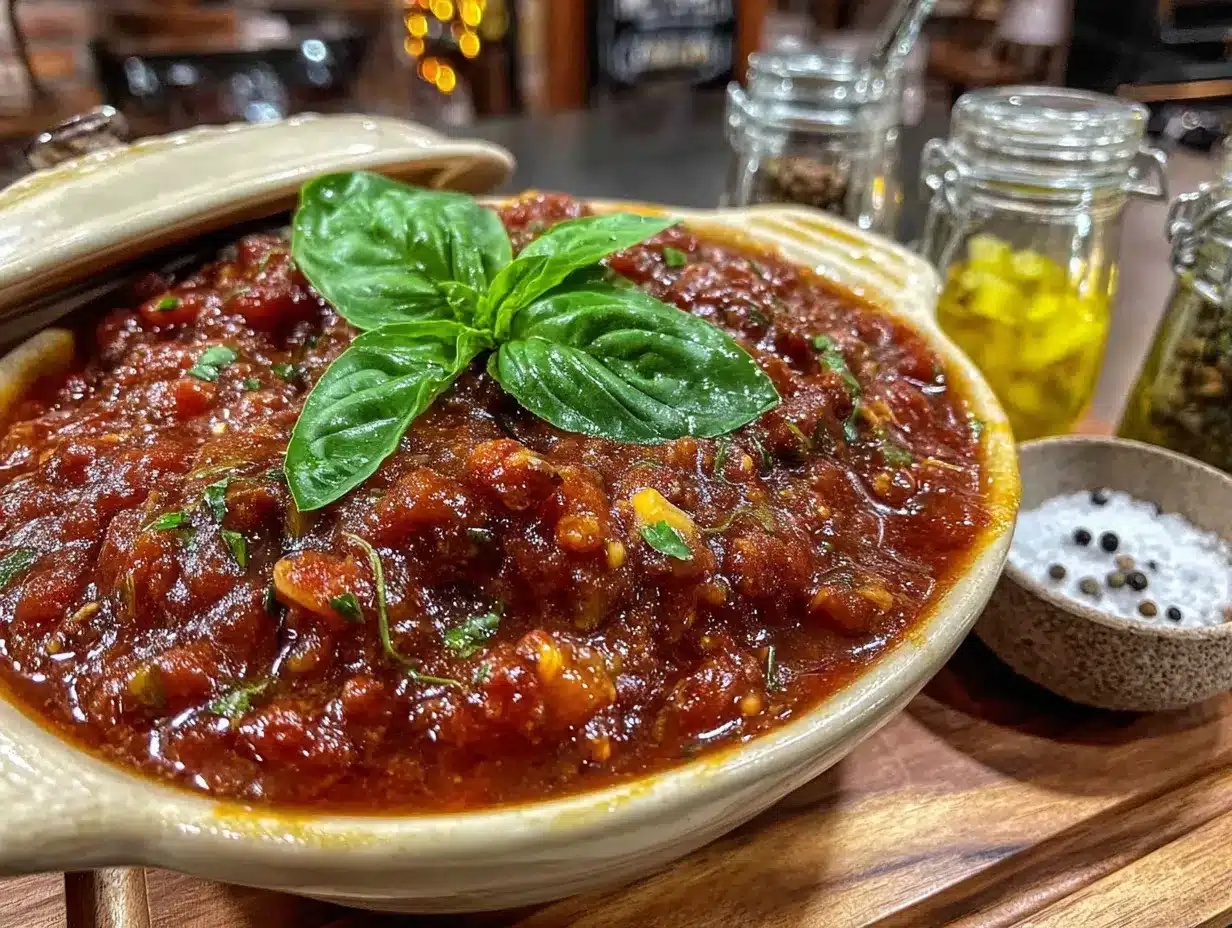
Let me walk you through this step by step. I’ve included times and sensory cues so you know exactly what to look for.
- Prep your tomatoes (15 minutes): Wash your tomatoes and cut out the cores. Cut a small “X” on the bottom of each tomato. Bring a large pot of water to a boil and prepare an ice bath. Drop tomatoes in boiling water for 30-45 seconds, then transfer to ice water. The skins should slip right off. Discard skins and roughly chop the tomatoes. You should have about 12 cups of chopped tomatoes.
- Roast the aromatics (20 minutes): In your stockpot, heat olive oil over medium heat. Add diced onions and smashed garlic. Cook for 5-7 minutes until onions are translucent and garlic is fragrant—your kitchen should smell amazing at this point. Don’t let the garlic brown; if it starts to, reduce the heat.
- Simmer the base (30 minutes): Add the chopped tomatoes to the pot. Stir in salt, pepper, and sugar if using. Bring to a boil, then reduce heat to a steady simmer. Cook uncovered for 30 minutes, stirring occasionally. The tomatoes will break down and release their juices. You’ll notice the mixture thickening and the color deepening to a rich red.
- Blend the sauce (5 minutes): Remove the pot from heat. Using your immersion blender, puree the sauce until smooth. If using a regular blender, work in batches—fill the blender no more than halfway, hold the lid firmly with a towel, and blend. Be careful: hot liquid expands and can pop the lid off. I may or may not have cleaned tomato sauce off my ceiling once.
- Add basil and finish (10 minutes): Return the pot to low heat. Stir in the fresh basil leaves and lemon juice. Simmer for 5 more minutes. Taste and adjust salt if needed. The sauce should be thick enough to coat a spoon but still pourable. If it’s too thin, simmer another 10-15 minutes.
- Prepare jars for canning (20 minutes): While the sauce simmers, wash your jars, lids, and bands in hot soapy water. Rinse well. Place jars in your canner or a large pot, cover with water, and bring to a boil. Turn off heat and let jars sit in hot water until ready to fill. Place lids in a small saucepan of simmering water (not boiling—just hot) to soften the sealing compound.
- Fill the jars (15 minutes): Using your jar lifter, remove one jar at a time from the hot water. Place on a clean towel. Using your wide-mouth funnel, ladle hot sauce into the jar, leaving 1/2 inch headspace (that’s the space between the sauce and the rim). Run a clean, damp paper towel around the rim to remove any sauce residue—this is crucial for a good seal. Center a lid on the jar and screw on the band until fingertip-tight (don’t crank it; just snug).
- Process in water bath (35 minutes for pints, 40 for quarts): Place filled jars back into the canner. Make sure they’re covered by at least 1 inch of water. Bring to a full rolling boil, then start your timer. Process for 35 minutes for pints, 40 for quarts. Adjust processing time if you’re at high altitude—add 5 minutes for every 1,000 feet above sea level.
- Cool and check seals (12+ hours): Turn off heat. Remove jars using your jar lifter and place them on a towel-lined counter, leaving at least 1 inch between jars. Don’t tighten the bands. Let them cool undisturbed for 12-24 hours. You’ll hear the satisfying “pop” of lids sealing as they cool. After 24 hours, press the center of each lid—if it doesn’t flex up and down, it’s sealed. Refrigerate any unsealed jars and use within a week.
Cooking Tips & Techniques
I’ve made this recipe at least forty times, and I’ve learned a few things the hard way. Here’s what I wish someone had told me:
Don’t skip the roasting step. I know it seems like an extra step, but roasting the onions and garlic before adding tomatoes transforms the flavor. It adds a sweetness and depth that you can’t get from just simmering. I once tried skipping it to save time—big mistake. The sauce tasted flat and one-dimensional.
Watch your acidity. Tomatoes vary wildly in acidity depending on variety, ripeness, and growing conditions. That’s why bottled lemon juice is non-negotiable for safe canning. If your sauce tastes too acidic after canning, balance it when you serve it—add a pinch of sugar or a pat of butter.
Use the right tomatoes. I learned this lesson when I tried canning with beefsteak tomatoes. They’re beautiful and delicious fresh, but they’re too watery for sauce. You’ll end up simmering for hours to get the right consistency. Roma or San Marzano tomatoes are drier and meatier—they make thicker sauce in less time.
Keep an eye on the boil. When processing jars, make sure the water stays at a steady, rolling boil. If the temperature drops, you’ll need to restart your timer. I once got distracted by a phone call and lost my boil—had to start the 35 minutes all over. Not fun.
Label your jars. I know you think you’ll remember what’s in each jar, but by January, they all look the same. I use a permanent marker on the lid or a cute label. Write the date and what it is—trust me on this.
Variations & Adaptations
This recipe is a great base, but don’t be afraid to make it your own. Here are some variations I’ve tried:
- Spicy Arrabbiata Version: Add 2-3 dried red chili peppers (or 1 teaspoon red pepper flakes) when you roast the onions and garlic. The heat infuses beautifully without overwhelming the tomato flavor. I made this for a potluck once and it was gone in twenty minutes.
- Roasted Garlic & Herb: Instead of fresh garlic, roast a whole head of garlic in the oven (wrap in foil, 400°F for 40 minutes). Squeeze the soft cloves into the pot. Add 1 teaspoon dried oregano and 1 teaspoon dried thyme along with the basil. This version is incredibly mellow and sweet.
- Mushroom & Tomato Sauce: Sauté 8 ounces of sliced cremini mushrooms with the onions. They add an earthy, umami depth that’s amazing on pasta or polenta. My vegetarian friends request this version specifically.
- Low-Sodium Option: Reduce salt to 1 teaspoon. The sauce will still be flavorful from the herbs and garlic. You can always add more salt when you serve it.
- Smoky Chipotle Version: Add 2 chipotle peppers in adobo sauce (minced) when you add the tomatoes. The smoky heat is incredible on tacos or enchiladas. I wouldn’t use this on pasta, but it’s amazing in Mexican dishes.
Personal Favorite: My go-to variation is the roasted garlic version. I’ll roast two heads of garlic while the tomatoes are prepping—the house smells incredible, and the sauce ends up so silky and sweet. I’ve started making double batches of this version because my family goes through it so fast.
Serving & Storage Suggestions
This sauce is incredibly versatile. Here’s how I use it:
Serving: Serve warm over your favorite pasta—spaghetti, fettuccine, or penne all work beautifully. I also love it on polenta, stirred into soups, or as a dipping sauce for crusty bread. For a quick weeknight dinner, I’ll sauté some Italian sausage, add a jar of this sauce, and serve over rigatoni. Dinner in fifteen minutes, but it tastes like you spent all day.
Storage: Properly sealed jars will keep in a cool, dark pantry for 12-18 months. I store mine in the basement, away from direct sunlight and heat sources. Once opened, refrigerate and use within 5-7 days. The flavor actually improves after about a month of storage—the basil and garlic meld together beautifully.
Freezing Option: If you don’t want to can, this sauce freezes beautifully. Let it cool completely, then transfer to freezer-safe containers or zip-top bags. Leave 1 inch of headspace for expansion. Freeze flat for easy stacking. Thaw in the refrigerator overnight or on the counter for a few hours. Frozen sauce keeps for 6-8 months.
Reheating: Reheat gently on the stovetop over medium-low heat, stirring occasionally. If the sauce seems too thick, add a splash of pasta water or chicken broth to loosen it. Don’t microwave it in the jar—the metal lid will spark. Trust me, it’s not a fun lesson to learn.
Flavor Development: I’ve noticed that this sauce tastes even better after a few months. The flavors mellow and meld together in a way that fresh sauce just can’t match. It’s like the sauce needs time to become friends with itself. So if you can, let it sit for at least a month before cracking open a jar.
Nutritional Information & Benefits
This sauce is as healthy as it is delicious. Here’s the approximate nutrition per 1/2 cup serving:
| Nutrient | Amount |
|---|---|
| Calories | 65 |
| Total Fat | 4g |
| Sodium | 290mg |
| Total Carbohydrates | 8g |
| Dietary Fiber | 2g |
| Sugars | 5g |
| Protein | 2g |
| Vitamin C | 25% DV |
| Vitamin A | 15% DV |
| Potassium | 10% DV |
Health Benefits: Tomatoes are packed with lycopene, a powerful antioxidant that’s actually more bioavailable when cooked. The olive oil helps your body absorb the lycopene better—it’s a perfect nutritional pairing. Basil adds vitamin K and anti-inflammatory compounds. This sauce is naturally gluten-free, dairy-free, and vegan. It’s also low in calories and sugar compared to store-bought sauces, which often have added sugar and preservatives.
Dietary Notes: This recipe is naturally gluten-free, dairy-free, vegan, and Whole30-compliant. If you’re on a low-sodium diet, reduce the salt to 1 teaspoon. For a lower-fat option, you can reduce the olive oil to 2 tablespoons—the sauce will still be delicious, just slightly less rich.
Conclusion
This homemade tomato basil canning sauce is more than just a recipe—it’s a way to capture summer and save it for the cold months ahead. It’s the jar you reach for on a busy Tuesday when you need dinner on the table fast. It’s the gift you give that says, “I grew this, I cooked this, and I’m sharing a piece of my kitchen with you.”
I love this recipe because it’s forgiving. It doesn’t demand perfection. If your tomatoes are a little uneven or you forget to add the basil until the last minute, it still turns out amazing. The first time I made it, I burned the garlic and had to start over. The second time, I forgot the lemon juice and had to re-process all the jars. But now? It’s muscle memory. And every time I twist open a jar in January, I remember that Tuesday afternoon when my neighbor stood in my pantry, eating cold sauce with a spoon.
I’d love to hear how this recipe turns out for you. Did you try a variation? Did your family love it? Drop a comment below and let me know—I read every single one. And if you share a photo on Pinterest or Instagram, tag me so I can see your beautiful jars!
Happy canning, friend. Your future self—the one with a pantry full of summer—will thank you.
Frequently Asked Questions
Can I use canned tomatoes instead of fresh?
Yes, you can. Use three 28-ounce cans of whole peeled tomatoes (preferably San Marzano). Drain the liquid and skip the blanching step. The flavor won’t be quite as bright as fresh summer tomatoes, but it’s still delicious—especially in winter when fresh tomatoes are bland.
Do I have to peel the tomatoes?
Yes, for canning safety and texture. Tomato skins can curl up in the jar and create an unappealing texture, plus they can harbor bacteria that affect the seal. The blanching method makes peeling quick and easy—don’t skip it.
Why did my jars not seal?
Several reasons: the rim wasn’t clean (wipe it well!), the jar was chipped, the lid was old or damaged, or you didn’t leave enough headspace. If a jar doesn’t seal within 24 hours, just refrigerate it and use it within a week. No need to panic—it happens to everyone.
Can I double this recipe?
Absolutely. I regularly make double batches. Just make sure your stockpot is large enough (12 quarts or bigger) and that you have enough jars and canner capacity. You may need to process in batches if your canner can’t fit all the jars at once.
Is this sauce safe for water bath canning?
Yes, because tomatoes are a high-acid food, and we’re adding bottled lemon juice to ensure safe acidity levels. Always use bottled lemon juice (not fresh) for consistent pH. Do not add low-acid ingredients like peppers, onions, or mushrooms in large quantities without adjusting the recipe—stick to the proportions listed here for safe canning.
Pin This Recipe!
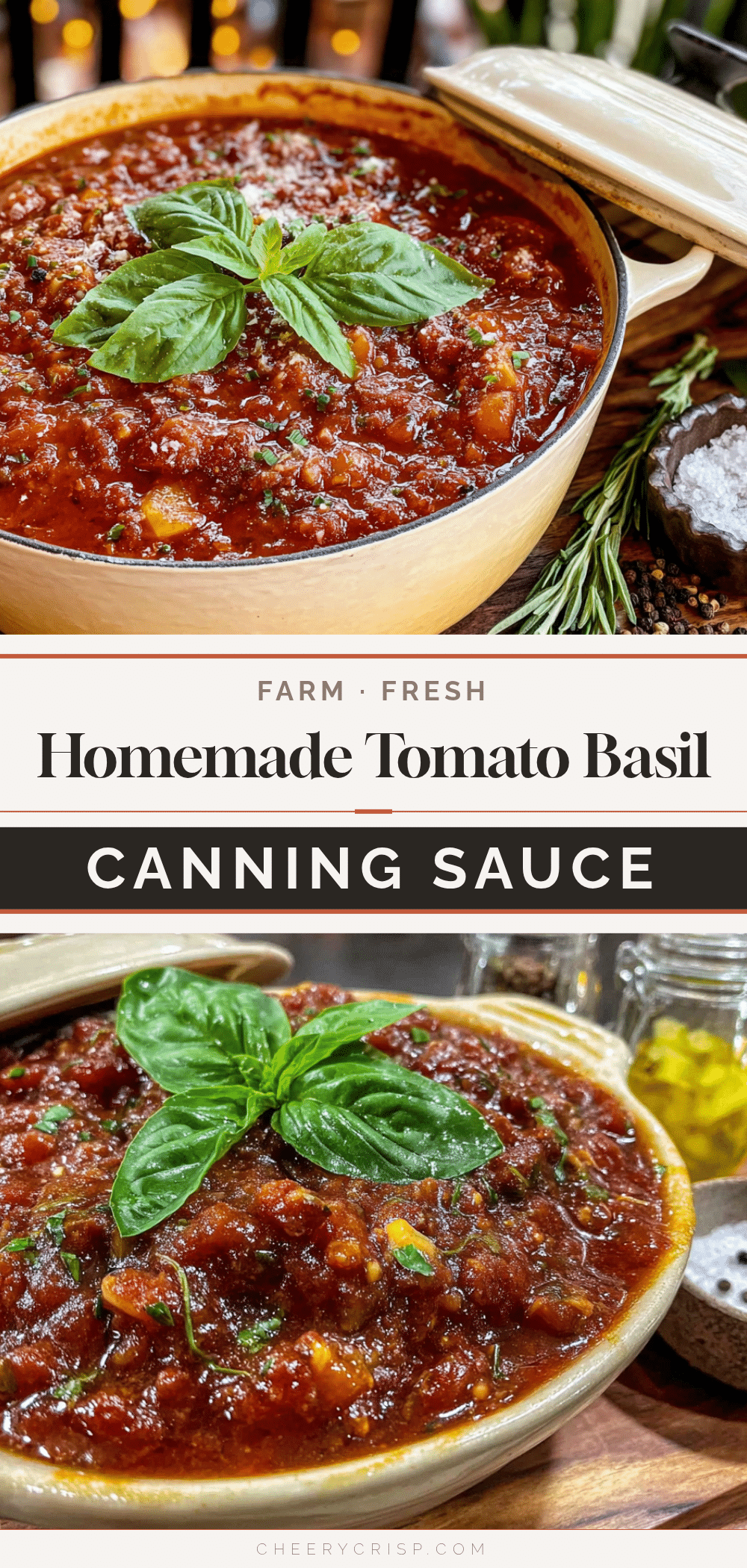
Best Homemade Tomato Basil Canning Sauce – Easy Recipe
This easy homemade tomato basil canning sauce captures the taste of summer in a jar. Made with simple ingredients like ripe Roma tomatoes, fresh basil, and roasted garlic, it’s perfect for pasta, gifts, or enjoying all year round.
- Prep Time: 15 minutes
- Cook Time: 1 hour 5 minutes
- Total Time: 2 hours (plus cooling time)
- Yield: 4-5 pints 1x
- Category: Sauce
- Cuisine: Italian
Ingredients
- 8 pounds ripe Roma tomatoes (or any paste tomato)
- 1/4 cup olive oil (extra virgin preferred)
- 2 medium yellow onions, diced
- 8 cloves garlic, smashed
- 1 cup fresh basil leaves, loosely packed
- 2 tablespoons bottled lemon juice
- 1 tablespoon salt (kosher salt; reduce to 2 teaspoons if using table salt)
- 1 teaspoon black pepper (freshly ground)
- 1 teaspoon sugar (optional, only if tomatoes taste acidic)
Instructions
- Prep your tomatoes (15 minutes): Wash tomatoes and cut out cores. Cut a small ‘X’ on the bottom of each tomato. Bring a large pot of water to a boil and prepare an ice bath. Drop tomatoes in boiling water for 30-45 seconds, then transfer to ice water. Slip off skins, discard, and roughly chop tomatoes (about 12 cups).
- Roast the aromatics (20 minutes): In your stockpot, heat olive oil over medium heat. Add diced onions and smashed garlic. Cook for 5-7 minutes until onions are translucent and garlic is fragrant. Do not let garlic brown.
- Simmer the base (30 minutes): Add chopped tomatoes to the pot. Stir in salt, pepper, and sugar if using. Bring to a boil, then reduce heat to a steady simmer. Cook uncovered for 30 minutes, stirring occasionally, until mixture thickens and deepens in color.
- Blend the sauce (5 minutes): Remove pot from heat. Using an immersion blender, puree the sauce until smooth. If using a regular blender, work in batches, filling no more than halfway, and blend carefully.
- Add basil and finish (10 minutes): Return pot to low heat. Stir in fresh basil leaves and lemon juice. Simmer for 5 more minutes. Taste and adjust salt if needed. Sauce should be thick enough to coat a spoon but still pourable.
- Prepare jars for canning (20 minutes): Wash jars, lids, and bands in hot soapy water. Rinse well. Place jars in canner or large pot, cover with water, and bring to a boil. Turn off heat and let jars sit in hot water. Place lids in a small saucepan of simmering water.
- Fill the jars (15 minutes): Using a jar lifter, remove one jar at a time from hot water. Place on a clean towel. Using a wide-mouth funnel, ladle hot sauce into jar, leaving 1/2 inch headspace. Wipe rim with a clean, damp paper towel. Center lid on jar and screw on band until fingertip-tight.
- Process in water bath (35 minutes for pints, 40 for quarts): Place filled jars back into canner, ensuring they are covered by at least 1 inch of water. Bring to a full rolling boil, then start timer. Process for 35 minutes for pints, 40 for quarts. Adjust for high altitude if needed.
- Cool and check seals (12+ hours): Turn off heat. Remove jars using jar lifter and place on a towel-lined counter, leaving at least 1 inch between jars. Do not tighten bands. Let cool undisturbed for 12-24 hours. After 24 hours, press center of each lid—if it doesn’t flex up and down, it’s sealed. Refrigerate any unsealed jars and use within a week.
Notes
Don’t skip roasting the onions and garlic—it adds depth of flavor. Use bottled lemon juice for safe acidity. Roma or San Marzano tomatoes are best for thicker sauce. Ensure water stays at a steady rolling boil during processing. Label jars with date and contents. Sauce flavor improves after a month of storage.
Nutrition
- Serving Size: 1/2 cup
- Calories: 65
- Sugar: 5
- Sodium: 290
- Fat: 4
- Saturated Fat: 0.5
- Carbohydrates: 8
- Fiber: 2
- Protein: 2
Keywords: tomato basil sauce, canning recipe, homemade sauce, garden tomatoes, water bath canning, easy canning, summer recipe