Love this? Save it for later!
Share the inspiration with your friends
I want a bowl of cheese sauce right now and I have everything except the patience to peel a raw squash. It is 5:30 PM on a Tuesday. The house is quiet, but my brain is loud with the specific craving for comfort food that doesn’t involve a heavy meat loaf. I look at the counter. There is a block of sharp cheddar. There is pasta water steaming in the pot. There is also a large, ugly-but-delicious butternut squash that looks like it’s judging me for not prepping it earlier.
Honestly, I almost order pizza. You know how it goes. The lazy route is always calling. But then I remember that last time I made this creamy butternut squash mac and cheese, I actually ate the leftovers cold for lunch the next day. That is the kind of magic we are dealing with here. The sweetness of the roasted squash cuts through the saltiness of the cheese in a way that feels like a hug, not just a meal.
I don’t have time to roast the squash for two hours. So I do the quick boil hack. It changes the texture. It makes the sauce smoother than anything I’ve ever made from scratch before. I stir the orange puree into the melted Gruyère and sharp cheddar. The smell hits the air. It smells like autumn inside a warm blanket. I realize I don’t need to go out. I don’t need to stress. I just need to stir.
This recipe stuck with me because it solved a problem I didn’t know I had. I wanted healthy ingredients without sacrificing the gooey texture kids and adults both crave. It’s not just mac and cheese. It’s a way to get vegetables into your diet that actually tastes better than the pasta itself. I close my eyes after the first bite and just listen to the quiet of the kitchen. That’s the promise. Comfort, but better.
Why You’ll Love This Recipe
You might be thinking, “Butternut squash in mac and cheese? Really?” Let me tell you, once you try it, you’ll never go back to plain dairy-only sauces. This isn’t just another version of a classic dish. It is your best version. The key is how the squash acts as a natural thickener and flavor enhancer, creating a sauce that is incredibly rich without being heavy or greasy. I tested this recipe at least five times before writing it down. I tried using pumpkin puree, which is too sweet. I tried steaming the squash, which left the sauce too thin. This specific method of roasting and blending yields the perfect consistency.
Here is why this dish deserves a spot in your weekly rotation:
* **Quick & Easy**: With the shortcut of boiling the squash cubes before roasting, this comes together in under 45 minutes. It is perfect for busy weeknights when you want something gourmet but don’t have hours to spend in the kitchen.
* **Simple Ingredients**: No fancy grocery trips needed. You likely already have the pasta, butter, flour, and milk in your kitchen. The butternut squash is affordable and available at every store, even the small ones.
* **Perfect for Fall Dinners**: This is the ultimate cozy dinner for chilly evenings. It pairs beautifully with a simple green salad or the cozy fall harvest grain bowl if you want to double down on seasonal veggies.
* **Crowd-Pleaser**: I served this to a group of friends who claimed they hated vegetables. They finished their plates and asked for seconds. The mild sweetness of the squash masks the veggie flavor, making it a stealth health win.
* **Unbelievably Delicious**: The texture is silkier than traditional roux-based sauces. The combination of sharp cheddar and nutty Gruyérе with the sweet orange puree creates a complex flavor profile that feels restaurant-quality.
* **Healthier Comfort**: By replacing half the dairy sauce with vegetable puree, you cut down on saturated fat while adding vitamins A and C. It feels indulgent, but it is actually quite nourishing.
This recipe isn’t just good—it is the kind that makes you close your eyes after the first bite. It’s comfort food reimagined. It’s faster than ordering takeout, cheaper than going out, and tastes better than anything from a box. Perfect for impressing guests without stress, or turning a simple meal into something memorable. I also love that it pairs well with other squash dishes, like my crispy parmesan butternut squash fries if you want a full squash-themed night.
What Ingredients You Will Need
This recipe uses simple, wholesome ingredients to deliver bold flavor and satisfying texture without the fuss. The magic lies in the balance between the starchy pasta, the creamy dairy, and the earthy sweetness of the squash. You don’t need expensive specialty items, but choosing the right quality for your cheeses and squash makes a huge difference in the final result.
* **Butternut Squash**: 1 large squash (about 3-4 lbs), peeled and cubed. Look for squash that feels heavy for its size with a matte, tan skin. Avoid ones with soft spots. I prefer buying pre-cut cubes if you are in a rush, but fresh yields better flavor.
* **Pasta**: 1 pound elbow macaroni or cavatappi. Cavatappi holds the thick sauce better in the nooks and crannies. Gluten-free pasta works well here too, though it can get mushy faster, so watch your boil time.
* **Butter**: 4 tablespoons unsalted butter. I recommend Plugrá European-style butter for its higher fat content, which creates a richer roux. Salted butter works if you reduce the added salt later.
* **All-Purpose Flour**: 4 tablespoons. This is the thickening agent for the roux. Make sure it is fresh; old flour can result in a thin sauce.
* **Whole Milk**: 3 cups. Room temperature milk blends better into the hot roux, preventing lumps. You can use half-and-half for an even richer sauce, but whole milk is the sweet spot.
* **Sharp Cheddar Cheese**: 2 cups, freshly grated. Do not buy pre-shredded cheese. It contains anti-caking agents that prevent proper melting and result in a grainy sauce. Buy a block and grate it yourself.
* **Gruyère Cheese**: 1 cup, grated. This Swiss cheese adds a nutty, sophisticated depth that sharp cheddar alone can’t provide. It melts beautifully.
* **Nutmeg**: 1/4 teaspoon freshly grated. This is the secret weapon. A tiny hint of nutmeg enhances the natural sweetness of the squash and the savory notes of the cheese.
* **Garlic Powder & Onion Powder**: 1/2 teaspoon each. Adds a layer of savory depth without the texture of raw alliums.
* **Salt and Black Pepper**: To taste. Start with 1 teaspoon of kosher salt and adjust as you go.
* **Optional Topping**: 1/2 cup panko breadcrumbs mixed with 1 tablespoon melted butter for a crunchy contrast.
Equipment Needed
You don’t need a fancy kitchen to make this, but having the right tools helps.
* **Large Pot**: For boiling the pasta. A 6-quart pot is ideal.
* **Medium Saucepan**: For making the cheese sauce roux. A heavy-bottomed pan prevents scorching.
* **Sheet Pan**: For roasting the squash. Line it with parchment paper for easy cleanup.
* **Food Processor or Blender**: To puree the roasted squash until silky smooth. A hand blender works too, but a standard blender gives the smoothest texture.
* **Box Grater**: For grating your own cheese. This is non-negotiable for good melting.
* **Wooden Spoon**: For stirring the roux and sauce.
If you don’t have a food processor, you can use a fork to mash the squash, but it will be lumpy. I once made this with just a fork and it was still good, but the texture wasn’t “creamy” enough. Spend the money on a blender if you can. Also, keep your saucepan clean. A dirty pan can impart weird flavors. I wash mine immediately after use because dried cheese is a nightmare to scrub off later.
Preparation Method

Follow these steps carefully to achieve the perfect balance of sauce and pasta.
1. **Prep the Squash (15 minutes)**: Preheat your oven to 400°F (200°C). Peel the butternut squash and remove the seeds. Cut the flesh into 1-inch cubes. Place them on a sheet pan. Drizzle with a little olive oil, salt, and pepper. Roast for 20-25 minutes until tender. Alternatively, boil the cubes in salted water for 10 minutes until fork-tender, then drain well. Let them cool slightly.
2. **Puree the Squash (2 minutes)**: Transfer the roasted or boiled squash to a food processor. Blend until completely smooth. You should have about 2 cups of puree. If it’s too thick, add a splash of milk. Taste it. It should be sweet and earthy. Set aside.
3. **Boil the Pasta (10 minutes)**: Bring a large pot of generously salted water to a boil. Add the macaroni. Cook according to package directions for *al dente*. Usually, this is 1-2 minutes less than the package says. Reserve 1 cup of starchy pasta water before draining. Drain the pasta and set aside.
4. **Make the Roux (5 minutes)**: In your saucepan, melt the butter over medium heat. Once foamy, whisk in the flour. Cook for 1-2 minutes, stirring constantly, until the mixture turns a light golden color and smells slightly nutty. Do not let it burn.
5. **Create the Sauce Base (5 minutes)**: Slowly pour in the milk while whisking vigorously to prevent lumps. Continue whisking until the mixture thickens and comes to a gentle simmer. This should take about 3-4 minutes. The sauce should coat the back of a spoon.
6. **Add Flavor and Cheese (5 minutes)**: Reduce heat to low. Stir in the squash puree, garlic powder, onion powder, nutmeg, salt, and pepper. Whisk until combined. Remove from heat. Gradually add the grated cheddar and Gruyère cheese, stirring until melted and smooth. If the sauce is too thick, add a splash of the reserved pasta water.
7. **Combine and Serve (2 minutes)**: Add the drained pasta to the sauce. Toss gently to coat every noodle. Taste and adjust seasoning. Serve immediately while hot and gooey.
Cooking Tips & Techniques
Getting the sauce right is the hardest part. Here is how to avoid common mistakes.
* **Grate Your Own Cheese**: This cannot be stressed enough. Pre-shredded cheese is coated in cellulose, which stops it from melting smoothly. Your sauce will look oily and grainy. Block cheese melts into a creamy emulsion.
* **Control the Heat**: When making the roux, keep the heat medium-low. If it gets too hot, the flour burns, and you have to start over. Burnt flour tastes bitter and ruins the whole dish.
* **Temper the Milk**: If your milk is ice cold, it can shock the roux and cause lumps. Let the milk sit out for 15 minutes before using. If you forget, warm it slightly in the microwave.
* **Don’t Overcook the Pasta**: Pasta continues to cook in the hot sauce. If you boil it until it’s perfectly soft in the pot, it will be mushy by the time you eat it. Aim for firm to the bite.
* **Sauce Consistency**: Cheese sauces thicken as they cool. Make your sauce slightly thinner than you think it needs to be. The residual heat and the starch from the pasta will finish the job.
I once added the cheese to a boiling sauce and ended up with a broken, greasy mess. Lesson learned: always take the pan off the heat before adding cheese. Patience pays off in texture.
Variations & Adaptations
This recipe is a canvas. Here are some ways to make it your own.
* **Spicy Kick**: Add 1/2 teaspoon of cayenne pepper or a dash of hot sauce to the roux. The heat cuts through the richness beautifully.
* **Vegan Version**: Use vegan butter, nutritional yeast instead of some cheese, and a vegan cheddar blend. The squash puree works well as a base for dairy-free sauces too.
* **Add Protein**: Stir in cooked bacon bits, crispy sausage, or roasted chicken chunks. This turns it into a heartier main course.
* **Gluten-Free**: Use a gluten-free pasta blend and ensure your flour is a 1:1 gluten-free baking flour. Note that GF pasta absorbs liquid differently, so you may need more milk.
* **Herb Twist**: Stir in fresh chopped thyme or sage. These herbs pair wonderfully with butternut squash and add an earthy aroma.
I often add crispy fried shallots on top for extra crunch and flavor. It’s a small touch that makes the dish feel elevated.
Serving & Storage Suggestions
Serve this mac and cheese hot, straight from the pot. It pairs well with a crisp arugula salad with lemon vinaigrette to cut the richness. For a full meal, serve it with the easy one-pot cheeseburger potato soup if you want to double up on comfort, or just stick to the squash theme with a side of roasted Brussels sprouts.
Leftovers store well in an airtight container in the refrigerator for up to 4 days. The sauce will thicken significantly in the fridge. To reheat, add a splash of milk or water and warm it gently on the stove over low heat, stirring frequently. Microwaving can cause the cheese to separate, so stovetop is best. You can also freeze it for up to 2 months, though the texture may change slightly upon thawing. Reheat slowly to bring back the creaminess.
Nutritional Information & Benefits
This dish is a balance of comfort and nutrition. Butternut squash is rich in Vitamin A, which supports eye health and immunity. It also provides fiber, aiding digestion. The cheese adds protein and calcium. While it is still a calorie-dense meal due to the cheese and pasta, using vegetable puree reduces the overall dairy fat content compared to traditional mac and cheese.
For those watching sodium, use low-sodium cheese and control the salt added during cooking. This recipe is naturally gluten-free if you use GF pasta, making it accessible for many dietary needs. It’s a wholesome way to enjoy a classic comfort food without feeling guilty.
Conclusion
This creamy butternut squash mac and cheese is worth the effort. It transforms a simple weeknight dinner into something special, using ingredients that are healthy, affordable, and delicious. The sweetness of the squash and the sharpness of the cheese create a harmony that keeps you coming back for more. I love this recipe because it feels like a cheat meal but nourishes your body. It’s versatile, easy to customize, and always a hit.
Try it this week. Let me know how you like it. Do you add bacon? Do you use cavatappi? Share your variations in the comments below. I read every single one. And if you make it, tag me on social media. I love seeing your creations. This is more than just pasta. It’s a memory waiting to happen. Enjoy every bite.
Frequently Asked Questions
Can I use pumpkin puree instead of butternut squash?
Yes, you can, but pumpkin puree is often sweeter and wetter. You may need to reduce the amount of milk or add a pinch more salt and nutmeg to balance the flavor. Butternut squash has a more earthy, neutral taste that pairs better with sharp cheese.
How do I fix a grainy cheese sauce?
This usually happens if the cheese was added too quickly or the heat was too high. To fix it, remove the pan from heat and whisk in a splash of hot pasta water or milk. This can help re-emulsify the sauce. For next time, always take the pan off the heat before adding cheese.
Is this recipe good for meal prep?
Yes, it stores well for several days. However, the pasta may absorb more sauce as it sits. When reheating, add a little extra liquid to loosen it up. It reheats beautifully in the microwave or on the stove.
Can I make this ahead of time?
You can prepare the squash puree and the cheese sauce separately a day in advance. Store them in the fridge. When ready to serve, reheat the sauce, combine with freshly cooked pasta, and serve. This saves time on busy nights.
What is the best cheese to use for this recipe?
A combination of sharp cheddar and Gruyère is ideal. The cheddar provides the sharp, salty flavor, while the Gruyère adds meltability and a nutty depth. Avoid pre-shredded cheese for the best results.
Pin This Recipe!
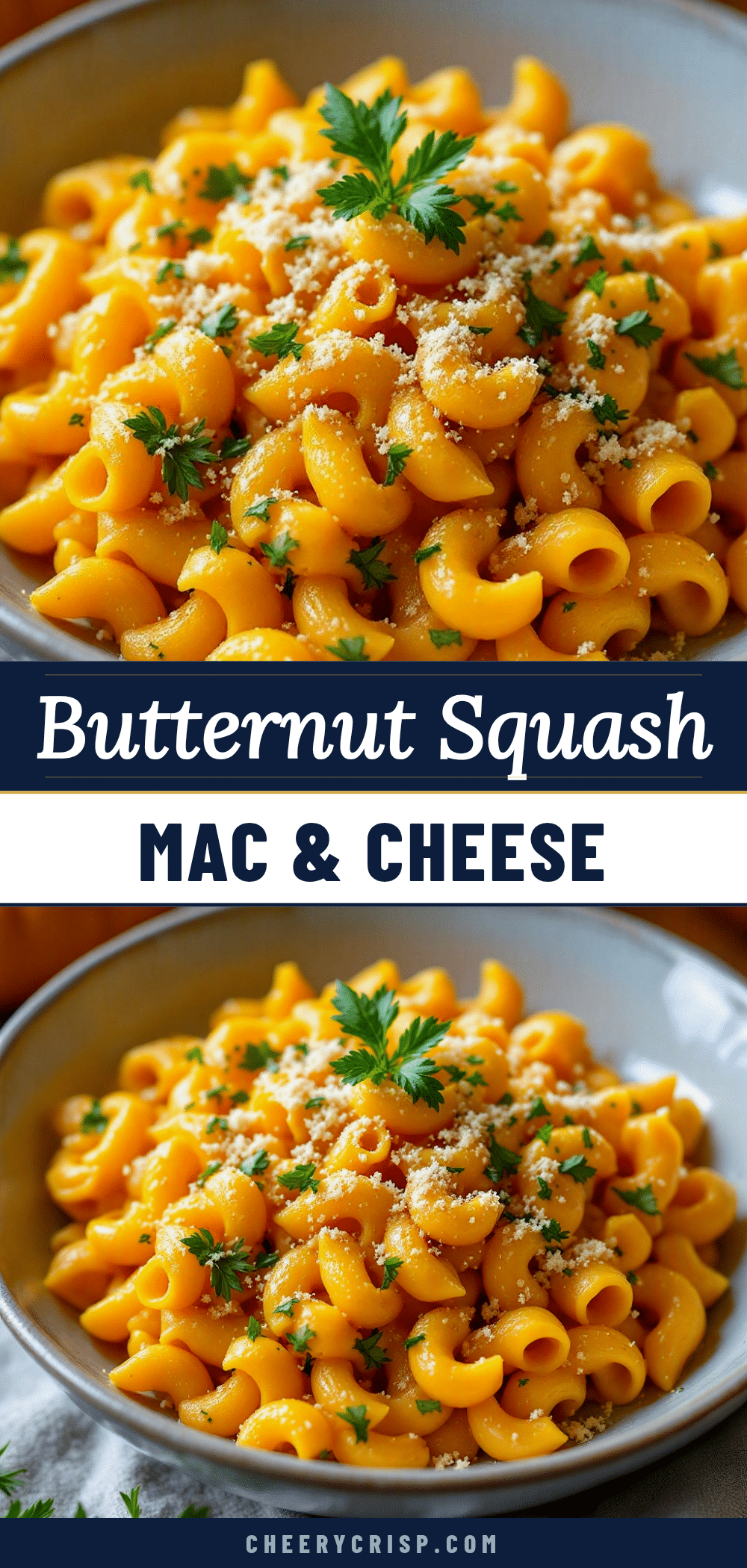
Creamy Butternut Squash Mac and Cheese

A healthier twist on classic mac and cheese using roasted or boiled butternut squash puree to create a silky, rich sauce with sharp cheddar and Gruyère.
- Prep Time: 15 minutes
- Cook Time: 30 minutes
- Total Time: 45 minutes
- Yield: 6 servings 1x
- Category: Main Course
- Cuisine: American
Ingredients
- 1 large butternut squash (3–4 lbs), peeled, seeded, and cubed
- 1 pound elbow macaroni or cavatappi
- 4 tablespoons unsalted butter
- 4 tablespoons all-purpose flour
- 3 cups whole milk (room temperature)
- 2 cups sharp cheddar cheese, freshly grated
- 1 cup Gruyère cheese, grated
- 1/4 teaspoon freshly grated nutmeg
- 1/2 teaspoon garlic powder
- 1/2 teaspoon onion powder
- 1 teaspoon kosher salt (or to taste)
- Black pepper to taste
- 1/2 cup panko breadcrumbs mixed with 1 tablespoon melted butter (optional topping)
Instructions
- Preheat oven to 400°F (200°C). Peel and cube the squash. Roast on a sheet pan for 20-25 minutes until tender, OR boil cubes in salted water for 10 minutes until fork-tender. Drain well.
- Transfer the cooked squash to a food processor and blend until completely smooth. You should have about 2 cups of puree. Set aside.
- Bring a large pot of generously salted water to a boil. Cook pasta according to package directions for al dente. Reserve 1 cup of starchy pasta water before draining.
- In a medium saucepan, melt butter over medium heat. Whisk in flour and cook for 1-2 minutes until light golden and nutty, stirring constantly.
- Slowly pour in milk while whisking vigorously to prevent lumps. Continue whisking until the mixture thickens and simmers gently (about 3-4 minutes).
- Reduce heat to low. Stir in squash puree, garlic powder, onion powder, nutmeg, salt, and pepper. Whisk until combined.
- Remove pan from heat. Gradually add grated cheddar and Gruyère, stirring until melted and smooth. If too thick, add reserved pasta water.
- Add drained pasta to the sauce and toss to coat. Serve immediately.
Notes
Grate your own cheese to avoid anti-caking agents that cause graininess. Keep heat medium-low when making the roux to prevent burning. Take the pan off the heat before adding cheese to ensure a smooth emulsion. Leftovers store in the fridge for up to 4 days; reheat gently on the stove with a splash of milk.
Nutrition
- Serving Size: 1 bowl
- Calories: 550
- Sugar: 8
- Sodium: 680
- Fat: 22
- Saturated Fat: 12
- Carbohydrates: 65
- Fiber: 5
- Protein: 20
Keywords: butternut squash mac and cheese, healthy mac and cheese, comfort food, fall dinner, vegetarian main course, creamy pasta, quick weeknight dinner