Love this? Save it for later!
Share the inspiration with your friends
“The power went out halfway through my first attempt at cooking this prime rib roast,” I remember telling my friend Mark over dinner one chilly December evening. It was one of those unexpected kitchen mishaps that, honestly, could have been a disaster. Instead, it was the moment I stumbled upon the perfect reverse-sear method for prime rib. I was trying to impress a few last-minute guests during the holidays, and let me tell you, this recipe saved the day.
Cooking a prime rib roast has always felt intimidating to me — you know, that thick slab of beef that promises so much but can easily turn into a chewy, unevenly cooked mess. But after that blackout (and a bit of improvisation by candlelight), I realized that the key isn’t rushing or cranking up the heat. It’s about patience, control, and a final sear that locks in all the juices while giving you that gorgeous crust.
This perfect reverse-sear prime rib roast with red wine au jus isn’t just about technique — it’s about the whole experience. The way the crust crackles under your knife, the tender rosy center, and the rich, velvety au jus that makes you close your eyes after the first bite. Honestly, I’ve made it a tradition every year since, and I’m convinced it’s the easiest way to impress a crowd without breaking a sweat or risking a dry roast.
Maybe you’ve been there, staring at a giant roast wondering how to tackle it without stress. If so, this recipe is for you. Let me tell you how I transformed an accidental kitchen blackout into my go-to holiday feast that people still rave about.
Why You’ll Love This Recipe
After countless trials and a few kitchen slip-ups, I’ve refined this reverse-sear prime rib roast recipe to bring out the best in this classic cut. Whether you’re a seasoned cook or someone who usually sticks to simpler meals, this recipe is approachable and downright rewarding.
- Quick & Easy: While prime rib sounds fancy, this recipe comes together with minimal hands-on time and predictable results, perfect for busy holiday prep.
- Simple Ingredients: You don’t need exotic spices or a dozen sauces—just quality beef, salt, pepper, garlic, and a straightforward red wine au jus.
- Perfect for Special Occasions: Whether it’s Christmas dinner, a birthday, or a cozy Sunday feast, this roast steals the spotlight effortlessly.
- Crowd-Pleaser: The tender, juicy center with a crispy crust gets rave reviews from both meat lovers and occasional carnivores alike.
- Unbelievably Delicious: The reverse-sear method ensures even cooking and a crust so flavorful, it almost tastes like a secret weapon.
This recipe stands out because it combines low-and-slow roasting with a high-heat finish, which means the roast cooks evenly, and the crust crisps up beautifully without overcooking the inside. Plus, the red wine au jus is a simple yet elegant sauce that brings all the flavors together, and trust me, it’s the kind of sauce that’ll have your guests asking for seconds.
Honestly, this isn’t just any prime rib roast—it’s the prime rib you’ll want to make every year. It’s comfort food with a touch of sophistication, and it’s surprisingly straightforward once you get the hang of the timing and technique.
What Ingredients You Will Need
This recipe uses simple, wholesome ingredients that work together to create bold flavor and a satisfying texture without any fuss. Most are pantry staples or easy to find at your local market.
- Prime Rib Roast (Bone-In): About 4-6 pounds (1.8-2.7 kg) – I recommend a USDA Choice or Prime grade for the best marbling and flavor.
- Kosher Salt: For seasoning, crucial to drawing out flavor and forming the crust.
- Freshly Ground Black Pepper: Adds that essential peppery kick.
- Garlic Powder or Fresh Garlic: I usually rub minced fresh garlic under the crust for a punch of aroma.
- Olive Oil or Neutral Cooking Oil: About 2 tablespoons – helps with the crust formation during the sear.
- Unsalted Butter: 2 tablespoons, softened – optional but adds richness to the crust when rubbed before roasting.
- Beef Broth: 2 cups (480 ml) – base for the au jus, choose low-sodium if possible.
- Dry Red Wine: 1 cup (240 ml) – I trust a Cabernet Sauvignon or Merlot for a deep, rich au jus flavor.
- Fresh Thyme or Rosemary: A few sprigs – for the au jus and to infuse subtle herbal notes.
- Shallots: 1-2, finely chopped – they bring a sweet, mild bite to the sauce.
Substitution tips: If you don’t have fresh herbs, dried thyme works fine but use sparingly. For a gluten-free option, double-check your beef broth for additives. If wine isn’t your thing, use extra beef broth with a splash of balsamic vinegar for acidity.
I like to source my prime rib from a trusted butcher—local or specialty stores like Snake River Farms offer great quality if you want to splurge. For pantry staples like kosher salt and pepper, brands like Diamond Crystal and freshly ground peppercorns from a grinder make a noticeable difference.
Equipment Needed
- Oven: A reliable oven with accurate temperature control is essential for the slow roasting phase.
- Cast Iron Skillet or Heavy-Bottomed Pan: For the high-heat searing step. I prefer cast iron because it holds heat evenly and creates that amazing crust.
- Meat Thermometer (Instant Read): Absolutely necessary for checking internal temperature to avoid overcooking or undercooking.
- Roasting Pan with Rack: To allow air circulation around the prime rib during the slow roast.
- Saucepan or Small Pot: For preparing the red wine au jus.
If you don’t have a cast iron skillet, a heavy stainless steel pan works too but skip nonstick as it won’t handle the high heat well. For thermometers, I swear by the ThermoWorks Thermapen for its speed and accuracy. Budget-friendly digital thermometers are fine too; just be patient with the readings.
Pro tip: Season your pan lightly with oil before searing to prevent sticking, and make sure your pan is smoking hot before you add the meat for that perfect crust.
Preparation Method
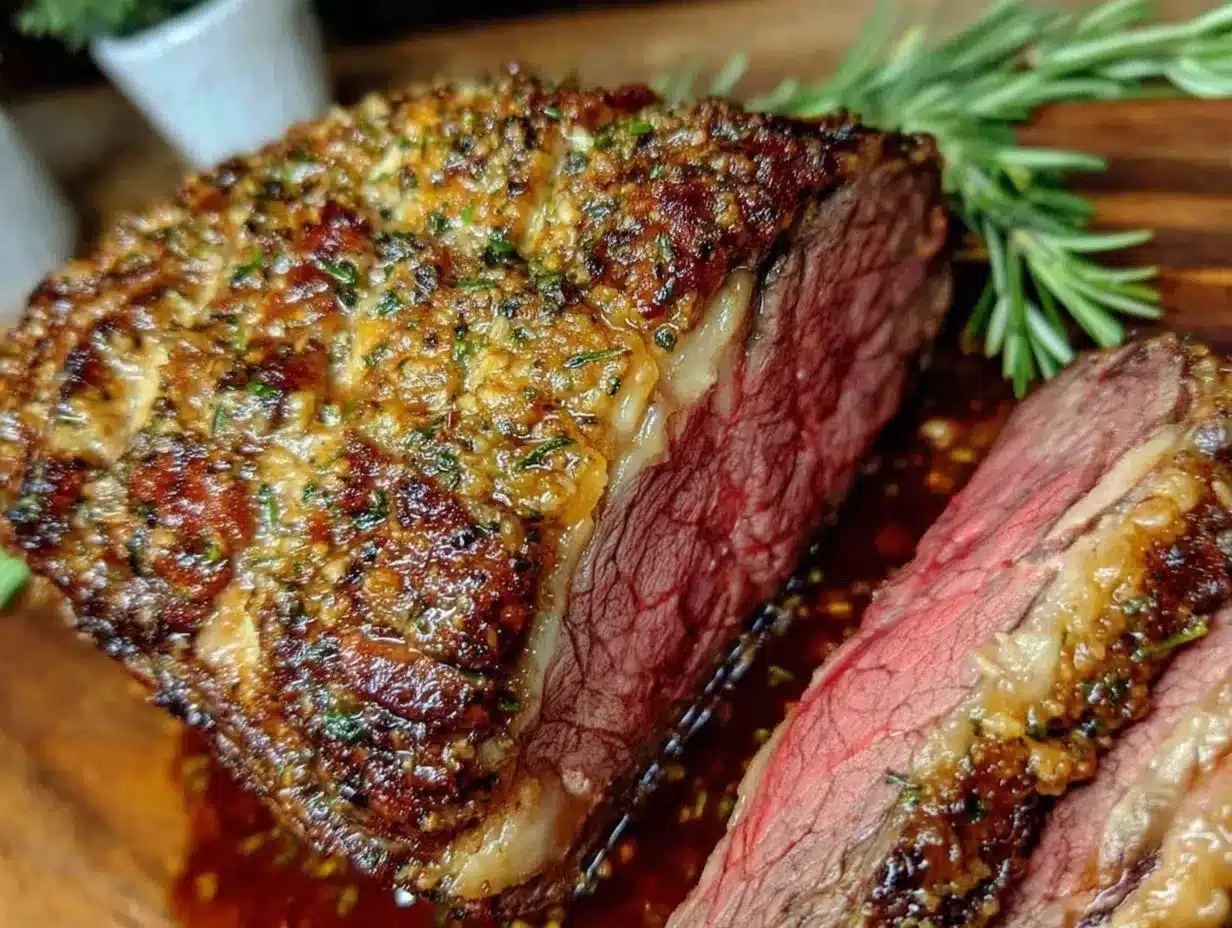
- Prep the Roast (10 minutes): Take your prime rib out of the fridge about 1 hour before cooking to bring it to room temperature. This helps it cook evenly. Pat it dry with paper towels, then rub the softened butter all over the surface. Season generously with kosher salt, black pepper, and garlic (fresh or powder). Set aside.
- Preheat the Oven (5 minutes): Set your oven to 225°F (107°C). Low and slow is the way to go for the reverse sear.
- Slow Roast (1.5 – 2 hours): Place the prime rib on a rack in your roasting pan. Insert the meat thermometer into the thickest part, avoiding the bone. Roast until the internal temperature reaches 115°F (46°C) for rare, 120°F (49°C) for medium-rare – this usually takes about 1.5 to 2 hours, depending on size.
- Rest Before Searing (15-20 minutes): Remove the roast from the oven and tent loosely with foil. Let it rest while you prepare your pan for searing. Resting lets the juices redistribute.
- Sear the Roast (5-7 minutes): Heat your cast iron skillet over high heat until it’s smoking hot. Add oil and carefully place the roast fat-side down. Sear each side (including edges) for about 1-2 minutes until a deep brown crust forms. Use tongs carefully — the pan will be hot!
- Final Temperature Check: After searing, check the internal temperature again. It should be around 125°F (52°C) for medium-rare. If needed, pop it back in the oven for a few minutes.
- Make the Red Wine Au Jus (15 minutes): While the meat rests post-sear, pour off excess fat from the roasting pan, leaving browned bits. Place pan over medium heat, add chopped shallots, and cook until softened. Deglaze with red wine, scraping the bottom. Add beef broth and fresh thyme. Simmer gently until reduced by half and slightly thickened. Strain if desired.
- Carve and Serve: Slice the roast against the grain into thick, juicy pieces. Serve immediately with the warm red wine au jus drizzled over or on the side.
Tip: Keep an eye on the thermometer—overshooting temperature is the biggest enemy here. If you don’t have an instant-read thermometer, slice into the roast near the end to check doneness visually: a rosy-pink center means you’re right on track.
Cooking Tips & Techniques
Alright, let me share some hard-earned tips to make your reverse-sear prime rib roast foolproof:
- Low and Slow Works Wonders: Roasting at a low temperature allows the meat to cook evenly with a tender, juicy center. Rushing this step will just give you uneven doneness and a burnt crust.
- Resting is Non-Negotiable: Rest the roast before and after searing. Trust me, it keeps the juices inside and makes slicing cleaner.
- Use an Instant-Read Thermometer: This tool is your best friend. Even a minute or two too long in the oven can change the texture drastically.
- Searing Last Locks in Flavor: The high-heat sear after roasting creates that perfect crust. Don’t skip this step or under-heat your pan.
- Don’t Forget to Deglaze: Scraping those browned bits off the pan for your au jus adds a ton of flavor. Use a wooden spoon and don’t rush it.
- Patience Over Panic: If you feel tempted to crank the heat, step back and breathe. Good prime rib takes time — it’s worth it.
One time, I forgot to take the roast out early enough to warm up, and it cooked unevenly, but thanks to the reverse-sear method, I saved it with a longer slow roast and a careful sear. So, don’t stress if things aren’t perfect at first.
Variations & Adaptations
Want to switch things up? Here are some variations to try with your prime rib roast:
- Herb-Crusted Version: Mix rosemary, thyme, garlic, and Dijon mustard into a paste and rub it on before roasting for an extra fragrant crust.
- Spicy Twist: Add smoked paprika, cayenne, and black pepper to your seasoning for a subtle heat that complements the beef.
- Gluten-Free Au Jus: Use gluten-free beef broth and thicken your au jus with a cornstarch slurry if you want a bit more body.
- Oven-to-Grill Sear: If you prefer smoky flavor, finish the sear on a hot grill instead of a pan.
- Personal Favorite: I sometimes add a splash of balsamic vinegar to the au jus for a tangy brightness that cuts through the richness.
Feel free to tailor the herb and spice blend to your taste or seasonal availability. This recipe is forgiving and made to be yours.
Serving & Storage Suggestions
This prime rib roast is best served warm, sliced thick, and paired with the luscious red wine au jus. I like to serve it alongside roasted garlic mashed potatoes, sautéed green beans, or a simple arugula salad dressed with lemon vinaigrette.
Leftovers? Wrap the slices tightly in foil and store them in the fridge for up to 3 days. For longer storage, freeze slices in airtight containers or heavy-duty freezer bags for up to 3 months.
When reheating, avoid the microwave if you can. Instead, gently warm slices in a low oven (about 275°F / 135°C) wrapped in foil to keep them juicy. Reheat the au jus on the stove, adding a splash of broth or water if it’s too thick.
Pro tip: Flavors actually deepen overnight, so if you’re planning ahead, cooking a day early isn’t a bad idea. Just reheat carefully and serve with fresh au jus.
Nutritional Information & Benefits
Per serving (approximately 6 oz / 170 g of cooked prime rib with au jus):
| Nutrient | Amount |
|---|---|
| Calories | 450 kcal |
| Protein | 38 g |
| Fat | 32 g |
| Carbohydrates | 2 g |
| Sodium | 550 mg |
Prime rib is a rich source of high-quality protein and essential nutrients like iron, zinc, and vitamin B12, important for energy and immune health. The red wine au jus adds antioxidants from the wine and fresh herbs without extra calories.
This recipe is naturally gluten-free and low in carbs, making it a good fit for many diets. Be mindful of sodium intake if you’re watching salt, and choose low-sodium broth options.
Conclusion
This perfect reverse-sear prime rib roast with red wine au jus is truly a recipe worth having in your culinary arsenal. It takes the stress out of prime rib cooking by breaking it into manageable steps, with results that are juicy, flavorful, and impressive every time.
Feel free to customize the seasoning and the au jus to your liking — this recipe is flexible and forgiving, perfect for making your own. Honestly, once you nail this method, you’ll wonder why you ever worried about prime rib in the first place.
Give it a try this holiday season or for your next special dinner, and please share how it goes! I love hearing your tweaks and stories, so leave a comment or tag me when you make it. Happy cooking!
Frequently Asked Questions
What is the reverse-sear method?
The reverse-sear involves slow roasting the meat at low temperature first, then finishing with a high-heat sear to create a crispy crust. This ensures even cooking and juicy meat.
How do I know when the prime rib is done?
Use an instant-read thermometer. For medium-rare, aim for an internal temperature of about 125°F (52°C) after searing. The roast will continue to cook slightly while resting.
Can I use a boneless prime rib roast?
Yes, but bone-in tends to have more flavor and retains moisture better. Cooking times may vary slightly for boneless.
How long can I store leftover prime rib?
Store leftovers wrapped tightly in the fridge for up to 3 days or freeze for up to 3 months. Reheat gently to maintain juiciness.
What can I serve with prime rib roast?
Classic sides include mashed potatoes, roasted vegetables, Yorkshire pudding, or a fresh salad. The red wine au jus pairs well with nearly any savory side dish.
For similar celebratory dishes, you might enjoy my crispy garlic chicken or the homemade beef stew that also make great hearty meals without fuss.
Pin This Recipe!
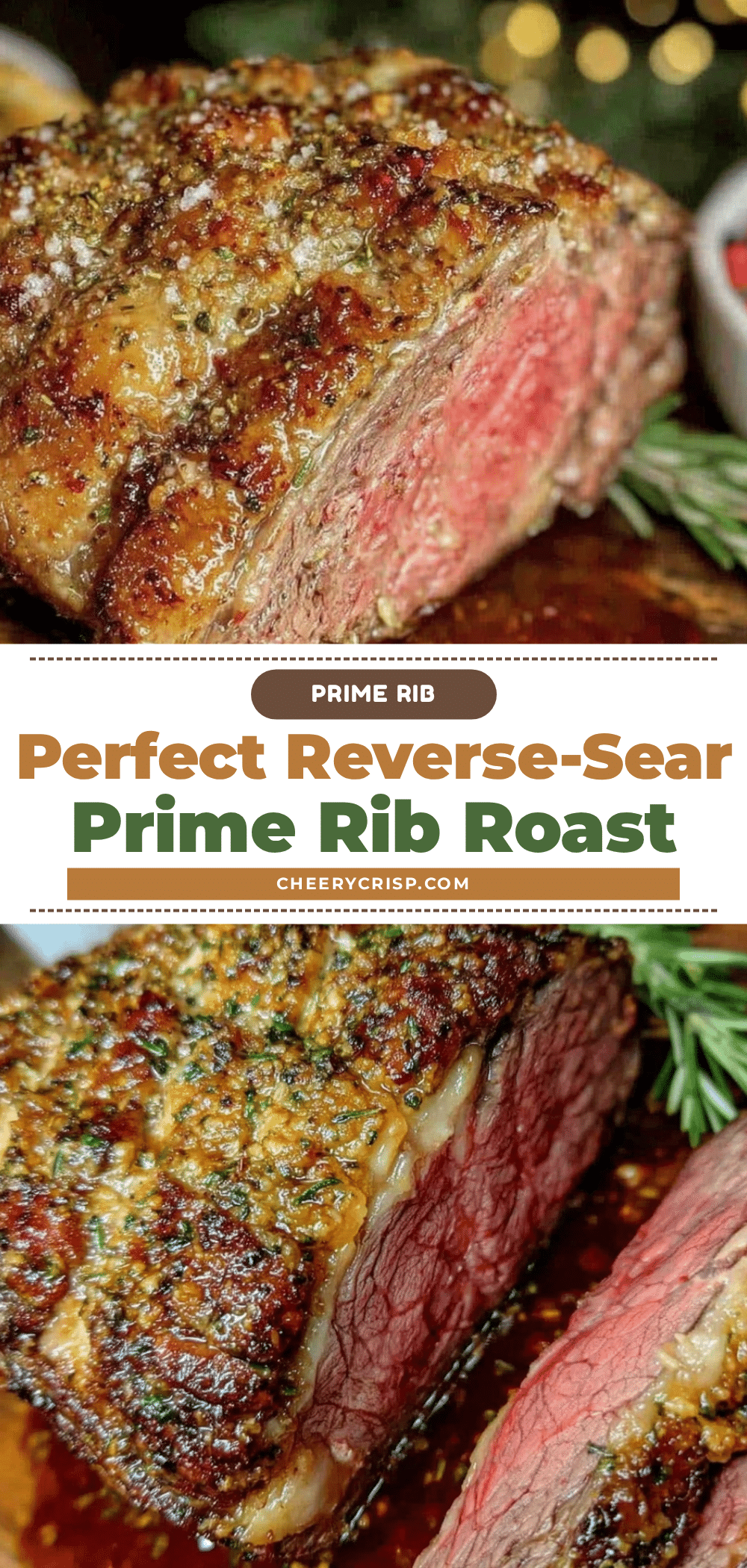
Perfect Reverse-Sear Prime Rib Roast Recipe with Red Wine Au Jus for Easy Holiday Feasts
This reverse-sear prime rib roast recipe delivers a tender, juicy center with a crispy crust, paired with a rich red wine au jus. Perfect for holiday feasts and special occasions, it combines low-and-slow roasting with a high-heat finish for even cooking and impressive flavor.
- Prep Time: 15 minutes
- Cook Time: 1 hour 45 minutes
- Total Time: 2 hours
- Yield: 8 servings 1x
- Category: Main Course
- Cuisine: American
Ingredients
- 4–6 pounds bone-in prime rib roast (USDA Choice or Prime grade recommended)
- Kosher salt, for seasoning
- Freshly ground black pepper
- Garlic powder or 2-3 cloves fresh garlic, minced
- 2 tablespoons olive oil or neutral cooking oil
- 2 tablespoons unsalted butter, softened (optional)
- 2 cups beef broth (low-sodium preferred)
- 1 cup dry red wine (Cabernet Sauvignon or Merlot recommended)
- A few sprigs fresh thyme or rosemary
- 1–2 shallots, finely chopped
Instructions
- Take the prime rib out of the fridge about 1 hour before cooking to bring it to room temperature. Pat dry with paper towels, rub softened butter all over, then season generously with kosher salt, black pepper, and garlic. Set aside.
- Preheat oven to 225°F (107°C).
- Place the prime rib on a rack in a roasting pan. Insert an instant-read meat thermometer into the thickest part, avoiding the bone. Roast until internal temperature reaches 115°F (46°C) for rare or 120°F (49°C) for medium-rare, about 1.5 to 2 hours depending on size.
- Remove roast from oven and tent loosely with foil. Let rest for 15-20 minutes while preparing pan for searing.
- Heat a cast iron skillet or heavy-bottomed pan over high heat until smoking hot. Add oil and sear the roast fat-side down, then all sides and edges, about 1-2 minutes per side until a deep brown crust forms.
- Check internal temperature again; it should be around 125°F (52°C) for medium-rare. If needed, return to oven for a few minutes.
- To make the red wine au jus, pour off excess fat from the roasting pan, leaving browned bits. Place pan over medium heat, add chopped shallots and cook until softened. Deglaze with red wine, scraping the bottom. Add beef broth and fresh thyme. Simmer gently until reduced by half and slightly thickened. Strain if desired.
- Slice the roast against the grain into thick pieces and serve immediately with warm red wine au jus.
Notes
Bring the roast to room temperature before cooking for even doneness. Use an instant-read thermometer to avoid overcooking. Rest the roast before and after searing to keep juices inside. Deglaze the pan well for flavorful au jus. For gluten-free au jus, use gluten-free beef broth and thicken with cornstarch if desired. Avoid microwave reheating; warm leftovers gently in a low oven.
Nutrition
- Serving Size: 6 oz (170 g) cooked
- Calories: 450
- Sodium: 550
- Fat: 32
- Carbohydrates: 2
- Protein: 38
Keywords: prime rib, reverse sear, holiday roast, red wine au jus, beef roast, easy prime rib, special occasion, holiday feast