Love this? Save it for later!
Share the inspiration with your friends
“You might not expect to find a French classic recipe scribbled on the back of a dusty travel journal, but that’s exactly how I stumbled upon this perfect French Coq au Vin,” I confessed to my friend while we stood by the kitchen counter, the aroma of simmering chicken filling the air. It was late spring when I returned from a spontaneous trip to Burgundy, and amidst the clutter of souvenirs and notes, there it was—a faded page, stained with what looked like red wine splashes and a few smudges from hurried kitchen scribbles.
The recipe wasn’t from a fancy cookbook or a Michelin-starred chef. Instead, it belonged to Monsieur Léon, the humble innkeeper of a tiny village I’d barely heard of before. He wasn’t one to boast, but his coq au vin was the talk of the town—and now, it’s become the kind of meal I crave on quiet Sunday afternoons. Honestly, I never thought braising chicken in wine could create such a rich, soulful dish that tastes like history itself.
Maybe you’ve been there, standing in your kitchen, wondering if you can pull off a recipe that feels a little intimidating. Let me tell you, this isn’t just any coq au vin. It’s the version that stayed with me after that trip, the one I’ve tweaked a bit here and there, and the one that has earned a permanent spot in my dinner rotation. There was one evening I forgot to add the thyme—total kitchen chaos—but the wine did its magic anyway. That’s how forgiving and delicious this recipe truly is. Let’s get into why this classic braised chicken is worth every minute you spend on it.
Why You’ll Love This Recipe
- Quick & Easy: Although it looks like a fancy dish, this coq au vin comes together in under 2 hours, perfect for weekend dinners when you want something special without all the fuss.
- Simple Ingredients: No exotic or hard-to-find items here—just good-quality chicken, red wine, fresh herbs, and pantry staples you probably already have.
- Perfect for Cozy Dinners: Whether it’s a chilly evening or a casual gathering, this dish warms the soul and impresses without stress.
- Crowd-Pleaser: This recipe gets rave reviews from both wine lovers and skeptics alike—trust me, I’ve served it to plenty of picky eaters.
- Unbelievably Delicious: The slow braising melds the flavors beautifully, creating tender chicken with a rich, savory sauce that’s hard to resist.
This isn’t just another coq au vin recipe—it’s my go-to for when I want that perfect balance of rustic charm and classic French technique. What sets it apart is the careful braising method that lets every ingredient shine, especially the mushrooms and pearl onions that soak up the wine’s essence. Honestly, the first time I served this to friends, their eyes closed in bliss after the first bite—and isn’t that what comfort food is about?
If you love dishes like classic beef bourguignon or rich braised meats, you’ll find this recipe just as satisfying. Let me share exactly what you’ll need to make this classic French coq au vin your own.
What Ingredients You Will Need
This recipe uses simple, wholesome ingredients to deliver bold flavor and satisfying texture without the fuss. Most are pantry staples, with fresh herbs and quality wine giving it that authentic French touch.
- For the chicken:
- 4 lbs (1.8 kg) bone-in, skin-on chicken thighs and drumsticks (preferably organic or free-range for best flavor)
- Salt and freshly ground black pepper
- 2 tbsp olive oil or unsalted butter (for browning)
- For the braising liquid:
- 2 cups (475 ml) full-bodied red wine (Burgundy or Pinot Noir recommended; I prefer Louis Jadot for authentic taste)
- 1 cup (240 ml) low-sodium chicken broth (adds depth without overpowering)
- 2 tbsp tomato paste (for richness)
- Vegetables and aromatics:
- 8 oz (225 g) cremini or button mushrooms, cleaned and halved
- 20 pearl onions, peeled (frozen works fine if fresh aren’t available)
- 3 garlic cloves, minced
- 2 medium carrots, sliced
- 2 celery stalks, sliced
- Fresh thyme sprigs (about 4-5)
- 2 bay leaves
- For finishing:
- 1-2 tbsp all-purpose flour (to thicken sauce)
- 2 tbsp unsalted butter (for enriching the sauce)
- Fresh parsley, chopped (for garnish)
If you want a gluten-free version, just swap the all-purpose flour with cornstarch or almond flour. For a dairy-free option, replace butter with vegan margarine or extra olive oil. Oh, and a quick tip: if you can, get pearl onions fresh and peel them yourself—it’s a bit tedious but honestly worth the texture and flavor boost!
Equipment Needed
- Heavy-bottomed Dutch oven or large oven-safe pot: This is the heart of the recipe, perfect for even heat distribution during browning and braising. I’ve tried cast iron and enameled versions; both work well as long as they’re oven-safe.
- Wooden spoon or heat-resistant spatula: For stirring and scraping up those delicious browned bits.
- Tongs: Handy for turning chicken pieces without breaking the skin.
- Small saucepan: Optional, for blanching pearl onions if you prefer an easier peeling method.
- Fine mesh strainer or slotted spoon: Useful if you want to strain the sauce for a silky finish, though I usually leave it rustic.
If you don’t have a Dutch oven, a heavy skillet with a tight-fitting lid can work, but be mindful of heat control. For budget-friendly options, brands like Lodge offer great cast iron pots without breaking the bank. Just remember, maintaining your cookware with regular seasoning will keep it performing beautifully for years.
Preparation Method
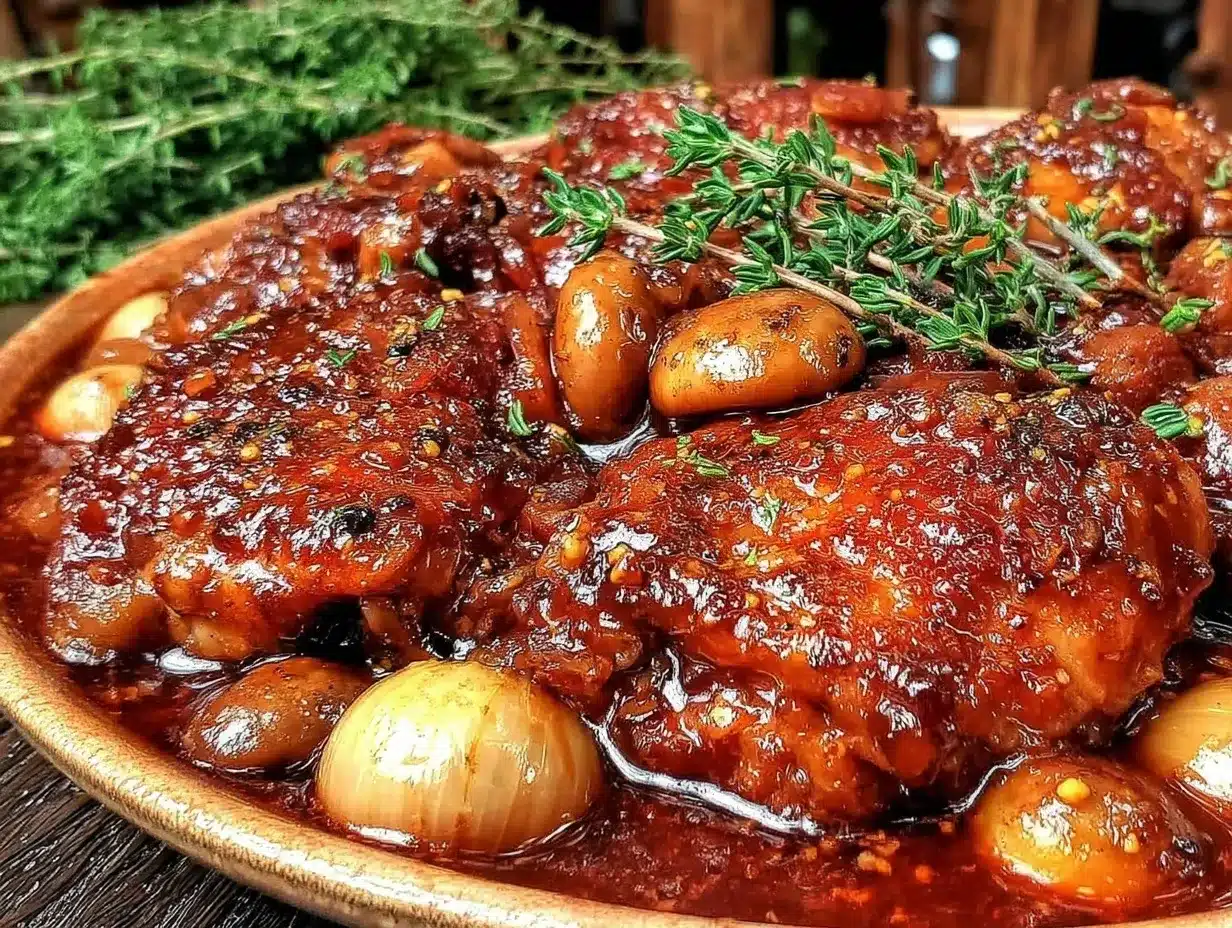
- Prep the chicken: Pat chicken pieces dry with paper towels, then season generously with salt and pepper. Dry skin helps get that golden-brown crust, so don’t skip this step. (10 minutes)
- Brown the chicken: Heat olive oil or butter in your Dutch oven over medium-high heat. In batches, add chicken skin-side down, cooking until golden and crisp—about 5 minutes per side. Don’t crowd the pan; this ensures even browning. Remove chicken and set aside. (15 minutes)
- Sauté vegetables: In the same pot, add carrots, celery, and pearl onions. Cook until softened, about 8 minutes, stirring occasionally. Add mushrooms and garlic in the last 3 minutes. This builds the base flavor. (10 minutes)
- Add tomato paste and deglaze: Stir in tomato paste and cook for 2 minutes. Pour in red wine, scraping up browned bits from the pot’s bottom with a wooden spoon. This adds depth and richness. (5 minutes)
- Return chicken and add broth: Place browned chicken back into the pot. Add chicken broth, thyme, and bay leaves. The liquid should almost cover the chicken but not fully submerge it. Bring to a gentle simmer. (5 minutes)
- Braise in oven: Cover pot and transfer to a preheated oven at 325°F (160°C). Let it braise for 1 to 1.25 hours, until chicken is tender and falling off the bone. (60-75 minutes)
- Finish sauce: Remove chicken and vegetables to a warm plate. Strain sauce if desired. Return sauce to stove, whisk in flour mixed with a little water (slurry) to thicken, then stir in butter for shine. Season with salt and pepper to taste. (10 minutes)
- Serve: Pour sauce over chicken and garnish with chopped parsley. Pair with creamy mashed potatoes or crusty bread for soaking up every drop.
Pro tip: If your sauce seems too thin after braising, simmer uncovered on the stovetop for a few minutes. You’ll see it thicken nicely and intensify in flavor. Also, keep an eye on the oven during braising—every oven heats differently, so adjust time as needed.
Cooking Tips & Techniques
Coq au vin might sound fancy, but the trick lies in patience and layering flavors. Brown your chicken well—this step creates those deep, savory notes that make the dish sing. I’ve learned the hard way that skipping this results in a flat-tasting sauce. Also, don’t rush peeling pearl onions; blanching them in boiling water for 1-2 minutes makes the skins slip right off without tears (unless you’re like me and somehow manage to splash hot water everywhere).
Use a good quality red wine, because it’s the backbone of the sauce. Cheap wine can make the dish taste dull or bitter. I’ve found that a medium-bodied Burgundy or Pinot Noir strikes the perfect balance—nothing too tannic or sweet. And don’t forget to let the dish braise low and slow—high heat will toughen the chicken.
I usually multitask by prepping a simple salad or dessert while the coq au vin simmers away. The kitchen smells so good, you might find yourself sneaking bites of sauce right out of the pot (not that I recommend it, but hey, it happens!).
Variations & Adaptations
- White Wine Version: Swap red wine for a dry white like Sauvignon Blanc for a lighter, brighter sauce.
- Mushroom-Heavy: Double the mushrooms and add some wild varieties like shiitake or chanterelles for earthier depth.
- Vegetarian Adaptation: Use hearty vegetables like eggplant and zucchini, braised in vegetable broth and red wine with smoked paprika for richness.
- Slow Cooker Method: Brown chicken and veggies first, then transfer all to a slow cooker. Cook on low for 6-7 hours for tender, hands-off results.
- Spicy Twist: Add a pinch of smoked chili flakes or cayenne to the sauce for subtle heat that complements the wine.
Personally, I tried adding a splash of brandy during deglazing once, which gave a slightly boozy kick that some friends adored. Feel free to experiment a bit and make this recipe truly yours!
Serving & Storage Suggestions
Serve your coq au vin warm, ideally right out of the pot, with sides like creamy mashed potatoes, buttered noodles, or a crisp green salad. A glass of the same red wine you cooked with makes a perfect pairing—trust me on this one.
Leftovers keep beautifully in the fridge for 3-4 days and often taste even better as the flavors meld overnight. Reheat gently on the stove over low heat, adding a splash of broth or water if the sauce thickens too much.
For longer storage, freeze in an airtight container for up to 3 months. Thaw overnight in the fridge before reheating. Keep in mind that pearl onions might soften a bit more after freezing, but they still hold their charm.
Flavors do deepen the longer it rests, so if you can, make it a day ahead for an effortless, impressive meal the next night.
Nutritional Information & Benefits
Each serving of this perfect French coq au vin provides approximately 450 calories, with a balanced mix of protein from chicken and antioxidants from red wine and vegetables. The dish is moderate in fat, mostly healthy unsaturated fats from olive oil or butter.
Chicken thighs offer essential nutrients like iron and zinc, while mushrooms and onions add fiber and vitamins. Using whole, fresh ingredients makes this a wholesome comfort meal.
This recipe is naturally gluten-free if you use cornstarch or almond flour as a thickener, and can be adapted for dairy-free diets by substituting butter. Just a heads-up: pearl onions and mushrooms are common allergens for some, so swap accordingly if needed.
From a wellness perspective, this dish is satisfying and nourishing without being heavy or greasy, making it a wonderful choice for those who want a hearty meal with real food.
Conclusion
This perfect French coq au vin recipe is a charming way to bring a little bit of Burgundy into your kitchen. It’s approachable, forgiving, and packed with flavor that feels both classic and comforting. I love how it turns a simple chicken dinner into a cozy, memorable experience—or a way to impress guests without breaking a sweat.
Feel free to tweak the herbs, wine, or veggies to fit your taste or pantry. Honestly, it’s one of those dishes where every home cook’s version is a little different, and that’s the beauty of it.
If you try this recipe, I’d love to hear how it turned out for you—drop a comment, share your twists, or just tell me which wine you paired it with. Happy braising, and here’s to many delicious dinners ahead!
FAQs About Perfect French Coq au Vin
What cut of chicken is best for coq au vin?
Bone-in, skin-on chicken thighs and drumsticks are ideal because they stay moist and develop great flavor during braising.
Can I use chicken breasts instead?
You can, but breasts tend to dry out during long braising. If you prefer breasts, reduce cooking time and watch carefully.
Do I have to use red wine?
Red wine is traditional and adds depth, but you can substitute with dry white wine or even grape juice mixed with a bit of vinegar if needed.
How do I peel pearl onions easily?
Blanch them in boiling water for 1-2 minutes, then plunge into ice water. The skins should slip off with a gentle squeeze.
Can I prepare coq au vin ahead of time?
Absolutely! It tastes even better the next day after flavors meld. Store in the fridge and reheat gently before serving.
PrintPerfect French Coq au Vin Recipe Easy Classic Braised Chicken
A classic French braised chicken dish simmered in red wine with mushrooms, pearl onions, and fresh herbs, delivering rich, soulful flavors perfect for cozy dinners.
- Prep Time: 25 minutes
- Cook Time: 1 hour 25 minutes
- Total Time: 1 hour 50 minutes
- Yield: 6 servings 1x
- Category: Main Course
- Cuisine: French
Ingredients
- 4 lbs bone-in, skin-on chicken thighs and drumsticks (preferably organic or free-range)
- Salt and freshly ground black pepper
- 2 tbsp olive oil or unsalted butter (for browning)
- 2 cups full-bodied red wine (Burgundy or Pinot Noir recommended)
- 1 cup low-sodium chicken broth
- 2 tbsp tomato paste
- 8 oz cremini or button mushrooms, cleaned and halved
- 20 pearl onions, peeled
- 3 garlic cloves, minced
- 2 medium carrots, sliced
- 2 celery stalks, sliced
- 4–5 fresh thyme sprigs
- 2 bay leaves
- 1–2 tbsp all-purpose flour (to thicken sauce)
- 2 tbsp unsalted butter (for enriching the sauce)
- Fresh parsley, chopped (for garnish)
Instructions
- Pat chicken pieces dry with paper towels, then season generously with salt and pepper. (10 minutes)
- Heat olive oil or butter in a Dutch oven over medium-high heat. Brown chicken skin-side down in batches until golden and crisp, about 5 minutes per side. Remove and set aside. (15 minutes)
- In the same pot, add carrots, celery, and pearl onions. Cook until softened, about 8 minutes, stirring occasionally. Add mushrooms and garlic in the last 3 minutes. (10 minutes)
- Stir in tomato paste and cook for 2 minutes. Pour in red wine, scraping up browned bits from the pot’s bottom. (5 minutes)
- Return chicken to the pot. Add chicken broth, thyme, and bay leaves. The liquid should almost cover the chicken but not fully submerge it. Bring to a gentle simmer. (5 minutes)
- Cover pot and transfer to a preheated oven at 325°F (160°C). Braise for 1 to 1.25 hours until chicken is tender and falling off the bone. (60-75 minutes)
- Remove chicken and vegetables to a warm plate. Strain sauce if desired. Return sauce to stove, whisk in flour mixed with a little water to thicken, then stir in butter. Season with salt and pepper to taste. (10 minutes)
- Pour sauce over chicken and garnish with chopped parsley. Serve with creamy mashed potatoes or crusty bread.
Notes
If sauce is too thin after braising, simmer uncovered on stovetop to thicken. Use good quality red wine for best flavor. Blanch pearl onions in boiling water for 1-2 minutes to peel easily. Adjust oven time as needed since ovens vary. For gluten-free, substitute flour with cornstarch or almond flour; for dairy-free, replace butter with vegan margarine or olive oil.
Nutrition
- Serving Size: 1 serving (approxima
- Calories: 450
- Sugar: 4
- Sodium: 350
- Fat: 22
- Saturated Fat: 6
- Carbohydrates: 12
- Fiber: 2
- Protein: 38
Keywords: Coq au Vin, French chicken recipe, braised chicken, classic French dish, red wine chicken, comfort food, easy coq au vin