Love this? Save it for later!
Share the inspiration with your friends
“I wasn’t expecting much when I grabbed that dusty little notebook from the back shelf at my local library’s book sale. The cover was faded, the pages yellowed, and tucked inside was a handwritten note: ‘My secret to soft, keto bread.’ Honestly, I thought it was a long shot—keto bread recipes often end up dry or crumbly, right? But curiosity got the better of me. I remember that evening distinctly: the kitchen light buzzing softly as I mixed ingredients, the smell of almond flour roasting just enough, and a small mess on the counter because I forgot to grease the pan properly. Maybe you’ve been there—trying to make something healthy but ending up with a half-disaster.
Well, this “Healthy Keto Bread with Only 2g Net Carbs – Soft & Moist Low-Carb Loaf” came out better than I hoped. It was soft, moist, and surprisingly flavorful—definitely not the cardboard-like loaf I was bracing for. Since then, it’s been my go-to bread for everything from quick sandwiches to a comforting toast with avocado. I mean, who knew you could have a keto bread that feels indulgent yet fits perfectly into a low-carb lifestyle?
Let me tell you, this recipe stuck with me because it’s not just about cutting carbs—it’s about enjoying the textures and flavors you might think you had to give up. So if you’ve ever struggled to find that perfect keto bread, this one’s for you. It’s easy, forgiving, and honestly, it might just surprise you too.”
Why You’ll Love This Recipe
After countless trials and a few crumbly failures, I landed on this keto bread recipe that truly stands out. It’s not just another low-carb loaf—it’s a soft, moist bread that’s surprisingly simple to make and tastes great fresh or toasted. Here’s why it’s become a staple in my kitchen:
- Quick & Easy: You can have this bread ready in under an hour, which is perfect for last-minute meal prep or those busy mornings when you want a wholesome breakfast without the fuss.
- Simple Ingredients: No weird additives or hard-to-find items. Just pantry staples like almond flour and eggs, so you don’t have to hunt down specialty stores.
- Perfect for Any Occasion: Whether it’s a casual weekday sandwich or a cozy weekend brunch, this loaf fits right in without stealing the spotlight.
- Crowd-Pleaser: Family and friends who aren’t even on keto have been surprised by how satisfying this bread is. Kids love it toasted with a bit of butter.
- Unbelievably Delicious: The texture is soft and moist—not dense or dry like many keto breads. It’s got just the right crumb to hold up to your favorite spreads or toppings.
What really sets this apart? The method uses a blend of almond flour and a touch of psyllium husk to give it structure and moisture without that typical dry, gritty feel. Plus, a dash of apple cider vinegar works its magic on fluffiness. It’s the kind of recipe that makes you close your eyes after the first bite and think, “Yep, this is the one.”
What Ingredients You Will Need
This recipe uses simple, wholesome ingredients to deliver bold flavor and satisfying texture without the fuss. Most are pantry staples, and if you’re missing a few, I’ve included easy substitutions so you can still whip this up with what you have.
- Almond Flour – 2 cups (200g), finely ground for best texture (I prefer Bob’s Red Mill for consistency)
- Psyllium Husk Powder – 2 tablespoons (14g), helps give structure and moisture (you can find it in most health food stores)
- Baking Powder – 1 teaspoon, to help the bread rise and stay soft
- Salt – 1/2 teaspoon, enhances flavor
- Apple Cider Vinegar – 1 tablespoon, adds fluffiness and tenderness
- Eggs – 4 large, room temperature for best binding and rise
- Warm Water – 1 cup (240ml), to hydrate the psyllium husk and create a soft crumb
- Olive Oil or Melted Butter – 2 tablespoons, adds richness and moisture (use dairy-free butter if preferred)
Optional additions:
- 1 tablespoon of ground flaxseed for extra fiber and nuttiness
- A teaspoon of herbs or garlic powder for savory twists
For a gluten-free and keto-friendly loaf, this recipe hits the mark without complicated ingredients. If you want a nut-free version, swapping almond flour for sunflower seed flour works well, but expect a slightly different flavor. In summer, I sometimes add fresh rosemary to the batter for a bright aroma—trust me, it’s worth a try!
Equipment Needed
- Loaf Pan (8×4 inches or 9×5 inches): Essential for shaping the bread. I’ve used silicone pans and traditional metal ones; both work fine as long as you grease them well.
- Mixing Bowls: One medium for dry ingredients and one for wet ingredients helps keep things neat.
- Whisk and Spoon: For combining ingredients thoroughly.
- Measuring Cups and Spoons: Precision matters—especially with psyllium husk and baking powder.
- Oven Thermometer (optional): Ovens can be tricky; this helps keep the temperature steady around 350°F (175°C).
For budget-friendly baking, you can use parchment paper instead of greasing pans, which also helps with easy removal. If you bake bread often, investing in a quality loaf pan with a sturdy base is worth it—it gives the bread nice edges and even baking. Clean your pans immediately after use to keep them in good shape!
Preparation Method
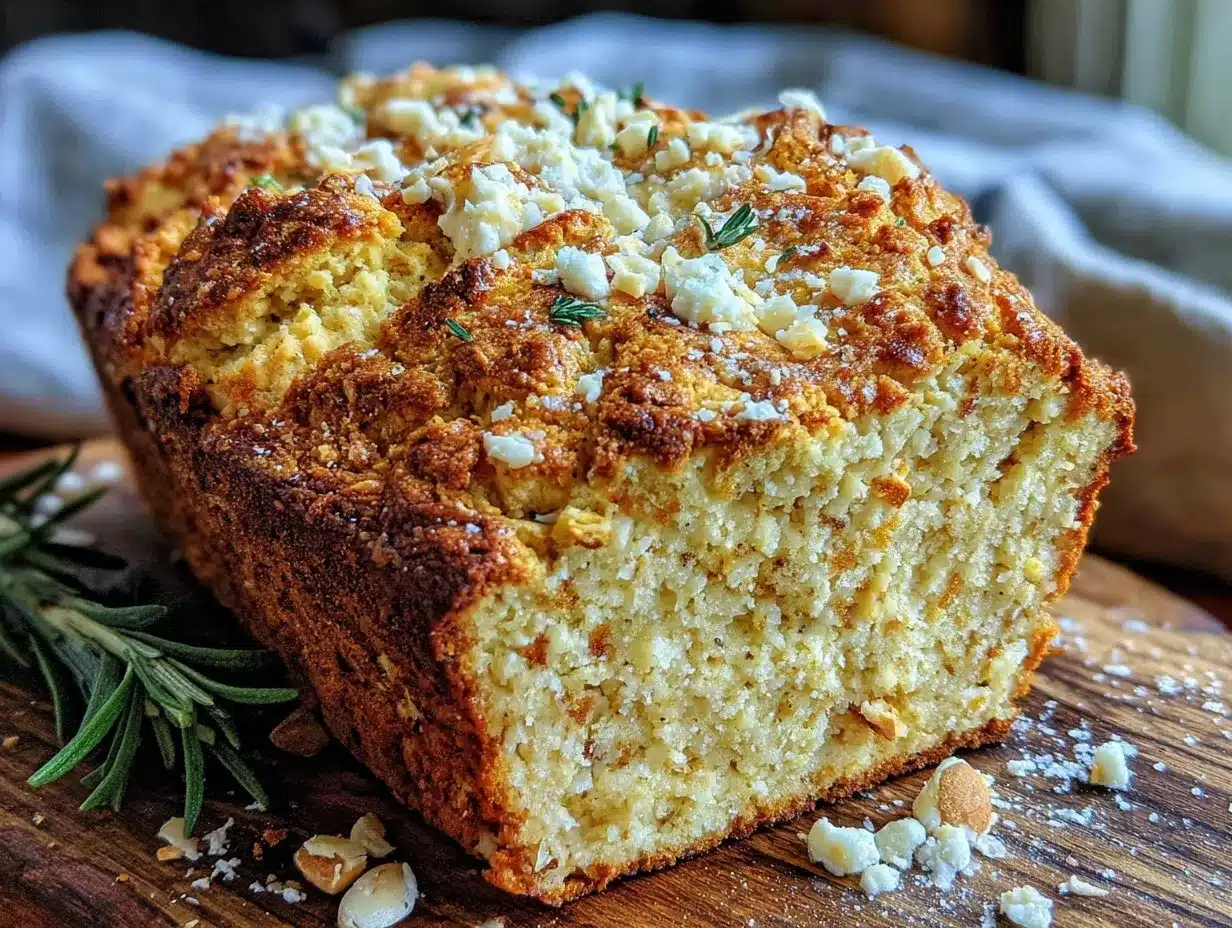
- Preheat your oven to 350°F (175°C). Grease your loaf pan with olive oil or line it with parchment paper for easy removal. This step sets you up for a smooth baking process.
- Mix the dry ingredients: In a medium bowl, whisk together 2 cups (200g) almond flour, 2 tablespoons (14g) psyllium husk powder, 1 teaspoon baking powder, and 1/2 teaspoon salt. Make sure there are no clumps—psyllium husk can stick together if you’re not careful.
- Combine wet ingredients: In a separate large bowl, beat 4 large eggs (room temperature is best) until frothy, then add 1 tablespoon apple cider vinegar, 2 tablespoons olive oil or melted butter, and 1 cup (240ml) warm water. Whisk everything until smooth.
- Integrate dry into wet: Slowly add the dry mixture into the wet bowl while stirring continuously. The batter will thicken quickly as the psyllium husk absorbs the liquid, forming a thick dough. If it feels too stiff, give it a minute—it will continue to hydrate.
- Transfer to loaf pan: Spoon the dough into your prepared loaf pan and smooth the top with a spatula. The batter should spread easily but remain thick.
- Bake: Place the pan in the preheated oven and bake for 45-50 minutes. The bread should be golden brown on top and firm to the touch. If your oven runs hot, check around 40 minutes to avoid overbaking.
- Cool completely: Once out of the oven, let the bread cool in the pan for 15 minutes, then transfer to a wire rack to cool fully. This helps prevent sogginess and keeps the crumb perfect.
Pro tip: When slicing, use a serrated knife and a gentle sawing motion for clean cuts. You’ll get perfect slices every time without squishing the loaf.
Sometimes, I’ve had the batter seem a bit runny—usually because the psyllium husk was old or clumpy. If that happens, a quick stir and 5 minutes rest before baking usually fixes it. You know that feeling when you’re halfway through baking and realize you forgot a key step? Happened to me once with this bread (forgot the vinegar!), and the loaf still turned out surprisingly good—just a bit less fluffy.
Cooking Tips & Techniques
Getting keto bread right isn’t always straightforward, but I’ve learned a few things that make this recipe foolproof.
- Use Fresh Psyllium Husk Powder: It’s the secret to that soft, moist texture. Old psyllium can dry out your bread, so keep it sealed and fresh.
- Don’t Skip the Apple Cider Vinegar: It reacts with the baking powder to create air pockets, making the loaf lighter. I’ve tried lemon juice as a substitute, but vinegar works best.
- Room Temperature Eggs Are Key: They blend better and help the batter rise properly. Straight-from-the-fridge eggs sometimes cause the batter to seize up.
- Watch Your Oven Temperature: Ovens can vary, so an oven thermometer is a great tool. Too hot and the crust toughens before the inside cooks; too cool and the bread gets dense.
- Rest the Batter: Give the dough 2-3 minutes after mixing to let the psyllium absorb moisture fully. This step ensures the bread holds together well.
- Don’t Overmix: Once the dry and wet ingredients combine, mix just until uniform. Overmixing can lead to a gummy texture, which no one wants.
One time, I baked this bread in a glass pan, and it took a little longer to cook through. If you notice the top browning too fast, tent it loosely with foil halfway through baking.
Multitasking tip: While the bread bakes, prep your toppings or make a batch of creamy avocado spread to enjoy fresh, turning your simple loaf into a delicious snack or meal.
Variations & Adaptations
It’s honestly fun to tweak this recipe depending on what mood or dietary need you have.
- Herb & Garlic Keto Bread: Add 1 teaspoon garlic powder and 1 tablespoon chopped fresh rosemary or thyme to the dry ingredients for an aromatic twist that pairs wonderfully with soups and salads.
- Seeded Loaf: Stir in 2 tablespoons of mixed seeds like chia, sunflower, or sesame for extra crunch and nutrition.
- Nut-Free Version: Swap almond flour with sunflower seed flour. The flavor changes slightly, but it’s a great alternative for those with nut allergies.
- Cheese Lover’s Adaptation: Fold in 1/2 cup shredded sharp cheddar or mozzarella before baking for a gooey, savory bread.
- Different Cooking Methods: If you prefer, you can bake mini loaves or muffins using this batter. Reduce baking time to 25-30 minutes and keep an eye on doneness.
My personal favorite is the herb and garlic version; it reminds me of a cozy evening with a warm bowl of creamy tomato soup. Honestly, it’s hard to go back to plain bread after trying these variations.
Serving & Storage Suggestions
This keto bread is best served at room temperature or lightly toasted to bring out the nutty almond flavor. I love thick slices slathered with butter or as the base for open-faced sandwiches.
It pairs beautifully with soft cheeses, avocado, or hearty spreads like smoked salmon and cream cheese. For breakfast, try it with a fried egg and a sprinkle of chili flakes—comfort food, keto style.
To store, wrap the bread tightly in plastic wrap or place it in an airtight container. Keep it in the refrigerator for up to 5 days. I recommend slicing before storing so you can grab a slice easily.
For longer storage, freeze the bread wrapped well. Thaw slices at room temperature or toast directly from frozen. Toasting revives the softness and texture like it’s fresh-baked.
Flavors actually develop a bit after a day or two, making the bread even tastier as the ingredients mingle. If you’re planning ahead, baking this bread a day before serving is a smart move.
Nutritional Information & Benefits
This Healthy Keto Bread recipe delivers approximately 2 grams of net carbs per slice (assuming 12 slices per loaf), making it a perfect fit for low-carb and keto diets. It’s rich in healthy fats from almond flour and olive oil, plus a good source of fiber thanks to psyllium husk.
Almond flour provides vitamin E and magnesium, which support heart and nerve health. Psyllium husk aids digestion and promotes gut health by acting as a prebiotic fiber.
The bread is gluten-free, grain-free, and suitable for those avoiding dairy if you use olive oil instead of butter. It’s a wholesome choice that satisfies bread cravings without the carb overload.
Personally, I appreciate how this loaf helps me stick to my nutrition goals without feeling deprived. It’s a small but meaningful way to enjoy comfort food while staying health-conscious.
Conclusion
This Healthy Keto Bread with Only 2g Net Carbs is more than just a low-carb alternative—it’s a soft, moist loaf that feels indulgent and satisfying. I love how easy it comes together and the way it holds up to all kinds of toppings and meals.
Feel free to tweak this recipe to your taste—add herbs, seeds, or cheese and make it your own. I hope it becomes your go-to bread too, especially on days when you want something comforting without the carb guilt.
Let me know how your loaf turns out and if you tried any fun variations! Sharing your experience really makes my day, and I’m always here if you need tips or ideas. Happy baking!
Frequently Asked Questions
Is this keto bread suitable for beginners?
Absolutely! The recipe uses simple ingredients and straightforward steps, making it perfect for anyone new to keto baking.
Can I use coconut flour instead of almond flour?
Coconut flour behaves very differently and absorbs more liquid, so it’s not a 1:1 substitute. Using coconut flour would require adjusting the recipe significantly.
How long does this bread stay fresh?
Stored properly in the fridge, it stays fresh for up to 5 days. Freezing extends its shelf life to about 3 months.
Can I make this bread dairy-free?
Yes! Use olive oil instead of butter and you’ll have a dairy-free loaf without compromising on moisture.
What’s the best way to reheat leftover keto bread?
Toast it lightly or warm it in the oven at 300°F (150°C) for 5-7 minutes. Avoid microwaving as it can make the bread rubbery.
Pin This Recipe!
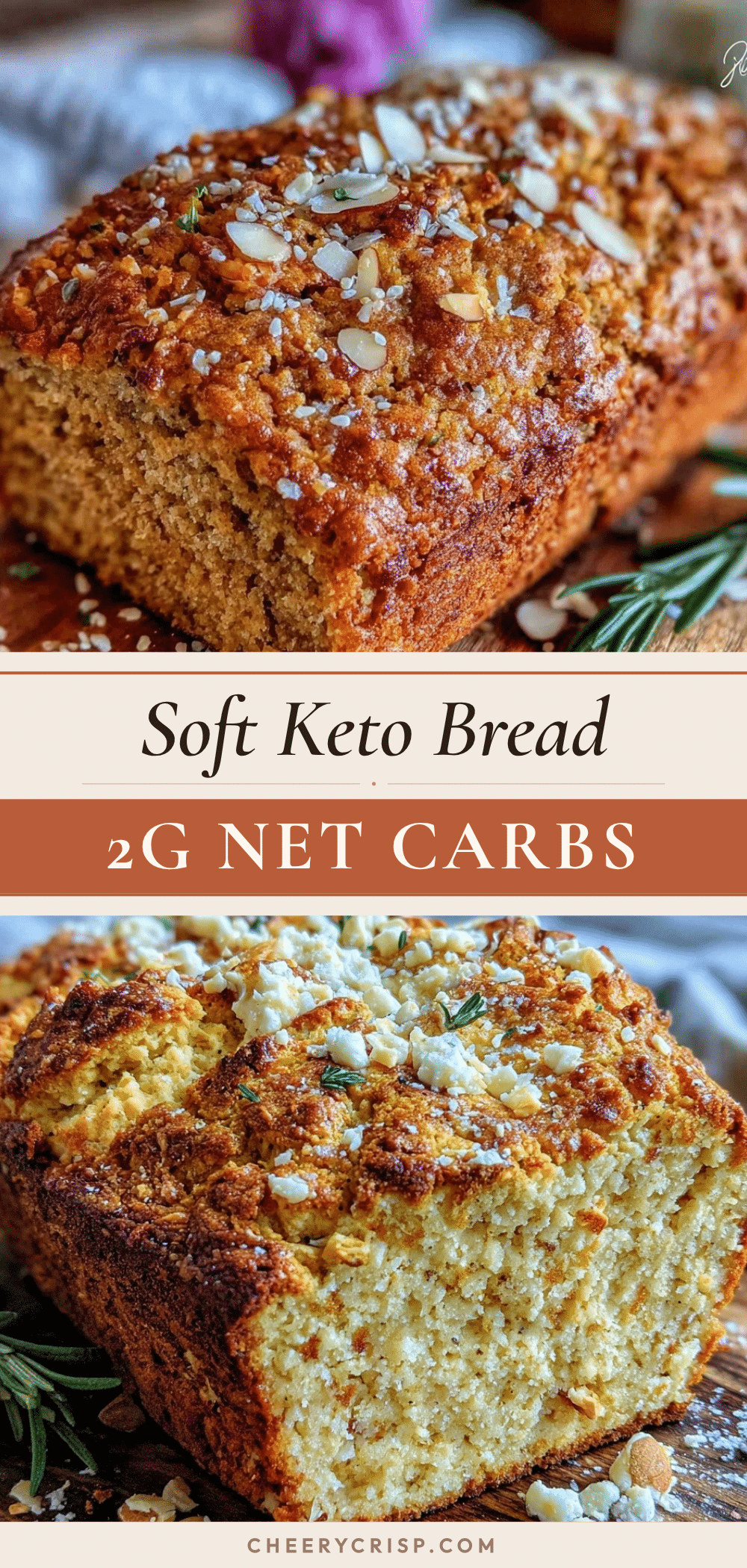
Healthy Keto Bread Recipe with 2g Net Carbs Easy Soft Low-Carb Loaf
A soft, moist, and flavorful keto bread loaf with only 2g net carbs per slice, perfect for low-carb lifestyles and easy to make with simple pantry ingredients.
- Prep Time: 15 minutes
- Cook Time: 45-50 minutes
- Total Time: 60-65 minutes
- Yield: 12 slices 1x
- Category: Bread
- Cuisine: American
Ingredients
- 2 cups (200g) almond flour, finely ground
- 2 tablespoons (14g) psyllium husk powder
- 1 teaspoon baking powder
- 1/2 teaspoon salt
- 1 tablespoon apple cider vinegar
- 4 large eggs, room temperature
- 1 cup (240ml) warm water
- 2 tablespoons olive oil or melted butter (use dairy-free butter if preferred)
- Optional: 1 tablespoon ground flaxseed
- Optional: 1 teaspoon herbs or garlic powder
Instructions
- Preheat your oven to 350°F (175°C). Grease your loaf pan with olive oil or line it with parchment paper for easy removal.
- In a medium bowl, whisk together almond flour, psyllium husk powder, baking powder, and salt until no clumps remain.
- In a separate large bowl, beat the eggs until frothy, then add apple cider vinegar, olive oil or melted butter, and warm water. Whisk until smooth.
- Slowly add the dry mixture into the wet ingredients while stirring continuously until a thick dough forms. Let rest for 2-3 minutes to hydrate.
- Spoon the dough into the prepared loaf pan and smooth the top with a spatula.
- Bake for 45-50 minutes until the bread is golden brown on top and firm to the touch. Check at 40 minutes if your oven runs hot.
- Cool the bread in the pan for 15 minutes, then transfer to a wire rack to cool completely before slicing.
- Use a serrated knife and gentle sawing motion to slice the bread cleanly.
Notes
Use fresh psyllium husk powder for best texture. Room temperature eggs help the batter rise properly. Rest the batter 2-3 minutes before baking. Avoid overmixing to prevent gummy texture. Tent with foil if top browns too fast. Use serrated knife for slicing. Store wrapped in fridge up to 5 days or freeze up to 3 months.
Nutrition
- Serving Size: 1 slice
- Calories: 150
- Sugar: 1
- Sodium: 200
- Fat: 13
- Saturated Fat: 2
- Carbohydrates: 5
- Fiber: 3
- Protein: 6
Keywords: keto bread, low carb bread, healthy bread, keto recipe, almond flour bread, gluten free bread, soft keto loaf