Love this? Save it for later!
Share the inspiration with your friends
“You have to try this salad,” my neighbor Dimitri said one sunny Saturday morning, holding out a rustic ceramic bowl filled with vibrant colors. I wasn’t expecting a cooking lesson from him—he’s more of a weekend gardener than a chef—but there I was, leaning over the fence, watching him toss together what he called a “proper” Greek Horiatiki salad. It was late spring, the smell of blooming jasmine mixed with the sharp tang of lemon and oregano filling the air.
Honestly, I’d always thought salads were just a quick side dish, but Dimitri’s version had this fresh, briny punch thanks to Kalamata olives that I hadn’t really appreciated before. The tomatoes were sun-ripened, the cucumbers crisp, and the feta—oh, the feta—crumbled just right, creamy yet crumbly, like a little piece of the Mediterranean itself.
He told me this recipe wasn’t just any salad; it was the kind that Greeks bring out when friends drop by unexpectedly, or when a simple meal needs that extra spark. I made a mess trying to chop the onions fast enough, and my kitchen smelled like oregano for days, but the real surprise was how often I found myself craving this fresh Greek Horiatiki salad with Kalamata olives after that day. Maybe you’ve been there, tasting something so simple yet so soulful it just sticks with you. This salad? It’s one of those dishes.
Why You’ll Love This Recipe
After making this fresh Greek Horiatiki salad with Kalamata olives countless times, I can confidently say it’s a game-changer for easy, healthy meals. Not only does it come together in a flash, but its bold flavors always impress without the fuss.
- Quick & Easy: Ready in under 15 minutes, perfect for busy weeknights or when you need a refreshing lunch.
- Simple Ingredients: Uses pantry staples and fresh produce you likely have on hand, with no complicated prep.
- Perfect for Warm Weather: Ideal for summer barbecues, picnics, or light dinners that don’t weigh you down.
- Crowd-Pleaser: Always gets rave reviews, especially from those who love Mediterranean flavors.
- Unbelievably Delicious: The salty Kalamata olives combined with juicy tomatoes and creamy feta create a flavor combo that’s just next-level.
What sets this recipe apart is the balance of freshness and seasoning. The key is using ripe, high-quality produce and the olives—those Kalamata beauties, briny and rich—really make the dish sing. Plus, the dressing is simple but perfectly tangy, bringing everything together without overpowering the natural flavors.
This salad isn’t just food; it’s a little Mediterranean getaway on your plate. Whether you’re aiming to impress guests with minimal effort or just want a wholesome dish to enjoy solo, this recipe has got your back.
What Ingredients You Will Need
This fresh Greek Horiatiki salad with Kalamata olives relies on straightforward, wholesome ingredients that highlight Mediterranean simplicity and flavor. Most are pantry staples or easy to find at your local market. The freshness of each component makes all the difference here.
- Ripe Tomatoes: 4 medium-large, preferably vine-ripened or heirloom, cut into chunks (juicy and sweet for that fresh burst)
- Cucumbers: 1 large English cucumber, peeled if desired, sliced into half-moons or chunks (adds crisp texture)
- Red Onion: ½ medium, thinly sliced (for a sharp bite; soak in cold water if you prefer milder flavor)
- Kalamata Olives: 1 cup pitted, halved (the star ingredient—choose a good-quality brand like Melissa’s for authentic flavor)
- Feta Cheese: 7 ounces (200g) block, preferably Greek PDO feta, crumbled or sliced into slabs (creamy and tangy)
- Green Bell Pepper: 1 small, sliced (optional, but traditional for extra crunch and color)
- Extra Virgin Olive Oil: ¼ cup (60ml), use a robust, fruity variety for that authentic taste
- Red Wine Vinegar: 1 tablespoon (balances the richness with acidity)
- Dried Oregano: 1 teaspoon, preferably Greek oregano (aromatic and earthy)
- Sea Salt: to taste (be cautious because feta and olives are salty)
- Freshly Ground Black Pepper: to taste
If you want to swap things up, try substituting the red wine vinegar with fresh lemon juice for a brighter zing. Or, if you’re dairy-free, you can omit the feta or use a plant-based alternative, though the feta really brings that signature tang. In summer, I love adding fresh basil or mint leaves for an herbal twist.
Equipment Needed
- Sharp chef’s knife — essential for chopping vegetables cleanly without bruising.
- Cutting board — a sturdy, easy-to-clean board works best for slicing the tomatoes and cucumbers.
- Large salad bowl — roomy enough for tossing the salad ingredients comfortably.
- Salad tongs or wooden spoons — for gentle mixing without breaking up the feta too much.
- Measuring spoons — handy for accurate olive oil and vinegar measurements.
- Optional: small mixing bowl — if you want to whisk the dressing separately before pouring over the salad.
I usually keep a separate bowl for slicing the onions and soaking them briefly to mellow the taste. For budget-friendly options, a simple glass or ceramic bowl works just fine—no need for anything fancy. And if you have a mandoline, it can speed up slicing the cucumbers and onions, but a good knife will do the job perfectly.
Preparation Method
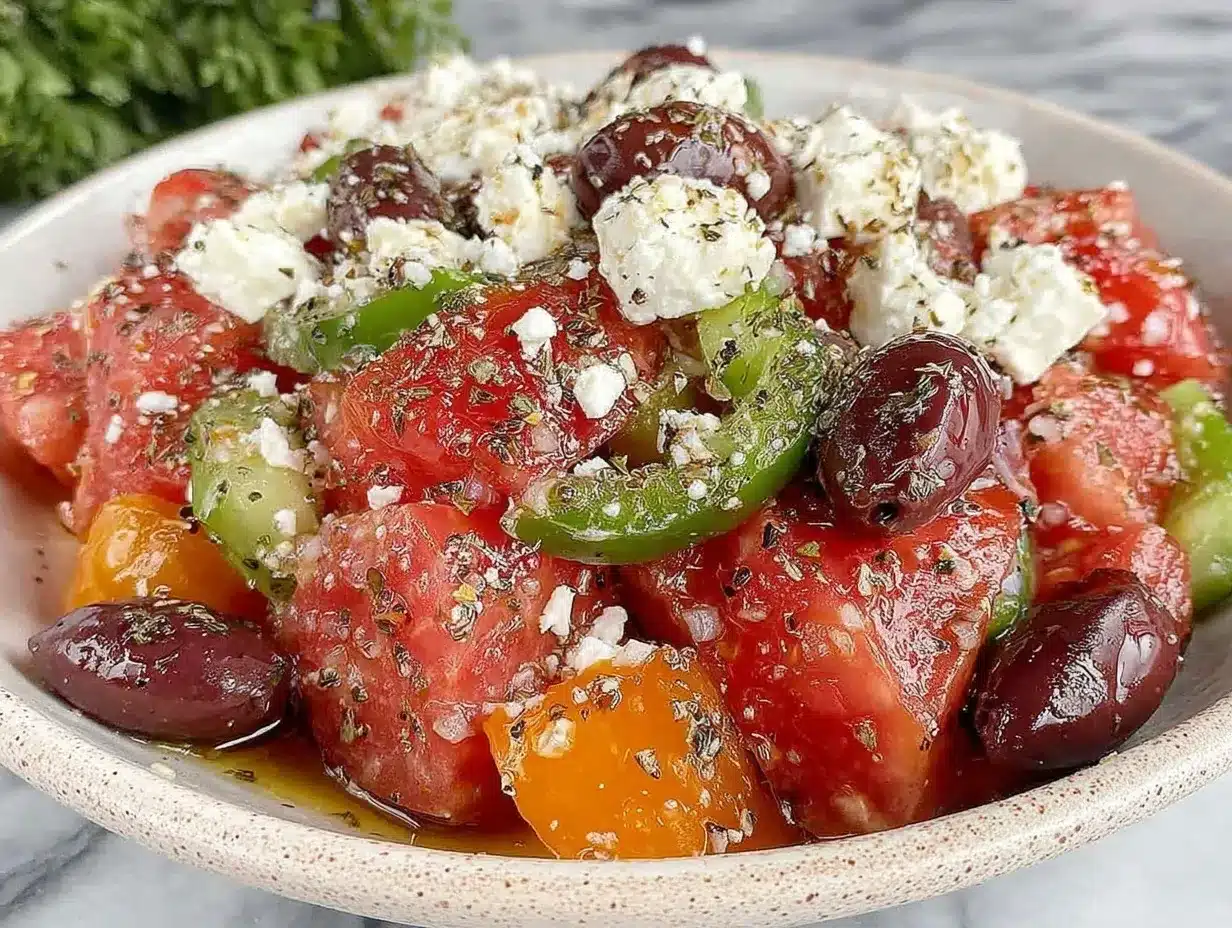
- Prepare the Vegetables (10 minutes): Start by washing and drying all your produce thoroughly. Cut the tomatoes into chunky wedges, removing the core if you like. Peel the cucumber if the skin is thick or waxy, then slice it into half-moons about ¼ inch (6mm) thick. Slice the red onion thinly; if you want to cut the sharpness, soak the slices in cold water for 5 minutes, then drain well.
- Slice the Green Pepper (Optional) (2 minutes): Cut the green bell pepper into thin rings or strips. This adds crunch and color but can be skipped if you’re not a fan.
- Combine the Salad Base (3 minutes): In your large salad bowl, gently toss the tomatoes, cucumbers, onion, green pepper, and Kalamata olives together. Be careful not to crush the tomatoes; you want them intact to keep the texture nice.
- Add the Feta Cheese (2 minutes): Crumble or slice the feta and place it on top of the salad. I prefer larger slabs because they hold up better when tossing later, but crumbled is fine if you like it mixed in fully.
- Make the Dressing (2 minutes): In a small bowl or directly over the salad, mix the extra virgin olive oil, red wine vinegar, dried oregano, a pinch of sea salt, and freshly ground black pepper. Give it a quick whisk or stir until combined. Taste and adjust seasoning if needed.
- Toss and Serve (1 minute): Drizzle the dressing evenly over the salad. Use salad tongs or two large spoons to gently toss everything together just before serving. The feta will soften slightly, and the flavors meld beautifully.
Tip: If you’re prepping ahead, keep the dressing separate until just before serving to avoid soggy vegetables. And remember, this salad is best served fresh—don’t let it sit too long or the cucumbers can get watery.
Cooking Tips & Techniques
Making a fresh Greek Horiatiki salad with Kalamata olives is simple, but a few tricks make all the difference between “just okay” and restaurant-worthy.
- Choose Ripe Tomatoes: The tomatoes are the heart of this salad, so pick the ripest, juiciest ones you can find. If your tomatoes aren’t quite there, try roasting them lightly for a richer flavor.
- Handle Feta Gently: Feta can crumble too much if you toss aggressively. I like to add it in larger pieces and fold it in lightly at the end to keep texture intact.
- Soak Onions to Mellow: If raw onion bite is too strong for you, soaking thin slices in cold water softens the flavor without losing crunch.
- Use Quality Olive Oil: A robust extra virgin olive oil really lifts the salad. Don’t skimp here; it’s worth the investment.
- Adjust Seasoning Last: Because feta and olives are salty, add salt sparingly and taste as you go to avoid over-salting.
- Timing is Key: This salad is best eaten within a few hours of making it. If you need to prepare ahead, keep the dressing separate and add just before serving.
One time, I accidentally used regular black olives instead of Kalamata, and while the flavor was still good, it lacked that distinctive tang that makes this salad special. Lesson learned: don’t substitute the olives if you want the full effect!
Variations & Adaptations
This classic salad is versatile and easy to adapt depending on your dietary needs or what’s in season.
- Vegan Version: Omit the feta or replace it with a tangy vegan cheese or firm tofu marinated in lemon and herbs.
- Seasonal Twist: Add fresh herbs like mint or basil in summer, or swap cucumbers for zucchini ribbons if you prefer.
- Protein Boost: Add grilled chicken or chickpeas for a more filling meal.
- Low-Sodium Option: Rinse the Kalamata olives to reduce saltiness and use a low-sodium feta.
- Different Vinegars: Use lemon juice or balsamic vinegar instead of red wine vinegar for a unique flavor profile.
Personally, I once added roasted red peppers and capers for a smoky, briny twist that my friends loved. Don’t hesitate to experiment with what you have—you might discover your own favorite spin.
Serving & Storage Suggestions
This fresh Greek Horiatiki salad with Kalamata olives is best served chilled or at room temperature. I like to plate it with a drizzle of extra olive oil and a sprinkle of fresh oregano leaves for a pretty finish.
It pairs beautifully with grilled meats, warm pita bread, or a chilled glass of rosé. For a complete Mediterranean meal, try serving alongside dishes like crispy garlic chicken or roasted lemon potatoes.
If you have leftovers, store them in an airtight container in the refrigerator for up to two days. Keep the dressing separate if possible. When reheating, it’s best to enjoy the salad cold, but if you want to soften the feta and meld flavors more, let it sit at room temperature for 15 minutes before serving.
Flavors tend to develop and marry over time, so if you prepare the salad a few hours ahead (without dressing), it can taste even better!
Nutritional Information & Benefits
This fresh Greek Horiatiki salad with Kalamata olives is not only delicious but also packed with nutrients. Here’s an estimate per serving (serves 4):
| Calories | 180 kcal |
|---|---|
| Protein | 6 g |
| Fat | 15 g (mostly healthy fats from olive oil and olives) |
| Carbohydrates | 8 g |
| Fiber | 2 g |
The olive oil and Kalamata olives provide heart-healthy monounsaturated fats, while the fresh vegetables offer antioxidants and vitamins. Feta cheese contributes calcium and protein. This salad is naturally gluten-free and low in carbs, making it suitable for many dietary lifestyles.
From a wellness perspective, I love how this dish feels light but satisfying. It’s a great way to get in fresh veggies with the bonus of bold flavors that make healthy eating enjoyable, not boring.
Conclusion
If you’re looking for a fresh, healthy meal that’s bursting with Mediterranean flavors, this fresh Greek Horiatiki salad with Kalamata olives is a winner. It’s simple, quick, and honestly, one of those recipes that make you feel like you’re dining seaside, even if you’re just in your kitchen.
Feel free to customize it with your favorite herbs or add-ins, but don’t skip the Kalamata olives—they’re the soul of this salad. I love how this dish can be a side, a light lunch, or part of a bigger Mediterranean spread.
Give it a try and let me know how you make it your own! Share your tweaks or stories in the comments—I’m always excited to hear how this salad fits into your kitchen adventures. Here’s to fresh flavors and easy meals that bring a little joy every day.
FAQs About Fresh Greek Horiatiki Salad with Kalamata Olives
What makes a Greek Horiatiki salad different from a regular Greek salad?
Horiatiki salad is the traditional “village” Greek salad, typically made with larger chunks of fresh vegetables, Kalamata olives, and a slab of feta on top, dressed simply with olive oil and oregano, without lettuce or fancy additions.
Can I prepare this salad ahead of time?
Yes, but keep the dressing separate until just before serving to prevent the veggies from getting soggy. The salad tastes best fresh but can hold up for a few hours refrigerated.
Are Kalamata olives necessary for this recipe?
They’re key for authentic flavor—briny, fruity, and rich. You can substitute with other black olives, but the taste won’t be quite the same.
Is this salad suitable for a vegan diet?
To make it vegan, omit the feta or use a plant-based cheese alternative. The rest of the ingredients are naturally vegan-friendly.
What can I serve with Greek Horiatiki salad?
It pairs wonderfully with grilled meats, seafood, pita bread, or Mediterranean dishes like roasted lemon potatoes for a complete meal.
PrintFresh Greek Horiatiki Salad Recipe Perfect for Easy Healthy Meals

A vibrant and authentic Greek Horiatiki salad featuring ripe tomatoes, crisp cucumbers, Kalamata olives, and creamy feta cheese, dressed simply with olive oil, red wine vinegar, and oregano. Perfect for quick, healthy meals with bold Mediterranean flavors.
- Prep Time: 15 minutes
- Cook Time: 0 minutes
- Total Time: 15 minutes
- Yield: 4 servings 1x
- Category: Salad
- Cuisine: Greek
Ingredients
- 4 medium-large ripe tomatoes, cut into chunks
- 1 large English cucumber, peeled if desired, sliced into half-moons or chunks
- ½ medium red onion, thinly sliced
- 1 cup Kalamata olives, pitted and halved
- 7 ounces (200g) feta cheese block, crumbled or sliced into slabs
- 1 small green bell pepper, sliced (optional)
- ¼ cup (60ml) extra virgin olive oil
- 1 tablespoon red wine vinegar
- 1 teaspoon dried oregano
- Sea salt, to taste
- Freshly ground black pepper, to taste
Instructions
- Prepare the Vegetables (10 minutes): Wash and dry all produce thoroughly. Cut tomatoes into chunky wedges, removing the core if desired. Peel cucumber if skin is thick or waxy, then slice into ¼ inch (6mm) thick half-moons. Thinly slice red onion; soak in cold water for 5 minutes if a milder flavor is preferred, then drain well.
- Slice the Green Pepper (Optional) (2 minutes): Cut green bell pepper into thin rings or strips for added crunch and color, or skip if preferred.
- Combine the Salad Base (3 minutes): In a large salad bowl, gently toss tomatoes, cucumbers, onion, green pepper, and Kalamata olives together, being careful not to crush the tomatoes.
- Add the Feta Cheese (2 minutes): Crumble or slice feta and place on top of the salad. Larger slabs are preferred to hold texture when tossing.
- Make the Dressing (2 minutes): In a small bowl or directly over the salad, mix extra virgin olive oil, red wine vinegar, dried oregano, a pinch of sea salt, and freshly ground black pepper. Whisk or stir until combined. Taste and adjust seasoning as needed.
- Toss and Serve (1 minute): Drizzle dressing evenly over salad. Use salad tongs or two large spoons to gently toss everything together just before serving.
Notes
Keep dressing separate until just before serving to avoid soggy vegetables. Use ripe, high-quality produce for best flavor. Soak onions in cold water to mellow sharpness. Handle feta gently to maintain texture. Salad is best eaten fresh but can be refrigerated for up to two days with dressing stored separately.
Nutrition
- Serving Size: 1 serving (approxima
- Calories: 180
- Sugar: 5
- Sodium: 450
- Fat: 15
- Saturated Fat: 5
- Carbohydrates: 8
- Fiber: 2
- Protein: 6
Keywords: Greek salad, Horiatiki salad, Kalamata olives, feta cheese, Mediterranean salad, healthy salad, easy salad recipe, summer salad