Love this? Save it for later!
Share the inspiration with your friends
“You ever get that one unexpected flavor that just sticks with you?” my friend Niran asked me over a cup of tea last spring. Honestly, I wasn’t prepared for the story that followed. She told me about this tiny street stall in Chiang Mai where the vendor’s pad thai with tamarind sauce was so good it drew crowds from all corners of the city—locals and tourists alike. I mean, I’ve had pad thai before, but this was different. She described how the tamarind sauce wasn’t just tangy; it had this deep, smoky-sweet undertone that made every bite sing.
When I finally found myself in that bustling market months later, the memory of her story was all I could think about. The vendor, an older man with a cracked wok and a knowing smile, tossed noodles with such rhythm that I stood there, mesmerized. The first bite? It was like a flavor explosion—bright tamarind, toasted peanuts, a whisper of chili heat, and that perfect balance of sweet and sour. It wasn’t just a dish; it was a moment.
Back home, I tried replicating that magical pad thai with tamarind sauce countless times. Spoiler: there were burned noodles, missing ingredients, and a few too many late-night sauce tastings. But after some trial, error, and a few tweaks, I landed on a recipe that honors that street stall’s spirit—authentic, flavorful, and surprisingly simple to make in your own kitchen. Maybe you’ve been there too, chasing a taste that feels like a tiny adventure. Let me tell you, this recipe stayed with me because it’s more than just food; it’s a little trip to Thailand, plate by plate.
Why You’ll Love This Recipe
After making this Flavorful Pad Thai with Tamarind Sauce more times than I can count, I’ve come to realize why it’s a kitchen favorite for so many:
- Quick & Easy: Ready in about 30 minutes, perfect for busy weeknights or those sudden cravings when you want something satisfying but fast.
- Simple Ingredients: No exotic shopping needed; most of the ingredients are pantry staples or easy to find at your local store.
- Perfect for Any Occasion: Whether it’s a casual dinner, a laid-back weekend meal, or even a crowd-pleasing dish at potlucks, it fits right in.
- Crowd-Pleaser: The combination of tangy tamarind, crunchy peanuts, and tender noodles always wins over kids and adults alike.
- Authentic Taste: This recipe uses a homemade tamarind sauce that brings the genuine flavors of Thailand straight to your table—none of that overly sweet, bottled stuff.
What really sets this pad thai with tamarind sauce apart is the balance. It’s not too sour or sweet but perfectly harmonious, thanks to a little trick I learned from my friend Niran—roasting the tamarind paste with a pinch of palm sugar before mixing. It’s that tiny step that makes all the difference.
Honestly, I love sharing this recipe because it’s like sharing a little piece of my journey and the taste that stuck with me. If you’re looking for a recipe that’s approachable yet truly authentic, this one’s for you.
What Ingredients You Will Need
This Flavorful Pad Thai with Tamarind Sauce relies on straightforward, wholesome ingredients that come together to create bold flavors and a satisfying texture. Most of these are pantry staples or easy to find, and a few simple swaps can make this dish work for various diets.
- Rice noodles: 8 oz (225 g) flat rice noodles, soaked or boiled as per package instructions (I prefer thin to medium width noodles for the best texture)
- Tamarind paste: 2 tablespoons, preferably unsweetened (look for brands like Mae Ploy for authentic flavor)
- Palm sugar: 2 tablespoons, grated or chopped (adds natural sweetness; brown sugar can substitute in a pinch)
- Fish sauce: 3 tablespoons, for that umami punch (use soy sauce or tamari for vegetarian/vegan option)
- Garlic: 3 cloves, minced (fresh garlic is key for that aromatic base)
- Shallots: 2 small, thinly sliced (adds mild sweetness)
- Eggs: 2 large, beaten (room temperature for better scrambling)
- Firm tofu: 7 oz (200 g), pressed and cubed (optional but adds great texture and protein)
- Cooked shrimp: 8 oz (225 g), peeled and deveined (can substitute with chicken or keep vegetarian)
- Roasted peanuts: 1/3 cup (about 50 g), roughly chopped (for that signature crunch)
- Green onions: 3 stalks, sliced
- Bean sprouts: 1 cup, rinsed
- Lime wedges: For serving (a squeeze really brightens the whole dish)
- Red chili flakes or fresh chili: To taste (adds heat, but you can dial it down)
- Cooking oil: 2 tablespoons, preferably peanut or vegetable oil (neutral flavor and good for high heat)
Remember, the tamarind paste and palm sugar are the stars here, giving the sauce its authentic tangy-sweet character. If you want to try a gluten-free version, just double-check your soy sauce or tamari choice.
Equipment Needed
- Large wok or non-stick skillet: Essential for stir-frying at high heat; a wok distributes heat evenly, but a wide skillet works fine too.
- Mixing bowls: For soaking noodles and mixing the sauce.
- Spatula or wooden spoon: For tossing ingredients without breaking the noodles.
- Measuring spoons and cups: For precise seasoning.
- Knife and cutting board: For prepping garlic, shallots, and other veggies.
If you don’t have a wok, a large, heavy-bottomed pan will do just fine, though you might need to cook in batches. I once tried this with a small frying pan and, honestly, the noodles got a bit mushy because I couldn’t toss them properly—lesson learned! Also, keeping your spatula handy and dry helps with the tossing technique.
Preparation Method
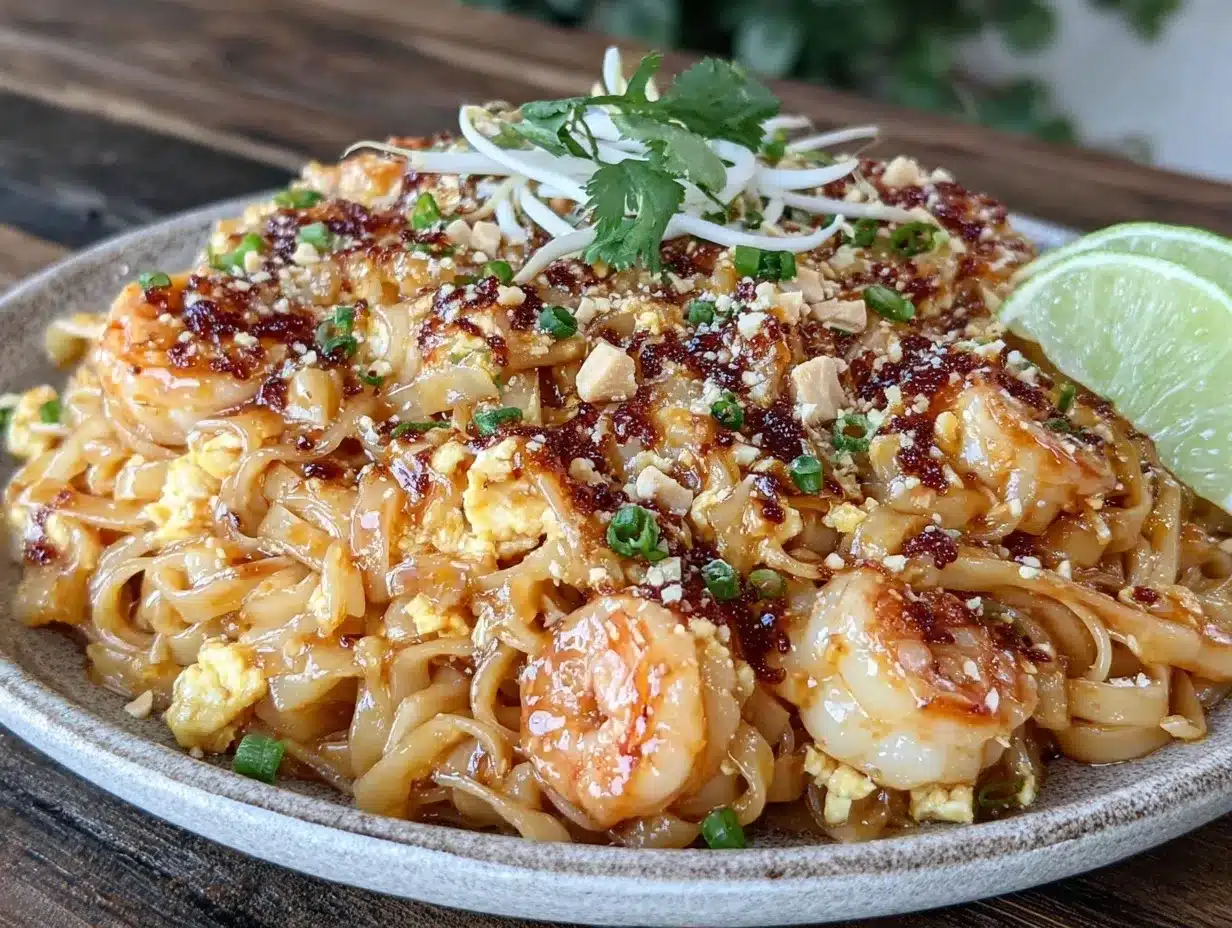
- Prepare the noodles: Soak 8 oz (225 g) rice noodles in warm water for 20-30 minutes until pliable but not mushy. Drain and set aside. (If using dried noodles, follow package instructions closely.)
- Make the tamarind sauce: In a small bowl, mix 2 tablespoons tamarind paste, 2 tablespoons palm sugar, and 3 tablespoons fish sauce. Stir until the sugar dissolves. If the tamarind paste is thick, add a tablespoon of warm water to loosen it. Set aside. (Pro tip: roasting the tamarind paste lightly in a dry pan before mixing deepens the flavor.)
- Heat the wok: Add 2 tablespoons cooking oil to a hot wok over medium-high heat. Swirl to coat.
- Sauté aromatics: Add minced garlic and sliced shallots; stir-fry for 30 seconds until fragrant but not browned.
- Add protein: Toss in cubed tofu and cooked shrimp. Stir-fry for 2-3 minutes until tofu edges are golden and shrimp are warmed through.
- Push ingredients aside: Clear a space in the center of the wok and pour the beaten eggs. Let them set for 10 seconds, then scramble gently to cook through.
- Add noodles and sauce: Add the drained noodles and pour the tamarind sauce over. Toss everything together quickly but gently, making sure the noodles are evenly coated. This should take about 1-2 minutes; avoid overcooking to keep noodles tender.
- Final touches: Stir in bean sprouts and sliced green onions. Toss briefly just to combine and warm through.
- Serve: Plate your pad thai immediately. Sprinkle with roughly chopped roasted peanuts, red chili flakes if using, and a generous squeeze of lime.
Quick tip: If your noodles start sticking, splash a little warm water to loosen. Also, working fast helps keep everything vibrant and fresh-tasting. I once got distracted and overcooked the noodles, which turned the dish mushy. Don’t make my mistake!
Cooking Tips & Techniques
Getting the perfect pad thai with tamarind sauce is about balancing heat, timing, and technique. Here’s what I’ve learned from many kitchen adventures:
- High heat is your friend: Stir-frying quickly over high heat gives that slightly charred, smoky flavor you want. But watch out—too hot and you risk burning your garlic or tofu.
- Don’t overcrowd the pan: If your wok is small, cook in batches. Overcrowding causes steaming rather than frying, leading to soggy noodles.
- Prep everything before you start: Once the wok heats up, things move fast. Have your sauce, noodles, and proteins ready to go.
- Balance the sauce: The tamarind sauce should be tangy, sweet, and salty. Taste and adjust each element to your preference before adding to the noodles.
- Use fresh ingredients: Fresh bean sprouts and green onions add brightness and crunch that contrast the soft noodles perfectly.
- Peanuts last: Add roasted peanuts at the end to keep their crunch. Toast your own peanuts if you can—it’s worth the effort.
I remember the first time I tried skipping the tamarind paste and just using bottled sauces—it was a sad, flat version of the real thing. Trust me, the fresh tamarind paste makes a world of difference.
Variations & Adaptations
This pad thai with tamarind sauce is wonderfully adaptable. Here are a few ways to make it your own:
- Vegetarian or vegan: Swap fish sauce for soy sauce or tamari, and skip shrimp. Add extra tofu or mushrooms for protein.
- Gluten-free: Use tamari instead of soy sauce and check your tamarind paste for any additives.
- Spicy kick: Add fresh Thai chilies or a dash of Sriracha for heat. I’ve played around with fresh bird’s eye chilies for an authentic punch.
- Seasonal twist: In summer, toss in fresh mango or pineapple chunks for a tropical vibe. In winter, roasted sweet potatoes add a comforting sweetness.
- Different proteins: Chicken breast or pork slices work well if you prefer meat over shrimp.
One time, I made a version with smoked tempeh that surprised everyone at dinner. The smokiness paired beautifully with the tamarind sauce, giving it a whole new dimension.
Serving & Storage Suggestions
Pad thai is best served fresh and hot, right off the wok. The noodles have a perfect chew when warm, and the sauce shines brightest then.
Serve it with extra lime wedges and chili flakes on the side so everyone can customize their plate. I often pair it with a light cucumber salad or a cold Thai iced tea to balance the flavors.
If you have leftovers, store them in an airtight container in the refrigerator for up to 2 days. When reheating, add a splash of water and warm gently in a skillet to prevent drying out. Avoid microwaving if possible—it tends to make the noodles gummy.
Interestingly, the flavors deepen slightly after a day, but the texture changes, so fresh is definitely best.
Nutritional Information & Benefits
This Flavorful Pad Thai with Tamarind Sauce is a balanced meal with carbs from rice noodles, protein from shrimp and tofu, and healthy fats from peanuts. A typical serving contains approximately:
| Calories | 450-500 kcal |
|---|---|
| Protein | 25 g |
| Carbohydrates | 55 g |
| Fat | 15 g |
Tamarind paste is rich in antioxidants and adds beneficial vitamins, while peanuts provide heart-healthy fats. This recipe can be easily adjusted for gluten-free or vegetarian diets, making it versatile for many nutritional needs.
Conclusion
If you’re craving an authentic, flavorful pad thai with tamarind sauce that’s both approachable and delicious, this recipe is a great place to start. It’s got that magical balance of tangy, sweet, and savory that keeps me coming back for more—plus, it’s a fun way to bring a little Thai street food magic into your own kitchen.
Feel free to tweak the spice level, protein choices, or even toss in some seasonal veggies. Cooking is about making the recipe your own, after all. I hope you enjoy making and sharing this dish as much as I do.
If you give this recipe a try, I’d love to hear how it turned out or what variations you made. Share your stories and let’s keep the flavors rolling!
FAQs
What’s the best way to soften rice noodles for pad thai?
Soak them in warm water for 20-30 minutes until pliable but still firm. Avoid boiling unless the package says so, as overcooking makes them mushy.
Can I make the tamarind sauce ahead of time?
Absolutely! The sauce keeps well in the fridge for up to a week, making weeknight cooking quicker.
What if I can’t find tamarind paste?
You can try tamarind concentrate or even tamarind juice, but paste offers the best depth of flavor. Avoid bottled sauces labeled “pad thai sauce” as they often contain added sugars and preservatives.
Is there a vegetarian version of this pad thai?
Yes! Replace fish sauce with soy sauce or tamari, and skip shrimp. Extra tofu or mushrooms make great protein substitutes.
How spicy is this recipe by default?
It’s mildly spicy, but you can easily adjust by adding more or less chili flakes or fresh chilies to suit your taste.
PrintFlavorful Pad Thai with Tamarind Sauce

An authentic and easy-to-make Thai pad thai recipe featuring a tangy, smoky-sweet tamarind sauce that delivers bold flavors and satisfying textures.
- Prep Time: 15 minutes
- Cook Time: 15 minutes
- Total Time: 30 minutes
- Yield: 4 servings 1x
- Category: Main Course
- Cuisine: Thai
Ingredients
- 8 oz (225 g) flat rice noodles, soaked or boiled as per package instructions
- 2 tablespoons tamarind paste, preferably unsweetened
- 2 tablespoons palm sugar, grated or chopped (brown sugar can substitute)
- 3 tablespoons fish sauce (use soy sauce or tamari for vegetarian/vegan option)
- 3 cloves garlic, minced
- 2 small shallots, thinly sliced
- 2 large eggs, beaten
- 7 oz (200 g) firm tofu, pressed and cubed (optional)
- 8 oz (225 g) cooked shrimp, peeled and deveined (can substitute with chicken or keep vegetarian)
- 1/3 cup (about 50 g) roasted peanuts, roughly chopped
- 3 stalks green onions, sliced
- 1 cup bean sprouts, rinsed
- Lime wedges, for serving
- Red chili flakes or fresh chili, to taste
- 2 tablespoons cooking oil, preferably peanut or vegetable oil
Instructions
- Soak 8 oz (225 g) rice noodles in warm water for 20-30 minutes until pliable but not mushy. Drain and set aside.
- In a small bowl, mix 2 tablespoons tamarind paste, 2 tablespoons palm sugar, and 3 tablespoons fish sauce. Stir until the sugar dissolves. Add a tablespoon of warm water if tamarind paste is thick. Set aside.
- Heat 2 tablespoons cooking oil in a hot wok over medium-high heat and swirl to coat.
- Add minced garlic and sliced shallots; stir-fry for 30 seconds until fragrant but not browned.
- Add cubed tofu and cooked shrimp; stir-fry for 2-3 minutes until tofu edges are golden and shrimp are warmed through.
- Push ingredients aside, pour beaten eggs into the center, let set for 10 seconds, then scramble gently to cook through.
- Add drained noodles and pour tamarind sauce over. Toss quickly but gently to coat noodles evenly, about 1-2 minutes.
- Stir in bean sprouts and sliced green onions; toss briefly to combine and warm through.
- Serve immediately, sprinkled with roughly chopped roasted peanuts, red chili flakes if using, and a squeeze of lime.
Notes
Roasting tamarind paste lightly before mixing deepens the flavor. Use high heat and avoid overcrowding the pan to prevent soggy noodles. Add peanuts last to keep their crunch. If noodles stick, splash a little warm water to loosen. Fresh tamarind paste is preferred over bottled sauces for authentic taste.
Nutrition
- Serving Size: 1 serving (approxima
- Calories: 475
- Sugar: 8
- Sodium: 900
- Fat: 15
- Saturated Fat: 2.5
- Carbohydrates: 55
- Fiber: 3
- Protein: 25
Keywords: Pad Thai, Tamarind Sauce, Thai Recipe, Authentic Pad Thai, Easy Pad Thai, Stir-fry Noodles, Thai Street Food