Love this? Save it for later!
Share the inspiration with your friends
Introduction
“You ever get a recipe from a complete stranger at a street festival?” That’s how I came across this creamy Greek moussaka with béchamel. It was a sweltering afternoon at a little Mediterranean fair, and I found myself chatting with an elderly gentleman named Nikos, who was manning the food stall. Between flipping grilled lamb skewers, he shared stories of his childhood in Crete and how moussaka was the dish that brought his whole family together every Sunday. I wasn’t planning to try making it myself—too many layers, too many steps, you know? But when I finally did, I realized this recipe wasn’t just about the ingredients; it was a comforting ritual wrapped in creamy béchamel and rich, savory layers.
There was a moment in the kitchen when I forgot to add the nutmeg to the béchamel—classic me! But honestly, the dish still came out luscious and satisfying. Maybe you’ve been there, juggling too many pots and pans, hoping the layers come together just right. This moussaka recipe has stuck with me ever since, not just because it’s delicious, but because it embodies that cozy, soulful feeling that only a classic homemade meal can bring. Let me tell you, once you master the béchamel and those tender layers of eggplant and meat sauce, this dish will have you closing your eyes after the very first bite.
Why You’ll Love This Recipe
After countless trials and a few happy accidents, this creamy Greek moussaka with béchamel has become my go-to comfort food. It’s not just a classic—it’s the kind of dish that feels special without being fussy.
- Quick & Easy: You can have this layered delight ready in about 1 hour and 30 minutes—perfect for a weekend treat or a cozy dinner.
- Simple Ingredients: No need for exotic items; most are pantry staples or easy to find at your local market.
- Perfect for Family Meals: Whether it’s a holiday gathering or a casual Sunday dinner, moussaka brings everyone to the table.
- Crowd-Pleaser: Kids and adults alike adore the creamy béchamel topping combined with the savory meat and tender veggies.
- Unbelievably Delicious: The balance between the spiced meat sauce and smooth béchamel is just right—comfort food with a Mediterranean twist.
This recipe isn’t just any moussaka. The béchamel is whipped to a velvety perfection, thanks to a little extra butter and a pinch of nutmeg that I swear makes all the difference. Plus, the meat sauce is simmered slowly with cinnamon and tomato to give it that warm, rich flavor you won’t forget. Honestly, it’s a recipe you’ll want to make again and again—and maybe share with that one friend who claims they don’t like eggplant (they’ll be converted, trust me).
What Ingredients You Will Need
This creamy Greek moussaka combines fresh vegetables, a savory meat sauce, and a luscious béchamel topping. The ingredients are straightforward and mostly pantry staples, which makes the whole process less intimidating than it sounds.
- For the Eggplant Layers:
- 3 medium eggplants (about 2 pounds/900g), sliced into ½-inch thick rounds
- Salt, for drawing out moisture
- Olive oil, for roasting or frying
- For the Meat Sauce:
- 1 lb (450g) ground lamb or beef (lamb adds authentic flavor, but beef works well)
- 1 large onion, finely chopped
- 3 cloves garlic, minced
- 1 cup (240ml) crushed tomatoes (I prefer Muir Glen for depth)
- 1/2 cup (120ml) red wine (optional, but adds richness)
- 1 teaspoon ground cinnamon
- 1 teaspoon dried oregano
- Salt and freshly ground black pepper, to taste
- 2 tablespoons tomato paste
- For the Béchamel Sauce:
- 4 cups (960ml) whole milk, warmed
- 6 tablespoons unsalted butter
- 6 tablespoons all-purpose flour
- 2 large eggs, beaten
- 1/4 teaspoon freshly grated nutmeg (don’t skip this—it’s magic)
- Salt and white pepper, to taste
- 1 cup (100g) grated Parmesan or Kefalotyri cheese (for authentic touch and a golden top)
Ingredient Tips: For the eggplants, look for firm, glossy skin and avoid any that feel soft or bruised. If you want a lighter version, you can grill the eggplant slices instead of frying. If you’re dairy-free, swap the milk and butter in the béchamel with unsweetened almond milk and vegan butter, but expect a slightly different texture. For a vegetarian twist, replace the meat with lentils or mushrooms—though trust me, the lamb version is worth trying at least once.
Equipment Needed
- Large skillet or sauté pan (for cooking the meat sauce)
- Baking sheet or grill pan (for roasting or grilling eggplant slices)
- Medium saucepan (for preparing béchamel sauce)
- Whisk (essential for smooth béchamel without lumps)
- 9×13 inch (23×33 cm) baking dish (classic size for layering moussaka)
- Wooden spoon and rubber spatula (for stirring and scraping)
- Knife and cutting board (for chopping onions, garlic, and slicing eggplant)
If you don’t have a whisk, a fork works in a pinch, but the béchamel might take a little longer to smooth out. For roasting eggplant, a grill pan gives you nice char marks, but a regular baking sheet lined with parchment paper works just fine. Personally, I like using a heavy-bottomed saucepan for the béchamel because it prevents burning and helps control the heat better—especially important when thickening the sauce.
Preparation Method
- Prepare the Eggplants: Slice the eggplants into ½-inch (1.3 cm) rounds. Lay them on a baking sheet and sprinkle both sides generously with salt. Let them sit for 30 minutes to draw out excess moisture and bitterness. After 30 minutes, rinse off the salt and pat dry with paper towels.
- Cook the Eggplants: Brush eggplant slices with olive oil on both sides. You can either roast them in a preheated oven at 400°F (200°C) for about 20-25 minutes, flipping halfway through, or pan-fry them in a little olive oil until golden and tender, about 3 minutes per side. Set aside on paper towels to absorb any excess oil.
- Make the Meat Sauce: Heat a skillet over medium heat and add a tablespoon of olive oil. Sauté the chopped onions until soft and translucent, about 5 minutes. Add the minced garlic and cook for another minute. Add the ground lamb or beef, breaking it up with a spoon. Brown the meat until no longer pink.
- Stir in the tomato paste, crushed tomatoes, red wine (if using), cinnamon, oregano, salt, and pepper. Reduce heat to low and simmer uncovered for 30-40 minutes, stirring occasionally until the sauce thickens. Taste and adjust seasoning as needed.
- Prepare the Béchamel Sauce: In a medium saucepan, melt butter over medium heat. Once melted, whisk in the flour and cook, whisking constantly, for about 2 minutes to form a roux. Slowly pour in the warmed milk, whisking continuously to avoid lumps. Cook until the sauce thickens and coats the back of a spoon, about 8-10 minutes.
- Remove from heat and temper the beaten eggs by slowly adding a few spoonfuls of the béchamel into the eggs while whisking. Then stir the egg mixture back into the saucepan. Add nutmeg, salt, and white pepper to taste. Stir in half of the grated cheese.
- Assemble the Moussaka: Preheat your oven to 350°F (175°C). In your baking dish, spread a thin layer of meat sauce on the bottom. Layer half the eggplant slices over the sauce. Spread half of the remaining meat sauce over the eggplant. Add the rest of the eggplant slices on top, then the remaining meat sauce. Finally, pour the béchamel sauce evenly on top and sprinkle with the remaining cheese.
- Bake: Bake uncovered for 45-50 minutes, or until the top is golden and bubbling. Let the moussaka rest for at least 20 minutes before cutting—it helps the layers set and makes serving easier.
Pro Tip: If you notice the béchamel thickening too much before assembly, just whisk in a splash of warm milk to loosen it up. Also, resting the moussaka is crucial—trust me on this one; it’ll slice beautifully without falling apart.
Cooking Tips & Techniques
Making creamy Greek moussaka with béchamel might seem like a project, but a few insider tips can make it much smoother:
- Salt the Eggplant Properly: Drawing out moisture prevents sogginess and bitterness. Don’t skip this step—even if you’re in a hurry, it makes a big difference.
- Cook the Meat Sauce Low and Slow: The longer it simmers, the richer and more complex the flavor. If you’re pressed for time, 30 minutes is the minimum.
- Whisk Béchamel Continuously: This prevents lumps and burning. A steady hand and patience here pay off with a silky sauce.
- Temper the Eggs: Adding eggs directly to hot béchamel can scramble them. Slowly mixing a bit of sauce into the eggs first saves you from curdled béchamel.
- Layer Thoughtfully: Don’t overcrowd the pan with eggplant slices when cooking—they need space to crisp up, and crowded slices get soggy.
One time, I left the oven door open during baking and the top browned unevenly—lesson learned: keep that door closed! Also, multitasking is key. While the meat sauce simmers, prep your béchamel and eggplants to save time. This way, you’re not rushing last minute and risking mistakes.
Variations & Adaptations
This classic creamy Greek moussaka is versatile, so you can tweak it to fit your taste or dietary needs.
- Vegetarian Version: Replace meat with a hearty mix of sautéed mushrooms, lentils, or even textured vegetable protein. The béchamel adds richness so you won’t miss the meat.
- Gluten-Free Adaptation: Use a gluten-free all-purpose flour blend for the béchamel roux. Make sure your tomato paste and other ingredients don’t contain gluten additives.
- Seasonal Twist: Swap eggplant for zucchini or add thin slices of potato as a bottom layer for extra heartiness during cooler months.
- Spice it Up: Add a pinch of cayenne or smoked paprika to the meat sauce for a subtle heat that wakes up the dish.
- Personal Variation: I’ve tried stirring fresh herbs like mint and parsley into the meat sauce, which brightens the flavor and adds a fresh note that balances the béchamel’s creaminess.
Serving & Storage Suggestions
Moussaka is best served warm, but not piping hot—let it sit for about 20 minutes after baking so the layers settle. I like to garnish with a sprinkle of fresh parsley or a simple green salad on the side.
Pairing this dish with a crisp white wine or a refreshing cucumber yogurt salad complements its richness beautifully. For a full Mediterranean vibe, serve with warm pita bread or lemony roasted potatoes.
Storage: Leftovers keep well in the fridge for up to 3 days, tightly covered. Reheat gently in the oven at 325°F (160°C) until warm, or in the microwave if you’re in a hurry—though the oven keeps the béchamel from drying out.
You can freeze portions for up to 2 months. Thaw overnight in the fridge and reheat as described above. Fun fact: the flavors often deepen after a day or two, so leftovers can be even better!
Nutritional Information & Benefits
One serving of this creamy Greek moussaka (about 1/8 of the dish) contains approximately:
| Calories | 450-500 kcal |
|---|---|
| Protein | 28g |
| Carbohydrates | 20g |
| Fat | 30g |
| Fiber | 5g |
This dish offers a good balance of protein and fiber thanks to the ground meat and eggplants. The eggplant itself is rich in antioxidants and dietary fiber, which helps digestion. Using olive oil provides heart-healthy fats, and the béchamel’s calcium content comes from the milk and cheese. For those watching carbs, swapping potatoes with extra eggplant or zucchini lowers the carb count.
Be mindful of dairy and gluten if you have allergies, but with simple swaps, this recipe can fit many diets. I love that it feels indulgent without being too heavy—perfect for when you want comfort food that doesn’t leave you feeling weighed down.
Conclusion
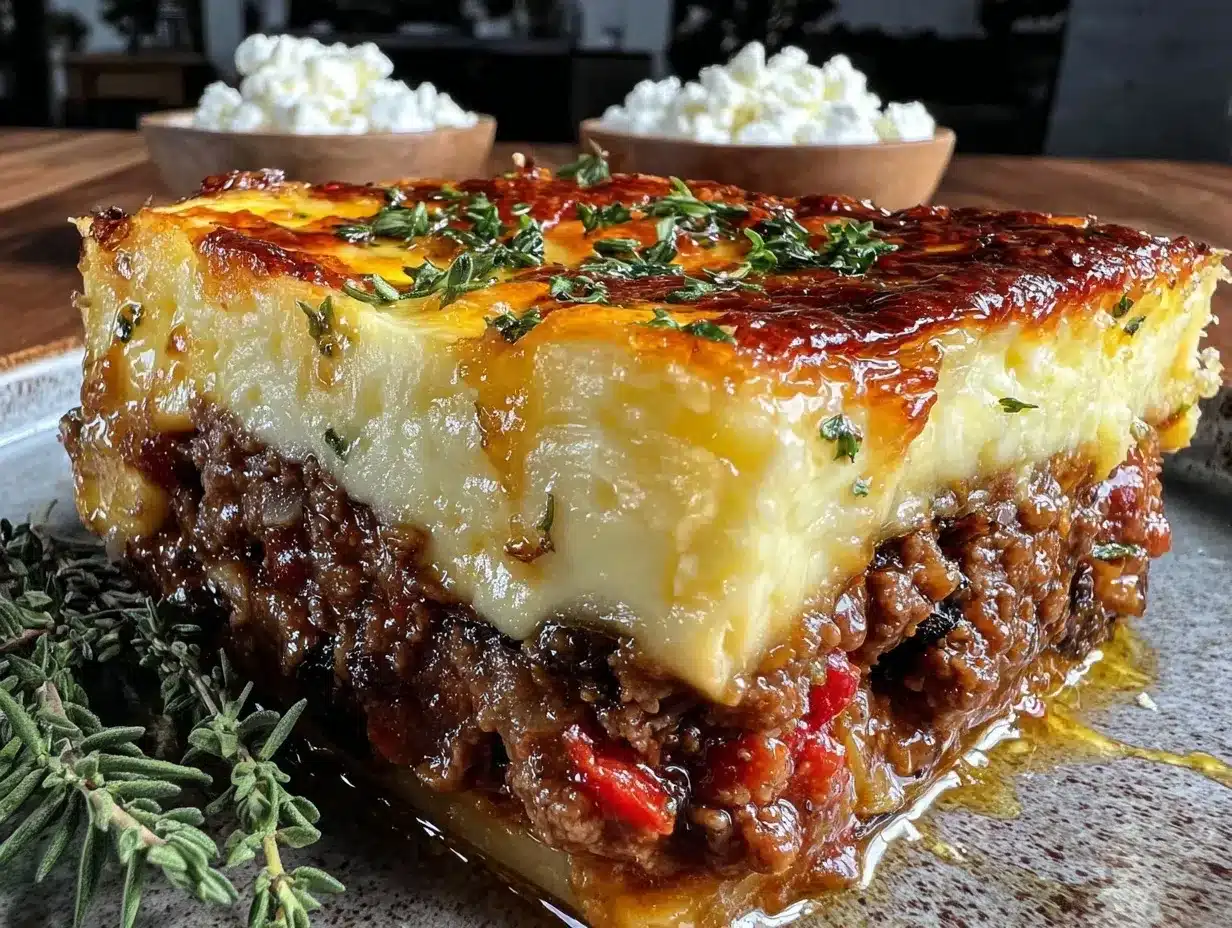
So, why give this creamy Greek moussaka with béchamel a shot? Because it’s that rare recipe that’s both approachable and deeply satisfying. It brings together layers of flavor and texture in a way that’s truly comforting but still impressive enough for guests. I’ve shared this dish with friends who were skeptical about eggplant or béchamel, and it won them over every time. Honestly, it’s a recipe that makes me feel connected to a rich tradition while still putting my own spin on it.
Feel free to adjust the spices, try different meats or vegetables, and make it your own. And hey, if you end up with a béchamel mishap or forget a step, don’t stress—it’ll still taste wonderful. I’d love to hear how your version turns out, so drop a comment below with your experience or any twists you try!
Happy cooking, and here’s to many cozy meals filled with creamy, layered delight!
FAQs
What can I use instead of eggplant in moussaka?
Zucchini or thinly sliced potatoes work well as substitutes. They create a slightly different texture but still absorb the flavors beautifully.
How do I prevent the béchamel from getting lumpy?
Whisk continuously when adding the milk to the roux, and make sure the milk is warm. Also, temper the eggs by slowly mixing some béchamel into them before adding back to the pot.
Can I make moussaka ahead of time?
Absolutely! It actually tastes better the next day once the flavors meld. Just cover and refrigerate, then reheat gently before serving.
Is there a vegetarian version of this moussaka?
Yes, replace the meat with cooked lentils, mushrooms, or a mix of sautéed vegetables. The béchamel adds richness that keeps it satisfying.
How do I store leftover moussaka?
Keep leftovers in an airtight container in the fridge for up to 3 days. You can also freeze portions for up to 2 months—just thaw overnight before reheating.
Pin This Recipe!
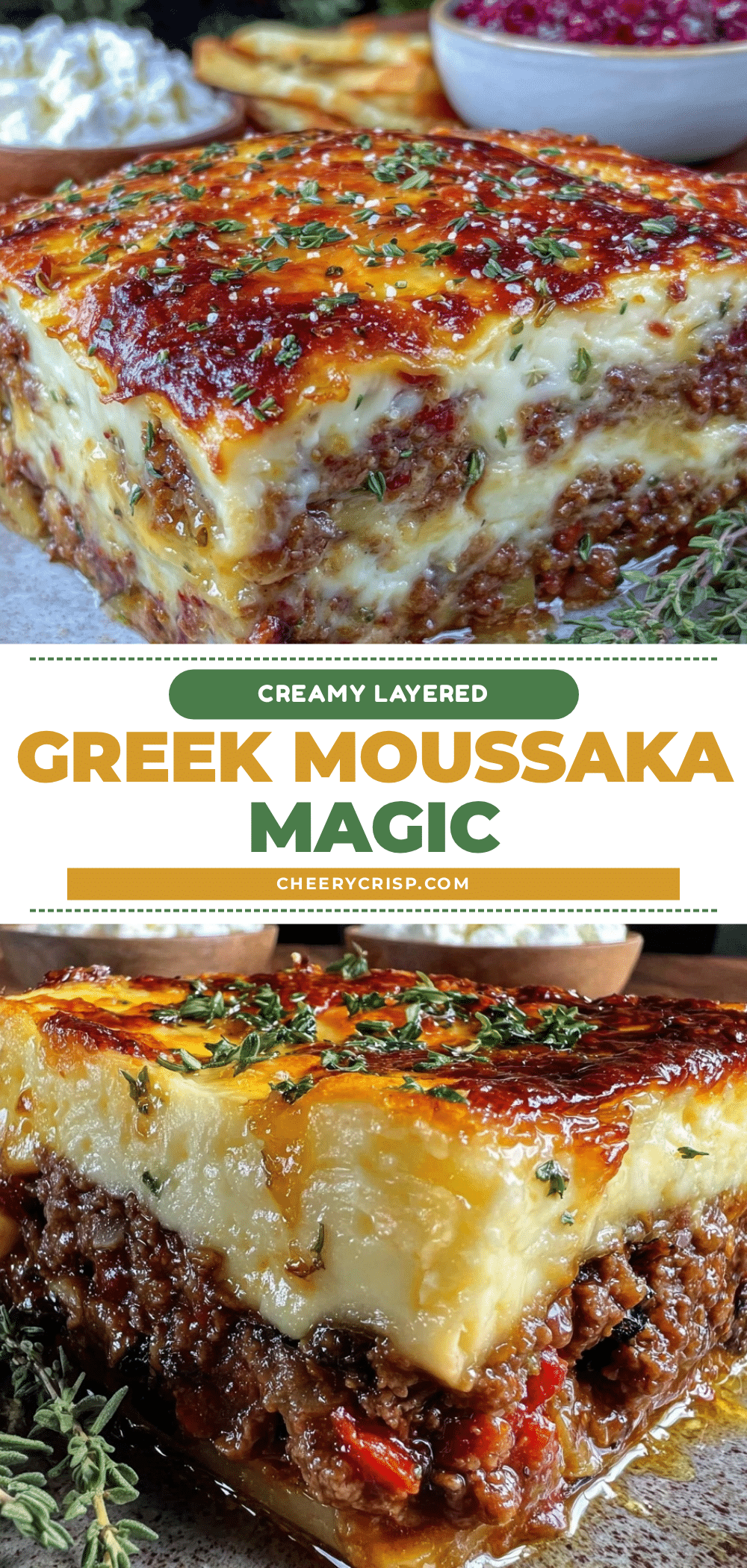
Creamy Greek Moussaka Recipe Easy Homemade Classic Layered Delight
A comforting and classic Greek moussaka layered with tender eggplant, savory meat sauce, and a velvety béchamel topping. This recipe is approachable, delicious, and perfect for family meals or special occasions.
- Prep Time: 45 minutes
- Cook Time: 1 hour 15 minutes
- Total Time: 2 hours
- Yield: 8 servings 1x
- Category: Main Course
- Cuisine: Greek
Ingredients
- 3 medium eggplants (about 2 pounds/900g), sliced into ½-inch thick rounds
- Salt, for drawing out moisture
- Olive oil, for roasting or frying
- 1 lb (450g) ground lamb or beef
- 1 large onion, finely chopped
- 3 cloves garlic, minced
- 1 cup (240ml) crushed tomatoes
- 1/2 cup (120ml) red wine (optional)
- 1 teaspoon ground cinnamon
- 1 teaspoon dried oregano
- Salt and freshly ground black pepper, to taste
- 2 tablespoons tomato paste
- 4 cups (960ml) whole milk, warmed
- 6 tablespoons unsalted butter
- 6 tablespoons all-purpose flour
- 2 large eggs, beaten
- 1/4 teaspoon freshly grated nutmeg
- Salt and white pepper, to taste
- 1 cup (100g) grated Parmesan or Kefalotyri cheese
Instructions
- Slice the eggplants into ½-inch (1.3 cm) rounds. Lay them on a baking sheet and sprinkle both sides generously with salt. Let them sit for 30 minutes to draw out excess moisture and bitterness. Rinse off the salt and pat dry with paper towels.
- Brush eggplant slices with olive oil on both sides. Roast in a preheated oven at 400°F (200°C) for 20-25 minutes, flipping halfway through, or pan-fry in olive oil until golden and tender, about 3 minutes per side. Set aside on paper towels to absorb excess oil.
- Heat a skillet over medium heat and add a tablespoon of olive oil. Sauté chopped onions until soft and translucent, about 5 minutes. Add minced garlic and cook for another minute.
- Add ground lamb or beef, breaking it up with a spoon. Brown the meat until no longer pink.
- Stir in tomato paste, crushed tomatoes, red wine (if using), cinnamon, oregano, salt, and pepper. Reduce heat to low and simmer uncovered for 30-40 minutes, stirring occasionally until sauce thickens. Adjust seasoning as needed.
- In a medium saucepan, melt butter over medium heat. Whisk in flour and cook for about 2 minutes to form a roux.
- Slowly pour in warmed milk, whisking continuously to avoid lumps. Cook until sauce thickens and coats the back of a spoon, about 8-10 minutes.
- Remove from heat and temper beaten eggs by slowly adding a few spoonfuls of béchamel into the eggs while whisking. Stir egg mixture back into saucepan.
- Add nutmeg, salt, and white pepper to taste. Stir in half of the grated cheese.
- Preheat oven to 350°F (175°C). Spread a thin layer of meat sauce on the bottom of a 9×13 inch baking dish.
- Layer half the eggplant slices over the sauce. Spread half of the remaining meat sauce over the eggplant.
- Add the rest of the eggplant slices on top, then the remaining meat sauce.
- Pour béchamel sauce evenly on top and sprinkle with remaining cheese.
- Bake uncovered for 45-50 minutes, or until the top is golden and bubbling.
- Let the moussaka rest for at least 20 minutes before cutting and serving.
Notes
If béchamel thickens too much before assembly, whisk in a splash of warm milk to loosen it. Resting the moussaka for at least 20 minutes after baking helps the layers set and makes slicing easier. Salt eggplant well to draw out moisture and prevent sogginess. For a lighter version, grill eggplant slices instead of frying. Vegetarian and gluten-free adaptations are possible with ingredient swaps.
Nutrition
- Serving Size: About 1/8 of the dis
- Calories: 475
- Sugar: 6
- Sodium: 450
- Fat: 30
- Saturated Fat: 15
- Carbohydrates: 20
- Fiber: 5
- Protein: 28
Keywords: Greek moussaka, creamy moussaka, béchamel sauce, layered casserole, Mediterranean recipe, lamb moussaka, eggplant recipe, comfort food