Love this? Save it for later!
Share the inspiration with your friends
Our neighbor, Mr. Henderson, watched me wrestle with a butternut squash on my back porch one chilly October afternoon. He didn’t say anything at first. Then he just shook his head, walked over to his garage, and came back with the most enormous, dirt-crusted squash I had ever seen. “You’re doing it all wrong,” he said, with a grin that suggested he had been cooking longer than I had been alive. He didn’t offer a recipe that day, just a better way to peel the thing. But a week later, a small thermos appeared on our doorstep with a handwritten note that simply said, “For when the wind bites.” Inside was this slow cooker butternut squash soup.
Honestly, I was a little intimidated to try making it myself at first. Mr. Henderson’s version was so perfectly smooth and deeply savory, I was convinced he had some secret ingredient he hadn’t written down. I mean, the man could make a pot of coffee that tasted like a hug, so his soup was bound to be legendary. My first attempt was a disaster—I forgot to add the sage until the very end, and it tasted more like sweet baby food than the savory, comforting bowl I remembered. But I kept at it, tweaking and tasting, and eventually, I landed on a version that felt like mine. It’s become my go-to for those days when you just need something warm and steady.
Maybe you’ve been there, staring at a pile of fall vegetables, wondering how to turn them into something that feels like a real meal without spending hours over a hot stove. That’s exactly where this recipe comes in. You just toss everything into the slow cooker, walk away, and come back to a kitchen that smells like autumn itself. It’s the kind of soup that makes you want to curl up on the couch with a good book and a thick slice of crusty bread. And honestly, that’s why it has stayed with me—it’s not just a recipe, it’s a little bit of calm in a busy week.
Why You’ll Love This Recipe
This isn’t just another butternut squash soup recipe. It’s the one that makes you forget you’re eating something that’s actually good for you. After countless batches, some that were too thin, some that were too sweet, and one that was frankly a little too garlicky, I can confidently say this version hits all the right notes. It’s the recipe I bring to potlucks and the one I make on a quiet Tuesday night when I need a little comfort.
- Hands-Off Cooking: The slow cooker does all the heavy lifting. You literally just chop, dump, and forget about it for a few hours. No stirring, no watching, no fuss.
- Simple Pantry Ingredients: You probably have most of these things in your kitchen right now. Onion, garlic, broth, and a few spices. The sage is the star, but it’s easy to find fresh or dried at any grocery store.
- Perfect for Meal Prep: This soup tastes even better the next day. Make a big batch on Sunday, and you have lunch or a quick dinner ready for half the week.
- Crowd-Pleaser: I’ve served this to picky eaters, foodie friends, and my own skeptical family. Everyone goes back for seconds. It’s creamy without being heavy, and savory without being boring.
- Unbelievably Comforting: The combination of sweet roasted squash, earthy sage, and a touch of warmth from the spices is pure magic. It’s the kind of soup that makes you close your eyes after the first spoonful.
What makes this recipe different from all the others? It’s the way the sage is handled. Instead of just tossing it in with everything else, we add a little extra at the end to keep its flavor bright and fresh. This little trick, learned from a few too many batches of muddy-tasting soup, makes all the difference. It’s not just about the ingredients; it’s about the timing. This soup is comfort food, reimagined for a busy world—healthier, easier, but with the same soul-soothing satisfaction you crave on a cold day.
What Ingredients You Will Need
This recipe uses simple, wholesome ingredients to deliver a rich and complex flavor. The magic is in how they come together in the slow cooker, letting each component shine without any complicated steps. You’ll find that most of these are fall pantry staples, easy to find and even easier to love.
- For the Soup Base:
- 1 large butternut squash (about 3 pounds), peeled, seeded, and cut into 1-inch cubes (look for one that feels heavy for its size, it will be sweeter)
- 1 medium yellow onion, roughly chopped
- 3 cloves garlic, minced (I use a microplane for this, it melts right into the soup)
- 1 large carrot, peeled and chopped (adds a subtle sweetness and beautiful color)
- 1 large apple, peeled, cored, and chopped (a Granny Smith or Honeycrisp works great, it brightens the whole soup)
- For the Liquid and Seasoning:
- 4 cups low-sodium vegetable broth (I like Imagine brand for its clean taste, but any good quality broth works)
- 1 can (13.5 oz) full-fat coconut milk (the creamy kind, not the light version, it makes the soup luscious)
- 2 tablespoons fresh sage leaves, finely chopped, plus extra for garnish (about 8-10 large leaves)
- 1 teaspoon dried thyme
- 1/2 teaspoon ground nutmeg (freshly grated is amazing, but pre-ground is fine)
- 1 teaspoon salt, or more to taste
- 1/2 teaspoon black pepper
- 1 tablespoon olive oil (for sautéing the aromatics)
- For Garnish (optional but highly recommended):
- Extra coconut milk or heavy cream (for a swirl on top)
- Fried sage leaves (just a quick fry in a little butter or oil)
- Toasted pumpkin seeds (pepitas)
- A drizzle of good quality maple syrup
Ingredient selection tip: When choosing a butternut squash, look for one with a long, straight neck. It’s much easier to peel and cut than the bulbous bottom part. If fresh sage is hard to find, you can use dried, but you’ll only need about 1 tablespoon. The flavor is more concentrated, so be careful not to overdo it. For a dairy-free option, the coconut milk is perfect, but if you prefer a more traditional flavor, you can swap it for heavy cream or half-and-half, just add it at the very end to prevent curdling.
Equipment Needed
You don’t need a lot of fancy gear for this recipe, which is part of its charm. A few basic kitchen tools and your trusty slow cooker are all it takes. I’ve made this in both a 6-quart and a 4-quart slow cooker, and both work perfectly. If you have a smaller one, just make sure you don’t overfill it.
- Slow Cooker (4 to 6 quarts): This is the star of the show. Any brand will do, but I’ve had great luck with my Cuisinart model. It heats evenly and has a handy “brown/sauté” setting that saves me a pan.
- Chef’s Knife: A sharp one is non-negotiable for cutting through that tough butternut squash. Trust me, a dull knife makes this job miserable.
- Vegetable Peeler: A good Y-peeler makes quick work of the squash skin. I find it much easier to use than a standard swivel peeler.
- Large Skillet or Sauté Pan: For quickly softening the onion and garlic before they go into the slow cooker. This step adds so much depth of flavor, don’t skip it.
- Immersion Blender: This is my favorite tool for the job. It lets you blend the soup right in the slow cooker, saving you from having to transfer hot liquid to a blender in batches. If you don’t have one, a regular countertop blender works, just be careful with the hot steam.
- Cutting Board: A large, sturdy board is essential for all that chopping.
- Measuring Cups and Spoons: For accuracy, especially with the spices and broth.
Budget-friendly tip: If you don’t own an immersion blender, a standard blender is a great alternative. Just let the soup cool slightly before blending, and only fill the blender pitcher halfway at a time to avoid a hot soup explosion. I learned that lesson the hard way, and let me tell you, cleaning butternut squash soup off the ceiling is not fun.
Preparation Method

This is where the magic happens. The steps are simple, but each one builds on the last to create a soup that tastes like you spent hours fussing over it. Follow along, and you’ll have a pot of pure comfort waiting for you.
- Prepare the Squash (10 minutes): Start by peeling the butternut squash with your vegetable peeler. Cut off the top and bottom, then slice it in half where the narrow neck meets the bulbous bottom. Cut each piece in half lengthwise and scoop out the seeds and stringy bits with a spoon. Now, cut the flesh into 1-inch cubes. Don’t stress about perfection, just try to get them roughly the same size so they cook evenly.
- Sauté the Aromatics (5 minutes): Heat the olive oil in your large skillet over medium heat. Add the chopped onion and cook for about 3 minutes, until it becomes soft and translucent. Add the minced garlic and cook for another 30 seconds, just until it’s fragrant. This little step wakes up the flavors in a way that dumping them in raw just can’t match.
- Layer in the Slow Cooker (5 minutes): Place the cubed butternut squash, chopped carrot, and chopped apple into the slow cooker. Add the sautéed onion and garlic on top. Sprinkle in the dried thyme, ground nutmeg, salt, and pepper. Don’t add the sage yet—we’re saving some for later.
- Add the Liquid (2 minutes): Pour the vegetable broth and one can of full-fat coconut milk over the vegetables. Give everything a gentle stir to combine. The liquid should almost cover the vegetables; if it doesn’t, that’s okay, the squash will release its own moisture as it cooks.
- Cook Low and Slow (6-8 hours on LOW or 3-4 hours on HIGH): Put the lid on your slow cooker and let it do its thing. I prefer cooking on LOW for a longer time—it really lets the flavors meld together beautifully. You’ll know it’s ready when the squash is fork-tender and practically falling apart.
- Blend Until Smooth (5 minutes): Once the cooking time is up, turn off the slow cooker. If you’re using an immersion blender, carefully blend the soup right in the pot until it is completely smooth and velvety. If you’re using a regular blender, work in batches. Fill the blender pitcher no more than halfway, hold the lid down with a kitchen towel, and blend until smooth. Pour each batch into a large bowl or pot.
- Finish with Fresh Sage (2 minutes): This is the secret step! After blending, stir in the 2 tablespoons of finely chopped fresh sage. The residual heat from the soup will gently wilt the sage, releasing its bright, aromatic flavor without cooking it away. Let it sit for about 5 minutes before serving. Taste and adjust the salt and pepper as needed.
Sensory cue: At this point, the soup should be a beautiful, deep golden-orange color. The texture should be thick enough to coat the back of a spoon but still pourable. Take a deep breath—you should smell the sweet squash, the earthy sage, and a hint of warm nutmeg.
Cooking Tips & Techniques
I’ve made this soup more times than I can count, and I’ve definitely had my share of learning moments. Here are a few things I’ve picked up along the way that will help you get it perfect on your first try.
Don’t Skip the Sauté. I know it adds one extra step and dirties one extra pan, but it is absolutely worth it. Sautéing the onion and garlic before adding them to the slow cooker deepens their flavor and removes any raw, harsh edge. It’s a small effort for a huge payoff in taste.
The Apple is Non-Negotiable. I tried making this without the apple once because I was out, and the soup was flat and one-dimensional. The apple adds a natural sweetness and a touch of acidity that brightens the whole dish. It doesn’t make the soup taste like apples; it just makes it taste more like itself.
Master the Sage Timing. This was my biggest lesson. If you add all the sage at the beginning, its delicate flavor gets completely lost in the long cooking process. You end up with a soup that tastes vaguely herby but not specifically like sage. By reserving half of it for the very end, you get a double hit of flavor—a deep, savory base from the cooking and a bright, fresh finish from the stir-in.
Blending Hot Liquid Safely. If you’re using a countertop blender, this is crucial. Hot soup expands as it blends, and the steam can pop the lid off, causing a mess and potential burns. Always let the soup cool for 10-15 minutes first, and never fill the blender more than halfway. Hold the lid down firmly with a folded kitchen towel while you blend.
Adjust the Consistency. Everyone likes their soup a little different. If you prefer a thinner soup, stir in an extra 1/2 cup of broth or water at the end. For a thicker, heartier soup, let it simmer on the stovetop for a few minutes after blending to reduce slightly. I like mine thick enough to coat a spoon but not so thick it feels like a puree.
Variations & Adaptations
One of the best things about this soup is how easily it adapts to different tastes and dietary needs. Don’t be afraid to make it your own. Here are a few variations I’ve tried and loved.
- Vegan & Dairy-Free Friendly: This recipe is already vegan and dairy-free as written, thanks to the coconut milk. For a richer, more traditional flavor, you can swap the coconut milk for an equal amount of full-fat oat milk or cashew cream. Both will give you a creamy texture without the coconut taste.
- Make it Spicy: For a warming kick, add 1/2 teaspoon of red pepper flakes along with the other spices. You can also stir in a tablespoon of sriracha or a pinch of cayenne pepper at the end. It’s a great way to warm up on a really cold day.
- Roasted Squash Shortcut: For an even deeper, caramelized flavor, you can roast the cubed butternut squash in a 400°F oven for 25-30 minutes before adding it to the slow cooker. This adds a lovely roasted, almost nutty flavor that is incredible. It’s a bit more work, but perfect for a special occasion.
- Herb Swaps: If you don’t have fresh sage, or just want to try something different, you can swap it for fresh rosemary or thyme. Use the same amount, finely chopped. Rosemary gives it a more piney, aromatic flavor, while thyme keeps it earthy and classic.
- Add Protein: To turn this soup into a complete meal, stir in 2 cups of cooked white beans (like cannellini or Great Northern) after blending. They add protein and fiber and make the soup even creamier without changing the flavor much. You can also top each bowl with shredded rotisserie chicken or crispy chickpeas.
Serving & Storage Suggestions
This soup is wonderful on its own, but a few thoughtful additions can turn it into a memorable meal. The way you serve it can make a simple weeknight dinner feel a little bit special.
Serving: Ladle the soup into warm bowls. A swirl of extra coconut milk or a drizzle of heavy cream on top looks beautiful. Garnish with a few fried sage leaves (just flash-fry them in a little butter for 30 seconds) and a sprinkle of toasted pumpkin seeds for crunch. A slice of crusty sourdough bread or a warm, flaky biscuit is the perfect companion for dipping. For a lighter meal, serve it alongside a simple green salad with a tangy vinaigrette.
Storage: This soup stores beautifully. Let it cool completely to room temperature, then transfer it to an airtight container. It will keep in the refrigerator for up to 5 days. In fact, the flavors meld and deepen overnight, so it often tastes even better the next day. The texture may thicken a bit after chilling, which is completely normal.
Freezing: This soup is a freezer superstar. Pour the cooled soup into freezer-safe bags or containers, leaving about an inch of headspace for expansion. It will keep for up to 3 months. To thaw, simply place the container in the refrigerator overnight. The texture remains remarkably smooth after freezing.
Reheating: Reheat the soup gently on the stovetop over medium-low heat, stirring occasionally. If it has thickened too much, stir in a splash of broth or water until it reaches your desired consistency. You can also reheat individual portions in the microwave, using 30-second intervals and stirring in between. Avoid boiling the soup, as this can cause the coconut milk to separate slightly.
Nutritional Information & Benefits
This soup is not just delicious; it’s packed with nutrients that make you feel good from the inside out. It’s a bowl of pure, wholesome goodness. Here’s a breakdown of what you’re getting.
Estimated Per Serving (based on 6 servings):
- Calories: 280
- Fat: 14g
- Carbohydrates: 38g
- Fiber: 8g
- Protein: 5g
- Sugar: 12g (naturally occurring from the squash and apple)
- Sodium: 580mg
Health Benefits: Butternut squash is a superstar vegetable. It is loaded with Vitamin A (great for your eyes and immune system), Vitamin C, and fiber. The apple adds additional fiber and antioxidants. Coconut milk provides healthy fats that help your body absorb the fat-soluble vitamins from the squash. Sage is known for its anti-inflammatory properties and is a good source of Vitamin K. This soup is naturally gluten-free, dairy-free, and vegan, making it a great option for many dietary needs. It’s a meal that nourishes your body and comforts your soul.
Conclusion
This slow cooker butternut squash soup with sage has become a staple in my fall and winter rotation for a reason. It’s everything I want in a comfort food—warm, creamy, deeply flavorful, and incredibly easy to make. It’s the kind of recipe that feels like a hug in a bowl, and it never fails to make my kitchen smell amazing. I love that I can throw it together in the morning and come home to a ready-made dinner that tastes like I spent hours on it.
Honestly, I hope you give this recipe a try and make it your own. Maybe you’ll add a little more spice, or swap the apple for a pear, or top it with something completely unexpected. That’s the beauty of a good soup—it’s a canvas for your own creativity. I promise, once you taste that first spoonful of silky, sage-infused soup, you’ll understand why it has a permanent spot on my menu.
I would love to hear how it turns out for you! Drop a comment below and tell me about your favorite way to serve it, or if you tried a fun variation. Don’t forget to share this recipe with a friend who needs a little cozy comfort in their life. Happy cooking, and stay warm out there!
Frequently Asked Questions
Can I use frozen butternut squash for this recipe?
Absolutely! Frozen butternut squash is a great time-saver. You can use about 4 cups of frozen cubed squash in place of the fresh one. No need to thaw it first, just add it directly to the slow cooker. You may need to cook it for an extra 30 minutes to an hour, as frozen vegetables release more water and take a little longer to become tender.
My soup turned out too thin. How can I thicken it?
This happens sometimes, especially if your squash was very watery. The easiest fix is to let the soup simmer on the stovetop after blending, uncovered, for 10-15 minutes. This will allow some of the excess liquid to evaporate and the soup to thicken. You can also stir in a tablespoon of cornstarch mixed with two tablespoons of cold water (a slurry) and simmer for a few more minutes.
Can I make this soup in an Instant Pot?
Yes, you can! Use the sauté function to cook the onion and garlic right in the pot. Then add the remaining ingredients (except the fresh sage for finishing). Pressure cook on HIGH for 10 minutes, then let the pressure release naturally for 10 minutes before doing a quick release. Blend as directed and stir in the fresh sage at the end.
Is there a substitute for coconut milk?
If you don’t have or don’t like coconut milk, you can use heavy cream, half-and-half, or even a can of full-fat evaporated milk. For a dairy-free option, full-fat oat milk or unsweetened cashew milk work wonderfully. Just keep in mind that the flavor and texture will change slightly. Heavy cream will make it richer, while oat milk will keep it lighter.
How do I prevent the soup from separating when I reheat it?
Separation can happen if the soup is heated too quickly or at too high a temperature. To avoid this, always reheat the soup gently over medium-low heat, stirring frequently. If you are using a microwave, use 50% power and stir every 30 seconds. If separation does occur, a vigorous whisk or a quick blitz with your immersion blender will bring it back together perfectly.
Pin This Recipe!
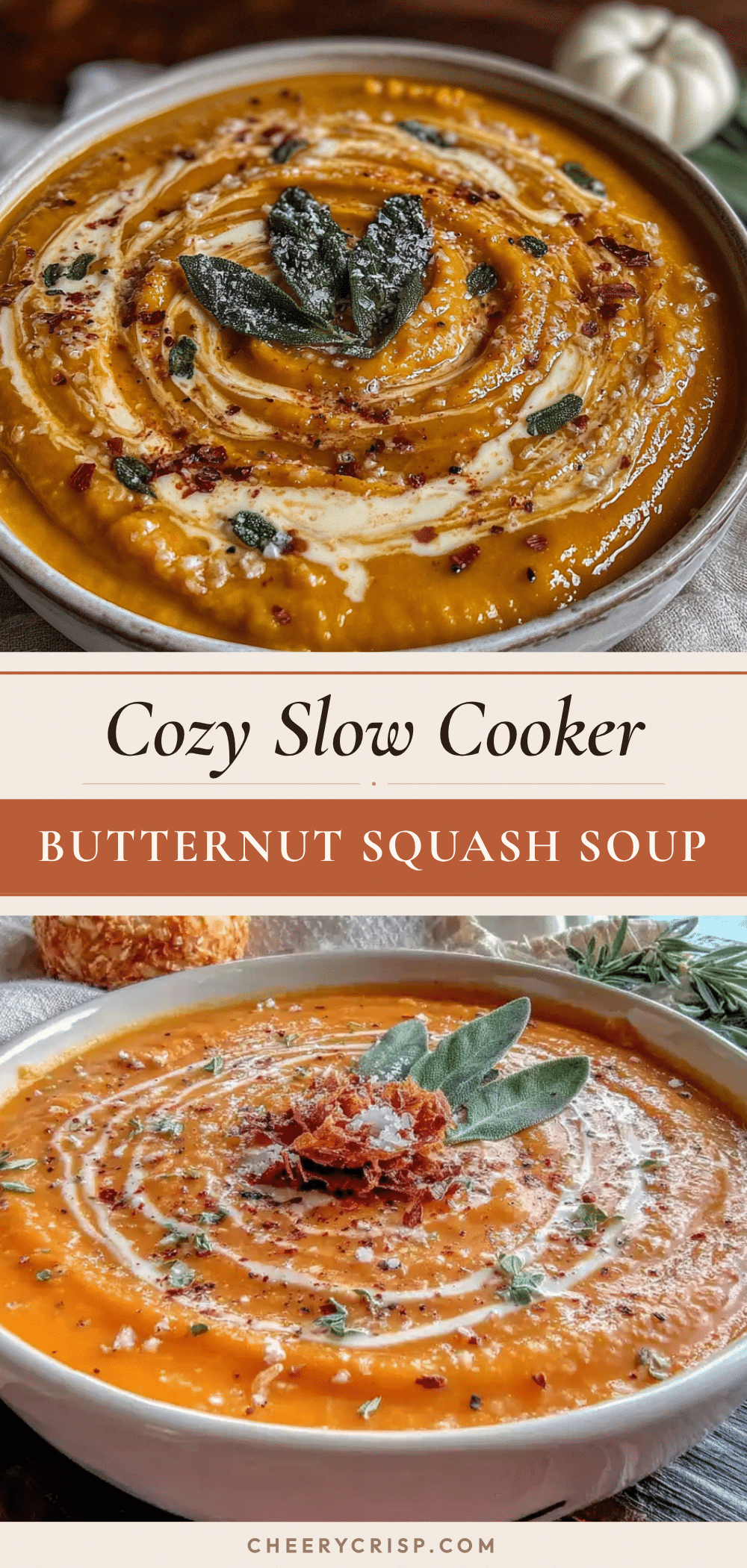
Cozy Slow Cooker Butternut Squash Soup with Sage

This slow cooker butternut squash soup is creamy, deeply savory, and incredibly easy to make. It’s the perfect hands-off comfort food for chilly days, with a secret trick for keeping the sage flavor bright and fresh.
- Prep Time: 20 minutes
- Cook Time: 6 hours (on LOW) or 3 hours (on HIGH)
- Total Time: 6 hours 20 minutes (on LOW) or 3 hours 20 minutes (on HIGH)
- Yield: 6 servings 1x
- Category: Soup
- Cuisine: American
Ingredients
- 1 large butternut squash (about 3 pounds), peeled, seeded, and cut into 1-inch cubes
- 1 medium yellow onion, roughly chopped
- 3 cloves garlic, minced
- 1 large carrot, peeled and chopped
- 1 large apple (Granny Smith or Honeycrisp), peeled, cored, and chopped
- 4 cups low-sodium vegetable broth
- 1 can (13.5 oz) full-fat coconut milk
- 2 tablespoons fresh sage leaves, finely chopped, plus extra for garnish
- 1 teaspoon dried thyme
- 1/2 teaspoon ground nutmeg
- 1 teaspoon salt, or more to taste
- 1/2 teaspoon black pepper
- 1 tablespoon olive oil
- Extra coconut milk or heavy cream for garnish (optional)
- Fried sage leaves for garnish (optional)
- Toasted pumpkin seeds (pepitas) for garnish (optional)
- A drizzle of good quality maple syrup for garnish (optional)
Instructions
- Prepare the Squash: Peel the butternut squash with a vegetable peeler. Cut off the top and bottom, then slice in half where the narrow neck meets the bulbous bottom. Cut each piece in half lengthwise and scoop out the seeds and stringy bits. Cut the flesh into 1-inch cubes.
- Sauté the Aromatics: Heat the olive oil in a large skillet over medium heat. Add the chopped onion and cook for about 3 minutes until soft and translucent. Add the minced garlic and cook for another 30 seconds until fragrant.
- Layer in the Slow Cooker: Place the cubed butternut squash, chopped carrot, and chopped apple into the slow cooker. Add the sautéed onion and garlic on top. Sprinkle in the dried thyme, ground nutmeg, salt, and pepper. Do not add the sage yet.
- Add the Liquid: Pour the vegetable broth and full-fat coconut milk over the vegetables. Gently stir to combine.
- Cook Low and Slow: Cover and cook on LOW for 6-8 hours or on HIGH for 3-4 hours, until the squash is fork-tender.
- Blend Until Smooth: Turn off the slow cooker. Using an immersion blender, blend the soup directly in the pot until completely smooth and velvety. Alternatively, let the soup cool slightly, then blend in batches in a countertop blender, filling no more than halfway and holding the lid down with a towel.
- Finish with Fresh Sage: Stir in the 2 tablespoons of finely chopped fresh sage. Let the soup sit for about 5 minutes before serving. Taste and adjust salt and pepper as needed.
Notes
Don’t skip sautéing the aromatics—it deepens the flavor. The apple is essential for natural sweetness and acidity. Reserve half the sage for the end to keep its flavor bright. For a thinner soup, stir in extra broth; for a thicker soup, simmer on the stovetop after blending. This soup stores well in the fridge for up to 5 days and freezes for up to 3 months.
Nutrition
- Serving Size: 1 bowl (about 1.5 cu
- Calories: 280
- Sugar: 12
- Sodium: 580
- Fat: 14
- Saturated Fat: 10
- Carbohydrates: 38
- Fiber: 8
- Protein: 5
Keywords: slow cooker butternut squash soup, creamy butternut squash soup, sage soup, fall soup, vegan soup, gluten-free soup, easy soup recipe