Love this? Save it for later!
Share the inspiration with your friends
My roommate asked me why I couldn’t just use the ramen seasoning packet for the stir fry sauce instead of mixing up a whole separate thing. I stared at her for a second, ready to launch into this whole explanation about how the packet is designed for soup, not stir fry, and how the flavors wouldn’t concentrate the same way. Then I stopped. I honestly had no good reason except that I’d never tried it.
So I did it. I dumped that little seasoning packet into the pan with the drained noodles and a splash of soy sauce, and you know what? It was perfect. I mean, really perfect. The powder dissolved right into the heat and coated every strand of noodle with this salty, savory goodness that tasted exactly like the lazy, genius comfort food I needed after a long Tuesday. I sat there eating straight from the pan, genuinely annoyed at how long I’d been overcomplicating things.
That was three years ago, and this 5-ingredient dorm room ramen stir fry has been in steady rotation ever since. It’s the kind of recipe that makes you feel like you’re cheating the system—because honestly, you kind of are. You’re taking a 25-cent pack of instant noodles and turning it into something that tastes like you actually tried. Maybe you’ve been there, standing in front of your pantry with zero energy and even fewer groceries, wondering if there’s a way to make something that isn’t sad. There is. And it starts with a packet of ramen and a little bit of faith.
Why You’ll Love This Recipe
This isn’t just another way to cook ramen. This is the version I’ve tested more times than I care to admit, tweaking proportions and timing until it hit that sweet spot between crispy, chewy, and saucy. Let me tell you why this one sticks.
- Only 5 Ingredients: Ramen noodles, frozen vegetables, eggs, soy sauce, and butter. That’s it. No fancy shopping list, no obscure Asian condiments you’ll use once and forget about.
- Ready in 10 Minutes: From the moment you start boiling water to the first bite, you’re looking at under ten minutes. This is faster than delivery and cheaper than a vending machine snack.
- Perfect for Late-Night Cravings: Whether you’re studying, working late, or just don’t feel like adulting, this recipe delivers comfort without effort.
- Endlessly Customizable: Once you know the base formula, you can toss in whatever you have—leftover chicken, a handful of spinach, a squirt of sriracha. It forgives everything.
- Actually Satisfying: Unlike plain ramen soup that leaves you hungry an hour later, this stir fry has real protein and vegetables. It feels like a meal, not a snack.
What makes this recipe different is the technique. Most people just boil ramen and call it a day. But by draining the noodles first and stir-frying them in butter until they get those crispy golden edges, you unlock a texture that plain soup noodles just can’t touch. It’s comfort food reimagined—faster, cheaper, and somehow even more soul-soothing than the original.
What Ingredients You Will Need
This recipe uses five simple ingredients that you probably already have in your kitchen. Each one plays a specific role in creating that perfect balance of flavor and texture without any fuss.
For the Base:
- 2 packs instant ramen noodles (discard the seasoning packets or save them for later—you’ll use one here). I prefer Maruchan or Nissin for their consistent noodle texture. The cheap ones work best here, honestly. Save your fancy organic noodles for another day.
- 1 tablespoon butter (salted or unsalted both work—just adjust your soy sauce accordingly). Butter gives the noodles that rich, glossy finish that oil alone can’t replicate.
For the Vegetables:
- 1 cup frozen mixed vegetables (peas, carrots, corn, and green beans are my go-to blend). No chopping required. Keep a bag in your freezer at all times—they’re the ultimate dorm room hack. If you’re feeling fancy, fresh broccoli or bell peppers work beautifully too.
For the Protein:
- 2 large eggs (room temperature if you remember, straight from the fridge if you don’t—I’ve done both). The eggs scramble into the noodles and create these lovely little ribbons of protein throughout the dish.
For the Sauce:
- 1 seasoning packet from the ramen (yes, the one you normally throw away). This is the secret ingredient that makes everything taste like it took way more effort than it did.
- 1 tablespoon soy sauce (low sodium is fine, regular is fine—just don’t skip it). The soy sauce adds depth and balances the richness of the butter and eggs.
Optional but Recommended:
- Sriracha or chili flakes for heat. I add this about half the time, depending on my mood.
- Sesame oil for a nutty finish. A few drops at the end takes this from good to “wait, what did you put in this?”
- Green onions for freshness and color. They make it look like you actually tried.
That’s genuinely it. Five ingredients, plus a few optional extras that don’t count because they’re just fun. The beauty of this recipe is how forgiving it is—swap the vegetables, change the protein, adjust the sauce. It works every time.
Equipment Needed
You don’t need much for this recipe, which is exactly the point. Here’s what you’ll need and a few workarounds if you’re working with a minimal kitchen setup.
- A medium pot: For boiling the ramen noodles. Any pot will do—just make sure it’s big enough for the noodles to move around freely. If you don’t have a pot, a microwave-safe bowl works in a pinch (just microwave the noodles with water for 3-4 minutes).
- A colander or strainer: To drain the noodles. No colander? Use the pot lid tilted at an angle, or a fork to fish the noodles out. I’ve done both.
- A non-stick skillet or frying pan: This is crucial for the stir-fry step. Non-stick makes cleanup infinitely easier, especially when you’re cooking eggs. An 8 or 10-inch pan works perfectly.
- A spatula or wooden spoon: For stirring and scrambling. I prefer a silicone spatula because it doesn’t scratch non-stick surfaces.
- A bowl: For beating the eggs before adding them to the pan. You can skip this and crack them directly into the pan if you’re feeling bold—I’ve done both and honestly, the bowl method gives you more control.
That’s it. Five pieces of equipment for a five-ingredient recipe. If you’re in a dorm room with a hot plate and a microwave, you can still make this work. I once made this with a camping stove and a single pot—took a little longer, but tasted just as good.
Preparation Method
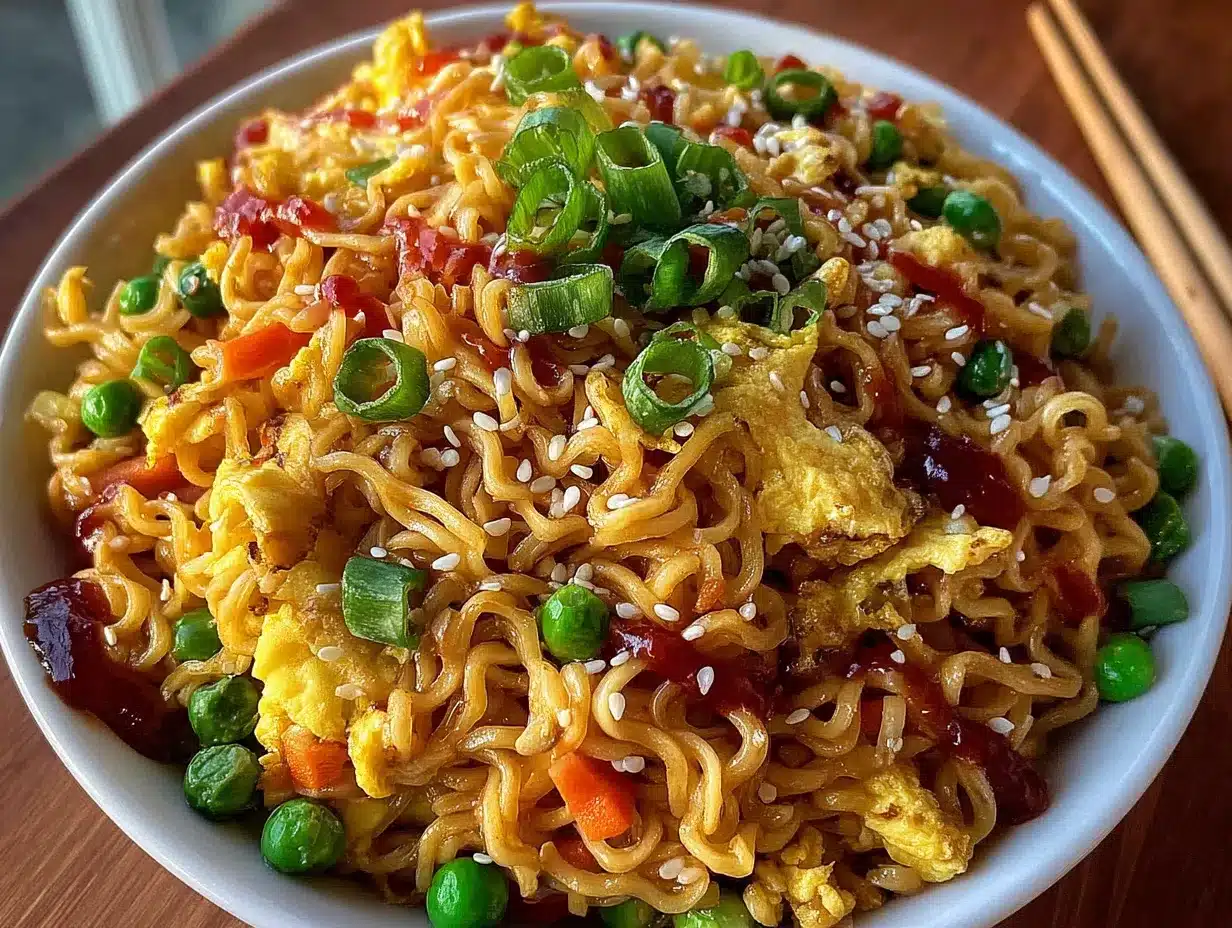
Let me walk you through this step by step. I’ve made this recipe dozens of times, and these are the exact moves that get the best results every single time.
Step 1: Boil the Ramen (2 minutes)
Bring about 4 cups of water to a boil in your medium pot. Once it’s bubbling, add both packs of ramen noodles (discard the seasoning packets or set them aside—you’ll use one later). Boil for exactly 2 minutes. You want the noodles to be just barely tender but still firm in the center. They’ll finish cooking in the pan, so undercook them slightly here. Drain the noodles immediately into your colander and give them a quick rinse with cold water to stop the cooking process. Set them aside.
Step 2: Scramble the Eggs (2 minutes)
While the noodles are boiling, crack both eggs into a small bowl and beat them with a fork until the yolks and whites are fully combined. Heat your non-stick skillet over medium heat and add half a tablespoon of butter. Once it melts and starts to sizzle, pour in the beaten eggs. Let them sit undisturbed for about 20 seconds, then start scrambling with your spatula. Cook until they’re just set but still soft and fluffy—about 60 to 90 seconds. Transfer the scrambled eggs to a plate and set them aside. Don’t overcook them here; they’ll get a little more heat later.
Step 3: Crisp the Noodles (3 minutes)
In the same skillet, add the remaining half tablespoon of butter over medium-high heat. Once it’s melted and foamy, add the drained ramen noodles. Spread them out into an even layer and let them cook undisturbed for about 2 minutes. You want the bottom to get golden brown and slightly crispy. This is the step that transforms ordinary ramen into something special—that crispy texture is where the magic happens. Flip the noodles with your spatula and cook for another minute on the other side.
Step 4: Add the Vegetables (2 minutes)
Toss in the frozen vegetables directly from the bag. No need to thaw them first—the heat from the pan will take care of that. Stir everything together and cook for about 2 minutes, until the vegetables are heated through and starting to get a little color. The frozen peas and corn will release a bit of moisture, which helps create a light sauce when combined with the butter and seasoning.
Step 5: Season and Combine (1 minute)
Sprinkle one seasoning packet from the ramen over the noodles and vegetables. Add the soy sauce and stir everything together until the seasoning powder dissolves completely and coats every strand of noodle. You should see the noodles turn a beautiful golden-brown color as the sauce comes together. If the mixture seems dry, add a tablespoon of water and toss again—the steam will help distribute the sauce.
Step 6: Finish and Serve (1 minute)
Return the scrambled eggs to the pan and give everything a final toss. Cook for about 30 seconds to reheat the eggs. Taste and adjust—add a splash more soy sauce if you want it saltier, or a drizzle of sriracha if you want heat. Serve immediately while the noodles are still crispy on the edges and the eggs are soft.
Total active time: about 10 minutes. Total dishes to wash: one pot, one colander, one skillet, one bowl, and one spatula. Not bad for a meal that tastes like you spent an hour on it.
Cooking Tips & Techniques
I’ve made this recipe enough times to know exactly where things can go wrong—and how to fix them. Here are the lessons I learned the hard way so you don’t have to.
Don’t Overcook the Noodles in the Water. This is the most common mistake. If you boil ramen for the full 3 minutes recommended on the package, they’ll turn mushy when you stir-fry them. Pull them at 2 minutes, when they’re still a little firm in the center. They’ll finish cooking in the pan and stay pleasantly chewy.
Use High Heat for the Crispy Step. Medium heat won’t give you those golden-brown edges. You need medium-high to high heat, and you need to let the noodles sit undisturbed for a full 2 minutes. I know it’s tempting to stir, but resist. That patience is what creates the texture that makes this recipe special.
Season in Layers. Don’t dump all the seasoning packet in at once. Start with half, taste, and add more if needed. Different brands have different salt levels, and you can always add more but you can’t take it out. I’ve made that mistake exactly once—it was salty enough to preserve a mummy.
Keep the Eggs Soft. When you scramble the eggs, pull them off the heat while they still look slightly underdone. They’ll continue cooking from residual heat, and then they’ll get a little more time when you add them back at the end. Overcooked scrambled eggs turn rubbery, and rubbery eggs ruin a perfectly good stir fry.
Work Fast. This isn’t a recipe where you can walk away. Everything happens quickly, and timing matters. Have your ingredients measured and ready before you start cooking. The whole process takes less than 10 minutes, but those 10 minutes require your full attention.
One Pan, Less Mess. If you’re really trying to minimize cleanup, you can cook everything in one pan. Boil the noodles, drain them, wipe the pan dry, and proceed with the stir-fry. It’s not ideal (the pan cools down between steps), but it works in a pinch.
Variations & Adaptations
This base recipe is a springboard, not a rulebook. Here are some variations I’ve tried and loved.
Spicy Garlic Version: Add 2 cloves of minced garlic to the pan right after the butter melts, before adding the noodles. Follow with 1 teaspoon of sriracha or gochujang paste along with the seasoning packet. The garlic gets fragrant in about 30 seconds, and the heat cuts through the richness of the butter beautifully.
Peanut Sauce Twist: Replace the soy sauce with 1 tablespoon of peanut butter and 1 teaspoon of rice vinegar. Stir until the peanut butter melts into a creamy sauce. Top with crushed peanuts and a squeeze of lime if you have it. This version tastes like a deconstructed pad thai and is dangerously addictive.
Vegetarian Upgrade: Skip the eggs and add extra vegetables—mushrooms, bell peppers, and snap peas work wonderfully. Use a splash of toasted sesame oil at the end for richness. The seasoning packet is already vegetarian, so no changes needed there.
Protein Boost: Leftover rotisserie chicken, cooked shrimp, or crumbled tofu all work great. Add the protein right after the vegetables, letting it warm through before adding the seasoning. I’ve also used canned tuna in a pinch—drain it well and flake it in with the noodles.
Low-Carb Adaptation: Swap the ramen noodles for zucchini noodles or shirataki noodles. The cooking time changes dramatically—zucchini noodles need only about 2 minutes in the pan, and shirataki noodles should be dry-fried first to remove excess moisture. The seasoning packet still works, though you might want to use half to control the salt.
My personal favorite variation is the spicy garlic version with an extra egg. Something about that combination hits every craving I have—salty, savory, spicy, and deeply comforting. I’ve made it so many times I don’t even measure anymore.
Serving & Storage Suggestions
This dish is best served immediately, straight from the pan to your bowl. The contrast between the crispy noodle edges and the soft, tender centers is at its peak within the first five minutes. Serve it hot, with optional toppings like sliced green onions, sesame seeds, or a drizzle of sriracha on top.
What to Serve With It: This stir fry is a complete meal on its own, but if you’re feeding a crowd or want to round it out, here are a few ideas. A simple cucumber salad with rice vinegar and sugar cuts through the richness. Edamame sprinkled with sea salt makes an easy side. And honestly? A cold beer or a glass of iced green tea pairs perfectly with the savory noodles.
Storage: If you have leftovers (unlikely, but possible), store them in an airtight container in the refrigerator for up to 2 days. The noodles will soften as they sit, absorbing the sauce and losing their crispy texture. Reheating in a hot skillet with a splash of water will help revive some of the original texture, but it won’t be quite the same as fresh.
Reheating: The microwave works in a pinch—30 seconds, stir, another 30 seconds. But for best results, reheat in a non-stick skillet over medium-high heat with a teaspoon of water or soy sauce. Toss constantly for about 2 minutes until everything is hot. The water creates steam that rehydrates the noodles without making them soggy.
Freezing: I don’t recommend freezing this dish. The noodles turn mushy when thawed, and the eggs develop an unpleasant texture. Make it fresh—it takes 10 minutes, and it’s always worth the minimal effort.
One thing I’ve noticed: the flavors actually meld together and deepen after about an hour in the fridge. Cold leftovers, straight from the container, have a different but equally delicious quality. I may or may not have eaten this for breakfast more than once.
Nutritional Information & Benefits
This recipe makes one generous serving or two smaller portions. Here’s the approximate nutritional breakdown for a single serving made as written:
| Nutrient | Amount |
|---|---|
| Calories | 480 |
| Protein | 18g |
| Carbohydrates | 52g |
| Fat | 22g |
| Saturated Fat | 9g |
| Fiber | 5g |
| Sodium | 1100mg |
The frozen vegetables add a solid dose of fiber, vitamin A, and vitamin C—not bad for something that came out of a bag. The eggs provide high-quality protein and choline, which supports brain health. And yes, the sodium is on the higher side, but that’s the nature of instant ramen. If you’re watching your salt intake, use half the seasoning packet and low-sodium soy sauce.
This recipe is vegetarian as written (check your ramen brand—most are vegetarian, but some contain chicken or beef flavoring). It’s not gluten-free due to the wheat noodles and soy sauce, but you can use gluten-free ramen and tamari to adapt it. It’s also budget-friendly—the total cost for a single serving is around $1.50, depending on where you shop.
I’m not a nutritionist, and I don’t pretend to be. What I can tell you is that this recipe makes me feel good—not just because it tastes great, but because I know exactly what went into it. No mystery additives, no excessive oil, just real food that happens to come together in ten minutes.
FAQs
Can I use the ramen seasoning packet?
Yes! That’s one of the key ingredients in this recipe. Use one packet for two packs of noodles. If you’re sensitive to salt, start with half and add more to taste.
What if I don’t have frozen vegetables?
Use fresh vegetables instead. Broccoli florets, bell peppers, shredded carrots, or snap peas all work great. Just chop them small and add them with the noodles so they have time to cook through.
Can I make this without eggs?
Absolutely. Skip the eggs and add an extra tablespoon of butter or a splash of sesame oil for richness. You can also add tofu, edamame, or canned chickpeas for protein instead.
How do I keep the noodles from getting mushy?
Don’t overcook them in the water—2 minutes max. Rinse them with cold water after draining to stop the cooking process. And use high heat when stir-frying to create those crispy edges.
Can I double this recipe?
Yes, but use a larger pan or cook in batches. Overcrowding the pan will steam the noodles instead of crisping them. If you’re doubling, I recommend cooking two separate batches—it only takes 10 minutes per batch, and the texture is way better.
Conclusion
This 5-ingredient dorm room ramen stir fry is proof that you don’t need a fully stocked kitchen, a big budget, or hours of time to make something genuinely delicious. It’s the recipe I turn to on days when I have nothing left—no energy, no groceries, no inspiration—and it never lets me down. The crispy edges, the soft scrambled eggs, the salty-savory sauce that coats every single strand of noodle—it’s comfort food in its purest, most honest form.
I hope you make this your own. Add the things you love, skip the things you don’t, and don’t be afraid to experiment. That’s the whole point of cooking, really—figuring out what makes you happy and making it again and again. If you try this recipe, I’d love to hear how it turned out. Did you add something unexpected? Did you burn the garlic and start over? (I’ve done that too.) Drop a comment below or tag me in your photos—I genuinely want to see your version of this little miracle meal.
Now go raid your pantry. You’ve got everything you need.
Pin This Recipe!
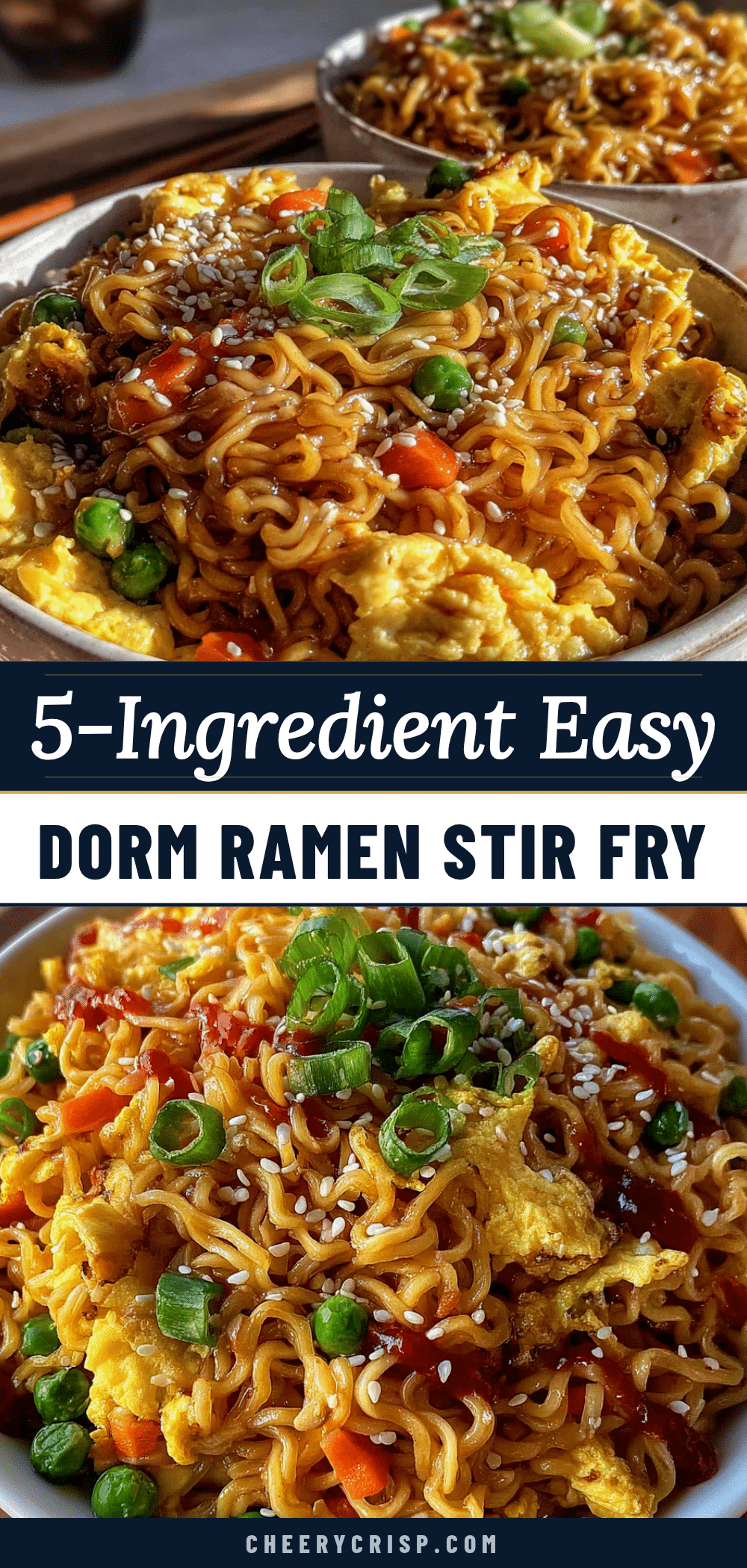
5-Ingredient Dorm Ramen Stir Fry: Easy & Homemade

A quick and easy ramen stir fry made with just 5 ingredients, perfect for dorm rooms or late-night cravings. Ready in 10 minutes, this recipe transforms instant noodles into a crispy, savory comfort meal.
- Prep Time: 5 minutes
- Cook Time: 10 minutes
- Total Time: 15 minutes
- Yield: 2 servings 1x
- Category: Main Course
- Cuisine: Asian Fusion
Ingredients
- 2 packs instant ramen noodles (discard one seasoning packet, use one)
- 1 tablespoon butter (salted or unsalted)
- 1 cup frozen mixed vegetables (peas, carrots, corn, green beans)
- 2 large eggs
- 1 seasoning packet from ramen
- 1 tablespoon soy sauce (low sodium or regular)
- Optional: Sriracha or chili flakes for heat
- Optional: Sesame oil for nutty finish
- Optional: Green onions for garnish
Instructions
- Boil the Ramen: Bring 4 cups of water to a boil. Add both packs of ramen noodles (discard or set aside seasoning packets). Boil for exactly 2 minutes until noodles are just tender but still firm. Drain immediately and rinse with cold water to stop cooking. Set aside.
- Scramble the Eggs: In a small bowl, beat both eggs with a fork until combined. Heat a non-stick skillet over medium heat and add 1/2 tablespoon butter. Once melted, pour in eggs. Let sit for 20 seconds, then scramble until just set but still soft (60-90 seconds). Transfer to a plate and set aside.
- Crisp the Noodles: In the same skillet, add remaining 1/2 tablespoon butter over medium-high heat. Once melted and foamy, add drained noodles. Spread into an even layer and cook undisturbed for 2 minutes until bottom is golden brown and crispy. Flip and cook for another minute.
- Add the Vegetables: Add frozen vegetables directly to the pan. Stir and cook for 2 minutes until heated through and slightly colored.
- Season and Combine: Sprinkle one seasoning packet over noodles and vegetables. Add soy sauce and stir until powder dissolves and coats noodles. If dry, add 1 tablespoon water and toss.
- Finish and Serve: Return scrambled eggs to the pan. Toss for 30 seconds to reheat. Taste and adjust with more soy sauce or sriracha if desired. Serve immediately.
Notes
Don’t overcook noodles in water—2 minutes max. Use high heat for crispy edges. Season in layers to control salt. Keep eggs soft by undercooking slightly. Work quickly as timing is crucial. For one-pan method, boil noodles, drain, wipe pan dry, and proceed.
Nutrition
- Serving Size: 1 generous serving o
- Calories: 480
- Sugar: 4
- Sodium: 1100
- Fat: 22
- Saturated Fat: 9
- Carbohydrates: 52
- Fiber: 5
- Protein: 18
Keywords: ramen stir fry, 5-ingredient recipe, dorm room meal, quick dinner, easy ramen, budget-friendly, comfort food