Love this? Save it for later!
Share the inspiration with your friends
This was supposed to be fig chutney. I had the onions chopped, the vinegar measured, and a vague memory of some spiced chutney my aunt used to make. But somewhere between the stove and my second cup of coffee, I grabbed honey instead of brown sugar. And then I realized the fresh thyme I bought was wilting on the counter from the day before. I was already running late for a phone call with my sister, so I just threw it all in the pot anyway — honey, thyme, figs, a splash of lemon — and figured I’d fix it later.
Later never came, and honestly, I’m glad it didn’t. What came out was nothing like the plan — and better. It was softer, more floral, and had this subtle herbaceousness that made me stop mid-stir. I stood there in my messy kitchen, spoon in hand, tasting something I didn’t intend to make, and I realized I’d accidentally stumbled onto something I’d be making for years. Maybe you’ve been there — the recipe that finds you instead of the other way around.
That’s how this homemade small-batch fig jam with honey and thyme was born. It’s not a chutney, it’s not a traditional jam, and it’s definitely not something you’d find on a grocery store shelf. It’s the kind of thing you make when you’re distracted, when you stop overthinking, and when you let the ingredients do what they want. And honestly, that’s why I keep making it. It reminds me that sometimes the best things in the kitchen happen when you’re not trying so hard.
Why You’ll Love This Recipe
Let me tell you why this small-batch fig jam with honey and thyme has become my most-requested recipe from friends and family. It’s not just another jam recipe — it’s the one that makes people close their eyes after the first bite.
- Quick & Easy: This comes together in under 45 minutes, no water bath canning required. Perfect for a lazy Sunday afternoon or when you need a last-minute hostess gift.
- Simple Ingredients: You only need five main ingredients. No pectin, no special preservatives, no trips to three different stores.
- Perfect for Gifting: A jar of this jam tied with a sprig of fresh thyme makes the most thoughtful homemade gift for holidays, housewarmings, or just because.
- Crowd-Pleaser: I’ve watched people who “don’t like figs” go back for seconds. The honey and thyme balance the sweetness in a way that feels sophisticated without being weird.
- Unbelievably Delicious: The texture is jammy but not gloopy, and the flavor has this layered complexity that tastes like you spent hours perfecting it. Spoiler: you didn’t.
What makes this recipe different from every other fig jam out there is the honey-thyme combination. Instead of using plain white sugar, honey adds a floral sweetness that pairs naturally with figs. And the fresh thyme? It cuts through the sweetness with this subtle savory note that keeps you coming back for another spoonful. I’ve tested this with dried thyme, with extra honey, with lemon zest — and this version is hands-down the best.
This isn’t just a jam. It’s comfort in a jar — the kind of thing that makes a simple piece of toast feel like a special occasion. Whether you’re slathering it on warm scones, swirling it into yogurt, or serving it alongside a cheese board, this homemade small-batch fig jam with honey and thyme is about to become your new favorite kitchen staple.
What Ingredients You Will Need
This recipe uses simple, wholesome ingredients to deliver that deep, complex flavor without any fuss. Most of these are pantry staples or easy to find at your local grocery store or farmers market.
- Fresh figs, stemmed and quartered (1 pound / about 450 grams) — Look for Black Mission or Brown Turkey figs that are ripe but still firm. Overly soft figs will break down too quickly and can make the jam watery. I prefer buying them from the farmers market when they’re in season, usually late summer through early fall.
- Honey (1/2 cup / 170 grams) — Use a mild, floral honey like orange blossom or wildflower. Avoid strong-flavored honey like buckwheat, which can overpower the delicate fig taste. Local honey is always my first choice — it supports local beekeepers and adds a unique flavor profile.
- Fresh thyme sprigs (4 to 5 sprigs) — Fresh is non-negotiable here. Dried thyme just doesn’t give you that same gentle herbal note. I grow thyme in a pot on my kitchen windowsill, so I always have some on hand. If you’re buying it, look for bright green, perky sprigs without any wilting.
- Fresh lemon juice (2 tablespoons / 30 ml) — This adds brightness and helps balance the sweetness. Bottled lemon juice won’t give you the same fresh, zingy flavor, so squeeze a real lemon. Meyer lemons work beautifully here if you can find them.
- Granulated sugar (1/4 cup / 50 grams) — A small amount helps with the jam’s texture and preserves it slightly. You can reduce this if you prefer a less sweet jam, but don’t skip it entirely — it helps the jam set properly.
- Pinch of salt — Just a tiny pinch. It might sound weird, but salt enhances all the other flavors and keeps the jam from tasting one-dimensional.
Optional but recommended: 1 tablespoon of balsamic vinegar (adds depth and a subtle tang that plays beautifully with the figs). I add this about half the time, depending on my mood and what I’m pairing the jam with.
Equipment Needed
You don’t need a fancy kitchen to make this jam. Here’s what you’ll need:
- Medium heavy-bottomed saucepan or Dutch oven — A heavy pot distributes heat evenly and prevents scorching. I use my trusty 3-quart Le Creuset, but any stainless steel or enameled pot works great. Avoid thin aluminum pots — they’ll give you hot spots and burnt jam.
- Wooden spoon or silicone spatula — For stirring. Wooden spoons are my preference because they don’t scratch the pot and they feel nice in the hand.
- Sharp knife and cutting board — For stemming and quartering the figs. A dull knife will squish the soft fruit.
- Measuring cups and spoons — For accuracy. I keep a set of dry measuring cups and a liquid measuring cup handy.
- Fine-mesh strainer — Optional, for removing the thyme sprigs and any stray seeds. I usually just fish the sprigs out with tongs.
- Glass jar with a tight-fitting lid — For storing the finished jam. A 12-ounce (350 ml) mason jar is perfect for this small batch. Sterilize it by washing in hot soapy water and drying in a low oven (250°F / 120°C) for 10 minutes.
- Small plate — For testing if the jam is set. Pop it in the freezer before you start cooking.
If you don’t have a heavy-bottomed pot, you can use a non-stick skillet — just watch it carefully because it can cook faster and scorch more easily. And if you don’t have a jar, any clean glass container with a lid will work. I’ve stored this jam in a repurposed pasta sauce jar before, and it was just fine.
Preparation Method
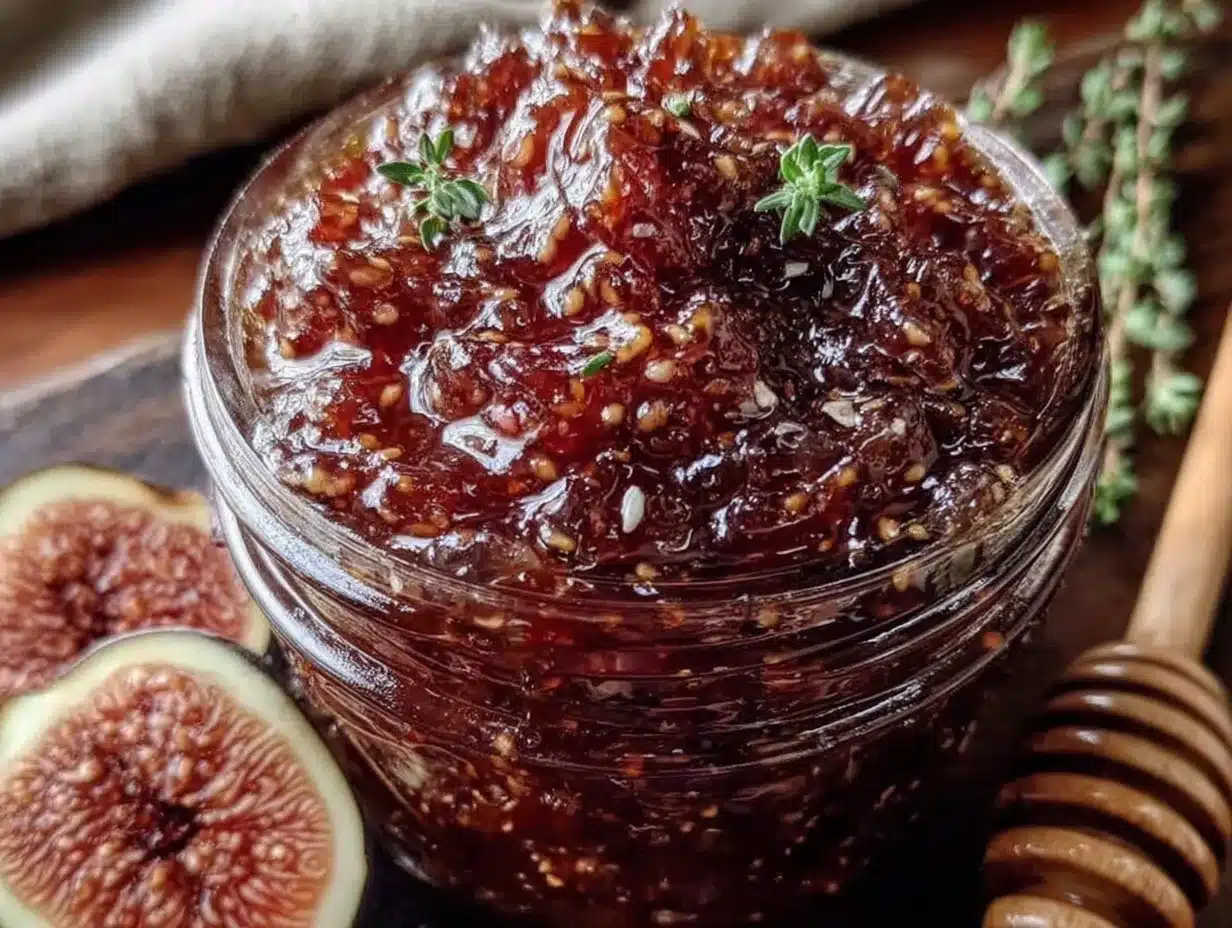
- Prep your figs (5 minutes): Rinse the figs gently under cool water and pat them dry with a clean kitchen towel. Cut off the hard stem ends, then quarter each fig. Don’t worry if some fall apart — that’s totally fine. You want them roughly the same size so they cook evenly.
- Combine ingredients in the pot (2 minutes): Place the quartered figs, honey, granulated sugar, lemon juice, and a pinch of salt in your saucepan. Add the fresh thyme sprigs, tucking them into the fruit mixture. Give everything a gentle stir to combine. At this point, it should look like a messy, beautiful pile of purple and green.
- Let it macerate (10-15 minutes): Let the mixture sit at room temperature for about 10 to 15 minutes. This isn’t strictly necessary, but it helps draw out the figs’ natural juices and softens them before cooking. Use this time to wash your cutting board and sterilize your jar. I usually pour myself a cup of tea and watch the figs start releasing their juices — it’s oddly satisfying.
- Start cooking (20-25 minutes): Place the pot over medium heat and bring the mixture to a gentle simmer. You want small bubbles breaking the surface, not a violent boil. Stir occasionally with your wooden spoon, scraping the bottom to prevent sticking. After about 10 minutes, you’ll notice the figs breaking down and the liquid thickening slightly.
- Reduce and thicken (10-15 more minutes): Reduce the heat to medium-low and continue cooking. Stir more frequently now — every minute or so — because the jam can scorch easily as it thickens. The mixture will go from looking like chunky fruit in syrup to a cohesive, jammy consistency. You’re looking for it to coat the back of your spoon and hold its shape for a moment when you drag your finger through it.
- Test for doneness (1 minute): This is the most important step. Take your small plate out of the freezer and drop a small spoonful of jam onto it. Let it sit for 30 seconds, then push it with your finger. If it wrinkles and doesn’t run back together, it’s done. If it’s still runny, cook for another 2-3 minutes and test again. Don’t rush this — undercooked jam is sad jam.
- Remove the thyme sprigs (1 minute): Once the jam is set, use tongs or a fork to fish out the thyme sprigs. Try to get all of them — biting into a whole thyme stem is not pleasant. A few loose leaves that fell off during cooking are fine and add nice little flecks of green.
- Cool and jar (30 minutes): Let the jam cool in the pot for about 10 minutes, then transfer it to your sterilized jar. Don’t fill it all the way to the top — leave about 1/2 inch of headspace. Let it cool completely at room temperature (about 20 more minutes), then screw on the lid and refrigerate.
Pro tip: If you want a smoother jam, you can use an immersion blender for about 5 seconds before jarring. I prefer mine with some chunky bits of fig, so I skip this step.
Cooking Tips & Techniques
After making this homemade small-batch fig jam with honey and thyme about a dozen times, I’ve learned a few things the hard way. Here are my best tips:
Don’t walk away from the pot. I know it’s tempting to multitask, but jam can go from perfect to burnt in about 30 seconds. The first time I made this, I stepped away to answer a text message, and by the time I came back, the bottom was scorched. The jam was still edible — I just scooped out the burnt part — but it had a slightly bitter note that wasn’t ideal. Now I set a timer and stay within arm’s reach of the stove.
Use a heavy-bottomed pot. This isn’t just fancy chef talk. Thin pots create hot spots that cause the jam to cook unevenly and burn in certain areas. My first few batches were made in a cheap non-stick pan, and I spent more time scraping burnt bits off the bottom than actually enjoying the jam. A good Dutch oven or stainless steel saucepan makes a world of difference.
Trust the wrinkle test. Don’t rely solely on time — every batch is different depending on the figs’ ripeness and water content. The wrinkle test on a frozen plate is foolproof. I once made the mistake of cooking the jam until it “looked thick” in the pot, only to have it turn into fig leather after cooling. Learn from my mistakes, people.
Adjust sweetness to your taste. Figs vary in sweetness depending on the variety and season. If your figs are incredibly sweet, you can reduce the honey by a tablespoon or two. If they’re a bit tart, add an extra splash of honey. Taste the mixture before you cook it — yes, it’s safe to taste raw figs — and adjust accordingly.
Plan for splatter. As the jam thickens, it tends to spit little hot bubbles. I’ve got a few tiny burn scars on my forearm to prove it. Use a splatter screen if you have one, or just stand back a bit when stirring. And maybe wear an apron.
Double the batch if you’re feeling ambitious. This recipe makes about one 12-ounce jar, which is perfect for trying it out. But once you fall in love with it — and you will — you’ll wish you made more. A double batch works perfectly; just increase the cooking time by about 5-10 minutes.
Variations & Adaptations
One of the best things about this jam is how adaptable it is. Here are some variations I’ve tried and loved:
Spiced Fig Jam: Add 1 cinnamon stick and 2 whole cloves along with the thyme sprigs. Remove them before jarring. This version is incredible on warm brie or baked camembert. I made this for a holiday party last year, and three people asked for the recipe.
Vanilla Fig Jam: Split a vanilla bean and scrape the seeds into the pot, then add the pod too. Remove the pod before jarring. The vanilla adds this warm, almost floral note that pairs beautifully with the honey. This is my go-to version for gifting.
Balsamic Fig Jam: Add 1 tablespoon of good balsamic vinegar along with the lemon juice. The vinegar adds a tangy depth that’s absolutely incredible with sharp cheeses and cured meats. I serve this version on crostini with goat cheese and prosciutto.
Low-Sugar Version: Reduce the honey to 1/4 cup and omit the granulated sugar. The jam will be softer and less shelf-stable, but it’s still delicious. Keep it in the fridge and use within two weeks. I make this version when I’m feeling health-conscious, and honestly, it’s still fantastic.
Dried Fig Version: If fresh figs aren’t in season, you can use dried figs. Rehydrate 8 ounces of dried figs in hot water for 30 minutes, then drain and chop them. Reduce the cooking time to about 15 minutes since dried figs have less water content. This version is actually more consistent year-round, and I’ve made it in the dead of winter with excellent results.
Herb Variations: Swap the thyme for rosemary, lavender, or even a few fresh sage leaves. Each herb gives the jam a completely different personality. Rosemary is my second favorite after thyme — it’s more assertive and works beautifully with lamb dishes.
Serving & Storage Suggestions
This jam is incredibly versatile. Here’s how I love to use it:
On toast or scones: The most obvious use, and honestly, the best. Spread it generously on warm buttered toast, fresh scones, or flaky biscuits. The honey-thyme flavor pairs especially well with a pat of salted butter.
With cheese: This jam is a cheese board superstar. It’s amazing with soft goat cheese, creamy brie, aged cheddar, or sharp manchego. I like to serve it alongside a wheel of baked brie — just top the brie with a few spoonfuls of jam and bake at 350°F (175°C) for 15 minutes.
Over yogurt or oatmeal: Swirl a spoonful into Greek yogurt or warm oatmeal for an instant upgrade. The jam adds sweetness and complexity without being overpowering. I eat this for breakfast at least twice a week.
As a glaze: Brush it over roasted pork tenderloin, chicken thighs, or salmon during the last few minutes of cooking. The honey caramelizes beautifully and the thyme adds a savory note. I did this with pork chops last week, and my husband said it was the best dinner I’d made in months.
In cocktails: Stir a spoonful into bourbon or gin cocktails for a figgy twist. It’s incredible in an old fashioned — just muddle a spoonful of jam with a dash of bitters before adding the whiskey.
Storage: Keep the jam in an airtight jar in the refrigerator for up to 3 weeks. This jam is not shelf-stable because of the lower sugar content, so don’t try to store it at room temperature. If you want to keep it longer, you can freeze it for up to 3 months. Just thaw it in the fridge overnight before using.
Flavor development: The flavors actually deepen and meld after a day or two in the fridge. I always think it tastes even better on day two. So don’t be disappointed if it seems a bit one-dimensional right after cooking — give it time.
Nutritional Information & Benefits
Here’s the approximate nutritional breakdown for one tablespoon (15 grams) of this jam:
| Nutrient | Amount |
|---|---|
| Calories | 35 |
| Total Fat | 0g |
| Sodium | 1mg |
| Total Carbohydrates | 9g |
| Dietary Fiber | 1g |
| Sugars | 7g |
| Protein | 0g |
Figs are surprisingly nutritious. They’re a good source of dietary fiber, which supports digestive health, and they contain potassium, magnesium, and calcium. Honey provides antioxidants and has natural antibacterial properties. And thyme? It’s rich in vitamin C and has been used for centuries to support respiratory health.
This jam is naturally gluten-free, dairy-free, and vegetarian. If you’re watching your sugar intake, remember that it does contain honey and a small amount of sugar, so enjoy it in moderation. A little goes a long way — one tablespoon is plenty to sweeten a bowl of yogurt or a slice of toast.
From a wellness perspective, I love that this jam lets me enjoy something sweet without the processed ingredients found in store-bought jams. It’s made with real food, and I know exactly what’s in it. That feels good, you know?
Conclusion
This homemade small-batch fig jam with honey and thyme is proof that some of the best things in life come from happy accidents. It’s simple enough for a weekday project but special enough to gift to people you really care about. The combination of sweet figs, floral honey, and earthy thyme is something you won’t find in any store-bought jar — and once you taste it, you’ll understand why I keep a jar in my fridge at all times.
I hope you give this recipe a try. Don’t stress about making it perfect — remember, I made it by accident while half-awake, and it turned out amazing. Feel free to adjust the honey, experiment with different herbs, or double the batch if you’re feeling ambitious. That’s the beauty of small-batch cooking — there’s room to play.
I’d love to hear how yours turns out! Drop a comment below and let me know what you served it with, or tag me in your photos if you share them online. And if you have a happy kitchen accident of your own, I want to hear about that too. Happy cooking, friends!
Frequently Asked Questions
Can I use dried figs instead of fresh?
Yes, absolutely. Rehydrate 8 ounces of dried figs in hot water for 30 minutes, drain them, and chop them before cooking. Reduce the cooking time to about 15 minutes since dried figs have less water. The flavor will be slightly more concentrated, but it’s still delicious.
How long does this jam last in the fridge?
This jam will keep in an airtight jar in the refrigerator for up to 3 weeks. Because it has less sugar than traditional jams, it’s not shelf-stable, so always keep it refrigerated. You can also freeze it for up to 3 months.
Can I can this jam for long-term storage?
This recipe isn’t designed for water bath canning because of the lower sugar and acid content. If you want a shelf-stable jam, you’d need to increase the sugar and lemon juice and process it in a water bath canner. For a small batch like this, I recommend just keeping it in the fridge.
Can I leave out the thyme?
Sure, you can skip it if you’re not a fan of herbal flavors. The jam will still be delicious — just a simpler, more straightforward fig and honey flavor. If you want to try a different herb, rosemary or lavender are great alternatives.
Why did my jam turn out too runny?
This usually happens when the jam isn’t cooked long enough. Next time, cook it a few minutes longer and use the frozen plate test to check for doneness. Also, make sure your figs aren’t overly ripe or waterlogged, as extra moisture can prevent the jam from setting properly.
Pin This Recipe!
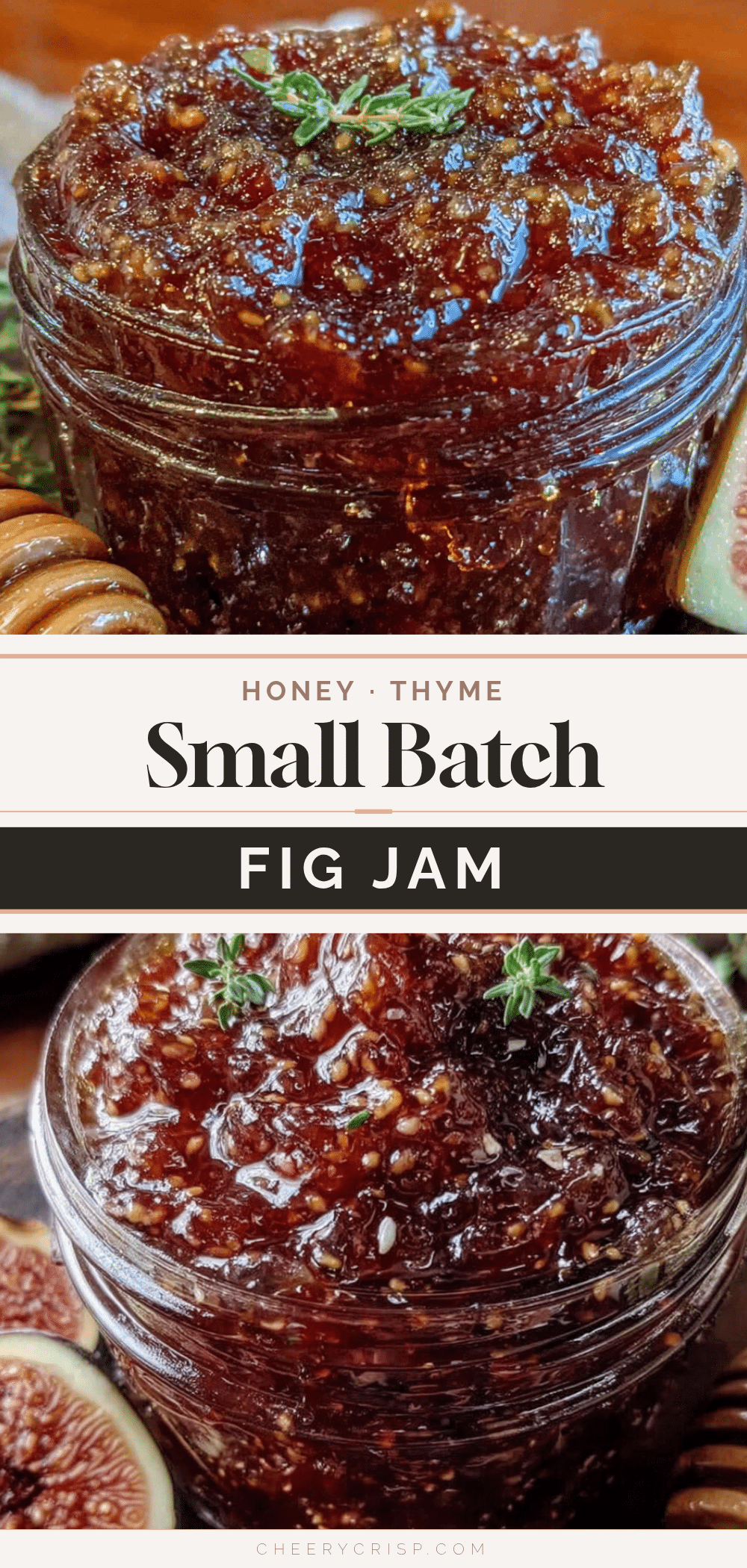
Homemade Small-Batch Fig Jam with Honey and Thyme
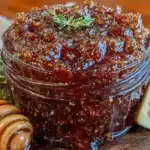
This homemade small-batch fig jam with honey and thyme is a happy accident turned kitchen staple. It’s quick, easy, and made with simple ingredients for a sophisticated flavor that’s perfect on toast, cheese boards, or as a glaze.
- Prep Time: 15 minutes
- Cook Time: 25 minutes
- Total Time: 40 minutes
- Yield: 1 jar (12 ounces / 350 ml) 1x
- Category: Condiment
- Cuisine: American
Ingredients
- 1 pound (about 450 grams) fresh figs, stemmed and quartered
- 1/2 cup (170 grams) honey (mild floral variety like orange blossom or wildflower)
- 4 to 5 sprigs fresh thyme
- 2 tablespoons (30 ml) fresh lemon juice
- 1/4 cup (50 grams) granulated sugar
- Pinch of salt
- 1 tablespoon balsamic vinegar (optional)
Instructions
- Prep your figs: Rinse the figs gently under cool water and pat them dry. Cut off the hard stem ends, then quarter each fig.
- Combine ingredients in the pot: Place the quartered figs, honey, granulated sugar, lemon juice, and a pinch of salt in your saucepan. Add the fresh thyme sprigs, tucking them into the fruit mixture. Give everything a gentle stir.
- Let it macerate: Let the mixture sit at room temperature for about 10 to 15 minutes to draw out the figs’ natural juices.
- Start cooking: Place the pot over medium heat and bring the mixture to a gentle simmer. Stir occasionally with a wooden spoon, scraping the bottom to prevent sticking. Cook for about 10 minutes until the figs break down and the liquid thickens slightly.
- Reduce and thicken: Reduce the heat to medium-low and continue cooking, stirring every minute or so, until the mixture reaches a jammy consistency that coats the back of a spoon (about 10-15 more minutes).
- Test for doneness: Place a small spoonful of jam on a frozen plate. Let it sit for 30 seconds, then push it with your finger. If it wrinkles and doesn’t run back together, it’s done. If still runny, cook for another 2-3 minutes and test again.
- Remove the thyme sprigs: Use tongs or a fork to fish out the thyme sprigs from the jam.
- Cool and jar: Let the jam cool in the pot for about 10 minutes, then transfer it to a sterilized jar, leaving about 1/2 inch of headspace. Let it cool completely at room temperature (about 20 more minutes), then screw on the lid and refrigerate.
Notes
This jam is not shelf-stable due to lower sugar content; always refrigerate. For a smoother jam, use an immersion blender for 5 seconds before jarring. The flavors deepen after a day or two in the fridge. If using dried figs, rehydrate 8 oz in hot water for 30 minutes, drain, chop, and reduce cooking time to about 15 minutes.
Nutrition
- Serving Size: 1 tablespoon (15 gra
- Calories: 35
- Sugar: 7
- Sodium: 1
- Carbohydrates: 9
- Fiber: 1
Keywords: fig jam, honey thyme jam, small batch jam, homemade jam, fig recipe, easy jam, no pectin jam