Love this? Save it for later!
Share the inspiration with your friends
“The power went out halfway through my first attempt at making prime rib roast. Honestly, I was panicking—this was supposed to be the centerpiece for a Sunday dinner that my friends had been looking forward to all week. I remember standing there by candlelight, trying to figure out how to salvage what felt like a disaster in the making. That night, I stumbled onto the reverse-sear method, almost by accident, when I decided to cook the roast low and slow after the oven flickered back on, then finish it with a hot sear on the stovetop. The result? A perfectly pink, tender, crusty prime rib that had everyone asking for seconds—even my notoriously picky friend, Jake.”
Maybe you’ve been there—trying to cook prime rib can feel intimidating, but this recipe turns that fear on its head. The reverse-sear technique is a game-changer because it lets you gently bring the meat to the right temperature, then locks in all those savory juices with a final sear that creates a crust to die for. And paired with an easy, tangy horseradish cream, it’s honestly a showstopper without the stress.
I still laugh when I think about how that power outage led to my go-to prime rib roast recipe. It’s become my signature dish for holidays and special dinners, and I keep it pretty simple—no fancy gadgets, just solid techniques and ingredients you can find at your local butcher. Let me tell you, once you nail this method, you might just find yourself making prime rib more often than you thought possible.
Why You’ll Love This Recipe
This Perfect Reverse-Sear Prime Rib Roast recipe has been tested and tweaked over many dinners, and honestly, it hits all the right notes. Here’s why it’s worth your time:
- Slow & Steady Cooking: The reverse-sear method means even cooking, so no more guessing if your roast is done or overdone.
- Simple Ingredients: You don’t need exotic spices or hard-to-find items. Just quality prime rib, salt, pepper, and a few staples for the horseradish cream.
- Impresses Every Time: Whether it’s a holiday feast or a cozy weekend dinner, this recipe turns out tender, juicy meat with a flavorful crust—always crowd-pleasing.
- Easy Horseradish Cream: The creamy, tangy condiment complements the beef perfectly, and it’s quick to whip up while the roast is resting.
- Reliable Results: I’ve made this for friends who swear off prime rib because it’s too tricky—now they’re converts, asking for the recipe.
What sets this apart from other prime rib recipes? The slow roasting followed by a high-heat sear means you get a crust that’s crisp but not burnt, and the inside stays juicy and pink. Plus, the horseradish cream adds a bright bite that balances the richness. It’s prime rib, but easier and more forgiving than you might expect. You’ll close your eyes with that first bite, trust me.
What Ingredients You Will Need
This recipe uses simple, wholesome ingredients to deliver bold flavor and a satisfying texture without fuss. Most are pantry staples, and the prime rib roast is the star, so quality matters.
- Prime Rib Roast (Bone-In, About 4-5 lbs / 1.8-2.3 kg): Look for well-marbled meat from a trusted butcher for the best taste and tenderness.
- Kosher Salt: Generous seasoning helps develop that savory crust.
- Freshly Ground Black Pepper: Adds a punch of flavor to the crust.
- Garlic Powder: Optional, but it deepens the savory notes.
- Olive Oil or Neutral Oil (like Canola): For searing the roast.
For the Horseradish Cream:
- Prepared Horseradish (2 tablespoons): Adjust based on your heat preference—freshly grated is great if you have it.
- Sour Cream (1/2 cup / 120 ml): Use full-fat for creaminess; Greek yogurt works for a tangier twist.
- Mayonnaise (2 tablespoons): Adds richness and smooth texture.
- Fresh Lemon Juice (1 teaspoon): Brightens the cream.
- Salt and Pepper to Taste: To balance flavors.
Pro tip: I prefer McCormick brand prepared horseradish for consistent heat, but if you want a milder cream, start with less and add more after tasting. If you can’t find bone-in prime rib, boneless works too, just adjust cooking time accordingly.
Equipment Needed
- Roasting Pan with Rack: Allows air circulation around the roast for even cooking; if you don’t have a rack, a sturdy wire rack works fine.
- Meat Thermometer (preferably digital probe): Essential to monitor internal temperature without cutting into the roast.
- Cast Iron Skillet or Heavy-Bottomed Pan: For the final sear—holds heat well and creates a fantastic crust.
- Mixing Bowl: To whip up the horseradish cream.
- Kitchen Tongs: Helpful for flipping the roast during searing.
If you don’t have a digital thermometer, an instant-read thermometer is a good alternative but requires more checking. I’ve tried searing on stainless steel pans, but cast iron gives the best crust without sticking. For a budget-friendly option, a simple roasting pan and wire rack combo from any kitchen store does the job perfectly.
Preparation Method
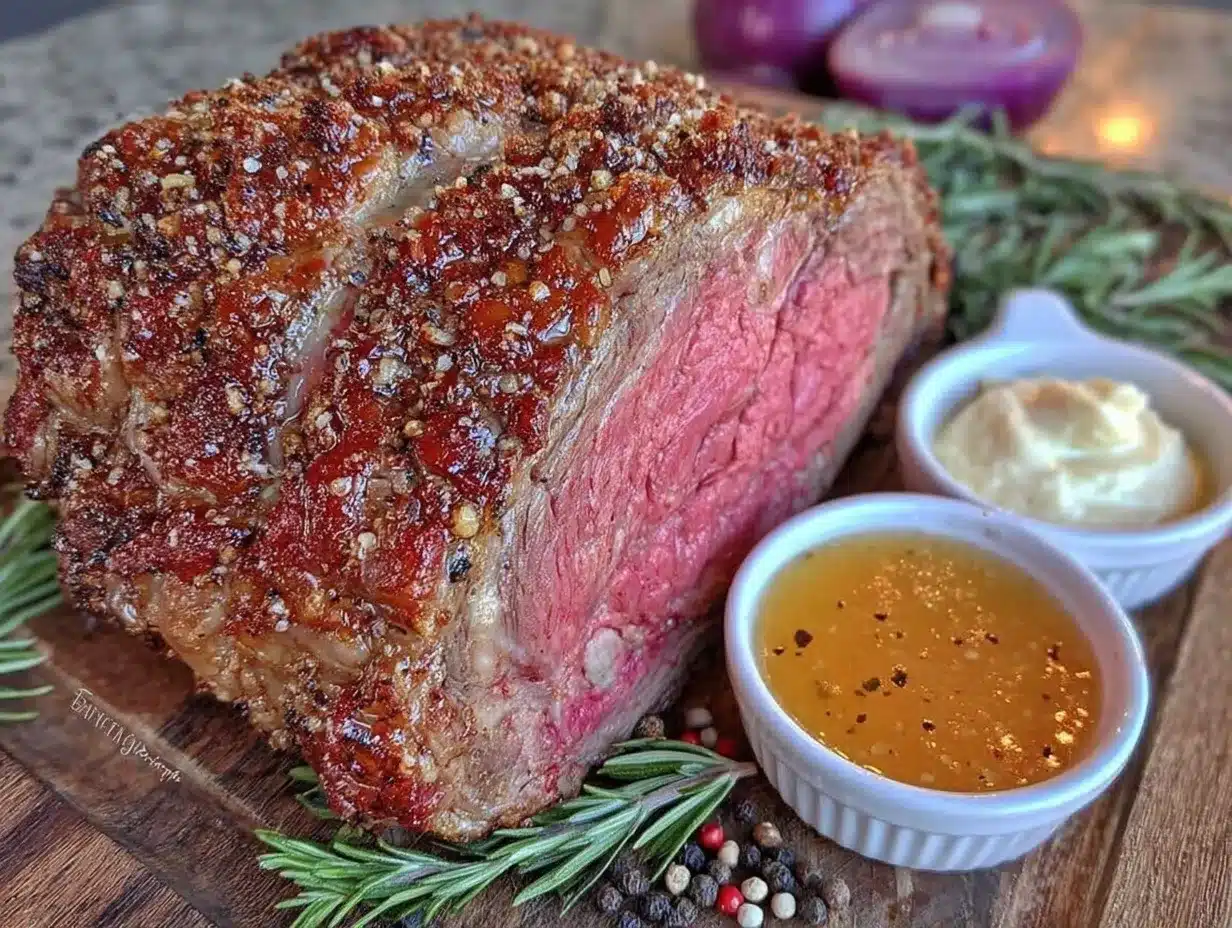
- Remove the Roast from the Refrigerator: About 1-2 hours before cooking, let your prime rib rest at room temperature. This helps it cook evenly. (Approx. 10 minutes prep)
- Preheat Oven to 225°F (107°C): Low and slow is the key here for the reverse-sear method.
- Season the Roast Generously: Pat dry with paper towels. Rub kosher salt, black pepper, and garlic powder evenly all over the meat. Don’t skimp—this is where flavor starts. (5 minutes)
- Place the Roast on the Rack in the Roasting Pan: Make sure it’s fat side up so the juices baste the meat as it cooks.
- Insert the Meat Thermometer Probe: Into the thickest part of the roast, avoiding bone. This is crucial for monitoring temperature precisely.
- Roast in the Oven: Cook until the internal temperature reaches 120°F (49°C) for rare or 130°F (54°C) for medium-rare. This usually takes about 2-3 hours depending on size. (Keep the oven door closed to maintain steady heat.)
- Remove the Roast and Tent with Foil: Let it rest for 20-30 minutes. This step lets juices redistribute. The temperature will rise slightly during this time—perfect for achieving desired doneness.
- Heat a Cast Iron Skillet Over High Heat: Add a tablespoon of oil and wait until it’s shimmering and almost smoking.
- Sear the Roast: Carefully place the roast in the skillet. Sear each side for 2-3 minutes until a deep brown crust forms. Use tongs to hold edges for a crusty finish all around.
- Remove and Rest Again: Let the roast rest for 10 minutes before slicing. This ensures juiciness.
- Prepare the Horseradish Cream: While the roast rests, mix prepared horseradish, sour cream, mayonnaise, lemon juice, salt, and pepper in a bowl. Adjust horseradish to taste.
- Slice and Serve: Cut prime rib into thick slices and serve with a dollop of horseradish cream on the side.
Cooking Tips & Techniques
Getting prime rib right can be tricky, but here are some tips I learned the hard way:
- Don’t Skip the Rest Time: Resting before and after cooking lets the juices settle, making every bite tender and moist.
- Use a Reliable Thermometer: Guessing by time alone can be risky; temperature is your best friend here.
- Low Oven Temp is Key: Cooking slow at 225°F (107°C) prevents overcooking the edges while the center stays raw.
- Searing Last is Crucial: Sear after roasting, not before, to keep that perfect pink center and get a caramelized crust.
- Watch Oil Temperature: Too cool and you won’t get a crust; too hot and it might smoke or burn. I usually wait until the oil just starts to shimmer.
- Season Well: Don’t be shy with salt and pepper—they bring out the roast’s natural flavor.
One time, I forgot to insert the thermometer early and had to guess the doneness—let’s just say I learned that wasn’t fun for my guests! Also, multitasking by prepping the horseradish cream during resting time saves minutes and keeps things moving smoothly.
Variations & Adaptations
Feel free to tweak this recipe to suit your preferences or dietary needs:
- Gluten-Free Option: This recipe is naturally gluten-free, but double-check your horseradish brand for additives.
- Herb-Crust Variation: Add fresh rosemary, thyme, and minced garlic to the salt and pepper rub for an herby crust.
- Dairy-Free Horseradish Cream: Swap sour cream and mayonnaise with coconut yogurt and vegan mayo for a creamy alternative.
- Cooking Method Adaptation: If you don’t have a cast iron skillet, use a heavy stainless steel pan or finish the roast under a broiler for a few minutes to develop crust.
- Spicy Horseradish Cream: Add a pinch of cayenne or a few drops of hot sauce to the cream for a kick.
I once tried smoked paprika in the seasoning mix and it gave an unexpected depth that my boyfriend loved. Don’t hesitate to experiment a little!
Serving & Storage Suggestions
Serve your prime rib roast warm, sliced thick, with horseradish cream dolloped on the side. It pairs beautifully with roasted vegetables, creamy mashed potatoes, or a crisp green salad. For drinks, a robust red wine like Cabernet Sauvignon or Malbec complements the rich beef flavors perfectly.
Leftovers keep well in the fridge for 3-4 days, wrapped tightly to preserve moisture. For longer storage, slice and freeze in airtight containers for up to 3 months. To reheat, gently warm slices in a low oven (about 250°F / 120°C) wrapped in foil to avoid drying out, or briefly sear in a hot pan.
Flavors mellow and deepen after a day or two, so if you can wait, leftovers can be even better the next day—great for sandwiches or reheated plates.
Nutritional Information & Benefits
An average serving of this prime rib roast (about 6 oz / 170 g) contains roughly 450 calories, with 35 grams of protein and 35 grams of fat. It’s a rich source of iron and B vitamins, important for energy and muscle function.
The horseradish cream adds a bit of tang without many calories, and horseradish itself has compounds that may aid digestion. This recipe fits well into gluten-free and low-carb diets, which is a bonus for many readers.
Of course, due to the fat content, moderation is key, but when enjoyed as part of a balanced meal and special occasion, it’s a real treat that nourishes both body and soul.
Conclusion
This Perfect Reverse-Sear Prime Rib Roast with Horseradish Cream is one of those recipes that turns a dinner into an event. It’s reliable, impressive, and surprisingly simple once you understand the method. I love how it brings people together around the table with minimal stress and maximum flavor.
Feel free to make it your own—adjust the seasoning, swap the horseradish cream for your favorite sauce, or pair it with sides you love. I’m confident this recipe will become a staple in your kitchen, just like it is in mine.
If you try it, please share your experience or any twists you’ve added—I always enjoy hearing how this classic dish evolves in different homes. Here’s to many unforgettable meals ahead!
Frequently Asked Questions
How do I know when my prime rib is done?
Use a meat thermometer inserted into the thickest part of the roast. For rare, aim for 120°F (49°C); for medium-rare, 130°F (54°C). Remember the temperature rises a bit during resting.
Can I use boneless prime rib for this recipe?
Yes, boneless works fine but may cook a bit faster. Keep a close eye on the internal temperature and adjust cooking times accordingly.
What if I don’t have a cast iron skillet for searing?
A heavy stainless steel pan or even finishing under a hot broiler can work. The goal is a quick, high-heat crust without overcooking the inside.
How spicy is the horseradish cream?
You can control the heat by adjusting the amount of horseradish. Start with less, taste, and add more if you like a bolder kick.
Can I prepare the horseradish cream ahead of time?
Absolutely! It tastes great made a few hours or even a day ahead—just keep it refrigerated and stir before serving.
Pin This Recipe!
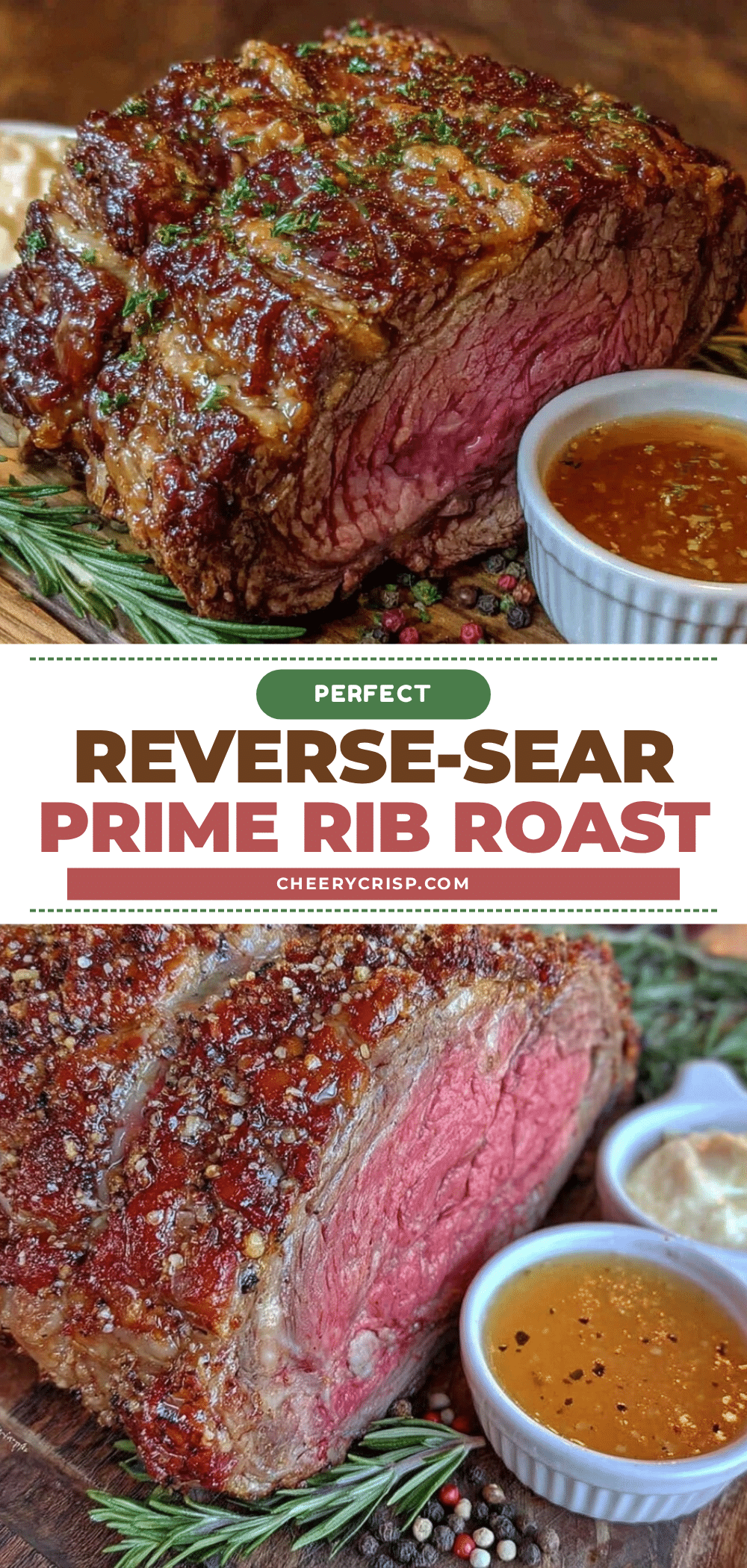
Perfect Reverse-Sear Prime Rib Roast Recipe with Easy Horseradish Cream
This recipe uses the reverse-sear method to cook a tender, juicy prime rib roast with a flavorful crust, paired with a tangy and easy horseradish cream. It’s perfect for holidays and special dinners, delivering reliable and impressive results.
- Prep Time: 15 minutes
- Cook Time: 2-3 hours
- Total Time: 2 hours 30 minutes to 3 hours 15 minutes
- Yield: 8 servings
- Category: Main Course
- Cuisine: American
Ingredients
- Prime Rib Roast (Bone-In, About 4-5 lbs / 1.8-2.3 kg)
- Kosher Salt
- Freshly Ground Black Pepper
- Garlic Powder (optional)
- Olive Oil or Neutral Oil (like Canola) for searing
- Prepared Horseradish (2 tablespoons)
- Sour Cream (1/2 cup / 120 ml)
- Mayonnaise (2 tablespoons)
- Fresh Lemon Juice (1 teaspoon)
- Salt and Pepper to Taste
Instructions
- Remove the roast from the refrigerator about 1-2 hours before cooking to let it rest at room temperature.
- Preheat oven to 225°F (107°C).
- Pat the roast dry with paper towels. Rub kosher salt, black pepper, and garlic powder evenly all over the meat.
- Place the roast on the rack in the roasting pan with the fat side up.
- Insert the meat thermometer probe into the thickest part of the roast, avoiding the bone.
- Roast in the oven until the internal temperature reaches 120°F (49°C) for rare or 130°F (54°C) for medium-rare, about 2-3 hours.
- Remove the roast and tent with foil. Let it rest for 20-30 minutes.
- Heat a cast iron skillet over high heat and add a tablespoon of oil until shimmering.
- Sear the roast on each side for 2-3 minutes until a deep brown crust forms.
- Remove and let rest for 10 minutes before slicing.
- While the roast rests, mix prepared horseradish, sour cream, mayonnaise, lemon juice, salt, and pepper in a bowl. Adjust horseradish to taste.
- Slice the prime rib into thick slices and serve with horseradish cream on the side.
Notes
Rest the roast before and after cooking to allow juices to redistribute for maximum tenderness. Use a reliable meat thermometer to ensure perfect doneness. Sear after roasting to achieve a caramelized crust without overcooking the interior. Adjust horseradish cream heat to taste. Boneless prime rib can be used but may require shorter cooking time. If no cast iron skillet is available, use a heavy stainless steel pan or broiler for searing.
Nutrition
- Serving Size: 6 oz (170 g) cooked
- Calories: 450
- Fat: 35
- Protein: 35
Keywords: prime rib, reverse sear, horseradish cream, roast beef, holiday roast, beef recipe, easy prime rib