Love this? Save it for later!
Share the inspiration with your friends
“Last autumn, I found myself wandering through a bustling Italian market in a little town called Montepulciano. The chatter of vendors, the scent of fresh herbs, and the sight of rich, slow-cooked meats immediately pulled me in. Amidst the lively crowd, an elderly butcher named Marco caught my attention. While expertly slicing cured meats, he casually mentioned his favorite dish: hand-rolled pappardelle paired with a slow-braised cinghiale ragù. I wasn’t expecting such a passionate recommendation from a butcher, but honestly, it stuck with me.
Back home, I tried to recreate that rustic Italian meal. I’ll admit, my first attempt was a bit messy—my dough was sticking everywhere, and the ragù took longer than I thought. But with a cracked bowl and a kitchen that looked like a flour storm had passed through, the flavors that emerged were unforgettable. The tender wild boar simmered lovingly in tomatoes and wine, and the hand-rolled pappardelle soaked up every bit of that deep, earthy sauce.
Maybe you’ve been there—wanting something authentic that feels both comforting and special. This recipe has stayed with me because it’s more than food; it’s a little journey to those Italian hills, a taste of tradition, and a reminder that great things sometimes come from a bit of chaos in the kitchen. Let me tell you, once you try making perfect hand-rolled pappardelle with slow-braised cinghiale ragù, you’ll understand why I keep going back to this one.
Why You’ll Love This Recipe
After countless trials, this hand-rolled pappardelle with slow-braised cinghiale ragù has earned a special place in my cooking repertoire. It’s not just about the end result—it’s the process and the soul behind it that make it truly stand out.
- Authentic Italian Flavor: This recipe captures the essence of Tuscan cooking, blending deep, rich ragù with silky, fresh pasta.
- Hand-Rolled Pasta Experience: Rolling your own pappardelle is surprisingly doable and adds a satisfying artisanal touch that store-bought never matches.
- Slow-Braised for Tenderness: The cinghiale (wild boar) simmers low and slow to develop that melt-in-your-mouth texture and complex flavor.
- Perfect for Special Occasions: Whether it’s a cozy dinner or a small gathering, this dish impresses without fussing over elaborate steps.
- Balanced and Hearty: You get a comforting depth from the sauce with fresh, egg-rich pasta that’s just the right thickness for holding every bite.
- Unique and Memorable: Unlike basic ragù recipes, using wild boar adds an earthy, gamey note that’s truly unforgettable.
What makes this recipe different? Well, it’s the way the pasta dough is rolled and cut by hand—giving you that rustic, imperfect charm—and the ragù’s slow simmer that brings out layers of flavor you simply can’t rush. Honestly, it’s the kind of meal that invites you to slow down, savor, and maybe even share stories around the table as you eat. I can’t wait for you to try it and have your own kitchen story with this one.
What Ingredients You Will Need
This recipe uses simple, wholesome ingredients to deliver bold flavor and satisfying texture without the fuss. Many of these are pantry staples, and a few require a bit of planning, especially the wild boar, which you can find at specialty butchers or well-stocked markets.
- For the Pappardelle Dough:
- All-purpose flour – 2 cups (250g), plus extra for dusting
- Large eggs – 3, room temperature (for richness and elasticity)
- Extra virgin olive oil – 1 tablespoon (adds silkiness to the dough)
- Salt – a pinch (to enhance flavor)
- For the Slow-Braised Cinghiale Ragù:
- Wild boar shoulder or stew meat – 2 pounds (900g), cut into chunks (ask your butcher for fresh, well-trimmed pieces)
- Extra virgin olive oil – 3 tablespoons (I trust Monini for quality)
- Yellow onion – 1 large, finely chopped
- Carrots – 2 medium, diced
- Celery stalks – 2, diced
- Garlic cloves – 4, minced
- Tomato paste – 2 tablespoons (look for Mutti brand for authenticity)
- Crushed tomatoes – 14 ounces (400g) can
- Dry red wine – 1 cup (240ml), preferably a Chianti or Sangiovese
- Fresh rosemary – 2 sprigs
- Fresh thyme – 2 sprigs
- Bay leaves – 2
- Salt and freshly ground black pepper – to taste
- Water or beef broth – as needed for braising
- Finishing Touches:
- Grated Pecorino Romano cheese – for serving
- Fresh flat-leaf parsley – chopped, for garnish (optional)
Substitution tips: If you can’t find wild boar, substitute with pork shoulder or beef chuck for a different but still delicious ragù. For gluten-free pasta, you could experiment with a blend of gluten-free flours, but hand-rolling might be trickier.
Equipment Needed
Crafting perfect hand-rolled pappardelle and slow-braised ragù doesn’t call for fancy gadgets, but a few tools will make the process smoother.
- Mixing bowl: For combining the pasta dough ingredients. A large ceramic or glass bowl works well.
- Rolling pin: A sturdy rolling pin is essential for rolling out the dough thinly. If you have a pasta roller, great, but hand-rolling is just as rewarding.
- Sharp knife or pizza cutter: For slicing the dough into wide pappardelle strips.
- Heavy-bottomed pot or Dutch oven: Perfect for the slow braise—retains heat evenly for tenderizing the wild boar.
- Wooden spoon: For stirring the ragù gently without mashing the meat.
- Colander: To drain the fresh pasta after boiling.
If you don’t have a Dutch oven, a heavy skillet with a tight-fitting lid works too. Personally, I’ve found that using a well-seasoned rolling pin makes the dough feel more manageable (plus, it’s easier to clean!). Budget-friendly versions of these tools are widely available and totally fine for home cooks.
Preparation Method
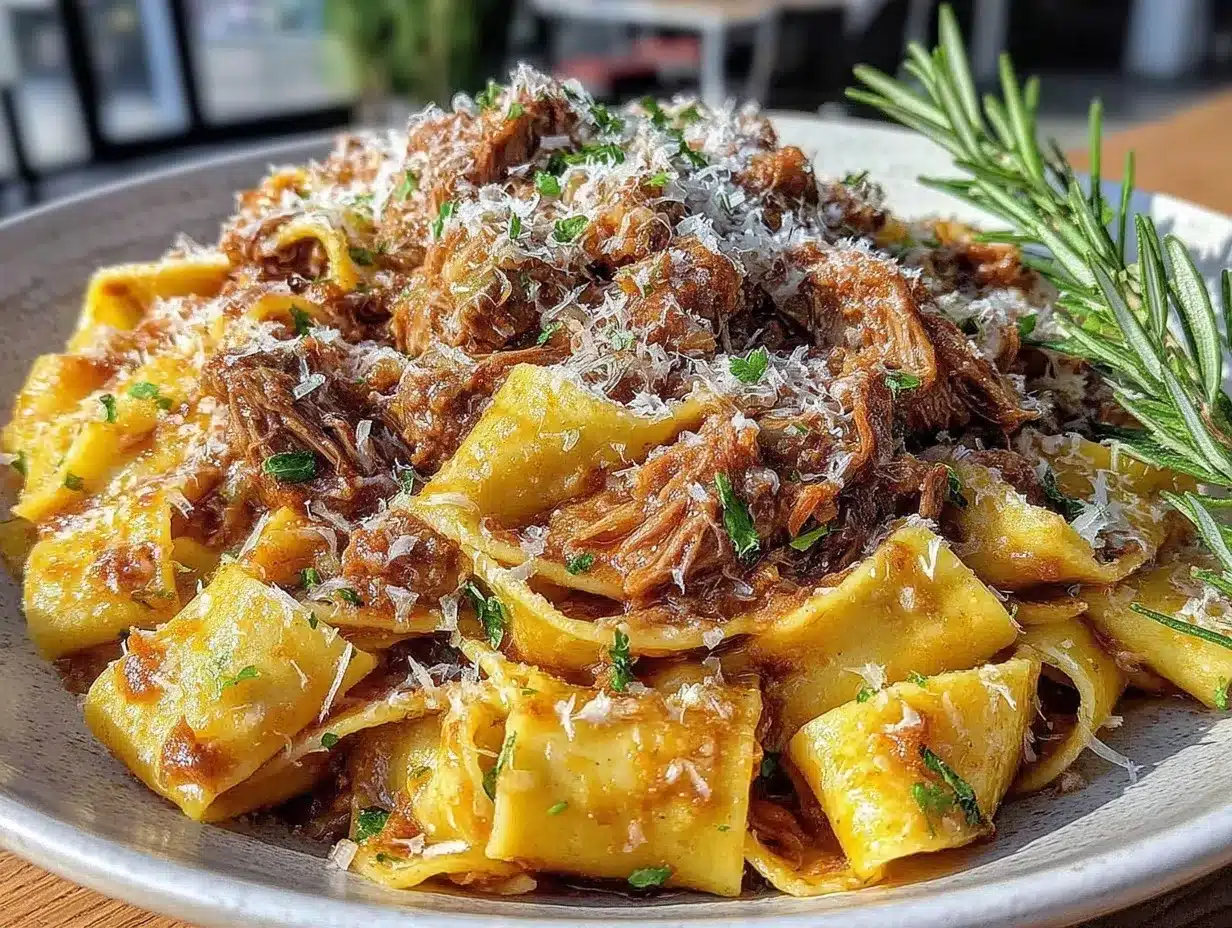
- Make the pasta dough: In a large bowl, mound the flour and create a well in the center. Crack in the eggs, add olive oil and salt. Using a fork, gently whisk the eggs, gradually pulling in flour from the edges until a shaggy dough forms. This should take about 5 minutes.
Tip: If the dough feels too sticky, sprinkle a little more flour. If too dry, add a teaspoon of water. - Knead the dough: Transfer the dough onto a clean, floured surface and knead for 8-10 minutes until smooth and elastic. You’ll know it’s ready when it springs back slightly when pressed.
Note: This step is key—don’t rush. Kneading develops the gluten so the pasta holds together. - Rest the dough: Wrap the dough in plastic wrap and let it rest at room temperature for 30 minutes. This relaxes the gluten, making it easier to roll out.
- Roll and cut the pappardelle: Divide the dough into 2 or 3 portions. On a floured surface, roll each piece into a thin rectangle about 1/16 inch (1.5 mm) thick. Use a sharp knife or pizza cutter to slice into wide strips about 3/4 inch (2 cm) wide.
Tip: Keep the dough you’re not working on covered to prevent drying out. - Prepare the ragù base: Heat olive oil in a Dutch oven over medium heat. Add chopped onions, carrots, and celery. Cook gently for 8-10 minutes until soft and translucent, stirring occasionally.
- Brown the wild boar: Increase heat to medium-high. Add the wild boar chunks and sear until browned on all sides, about 5-7 minutes. Avoid overcrowding the pot; brown in batches if needed.
- Add garlic and tomato paste: Stir in minced garlic and tomato paste. Cook for 2 minutes until fragrant and the paste darkens slightly.
- Deglaze with red wine: Pour in the wine, scraping up any browned bits on the bottom. Let it simmer and reduce by half—this usually takes 5-7 minutes.
- Add tomatoes and herbs: Stir in crushed tomatoes, rosemary, thyme, and bay leaves. Season with salt and pepper. Add enough water or beef broth to just cover the meat.
- Braise the ragù: Bring to a gentle simmer. Cover partially and cook on low heat for 3-4 hours, stirring occasionally. The meat should be tender enough to pull apart with a fork.
Tip: If the sauce thickens too much, add a splash of water. - Cook the pappardelle: Bring a large pot of salted water to a boil. Add fresh pappardelle and cook for 2-3 minutes until al dente. Fresh pasta cooks quickly, so watch closely.
Drain and reserve a little pasta water. - Combine and serve: Toss the pasta with a few ladlefuls of ragù, adding reserved pasta water if needed to loosen the sauce. Plate generously, sprinkle with grated Pecorino Romano, and garnish with parsley if you like.
Cooking Tips & Techniques
Making hand-rolled pappardelle might seem intimidating, but with a few pointers, it’s surprisingly straightforward.
- Keep the dough cool: Warm hands can make the dough sticky; if it gets too soft, chill it briefly before rolling out.
- Roll evenly: Try to keep the dough thickness consistent for even cooking. Uneven pasta can lead to some strips overcooked while others stay tough.
- Don’t crowd when browning meat: Overcrowding traps steam and prevents caramelization, which builds flavor in the ragù.
- Low and slow is your friend: The magic of cinghiale ragù comes from slow braising. Resist the urge to turn up the heat—it’s worth the wait.
- Use fresh herbs: Adding rosemary and thyme whole allows you to remove them easily, keeping the sauce smooth.
- Reserve pasta water: The starchy water helps the sauce cling beautifully to the pappardelle.
One thing I learned the hard way was rushing the braise. The first time I tried, I cranked the heat to save time, and the meat ended up tough. Patience truly pays off here, and the slow simmer makes all the difference.
Variations & Adaptations
This recipe is versatile, and you can adjust it to suit your preferences or dietary needs.
- Meat alternatives: If wild boar isn’t available, pork shoulder or beef chuck are excellent substitutes, though they’ll change the flavor profile slightly.
- Vegetarian twist: Swap the meat for hearty mushrooms like porcini or portobello, and add a splash of vegetable broth for depth.
- Gluten-free pasta: Use a gluten-free flour blend, but note that hand-rolling may be trickier—consider using a pasta machine for better control.
- Spice it up: Add a pinch of red chili flakes to the ragù for a subtle heat that contrasts nicely with the rich sauce.
- Seasonal vegetables: Toss in diced butternut squash or roasted bell peppers during the last hour of braising for added sweetness and texture.
Personally, I tried adding a splash of balsamic vinegar at the end of the ragù once, and it gave a lovely tang that brightened the flavors. It’s fun to experiment!
Serving & Storage Suggestions
Serve this hand-rolled pappardelle and cinghiale ragù hot, ideally fresh from the stove. The pasta’s tender chew and the ragù’s rich sauce are best enjoyed immediately.
Pair with a robust red wine like Chianti or Brunello di Montalcino to complement the earthy flavors. A simple green salad with a tangy vinaigrette balances the meal nicely.
Leftovers can be refrigerated in an airtight container for up to 3 days. Reheat gently over low heat, adding a splash of water or broth to loosen the sauce. The flavors deepen with time, making it even more savory the next day.
For longer storage, freeze the ragù separately for up to 3 months. Thaw overnight in the fridge before reheating. Fresh pappardelle freezes less well, so it’s best made fresh or cooked and then frozen for quick meals.
Nutritional Information & Benefits
This dish offers a hearty balance of protein, carbs, and fats. The wild boar is leaner than pork, providing a rich source of protein with less fat. The fresh pasta supplies energy-giving carbohydrates made from simple ingredients.
Key ingredients like olive oil and tomatoes bring antioxidants and healthy fats, while herbs add flavor without extra calories. This meal is gluten-containing due to the wheat flour, so it’s not suitable for gluten intolerance.
From a wellness perspective, the slow cooking helps retain nutrients, and the rustic nature of the dish means it’s wholesome comfort food without unnecessary additives.
Conclusion
Making perfect hand-rolled pappardelle with slow-braised cinghiale ragù is a rewarding journey—one that connects you to Italian culinary traditions in your own kitchen. It’s a recipe that asks for a bit of patience and love, and in return, delivers deep, satisfying flavors and a touch of rustic elegance.
Feel free to tailor the ragù or pasta thickness to your liking. Maybe you’ll discover your own twist that makes this dish uniquely yours. For me, it’s a meal that brings warmth and memories every time I make it.
If you give this recipe a try, please share your experience or any variations you create—I love hearing how recipes grow in different kitchens. Happy cooking!
FAQs
What can I use if I can’t find wild boar for the ragù?
Pork shoulder or beef chuck are great substitutes that mimic the texture and richness of wild boar, though the flavor will be milder.
How thin should I roll the pappardelle dough?
Roll it out to about 1/16 inch (1.5 mm) thick. The pasta should be thin enough to cook quickly but still sturdy enough to hold the sauce.
Can I make the pasta dough ahead of time?
Yes, you can prepare the dough and refrigerate it wrapped in plastic for up to 24 hours. Let it come to room temperature before rolling.
How long does the slow-braising take?
Expect about 3 to 4 hours of low and slow cooking to achieve tender, flavorful meat.
Is it necessary to use fresh herbs in the ragù?
Fresh herbs like rosemary and thyme add vibrant aroma and flavor, but dried herbs can be used in a pinch—just reduce the quantity since dried herbs are more concentrated.
Pin This Recipe!
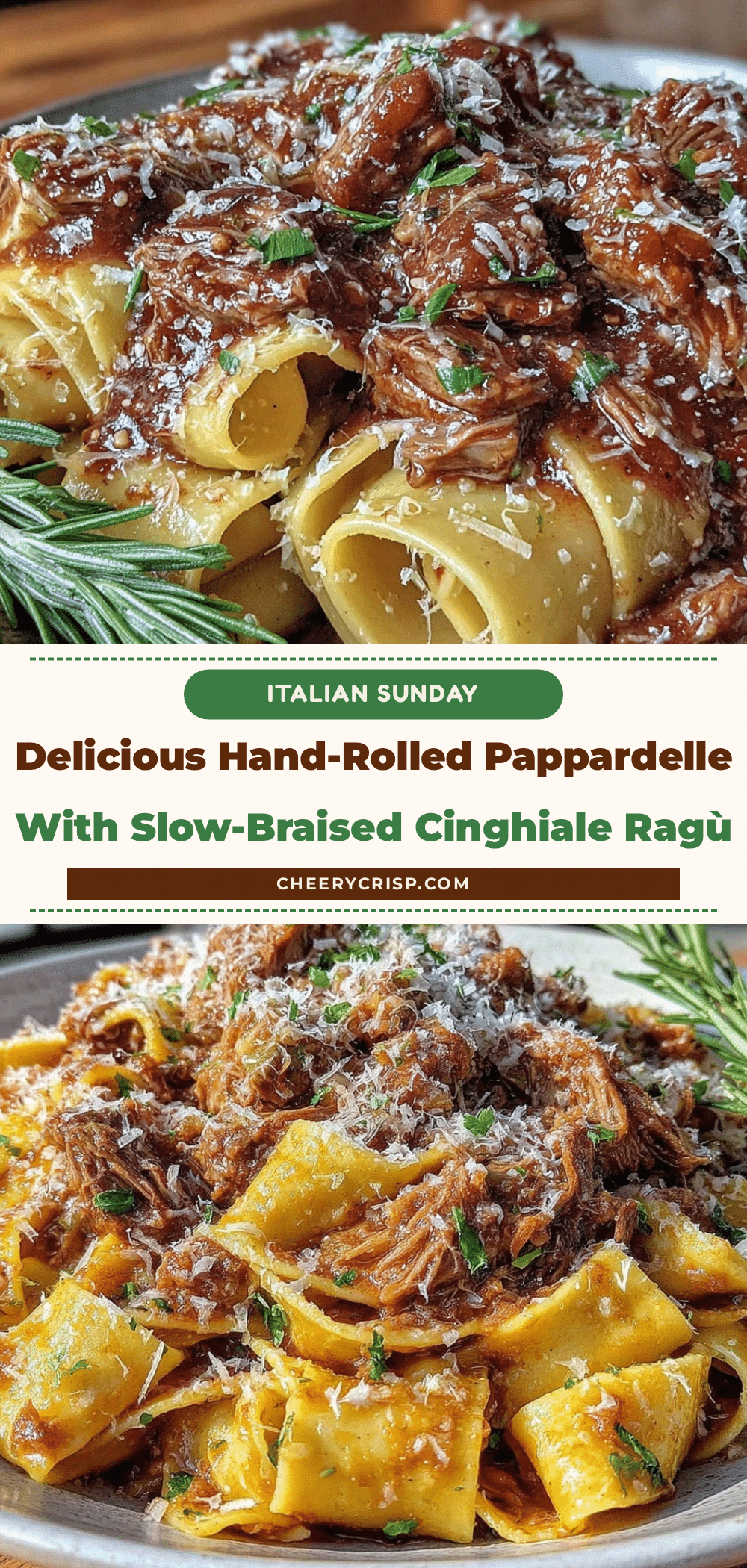
Perfect Hand-Rolled Pappardelle with Slow-Braised Cinghiale Ragù
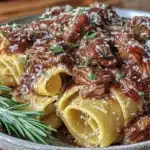
A rustic Italian recipe featuring hand-rolled pappardelle pasta paired with a slow-braised wild boar ragù, delivering authentic Tuscan flavors and a hearty, comforting meal.
- Prep Time: 45 minutes
- Cook Time: 3 hours 30 minutes
- Total Time: 4 hours 15 minutes
- Yield: 4 servings
- Category: Main Course
- Cuisine: Italian
Ingredients
- All-purpose flour – 2 cups (250g), plus extra for dusting
- Large eggs – 3, room temperature
- Extra virgin olive oil – 1 tablespoon (for dough)
- Salt – a pinch (for dough)
- Wild boar shoulder or stew meat – 2 pounds (900g), cut into chunks
- Extra virgin olive oil – 3 tablespoons (for ragù)
- Yellow onion – 1 large, finely chopped
- Carrots – 2 medium, diced
- Celery stalks – 2, diced
- Garlic cloves – 4, minced
- Tomato paste – 2 tablespoons
- Crushed tomatoes – 14 ounces (400g) can
- Dry red wine – 1 cup (240ml), preferably Chianti or Sangiovese
- Fresh rosemary – 2 sprigs
- Fresh thyme – 2 sprigs
- Bay leaves – 2
- Salt and freshly ground black pepper – to taste
- Water or beef broth – as needed for braising
- Grated Pecorino Romano cheese – for serving
- Fresh flat-leaf parsley – chopped, for garnish (optional)
Instructions
- Make the pasta dough: In a large bowl, mound the flour and create a well in the center. Crack in the eggs, add olive oil and salt. Using a fork, gently whisk the eggs, gradually pulling in flour from the edges until a shaggy dough forms (about 5 minutes). If dough is too sticky, sprinkle more flour; if too dry, add a teaspoon of water.
- Knead the dough: Transfer dough to a floured surface and knead for 8-10 minutes until smooth and elastic. Dough should spring back slightly when pressed.
- Rest the dough: Wrap dough in plastic wrap and let rest at room temperature for 30 minutes.
- Roll and cut the pappardelle: Divide dough into 2 or 3 portions. Roll each piece into a thin rectangle about 1/16 inch (1.5 mm) thick. Slice into wide strips about 3/4 inch (2 cm) wide using a sharp knife or pizza cutter. Keep unused dough covered.
- Prepare ragù base: Heat 3 tablespoons olive oil in a Dutch oven over medium heat. Add chopped onions, carrots, and celery. Cook gently for 8-10 minutes until soft and translucent.
- Brown the wild boar: Increase heat to medium-high. Add wild boar chunks and sear until browned on all sides, about 5-7 minutes. Brown in batches if needed to avoid overcrowding.
- Add garlic and tomato paste: Stir in minced garlic and tomato paste. Cook for 2 minutes until fragrant and paste darkens slightly.
- Deglaze with red wine: Pour in wine, scraping browned bits from bottom. Simmer and reduce by half (5-7 minutes).
- Add tomatoes and herbs: Stir in crushed tomatoes, rosemary, thyme, and bay leaves. Season with salt and pepper. Add enough water or beef broth to just cover meat.
- Braise the ragù: Bring to gentle simmer. Cover partially and cook on low heat for 3-4 hours, stirring occasionally. Meat should be tender enough to pull apart with a fork. Add water if sauce thickens too much.
- Cook the pappardelle: Bring large pot of salted water to boil. Add fresh pappardelle and cook 2-3 minutes until al dente. Drain and reserve some pasta water.
- Combine and serve: Toss pasta with ragù, adding reserved pasta water if needed to loosen sauce. Plate generously, sprinkle with grated Pecorino Romano, and garnish with parsley if desired.
Notes
[‘If dough is too sticky, chill briefly before rolling.’, ‘Roll dough evenly for consistent cooking.’, ‘Avoid overcrowding meat when browning to ensure caramelization.’, ‘Low and slow braising is essential for tender meat.’, ‘Use fresh herbs whole to easily remove before serving.’, ‘Reserve pasta water to help sauce cling to pasta.’, ‘Wild boar can be substituted with pork shoulder or beef chuck.’, ‘For gluten-free pasta, use gluten-free flour blends but hand-rolling may be difficult.’, ‘Add a pinch of red chili flakes for subtle heat if desired.’, ‘Add diced butternut squash or roasted bell peppers during last hour of braising for variation.’, ‘Leftover ragù can be refrigerated up to 3 days or frozen up to 3 months.’]
Nutrition
- Serving Size: 1 serving (approxima
- Calories: 650
- Sugar: 8
- Sodium: 550
- Fat: 28
- Saturated Fat: 6
- Carbohydrates: 65
- Fiber: 5
- Protein: 38
Keywords: hand-rolled pappardelle, cinghiale ragù, wild boar ragù, slow-braised ragù, Tuscan pasta, homemade pasta, Italian recipe, rustic Italian, fresh pasta, slow cooking