Love this? Save it for later!
Share the inspiration with your friends
Introduction
I had been avoiding peach cobbler for years. A whole decade, actually. It wasn’t the peaches themselves—I love a good, ripe peach more than most people I know. It was the cobbler part. The sad, soggy, doughy blanket that always seemed to ruin a perfectly good pile of fruit. Every version I tried felt like a betrayal of summer’s best offering.
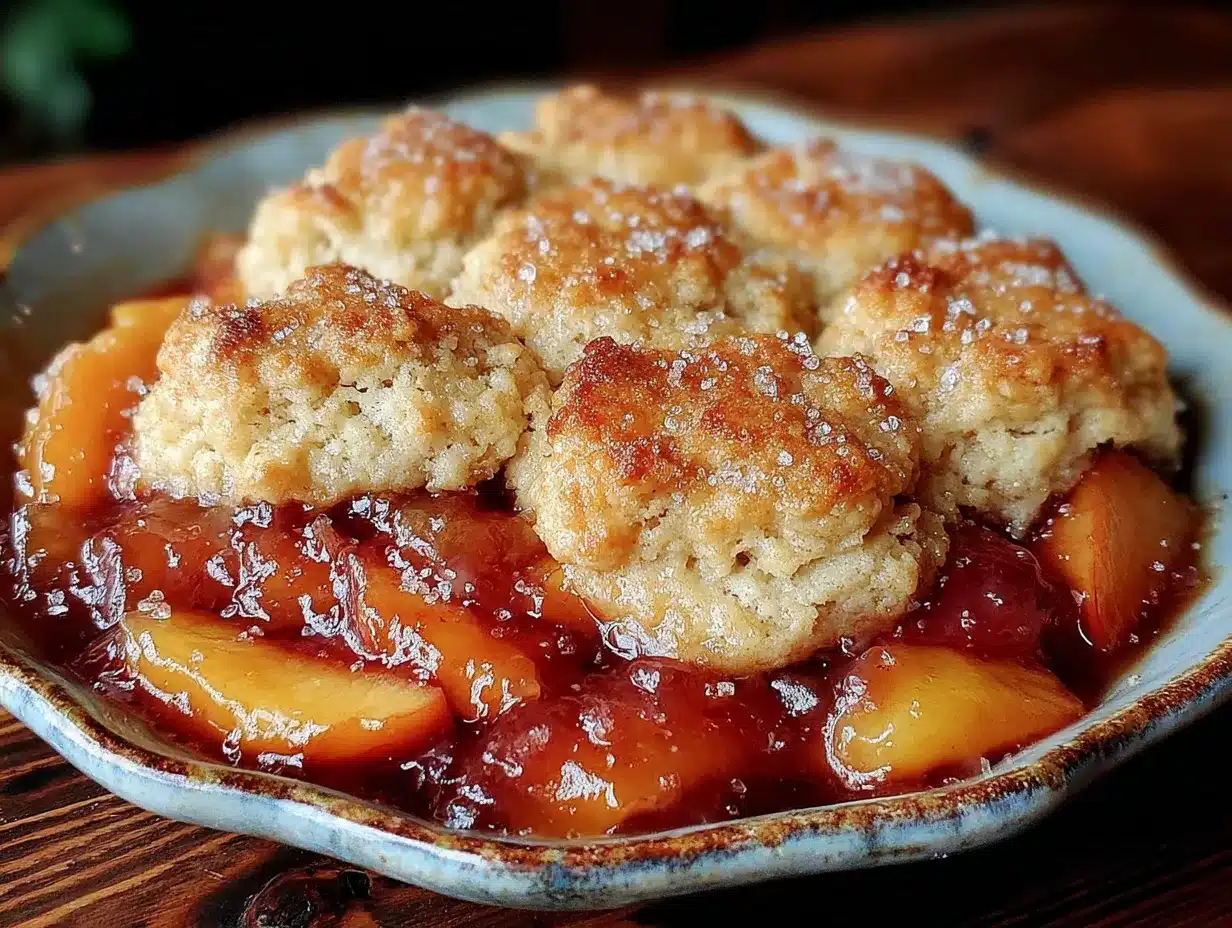
Then last August, my neighbor Carol knocked on my door holding a cast iron skillet wrapped in a kitchen towel. “I made too much,” she said, but her eyes told a different story. She wanted me to try it. I took the skillet reluctantly, already planning to politely accept a small portion and toss the rest when she wasn’t looking. That night, after dinner, I scooped out a spoonful of the golden-brown biscuit topping, letting it break through to the bubbling peach filling underneath. The brown sugar had caramelized on top into these little crunchy bits that shattered against my teeth. The biscuit was somehow both tender and sturdy, soaking up just enough of that syrupy peach juice without turning into paste. I ate three servings. I called Carol the next morning to apologize for my skepticism and ask for the recipe. She laughed and said she figured I’d call.
This is that recipe. It’s the one that changed my mind about what a cobbler could be, and honestly, it might change yours too. Maybe you’ve been there—ordering cobbler at a diner and getting a bowl of sad, gluey dough floating in sugary peach water. That’s not what this is. This is a proper, honest-to-goodness cobbler with a brown sugar biscuit topping that holds its own against the sweet, jammy peaches underneath. It’s the kind of dessert that makes you close your eyes after the first bite and forget what you were talking about. I’ve made it at least fifteen times since that August evening, and every single time, I’m still surprised by how good it is.
Why You’ll Love This Recipe
I’ve tested this recipe more times than I care to count, tweaking the biscuit ratio, adjusting the sugar levels, and even trying different peach varieties just to be sure. Here is why this version stands head and shoulders above the rest.
- Perfect Biscuit Topping Every Time : The brown sugar biscuit topping is the real star here. It bakes up golden and crisp on top, soft and fluffy underneath, with little caramelized edges that taste like a cross between a sugar cookie and a buttermilk biscuit. No more sad, doughy toppings.
- Simple, Real Ingredients : You likely have everything you need in your kitchen right now. No boxed mixes, no cream of tartar, no weird stabilizers. Just butter, flour, sugar, peaches, and a few pantry staples.
- Forgiving Technique : This recipe does not require perfect pastry skills. You can drop the biscuit topping in messy spoonfuls, and it will still look gorgeous and taste incredible. It is practically foolproof.
- Make-Ahead Friendly : The filling can be prepped a day in advance, and the whole cobbler actually tastes better the next morning with coffee. Not that I would know from experience or anything.
- Crowd-Pleasing Magic : I have served this at potlucks, family dinners, and casual get-togethers. It disappears every single time. People who claim they do not like fruit desserts ask for seconds.
What makes this recipe different from the dozens of other peach cobbler recipes out there is the biscuit technique. Most cobblers use a drop biscuit that is too wet or too dry, resulting in a topping that either sinks into the filling or stays dense and doughy. This version uses a higher butter-to-flour ratio and a touch of brown sugar that caramelizes during baking, creating a topping that is sturdy enough to hold its shape but tender enough to soak up the peach juices. It is the Goldilocks of cobbler toppings.
This is the kind of dessert that makes you feel like a hero without breaking a sweat. It is impressive enough for company but simple enough for a random Tuesday night when you just need something warm and sweet. It tastes like summer in a bowl, and honestly, it might just ruin all other cobblers for you.
What Ingredients You Will Need
This recipe uses simple, honest ingredients to create something truly special. Most of these are pantry staples, but a few deserve a little extra attention to get the best results.
For the Peach Filling
- 6 cups fresh peaches, peeled and sliced (about 6-8 medium peaches) — Look for peaches that give slightly when gently pressed but are not mushy. Freestone varieties like Elberta or Redhaven make slicing much easier since the pit comes away cleanly. If you cannot find freestone peaches, clingstone varieties work fine; you will just need to work a little harder to remove the pit.
- 1/2 cup granulated sugar — This draws out the natural juices from the peaches and creates that wonderful syrupy base. You can reduce this to 1/3 cup if your peaches are exceptionally sweet.
- 2 tablespoons cornstarch — This thickens the peach juices so the filling is not watery. Do not skip this, or you will end up with soup.
- 1 tablespoon fresh lemon juice — A splash of acidity balances the sweetness and keeps the peaches from browning too much. Use fresh lemon juice, not the bottled stuff.
- 1 teaspoon vanilla extract — This adds warmth and depth to the peach flavor. I prefer pure vanilla extract, but imitation works in a pinch.
- 1/4 teaspoon ground cinnamon — Just enough to complement the peaches without overpowering them.
- 1/8 teaspoon ground nutmeg — Optional but lovely. Freshly grated nutmeg is best if you have it.
For the Brown Sugar Biscuit Topping
- 1 1/2 cups all-purpose flour — Spoon and level your flour for accurate measuring. Scooping directly from the bag can pack in too much flour and make the biscuits dense.
- 1/2 cup packed light brown sugar — This is what gives the topping its caramelized, almost molasses-like flavor. Dark brown sugar works too and will give an even deeper flavor.
- 2 teaspoons baking powder — Make sure your baking powder is fresh. If it is more than six months old, it might not give you the rise you want.
- 1/2 teaspoon salt — Salt balances the sweetness and enhances the overall flavor.
- 6 tablespoons cold unsalted butter, cut into small cubes — Cold butter is non-negotiable here. It creates steam pockets as it melts in the oven, resulting in flaky, tender biscuits. I like using Kerrygold or any European-style butter for its higher fat content.
- 2/3 cup buttermilk, cold — The acidity in buttermilk tenderizes the gluten and reacts with the baking powder for extra lift. If you do not have buttermilk, you can make a quick substitute by adding 1 tablespoon of lemon juice or white vinegar to 2/3 cup of whole milk and letting it sit for 5 minutes.
- 1 tablespoon turbinado or coarse sugar, for sprinkling — This gives the tops a lovely crunchy texture. Demerara sugar works great too.
Ingredient Tips from My Kitchen
I have made this recipe with both supermarket peaches and farmers market peaches, and honestly, the difference is noticeable. Farmers market peaches tend to be juicier and more flavorful, which means you might need an extra tablespoon of cornstarch to thicken the filling. If you are using frozen peaches (thawed and drained), reduce the sugar slightly since frozen fruit is often packed in syrup.
For the buttermilk, I have had great results with both store-bought and homemade versions. The homemade version is a bit thinner, so the biscuit dough might be slightly wetter. Just add a tablespoon more flour if needed.
As for the butter, I have tested this with salted butter and just reduced the added salt to 1/4 teaspoon. It works fine, but unsalted gives you more control over the final salt level.
Equipment Needed
You do not need a lot of fancy equipment for this recipe, which is part of its beauty. Here is what you will need.
- 10-inch cast iron skillet or 9×13 baking dish — A cast iron skillet gives you the best heat distribution and those gorgeous caramelized edges. If you do not have one, a ceramic or glass baking dish works perfectly fine. Just note that glass bakes a little slower, so you might need to add 5 minutes to the baking time.
- Large mixing bowl — For the peach filling and the biscuit topping. I use separate bowls to avoid cross-contamination of wet and dry ingredients.
- Pastry cutter or two forks — For cutting the butter into the flour mixture. You can also use your fingertips if you work quickly to keep the butter cold. A food processor works too, but be careful not to over-process.
- Measuring cups and spoons — Accurate measurements matter in baking. Use dry measuring cups for flour and sugar, and a liquid measuring cup for the buttermilk.
- Sharp knife and cutting board — For peeling and slicing the peaches. A serrated peeler makes quick work of peach skins.
- Wooden spoon or spatula — For stirring the filling and mixing the dough.
- Cooling rack — Optional but helpful for even cooling.
I have made this cobbler in a cheap baking dish from the grocery store, and it still turned out great. The cast iron skillet just gives you those extra crispy edges that make people think you worked harder than you actually did. If you are investing in one piece of equipment for this recipe, let it be a good 10-inch cast iron skillet. It will last forever and improve everything you cook in it.
Preparation Method
This recipe comes together in about 15 minutes of active work, then the oven does the rest. Here is how to make it.
Step 1: Preheat and Prepare the Pan
Preheat your oven to 375°F (190°C). Place your cast iron skillet or baking dish on a baking sheet to catch any potential overflow during baking. Trust me on this one—I learned the hard way that peach cobbler can bubble over and make a smoky mess in the bottom of your oven.
Step 2: Make the Peach Filling
In a large bowl, combine the sliced peaches, granulated sugar, cornstarch, lemon juice, vanilla extract, cinnamon, and nutmeg. Stir gently with a wooden spoon until the peaches are evenly coated. Let the mixture sit for 5 to 10 minutes while you prepare the biscuit topping. This resting time allows the sugar to draw out the natural juices from the peaches, creating that wonderful syrupy base. You will notice the mixture becoming more liquid as it sits—that is exactly what you want.
Step 3: Prepare the Biscuit Topping
In a separate medium bowl, whisk together the all-purpose flour, packed brown sugar, baking powder, and salt. Add the cold butter cubes to the flour mixture. Using a pastry cutter or two forks, cut the butter into the flour until the mixture resembles coarse meal with some pea-sized butter pieces remaining. You want visible bits of butter throughout—those little pockets of butter will melt in the oven and create steam, giving you flaky, tender biscuits.
Make a well in the center of the flour mixture and pour in the cold buttermilk. Stir with a fork or spatula just until the dough comes together. It will be sticky and shaggy looking. Do not overmix, or the biscuits will be tough. A few dry spots are perfectly fine.
Step 4: Assemble the Cobbler
Pour the peach filling into your prepared skillet or baking dish, spreading it into an even layer. Using a spoon or a cookie scoop, drop dollops of the biscuit dough over the top of the peach filling. Do not spread the dough out—leave it in uneven mounds. This gives you those lovely craggy, caramelized edges. You should have about 8 to 10 dollops depending on the size of your spoon.
Sprinkle the turbinado or coarse sugar evenly over the biscuit topping. This step is optional but highly recommended for that delightful crunch.
Step 5: Bake
Place the skillet on the prepared baking sheet and transfer to the preheated oven. Bake for 35 to 45 minutes, or until the biscuit topping is golden brown and the peach filling is bubbling up around the edges. The filling should be thick and syrupy, not watery. If the topping is browning too quickly but the filling is not yet bubbling, tent the dish loosely with aluminum foil for the last 10 minutes of baking.
Let the cobbler cool on a wire rack for at least 15 to 20 minutes before serving. This resting time allows the filling to set up so it does not run all over your plate. I know it is tempting to dig in immediately, but patience pays off here.
Sensory Cues Throughout the Process
When you are cutting the butter into the flour, you should feel the mixture turning from powdery to sandy, with small, flat pieces of butter remaining. When you stir in the buttermilk, the dough should feel sticky and slightly shaggy, not smooth and elastic. During baking, your kitchen will smell like a combination of caramelized sugar, warm peaches, and toasted butter. The cobbler is done when you can see the filling bubbling thickly through the biscuit gaps, and the topping is a deep golden brown with slightly darker edges.
Cooking Tips & Techniques
After making this cobbler more times than I care to admit, I have collected a few tips that make the process smoother and the results more consistent.
Keep Everything Cold
The single most important tip for tender, flaky biscuits is keeping your butter and buttermilk cold. I pop my butter cubes in the freezer for 10 minutes before cutting them into the flour. If your kitchen is warm, chill your mixing bowl too. Warm butter will melt into the flour instead of creating those essential steam pockets, and you will end up with dense, flat biscuits.
Do Not Overwork the Dough
Biscuit dough is not like bread dough. You want to handle it as little as possible. Overmixing develops gluten, which makes the biscuits tough and chewy instead of tender and flaky. Stir just until the flour is moistened, and stop. A few dry spots are fine. I once overmixed a batch out of distraction, and the resulting biscuits were so tough they could have doubled as hockey pucks.
Peach Ripeness Matters
Underripe peaches will not release enough juice, leaving you with a dry filling. Overripe peaches can turn mushy during baking. Look for peaches that yield slightly to gentle pressure but still feel firm. If your peaches are slightly underripe, let them sit at room temperature for a day or two before using. You can also add an extra tablespoon of sugar to help coax out their juices.
Use a Baking Sheet
Seriously, put a baking sheet under your skillet or dish. Peach cobbler loves to bubble over, and cleaning burnt sugar off the bottom of your oven is not fun. I learned this the hard way during a dinner party, and the smoke alarm added an unexpected soundtrack to our meal.
Let It Rest
I know you want to eat this immediately. I do too. But letting the cobbler rest for at least 15 minutes allows the filling to thicken properly. If you serve it too soon, the juices will run all over the plate, and the biscuit topping will get soggy. The wait is worth it, I promise.
Test for Doneness
If you are unsure whether the cobbler is done, insert a toothpick into the center of a biscuit. It should come out clean or with a few moist crumbs. The filling should be bubbling visibly around the edges. If the filling is bubbling but the biscuits are still pale, give it another 5 minutes and check again.
Variations & Adaptations
This recipe is wonderfully adaptable. Here are a few variations I have tried and loved.
Gluten-Free Version
Substitute the all-purpose flour with a good gluten-free baking blend that contains xanthan gum. I have had great results with Bob’s Red Mill 1-to-1 Baking Flour. The biscuits will be slightly more delicate, so handle the dough gently. Everything else remains the same.
Dairy-Free Version
Use cold coconut oil or vegan butter in place of the regular butter, and substitute the buttermilk with unsweetened almond or oat milk mixed with 1 tablespoon of lemon juice. The flavor will be slightly different, but the texture holds up surprisingly well.
Mixed Stone Fruit Cobbler
Replace half of the peaches with nectarines, plums, or apricots. The combination of different stone fruits adds complexity and a beautiful color contrast. I made this version last July with a mix of peaches and dark plums, and the deep purple juices stained the biscuits in the most gorgeous way.
Spiced Peach Cobbler
Add 1/4 teaspoon of ground ginger and a pinch of cardamom to the peach filling alongside the cinnamon and nutmeg. This gives the cobbler a warm, almost chai-like flavor that pairs beautifully with vanilla ice cream.
Individual Skillet Cobblers
Divide the filling and topping among four 6-inch cast iron skillets or ramekins. Reduce the baking time to 20 to 25 minutes. These are perfect for dinner parties and make everyone feel special.
Less Sweet Version
Reduce the granulated sugar in the filling to 1/3 cup and use only 1/4 cup of brown sugar in the topping. The natural sweetness of ripe peaches should still shine through. This version is excellent if you plan to serve the cobbler with sweetened whipped cream or ice cream.
Serving & Storage Suggestions
This cobbler is at its absolute best served warm, about 15 to 20 minutes after it comes out of the oven. The biscuit topping is still crisp on top, the filling is thick and luscious, and the contrast between warm and cold toppings is pure magic.
How to Serve
Scoop generous portions into shallow bowls, making sure each serving gets a good amount of biscuit topping and peach filling. A scoop of vanilla bean ice cream is the classic accompaniment, and for good reason—the cold, creamy ice cream melting into the warm, spiced peaches is a combination that never gets old. Alternatively, a dollop of lightly sweetened whipped cream or a drizzle of heavy cream works beautifully. For a truly indulgent treat, serve it with a side of crème fraîche or Greek yogurt for a tangy contrast.
What to Serve Alongside
Peach cobbler is rich enough to stand alone, but it pairs wonderfully with a cup of hot coffee or iced tea. If you are serving it as part of a larger meal, it follows a simple grilled chicken or pork dinner beautifully. The sweetness of the cobbler balances the savory flavors of the main course.
Storage Instructions
Cover any leftover cobbler tightly with foil or plastic wrap and store it in the refrigerator for up to 4 days. The biscuit topping will soften over time as it absorbs moisture from the filling, but the flavor actually improves as the peaches continue to meld with the spices.
Reheating Tips
To restore some of the biscuit’s original crispness, reheat individual portions in a 350°F (175°C) oven for 10 to 15 minutes. You can also use a toaster oven if you have one. The microwave works in a pinch, but the biscuits will be soft rather than crisp. If you are reheating the entire dish, cover it with foil and bake at 350°F for 20 minutes, then uncover and bake for an additional 5 minutes.
Freezing Instructions
This cobbler freezes surprisingly well. Assemble the cobbler completely but do not bake it. Wrap the dish tightly in a layer of plastic wrap followed by a layer of foil, and freeze for up to 3 months. When ready to bake, thaw the cobbler in the refrigerator overnight, then bake as directed, adding 10 to 15 minutes to the baking time since you are starting from cold.
Nutritional Information & Benefits
While peach cobbler is certainly a treat, it does offer some surprising nutritional benefits, especially when made with fresh fruit and real ingredients.
Estimated Nutritional Values (per serving, based on 8 servings)
- Calories: 320
- Total Fat: 12g
- Saturated Fat: 7g
- Cholesterol: 30mg
- Sodium: 280mg
- Total Carbohydrates: 52g
- Dietary Fiber: 3g
- Sugars: 32g
- Protein: 4g
Health Benefits of Key Ingredients
Peaches are a good source of vitamin C, vitamin A, and dietary fiber. They also contain antioxidants like chlorogenic acid, which may help reduce inflammation and support heart health. The buttermilk in the biscuits provides calcium and probiotics, while the butter offers fat-soluble vitamins A, D, and E. Of course, this is still a dessert, so enjoy it in moderation as part of a balanced diet.
Dietary Considerations
This recipe contains gluten, dairy, and eggs (if you use the buttermilk substitute with milk). For gluten-free and dairy-free options, see the variations section above. This cobbler is naturally nut-free and does not contain any artificial preservatives or additives.
I personally love that this dessert feels indulgent without being overly heavy. It is the kind of treat that satisfies your sweet tooth while still reminding you that you are eating real, whole ingredients. There is something deeply satisfying about a dessert that lets the fruit shine rather than hiding it under layers of processed sugar and artificial flavors.
Conclusion
This easy homemade fresh peach cobbler with brown sugar biscuit topping is everything a summer dessert should be. It is simple enough for a weeknight, impressive enough for company, and delicious enough to make you forget about every other cobbler you have ever had. The brown sugar biscuit topping is the real game-changer here—it bakes up golden and crisp, with those caramelized edges that taste like pure magic.
What I love most about this recipe is how forgiving it is. You do not need to be a pastry chef to pull it off. You just need ripe peaches, a few pantry staples, and a willingness to let the oven do the hard work. The result is a dessert that tastes like summer in a bowl, with layers of sweet, jammy fruit and tender, buttery biscuits that soak up all that wonderful syrup.
I encourage you to make this recipe your own. Swap in different fruits, adjust the spices, or experiment with the topping. That is the beauty of a good cobbler—it welcomes creativity. And if you try it, I would love to hear how it turns out. Drop a comment below and let me know if this cobbler changed your mind like it changed mine. Share your photos, your variations, and your stories. After all, the best recipes are the ones we pass along and make our own.
Now go grab some peaches. Summer is waiting.
Frequently Asked Questions
Can I use frozen peaches instead of fresh?
Absolutely. Thaw the frozen peaches completely and drain off any excess liquid before using. You may need to add an extra tablespoon of cornstarch to compensate for the extra moisture. Reduce the sugar slightly since frozen peaches are often packed in syrup.
Why is my cobbler runny?
A runny cobbler usually means the filling did not thicken enough. This can happen if the peaches were exceptionally juicy, or if the cornstarch was not fully dissolved. Make sure to let the filling sit for 5 to 10 minutes before baking so the cornstarch can start working. If your cobbler is already baked and runny, let it cool longer—the filling will continue to thicken as it cools.
Can I make this cobbler ahead of time?
Yes, you can assemble the cobbler up to 24 hours in advance and refrigerate it unbaked. Add about 10 minutes to the baking time since you are starting from cold. The biscuit topping might be slightly less fluffy, but the flavor will be just as good.
How do I peel peaches easily?
Score a small X on the bottom of each peach, then drop them into boiling water for 30 to 60 seconds. Transfer them immediately to an ice water bath. The skins should slip right off. This method works best with ripe but firm peaches. If your peaches are very ripe, you can simply peel them with a sharp paring knife or a serrated peeler.
What is the best way to reheat leftover cobbler?
For the best results, reheat individual portions in a 350°F oven or toaster oven for 10 to 15 minutes. This helps restore some crispness to the biscuit topping. The microwave works in a pinch but will make the biscuits soft. If you are reheating the entire dish, cover it with foil and bake at 350°F for 20 minutes, then uncover and bake for 5 more minutes.
Pin This Recipe!

Easy Homemade Fresh Peach Cobbler Recipe
This easy homemade fresh peach cobbler with brown sugar biscuit topping is everything a summer dessert should be. It is simple enough for a weeknight, impressive enough for company, and delicious enough to make you forget about every other cobbler you have ever had.
- Prep Time: 15 minutes
- Cook Time: 35-45 minutes
- Total Time: 50-60 minutes
- Yield: 8 servings 1x
- Category: Dessert
- Cuisine: American
Ingredients
- 6 cups fresh peaches, peeled and sliced (about 6–8 medium peaches)
- 1/2 cup granulated sugar
- 2 tablespoons cornstarch
- 1 tablespoon fresh lemon juice
- 1 teaspoon vanilla extract
- 1/4 teaspoon ground cinnamon
- 1/8 teaspoon ground nutmeg
- 1 1/2 cups all-purpose flour
- 1/2 cup packed light brown sugar
- 2 teaspoons baking powder
- 1/2 teaspoon salt
- 6 tablespoons cold unsalted butter, cut into small cubes
- 2/3 cup buttermilk, cold
- 1 tablespoon turbinado or coarse sugar, for sprinkling
Instructions
- Preheat your oven to 375°F (190°C). Place your cast iron skillet or baking dish on a baking sheet to catch any potential overflow during baking.
- In a large bowl, combine the sliced peaches, granulated sugar, cornstarch, lemon juice, vanilla extract, cinnamon, and nutmeg. Stir gently with a wooden spoon until the peaches are evenly coated. Let the mixture sit for 5 to 10 minutes while you prepare the biscuit topping.
- In a separate medium bowl, whisk together the all-purpose flour, packed brown sugar, baking powder, and salt. Add the cold butter cubes to the flour mixture. Using a pastry cutter or two forks, cut the butter into the flour until the mixture resembles coarse meal with some pea-sized butter pieces remaining.
- Make a well in the center of the flour mixture and pour in the cold buttermilk. Stir with a fork or spatula just until the dough comes together. It will be sticky and shaggy looking. Do not overmix.
- Pour the peach filling into your prepared skillet or baking dish, spreading it into an even layer. Using a spoon or a cookie scoop, drop dollops of the biscuit dough over the top of the peach filling. Do not spread the dough out—leave it in uneven mounds. You should have about 8 to 10 dollops.
- Sprinkle the turbinado or coarse sugar evenly over the biscuit topping.
- Place the skillet on the prepared baking sheet and transfer to the preheated oven. Bake for 35 to 45 minutes, or until the biscuit topping is golden brown and the peach filling is bubbling up around the edges. If the topping is browning too quickly but the filling is not yet bubbling, tent the dish loosely with aluminum foil for the last 10 minutes of baking.
- Let the cobbler cool on a wire rack for at least 15 to 20 minutes before serving.
Notes
Keep butter and buttermilk cold for flaky biscuits. Do not overwork the dough. Let the cobbler rest for at least 15 minutes before serving to allow the filling to thicken. Use a baking sheet under the skillet to catch any overflow.
Nutrition
- Serving Size: 1 serving
- Calories: 320
- Sugar: 32
- Sodium: 280
- Fat: 12
- Saturated Fat: 7
- Carbohydrates: 52
- Fiber: 3
- Protein: 4
Keywords: peach cobbler, fresh peach cobbler, easy peach cobbler, brown sugar biscuit topping, summer dessert, homemade cobbler