Love this? Save it for later!
Share the inspiration with your friends
“I never thought a dairy-free butter substitute could taste this creamy,” my friend Jenna said last Tuesday as we mixed up a batch of cookies. Honestly, I was skeptical at first—I’ve tried a handful of dairy-free options before, and most felt like compromises rather than solutions. But this recipe? It came out smooth, buttery, and perfect for baking, without any dairy in sight.
The secret? It all started when I was helping a coworker with her holiday baking. She mentioned she needed a creamy, dairy-free butter substitute because her niece was allergic to dairy, and store-bought options weren’t cutting it. I went home that night, fiddled with some pantry staples, and after a few messy attempts (including one where I forgot to chill the mixture), I landed on a formula that works like a charm.
Maybe you’ve been there—staring at a recipe that calls for butter, wondering how to make it work when dairy is off-limits. This easy creamy dairy-free butter substitute for baking is exactly what you need. It blends perfectly into batters and doughs, creating that tender, flaky texture we all love. And let me tell you, it’s stuck around in my kitchen because it delivers every single time.
Why You’ll Love This Recipe
- Quick & Easy: Comes together in under 10 minutes, making it ideal for last-minute baking projects or busy days.
- Simple Ingredients: Uses everyday pantry staples—no need to hunt for specialty items.
- Perfect for Baking: Ideal for cookies, muffins, cakes, and even pie crusts.
- Crowd-Pleaser: Everyone, dairy-free or not, loves the flavor and texture it adds.
- Unbelievably Delicious: Creamy, buttery mouthfeel without the dairy greasiness.
What sets this dairy-free butter substitute apart? It’s all about the balance of oils and a touch of natural flavoring that mimics butter’s richness. I experimented with different fats and found that combining refined coconut oil with a neutral vegetable oil creates a spreadable, creamy texture that holds up well during baking. Plus, a pinch of salt and a hint of natural lecithin help it behave just like real butter in recipes.
This isn’t just another vegan butter replacement—it’s the kind of substitute that makes you close your eyes and savor the first bite, whether you’re making chocolate chip cookies or flaky biscuits. And honestly, it has made my vegan banana bread recipe even better. Give it a try, and you might find it becomes your go-to pantry staple, too.
What Ingredients You Will Need
This recipe uses simple, wholesome ingredients to deliver that rich, creamy texture without the dairy. Most of these are pantry staples, and substitutions are easy if you have dietary preferences.
- Refined coconut oil (1/2 cup / 115 g): Provides a creamy base without the coconut flavor (choose refined for neutral taste).
- Neutral vegetable oil (1/2 cup / 120 ml): I prefer grapeseed or sunflower oil for their lightness.
- Unsweetened soy or oat milk (2 tablespoons / 30 ml): Adds moisture and helps with blendability (feel free to use any plant milk).
- Pure sunflower lecithin (1 teaspoon): This natural emulsifier helps bind oils and water, making the texture smooth and spreadable.
- Salt (1/4 teaspoon): Enhances flavor, just like salted butter does.
- Natural butter flavor extract (optional, 1/2 teaspoon): Adds that familiar buttery note without dairy.
Ingredient tips: I recommend Nutiva for refined coconut oil because it melts smoothly and doesn’t separate. For lecithin, NOW Foods sunflower lecithin powder works great. If you don’t have lecithin, you can omit it, but the texture might be less creamy.
Seasonal note: If you’re baking during warmer months, store the finished butter substitute in the fridge to keep it solid. In cooler months, room temperature works fine for spreading.
Equipment Needed
- Mixing bowl: A medium-sized bowl to combine ingredients comfortably.
- Electric hand mixer or stand mixer: Helpful for whipping the oils and milk into a creamy consistency. A sturdy whisk works too, but expect a bit of an arm workout.
- Measuring cups and spoons: Accurate measurements are key for texture.
- Spatula: For scraping down the sides and folding ingredients.
- Container with lid: To store your dairy-free butter substitute (I like glass jars).
Pro tip: I’ve tried making this in a blender, but I find a mixer gives better control over the texture. If you don’t have a mixer, whisk vigorously—just pause for coffee halfway through!
Preparation Method

- Soften the coconut oil: If solid, gently melt the refined coconut oil until just soft but not liquid (about 20 seconds in the microwave or a few minutes at room temp). You want it creamy, not runny.
- Combine oils: In your mixing bowl, pour the softened coconut oil and neutral vegetable oil. Mix on low speed for 30 seconds to start blending them.
- Add the plant milk: Slowly pour in 2 tablespoons of your chosen plant milk while continuing to mix. This helps with the creamy texture.
- Incorporate lecithin and salt: Sprinkle in the sunflower lecithin and salt. These ingredients help bind the mixture and give it that authentic butter flavor.
- Mix thoroughly: Increase mixer speed to medium-high and whip for 3 to 4 minutes. The mixture should turn pale, creamy, and spreadable—think softened butter consistency.
- Optional flavoring: Add 1/2 teaspoon of natural butter flavor extract if you want that extra buttery aroma. Mix briefly to combine.
- Transfer & chill: Spoon the mixture into a container and refrigerate for at least 1 hour. This firms up the substitute, making it perfect for baking or spreading.
Notes: If the mixture separates or feels oily, remix briefly—sometimes a quick whip fixes texture issues. Also, remember to use refined coconut oil for a neutral flavor; otherwise, your butter substitute might taste coconutty.
Timing tip: You can prepare this substitute a day ahead. It keeps well in the fridge for up to two weeks—perfect for planning your baking projects in advance.
Cooking Tips & Techniques
There’s a bit of art to making a dairy-free butter substitute that behaves like real butter in baking. Here’s what I’ve learned from trial and error:
- Temperature matters: Make sure the coconut oil is softened but not melted. Too liquid and your mixture won’t whip up properly.
- Mix well: Don’t rush the whipping process. Proper emulsification takes a few minutes, so give your mixer time to do its magic.
- Use lecithin: This is my secret weapon. It acts like the natural emulsifiers in butter, preventing separation and giving that creamy texture.
- Salt is key: Just a pinch helps mimic the flavor profile of salted butter, but you can skip it if your recipe calls for unsalted butter.
- Chilling is essential: The substitute firms up in the fridge, so don’t skip this step before baking or spreading.
I once tried skipping lecithin, and the dough was greasy and crumbly. Lesson learned—don’t skip it if you want that perfect crumb. Also, multitasking tip: whip up the substitute while preheating your oven to save time.
Variations & Adaptations
- Nut-free variation: Use avocado oil instead of vegetable oil to keep it nut-free and mild-tasting.
- Flavored butter substitute: Add herbs like rosemary or garlic powder for savory baked goods, like biscuits or breadsticks.
- Lower fat option: Reduce oils slightly and add 1 tablespoon of unsweetened applesauce to keep moisture but cut fat.
- Gluten-free pairing: This substitute works beautifully with gluten-free flour blends, making it great for sensitive diets.
- Personal favorite variation: I once mixed in a teaspoon of maple syrup for breakfast muffins—it gave a subtle sweetness that paired beautifully with cinnamon.
Serving & Storage Suggestions
This dairy-free butter substitute is best served chilled or at room temperature, depending on your baking needs. If you’re spreading it on toast or bagels, let it sit out for 10 minutes to soften.
It pairs wonderfully with dishes like vegan blueberry scones or fluffy pancakes. For drinks, a hot cup of herbal tea or coffee complements the buttery flavor nicely.
Storage: Keep it refrigerated in a sealed container for up to two weeks. You can also freeze it for up to 3 months—just thaw overnight in the fridge before use.
Reheat gently if needed by microwaving in short bursts (5-10 seconds) to soften without melting. Over time, the flavor melds beautifully, making it even better when used in recipes that rest overnight, like pie crusts or layered cakes.
Nutritional Information & Benefits
Per 1 tablespoon (14 g) serving, this dairy-free butter substitute contains approximately:
| Calories | 120 |
|---|---|
| Fat | 14 g |
| Saturated Fat | 6 g |
| Carbohydrates | 0 g |
| Protein | 0 g |
Key benefits include being free from dairy and lactose, making it suitable for those with allergies or intolerances. The use of refined coconut oil provides medium-chain triglycerides, which some studies suggest may support metabolism.
This substitute is vegan, gluten-free, and soy-free if you choose the right plant milk. Just watch for allergens if adding flavor extracts or alternative oils.
From a wellness perspective, this butter substitute offers a creamy alternative that doesn’t compromise on baking quality while fitting into various dietary lifestyles.
Conclusion
If you’ve been hunting for an easy, creamy dairy-free butter substitute perfect for baking, this recipe checks all the boxes. It’s simple, reliable, and produces that buttery texture and flavor that most alternatives miss.
Feel free to tweak it based on your pantry and preferences—whether you want it sweeter, herb-infused, or lower fat, this formula is flexible. I keep a jar in my fridge because it truly makes dairy-free baking effortless and delicious.
Let me know how your baking goes with this substitute, or share your own creative spins in the comments below. Baking without dairy doesn’t have to be a compromise, and this recipe proves it every time.
Happy baking, friends!
FAQs
Can I use this dairy-free butter substitute for frying or sautéing?
This substitute is best suited for baking and spreading. Because it contains plant milk and lecithin, it may not hold up well at high frying temperatures.
Is refined coconut oil necessary, or can I use virgin coconut oil?
Refined coconut oil is recommended for a neutral flavor. Virgin coconut oil has a strong coconut taste that can overpower your baked goods.
How do I store leftover dairy-free butter substitute?
Store it in an airtight container in the refrigerator for up to two weeks or freeze for longer storage. Thaw in the fridge before using frozen portions.
Can I use this substitute in recipes that call for melted butter?
Yes! This substitute melts smoothly and can replace melted butter in recipes like brownies or cakes with a 1:1 ratio.
What if I don’t have sunflower lecithin?
You can omit lecithin, but the texture might be less creamy and more oily. Whip the mixture longer to help emulsify, or try adding a small amount of mustard powder as an alternative emulsifier.
Pin This Recipe!
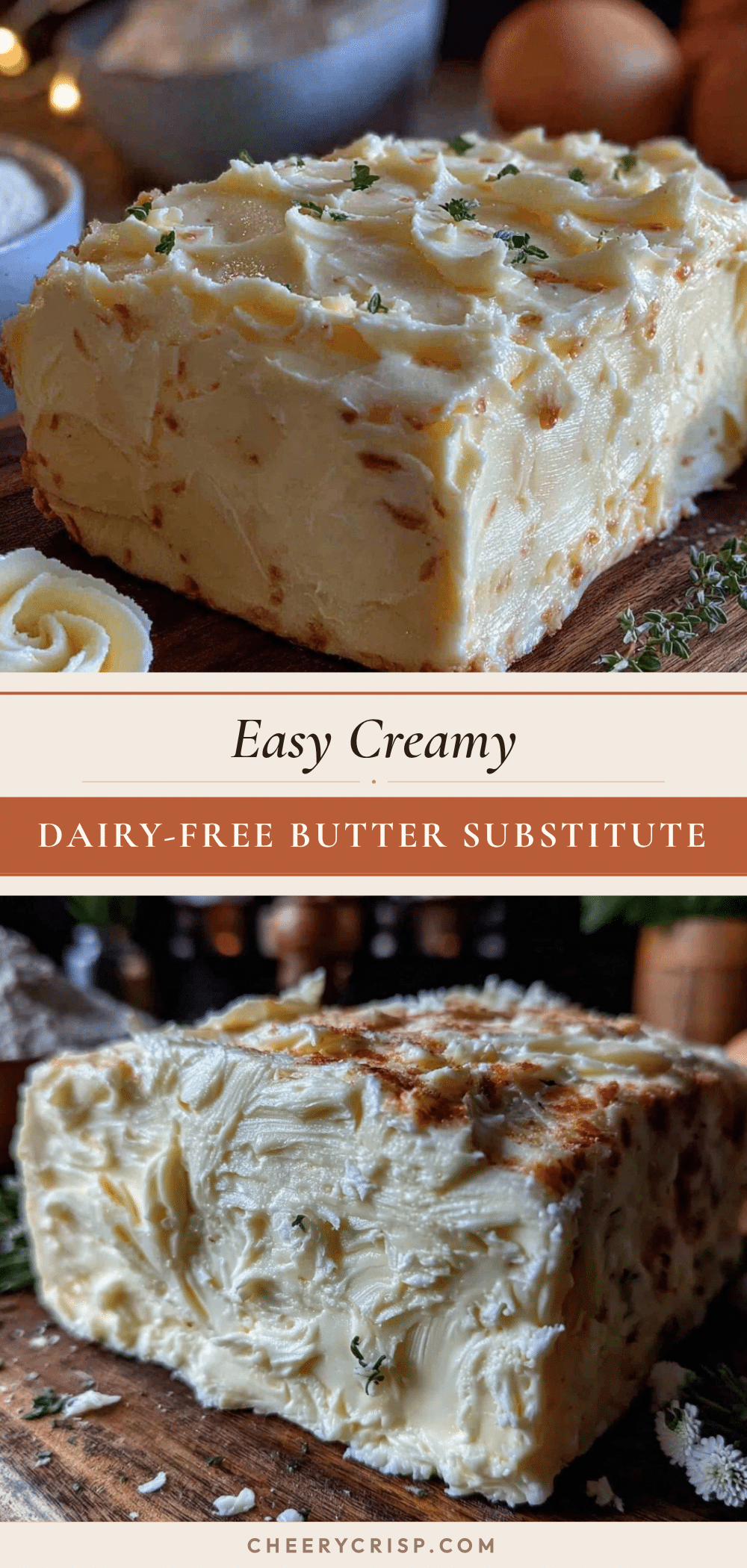
Easy Creamy Dairy-Free Butter Substitute Perfect for Baking Recipes

A quick and easy dairy-free butter substitute that is creamy, buttery, and perfect for baking cookies, muffins, cakes, and pie crusts without any dairy.
- Prep Time: 5 minutes
- Cook Time: 0 minutes
- Total Time: 1 hour 5 minutes
- Yield: About 1 cup (16 tablespoons) 1x
- Category: Baking Ingredient
- Cuisine: Vegan
Ingredients
- 1/2 cup (115 g) refined coconut oil
- 1/2 cup (120 ml) neutral vegetable oil (grapeseed or sunflower oil preferred)
- 2 tablespoons (30 ml) unsweetened soy or oat milk (or any plant milk)
- 1 teaspoon pure sunflower lecithin
- 1/4 teaspoon salt
- 1/2 teaspoon natural butter flavor extract (optional)
Instructions
- Soften the coconut oil until just soft but not liquid (about 20 seconds in the microwave or a few minutes at room temperature).
- In a mixing bowl, combine the softened coconut oil and neutral vegetable oil. Mix on low speed for 30 seconds.
- Slowly pour in 2 tablespoons of plant milk while continuing to mix.
- Sprinkle in the sunflower lecithin and salt.
- Increase mixer speed to medium-high and whip for 3 to 4 minutes until the mixture is pale, creamy, and spreadable.
- Add 1/2 teaspoon of natural butter flavor extract if desired and mix briefly.
- Transfer the mixture into a container and refrigerate for at least 1 hour to firm up.
Notes
Use refined coconut oil for a neutral flavor to avoid coconut taste. If mixture separates or feels oily, remix briefly. Chill the substitute to firm up before baking or spreading. Can be stored refrigerated for up to two weeks or frozen for up to 3 months. Optional lecithin improves texture and emulsification but can be omitted with longer whipping or alternative emulsifiers like mustard powder.
Nutrition
- Serving Size: 1 tablespoon (14 g)
- Calories: 120
- Sodium: 60
- Fat: 14
- Saturated Fat: 6
Keywords: dairy-free butter substitute, vegan butter, baking butter substitute, creamy butter alternative, refined coconut oil butter, plant-based butter