Love this? Save it for later!
Share the inspiration with your friends
“You’ve got to try it with guanciale,” my neighbor Luca insisted one breezy Saturday afternoon as he tossed a handful of crispy pork cheek into a sizzling pan. I was standing in his sunlit kitchen, watching the golden curls of fat render slowly, filling the room with that unmistakable aroma that immediately made me regret every previous attempt at carbonara back home. Luca wasn’t a professional chef—just a retired school teacher with a passion for the real deal Italian dishes, but his enthusiasm was infectious.
Honestly, I had always thought carbonara was just a quick pasta fix, something you whipped up with whatever pancetta or bacon you found in the fridge. But the way Luca prepared his classic authentic Italian carbonara with crispy guanciale turned that on its head. The guanciale’s delicate crispness, paired with the silky, egg-based sauce and a sprinkle of pecorino, created a texture and depth I hadn’t experienced before. It was a bit of a mess too—my notes got smudged when I spilled olive oil on my notebook—but that’s part of the charm, right?
If you’ve ever felt that carbonara is just pasta with bacon, you might be in for a surprise. This recipe stayed with me because it’s honest, straightforward, and absolutely packed with flavor. Maybe you’ve been there—trying to recreate a dish only to realize it’s about the small details, like the right cut of pork and the timing of the sauce. Let me tell you, this carbonara with crispy guanciale is worth every step.
Why You’ll Love This Recipe
This classic authentic Italian carbonara recipe has been tested through countless weekend dinners and casual get-togethers—and it’s always a hit. Whether you’re a seasoned pasta lover or just starting your Italian cooking adventure, this recipe brings out the best of traditional flavors with a few insider tips I picked up from locals like Luca.
- Quick & Easy: Ready in under 30 minutes, making it perfect for busy weeknights or an impressive last-minute dinner.
- Simple Ingredients: Uses pantry staples and authentic Italian essentials—no complicated shopping list here.
- Perfect for Cozy Dinners: Ideal for when you want something comforting but not heavy.
- Crowd-Pleaser: Loved by family and friends, this recipe gets rave reviews every time.
- Unbelievably Delicious: The crispy guanciale adds a rich, smoky crunch that sets this apart from other carbonara versions.
What really makes this recipe different? It’s all about respecting tradition but making it approachable. The creamy sauce isn’t heavy with cream (because that’s not how true carbonara works), and the guanciale is the star here—rendered just right to deliver that perfect balance of fat and crisp. I’ve tried versions with pancetta and bacon, but honestly, nothing matches the flavor punch of guanciale.
This carbonara isn’t just a meal; it’s the kind of dish that makes you close your eyes after the first bite and savor the moment. It’s comfort food with soul, the kind that makes you want to linger at the table, maybe with a glass of red wine, and just enjoy.
What Ingredients You Will Need
This recipe uses simple, wholesome ingredients to deliver bold flavor and satisfying texture without fuss. Most are pantry staples, but the guanciale is the real game-changer here, so try to find it at an Italian deli or specialty store. If you can’t, pancetta is the next best thing, but don’t skip it altogether.
- Guanciale: 150g (5 oz), diced into small cubes (this cured pork cheek is essential for authentic flavor)
- Spaghetti: 400g (14 oz), high-quality durum wheat pasta (I recommend De Cecco or Barilla for best texture)
- Egg Yolks: 4 large, at room temperature (for that rich, silky sauce)
- Pecorino Romano Cheese: 100g (1 cup), finely grated (adds sharpness and depth)
- Freshly Ground Black Pepper: To taste (the pepper’s warmth is key)
- Salt: For pasta water (be generous since the guanciale and cheese are salty)
Optional but recommended:
- Extra Virgin Olive Oil: 1 tablespoon (just to get the guanciale started if needed)
- Garlic Clove: 1 whole, peeled (some like to briefly infuse the oil, but it’s optional)
Substitution tips: If you need a gluten-free option, swap spaghetti for gluten-free pasta. For a dairy-free version, try nutritional yeast instead of pecorino, but honestly, it won’t quite be the same classic carbonara.
Equipment Needed
- Large Pot: For boiling pasta (a 5-quart or larger pot works best to prevent sticking)
- Large Skillet or Frying Pan: To render the guanciale crisp and golden (non-stick or stainless steel)
- Mixing Bowl: For whisking eggs and cheese together
- Tongs or Pasta Fork: For stirring and transferring pasta
- Cheese Grater: A microplane or box grater for finely grating pecorino
- Whisk or Fork: For mixing the egg and cheese sauce smoothly
If you don’t have a skillet, a heavy-bottomed pan works fine. I’ve even managed with a cast-iron pan when nothing else was available, though you have to watch the heat carefully to avoid burning the guanciale. A timer is handy but not essential—trust your senses.
Preparation Method
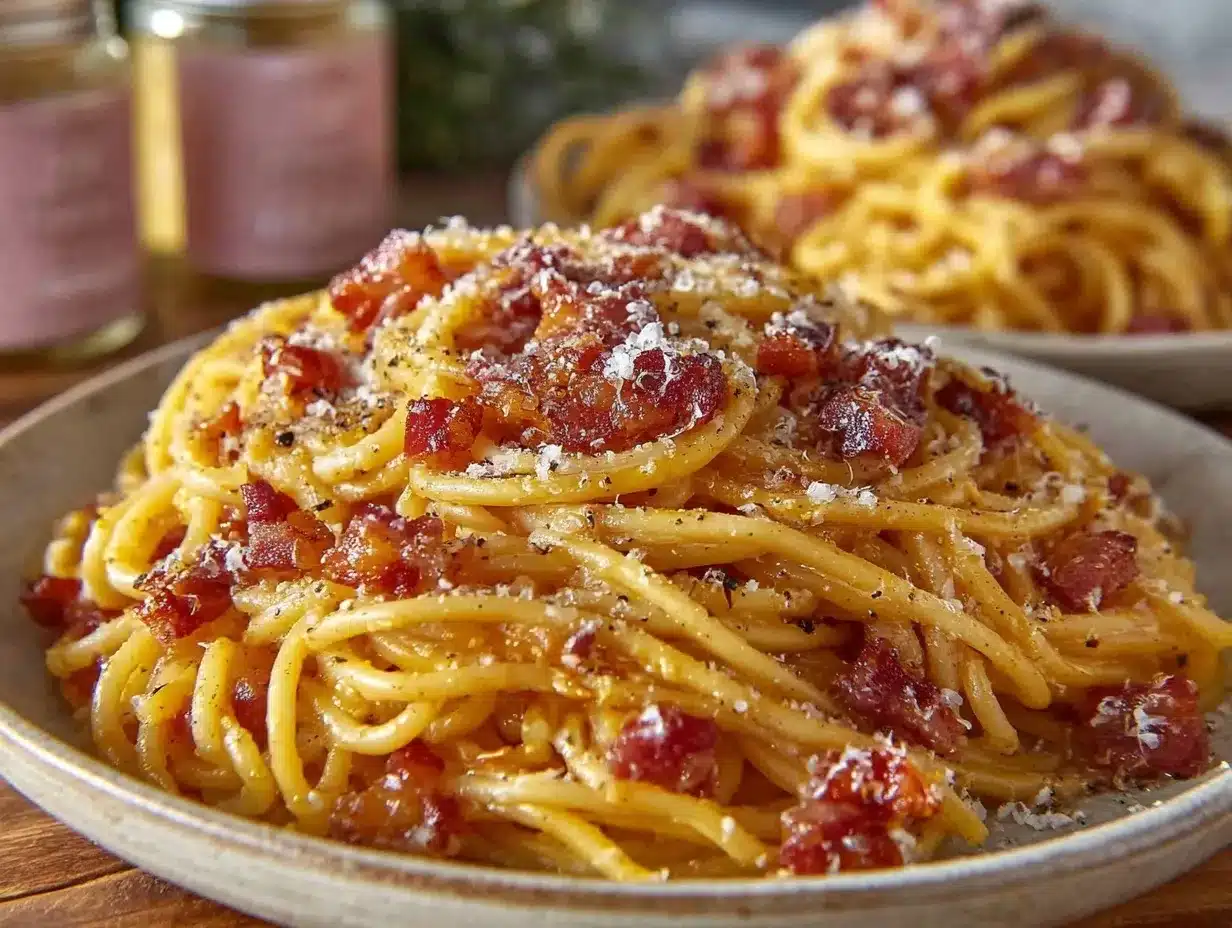
- Bring a large pot of salted water to a boil. Use about 4 quarts (3.8 liters) of water and a generous pinch of salt. The water should taste like the sea. This usually takes 8-10 minutes.
- Prepare the guanciale. While the water heats, dice 150g (5 oz) of guanciale into small cubes. If you want, toss in a peeled garlic clove to the pan for a mild infusion, but remove it before adding pasta later.
- Cook the guanciale. Heat a large skillet over medium heat. Add the guanciale (and olive oil if needed). Let it render slowly for about 6-8 minutes, stirring occasionally, until it’s crispy and golden with plenty of fat rendered out. Be careful not to burn it; adjust heat as needed.
- Mix the egg yolks and cheese. In a mixing bowl, whisk together 4 large egg yolks and 100g (1 cup) of finely grated Pecorino Romano. Add freshly ground black pepper generously—about 1 teaspoon or to taste. The mixture should be smooth and creamy.
- Cook the spaghetti. Once the water boils, add 400g (14 oz) spaghetti and cook until al dente, about 8-9 minutes (check package directions). Reserve about 1 cup (240 ml) of pasta cooking water before draining.
- Combine pasta and guanciale. Transfer the drained spaghetti directly into the skillet with the crispy guanciale and fat. Toss well over low heat for 1-2 minutes to combine and coat the pasta.
- Remove from heat and add egg mixture. This is crucial to avoid scrambling the eggs. Quickly pour in the egg and cheese mixture, tossing vigorously to create a creamy sauce. Add reserved pasta water a little at a time to loosen the sauce and achieve a silky texture.
- Adjust seasoning and serve immediately. Taste and add more black pepper or cheese if desired. Serve right away for the best texture and flavor.
Pro tip: If the sauce seems too thick or starts to clump, a splash more pasta water will smooth it out. Trust your eyes and instincts—the sauce should be glossy, not dry or curdled. I once forgot to remove the garlic clove and ended up with an odd bitterness that day—so watch out!
Cooking Tips & Techniques
Cooking carbonara well is all about timing and temperature. The eggs can scramble if the pasta is too hot, so always remove the pan from direct heat before adding the egg mixture. Toss quickly and steadily to create an emulsified sauce that clings beautifully to every strand of spaghetti.
Rendering guanciale slowly over medium heat is key. Rushing this step can leave you with chewy bits or burnt edges. I learned the hard way that patience here pays off in flavor and texture.
Don’t underestimate the power of freshly ground black pepper—it adds a spicy warmth that balances the richness of the pork and cheese.
Finally, reserve that pasta water! The starchy liquid is your secret weapon to adjust sauce consistency without messing with the authentic ingredients.
Variations & Adaptations
- Vegetarian Twist: Swap guanciale for smoked mushrooms sautéed with olive oil and smoked paprika to mimic that smoky depth.
- Seasonal Spin: In spring, add fresh peas or asparagus tips for a pop of color and sweetness.
- Gluten-Free Option: Use gluten-free spaghetti or a legume-based pasta for a protein boost without gluten.
- Cheese Swap: If Pecorino Romano is unavailable, aged Parmesan works, but the flavor will be milder.
- Personal Favorite: I sometimes add a tiny splash of white wine to the guanciale as it cooks for a subtle tang that brightens the dish.
Serving & Storage Suggestions
Serve this classic authentic Italian carbonara with crispy guanciale fresh and hot straight from the pan. The sauce is at its creamiest and the guanciale crispiest right away. Pair it with a simple green salad dressed with lemon and olive oil or a glass of Barbera or Chianti for a classic Italian experience.
Leftovers can be stored in an airtight container in the refrigerator for up to 2 days. Reheat gently in a skillet over low heat, adding a splash of water or broth to loosen the sauce. Avoid microwaving if you can—it tends to dry out the pasta.
Flavors develop slightly after resting, but the texture is best fresh. If you want to prepare ahead, cook the pasta and guanciale separately and combine just before serving.
Nutritional Information & Benefits
This recipe provides a hearty balance of protein, fat, and carbohydrates. Guanciale brings rich flavor and protein, while eggs add essential nutrients like vitamin B12 and choline. Pecorino Romano is a good source of calcium and adds a savory punch with minimal carbs.
While this dish is not low in fat, it’s a satisfying treat that can fit well into a balanced diet when enjoyed in moderation. For those watching sodium, consider reducing added salt since both guanciale and cheese are naturally salty.
Gluten-free pasta options make this recipe accessible to those with gluten intolerance, and the absence of cream makes it lighter than many other creamy pasta dishes.
Conclusion
This classic authentic Italian carbonara with crispy guanciale recipe is a true gem for anyone who appreciates the art of simple, honest cooking. It’s not just pasta with sauce; it’s a celebration of technique, timing, and the magic of good ingredients coming together. I love this recipe because it’s a reminder that sometimes, the best things in life are straightforward but require a little attention to detail.
Feel free to tweak it based on your taste—maybe a little extra cheese or a pinch more pepper. And don’t worry if your kitchen gets a bit messy along the way. That’s where the fun is! I’d love to hear how your version turns out or if you have your own twists to share.
Give it a try, and let this carbonara become a regular comfort on your table.
FAQs
What is the difference between guanciale and pancetta?
Guanciale is cured pork cheek with a higher fat content and a richer, more delicate flavor, while pancetta comes from pork belly and is milder. Guanciale crisps up differently and is traditional in carbonara.
Can I use bacon instead of guanciale?
You can, but it changes the flavor. Bacon is smoked, which adds a different taste. For authentic carbonara, guanciale is preferred.
Why isn’t cream used in authentic carbonara?
Traditional Italian carbonara relies on eggs and cheese to create a creamy texture. Adding cream changes the dish and is not authentic.
How do I prevent the eggs from scrambling?
Remove the pan from heat before adding the egg mixture and toss quickly. Adding a little pasta water helps create a smooth sauce without scrambling.
What pasta works best for carbonara?
Spaghetti is classic, but you can also use rigatoni or bucatini. The key is a pasta that holds the sauce well and has a good bite.
Pin This Recipe!
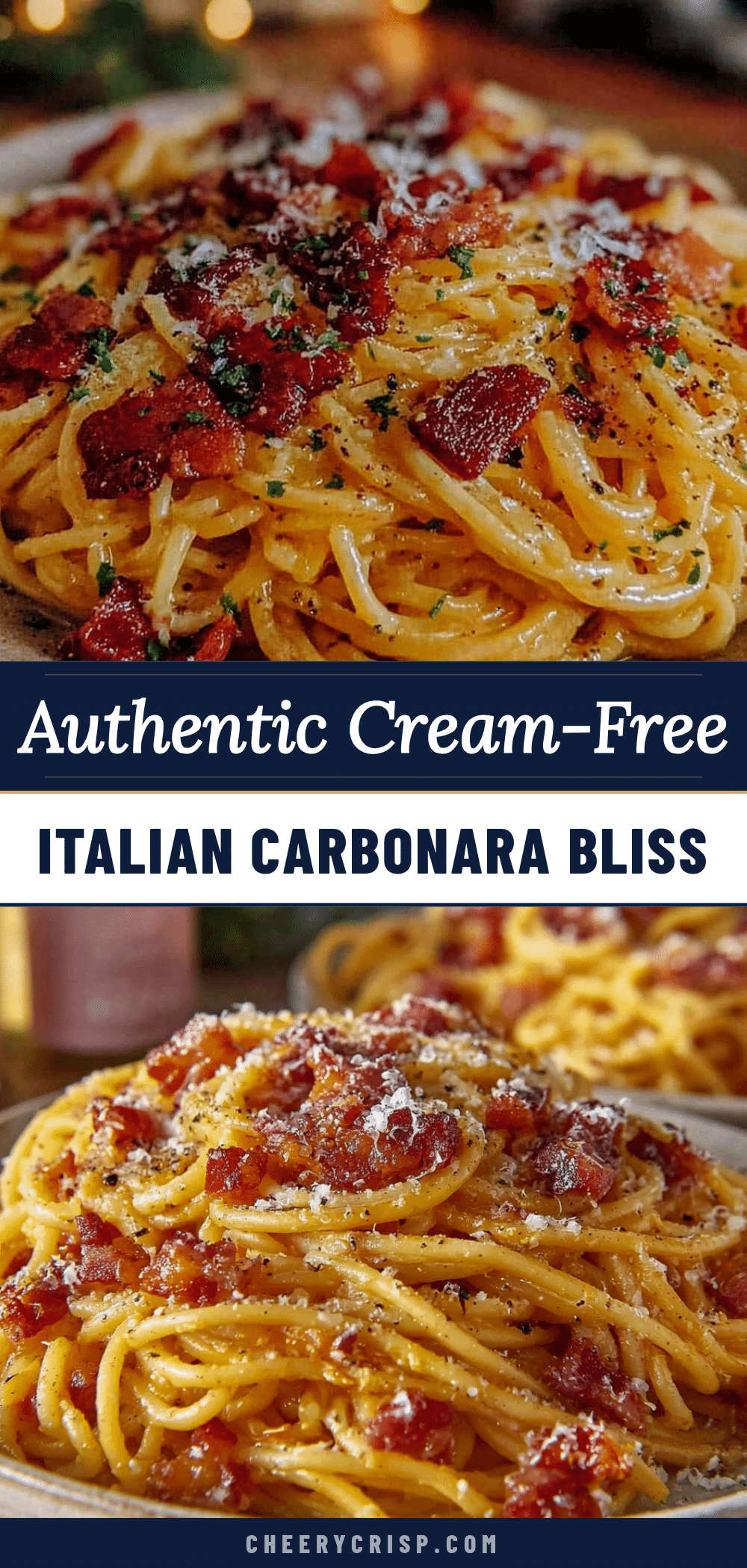
Classic Authentic Italian Carbonara Recipe Easy Crispy Guanciale Guide
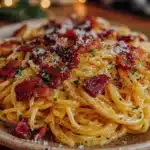
This classic authentic Italian carbonara recipe features crispy guanciale, silky egg-based sauce, and Pecorino Romano cheese for a rich, flavorful pasta dish that’s quick and easy to prepare.
- Prep Time: 10 minutes
- Cook Time: 15 minutes
- Total Time: 25 minutes
- Yield: 4 servings 1x
- Category: Main Course
- Cuisine: Italian
Ingredients
- 150g (5 oz) guanciale, diced into small cubes
- 400g (14 oz) spaghetti, high-quality durum wheat pasta
- 4 large egg yolks, at room temperature
- 100g (1 cup) Pecorino Romano cheese, finely grated
- Freshly ground black pepper, to taste
- Salt, for pasta water
- 1 tablespoon extra virgin olive oil (optional)
- 1 whole garlic clove, peeled (optional)
Instructions
- Bring a large pot of salted water to a boil (about 4 quarts or 3.8 liters). The water should taste like the sea.
- Dice 150g (5 oz) of guanciale into small cubes. Optionally, add a peeled garlic clove to the pan for mild infusion and remove before adding pasta.
- Heat a large skillet over medium heat. Add guanciale and olive oil if needed. Render slowly for 6-8 minutes until crispy and golden, stirring occasionally. Adjust heat to avoid burning.
- In a mixing bowl, whisk together 4 large egg yolks and 100g (1 cup) finely grated Pecorino Romano cheese. Add about 1 teaspoon freshly ground black pepper or to taste. Mix until smooth and creamy.
- Add 400g (14 oz) spaghetti to boiling water and cook until al dente, about 8-9 minutes. Reserve 1 cup (240 ml) pasta cooking water before draining.
- Transfer drained spaghetti directly into the skillet with crispy guanciale and fat. Toss over low heat for 1-2 minutes to combine and coat pasta.
- Remove skillet from heat. Quickly pour in egg and cheese mixture, tossing vigorously to create a creamy sauce. Add reserved pasta water gradually to loosen sauce and achieve silky texture.
- Adjust seasoning with additional black pepper or cheese if desired. Serve immediately for best texture and flavor.
Notes
Remove pan from heat before adding egg mixture to prevent scrambling. Use reserved pasta water to adjust sauce consistency. Render guanciale slowly over medium heat for best texture. Freshly ground black pepper is essential for authentic flavor. Leftovers can be stored in an airtight container in the refrigerator for up to 2 days and reheated gently in a skillet with a splash of water or broth.
Nutrition
- Serving Size: 1 serving (approxima
- Calories: 550
- Sugar: 2
- Sodium: 700
- Fat: 28
- Saturated Fat: 10
- Carbohydrates: 55
- Fiber: 3
- Protein: 25
Keywords: carbonara, guanciale, Italian pasta, authentic carbonara, spaghetti carbonara, pecorino romano, easy carbonara recipe, crispy guanciale