Love this? Save it for later!
Share the inspiration with your friends
“You’ve got to try the tamarind sauce in this one,” my friend Niran said, sliding a plate across the sticky table at that bustling night market in Chiang Mai. It was a hot, humid evening, and the sizzling sound from the street vendors was like music to my ears. Honestly, I wasn’t expecting much — just another noodle dish to tick off the list. But that first bite of the Flavorful Pad Thai with Tamarind Sauce changed everything. The tangy, slightly sweet, and smoky notes of the tamarind sauce coated the rice noodles perfectly, with crunchy peanuts and fresh lime cutting through the richness.
That night, I managed to scribble down the sauce ingredients on a napkin amid the chaos of the market — the ink smudged here and there, but the recipe stuck with me. Back home, I experimented, tweaked, and tasted until I got that authentic balance just right. Maybe you’ve been there, chasing a flavor memory that refuses to fade. This pad thai recipe isn’t just another take on a classic — it’s the one that kept me coming back to the kitchen, over and over, even on the busiest weeknights.
Let me tell you, making authentic pad thai with tamarind sauce at home might sound intimidating, but it’s actually quite achievable. And once you get that sauce right, the rest almost falls into place. This recipe is my way of sharing that unforgettable night market flavor, with a little bit of home-cooked love mixed in.
Why You’ll Love This Recipe
After countless trials and happy accidents, this Flavorful Pad Thai with Tamarind Sauce has become a staple in my kitchen. It’s not just tasty — it’s a reliable crowd-pleaser that brings a little slice of Thailand right to your dinner table. Here’s why you’ll be hooked:
- Quick & Easy: Ready in under 30 minutes — perfect when you’re craving something delicious but don’t want to spend hours cooking.
- Simple Ingredients: No need for exotic shopping trips; most of the ingredients are pantry staples or easy to find at your local grocery or Asian market.
- Perfect for Weeknight Dinners: Whether you’re feeding family or friends, this recipe impresses without stress.
- Crowd-Pleaser: Kids and adults alike rave about the balance of flavors — sweet, sour, salty, and a little crunch to keep things interesting.
- Unbelievably Delicious: The tamarind sauce is the real star here — it’s tangy and complex, unlike any pad thai sauce you’ll get from a jar.
What makes this pad thai special? It’s all about that sauce — I blend tamarind paste with fish sauce, palm sugar, and a hint of chili to nail the authentic taste. Plus, instead of the usual clumpy noodles, I give them a quick soak and toss to keep them perfectly tender but not mushy. Honestly, this recipe isn’t just pad thai; it’s my version that’s been tested by friends, perfected with patience, and loved by many. You’re going to close your eyes at the first bite and know exactly what I mean.
What Ingredients You Will Need
This recipe uses simple, wholesome ingredients that come together to create bold flavor and satisfying texture, without any fuss. Most are pantry staples or can be found easily at an Asian grocery store.
- Rice Noodles: 8 oz (225 g) dry flat rice noodles, about ¼ inch wide — look for brands like A Taste of Thai or Three Ladies for best texture.
- Tamarind Paste: 3 tablespoons — this gives the dish its iconic tangy flavor. If unavailable, you can substitute with a mix of lime juice and brown sugar, but tamarind is worth the hunt.
- Fish Sauce: 3 tablespoons — adds umami and saltiness. I recommend Red Boat for its clean, authentic taste.
- Palm Sugar: 2 tablespoons, grated — balances the tamarind with natural sweetness. Brown sugar works if you’re in a pinch.
- Garlic: 3 cloves, minced — the flavor base.
- Shallots: 2 small, thinly sliced — adds gentle sweetness and depth.
- Eggs: 2 large, beaten — for richness and binding.
- Firm Tofu: 6 oz (170 g), cut into small cubes — for texture and protein.
- Shrimp: 8 oz (225 g), peeled and deveined — optional, but gives that classic touch. You can swap for chicken or keep it vegetarian.
- Green Onions: 3 stalks, chopped — fresh garnish.
- Bean Sprouts: 1 cup — adds crunch and freshness.
- Roasted Peanuts: ½ cup, coarsely chopped — a must for texture contrast.
- Lime Wedges: For serving — the final zing.
- Crushed Red Pepper Flakes: Optional, to taste — for heat.
Note: For a gluten-free option, make sure to use rice noodles labeled gluten-free and check your fish sauce ingredients. If you prefer a vegan version, substitute fish sauce with soy sauce or tamari, and skip the shrimp.
Equipment Needed
- Large Bowl: For soaking the rice noodles. A wide bowl or shallow dish works best to allow noodles to soften evenly.
- Wok or Large Skillet: A wok is ideal for stir-frying quickly over high heat, but a large non-stick skillet will do in a pinch.
- Spatula or Wooden Spoon: For tossing ingredients without breaking the noodles.
- Knife and Cutting Board: For prepping tofu, garlic, and shallots.
- Measuring Spoons and Cups: To get the tamarind sauce balance just right.
If you don’t have a wok, don’t worry — a large heavy-bottomed skillet will still give you great results. Just make sure to keep the heat high and move quickly to avoid soggy noodles. I’ve used both, and while the wok gives a slight smoky flavor, the skillet works well for home cooks without special equipment.
Preparation Method
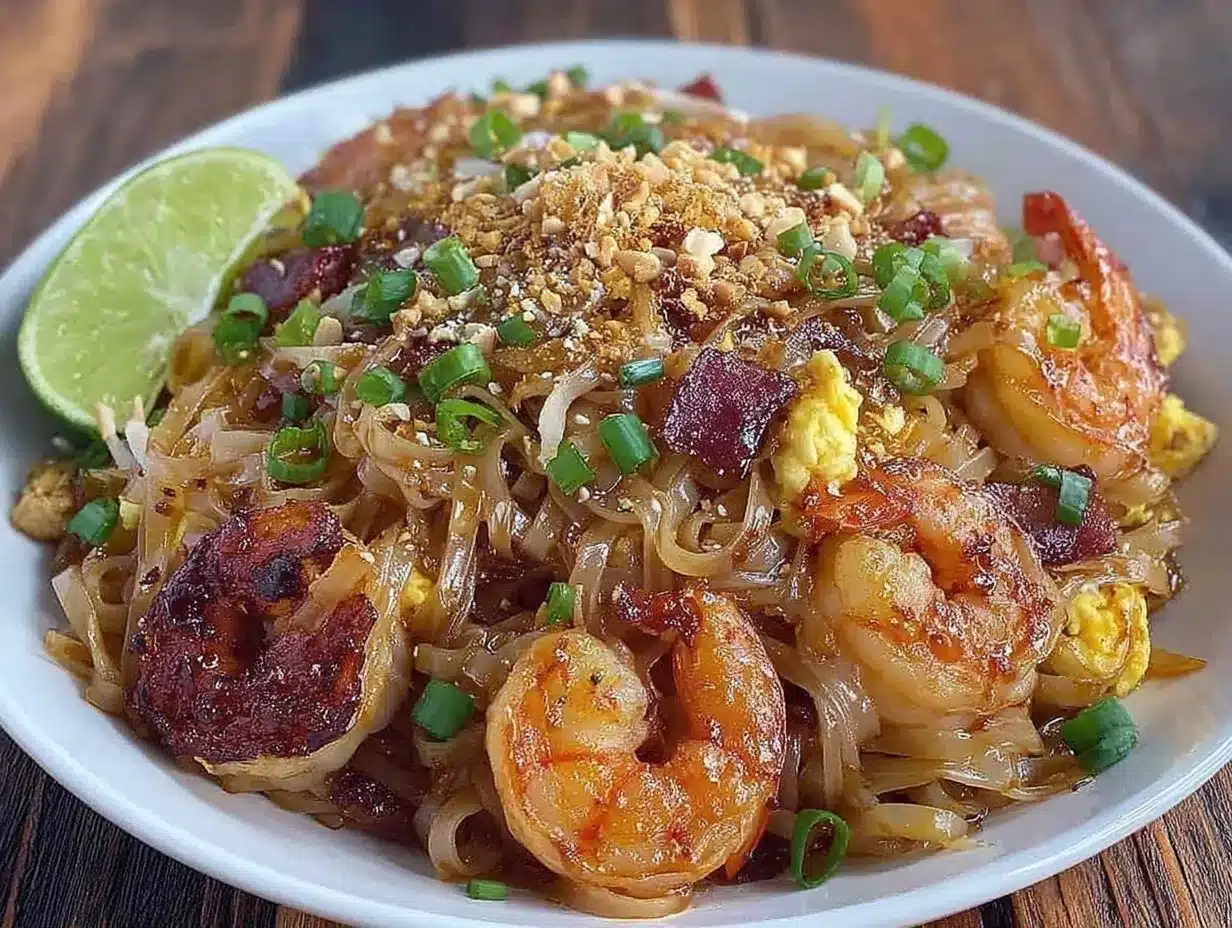
- Soak the Rice Noodles: Place the dry rice noodles in a large bowl and cover with warm water (about 110°F/43°C). Let soak for 20-25 minutes or until pliable but still firm to the bite. Drain and set aside. (Pro tip: Don’t over-soak — the noodles will cook further in the pan.)
- Prepare the Tamarind Sauce: In a small bowl, whisk together tamarind paste, fish sauce, palm sugar, and a splash of water (about 2 tablespoons) until smooth. Taste and adjust for balance — it should be tangy, sweet, and salty. Set aside.
- Cook the Protein: Heat 1 tablespoon of oil in the wok or skillet over medium-high heat. Add cubed tofu and cook until golden on all sides, about 4-5 minutes. Remove and set aside. In the same pan, add shrimp and cook until pink and opaque, about 2 minutes per side. Remove and set aside with tofu.
- Stir-Fry Aromatics: Add another tablespoon of oil. Toss in minced garlic and sliced shallots, stirring constantly until fragrant and lightly golden, about 1-2 minutes.
- Add Eggs: Push the aromatics to one side of the pan. Pour beaten eggs into the empty space and scramble gently until just set.
- Add Noodles and Sauce: Add the drained noodles and tamarind sauce to the pan. Toss quickly but gently to combine, ensuring every strand is coated. Cook for 2-3 minutes until noodles are tender and sauce is glossy. (If the mixture looks dry, add a tablespoon of water.)
- Return Protein and Add Veggies: Return tofu and shrimp to the pan. Add bean sprouts and half the chopped green onions. Toss everything together for another minute until heated through.
- Serve: Plate the pad thai and garnish with roasted peanuts, remaining green onions, lime wedges, and crushed red pepper flakes if you like heat.
Keep your wok or skillet hot but not smoking–too high heat can burn the sauce. And don’t be shy about tossing quickly; pad thai is all about the lively stir-fry action. I often have a fan blowing nearby because it can get a little smoky, but that’s part of the charm.
Cooking Tips & Techniques
Getting pad thai just right hinges on a few key tricks. First, soaking your rice noodles properly is crucial—too soft and they’ll turn mushy; too firm and they won’t absorb the sauce well. I usually test a noodle after 20 minutes and soak a little longer if needed.
When stir-frying, keep your ingredients moving to avoid clumping. I like to use a wide spatula to gently separate noodles as I toss. Also, timing is everything: add delicate ingredients like bean sprouts last to keep their crunch.
One mistake I made early on was rushing the tamarind sauce balance. It took me several tries—too much fish sauce and it was overpowering; too little tamarind and it lacked brightness. Tasting as you go is a must.
Multitasking helps here, especially if you prep all your ingredients before heating the pan. This mise en place approach saved me from scrambling mid-cook and messing up the texture.
Finally, don’t be afraid to adjust the heat with chili flakes or swap proteins to suit your mood. Pad thai is forgiving but rewarding when you pay attention to these little details.
Variations & Adaptations
This pad thai recipe is wonderfully flexible. Here are a few ways to make it your own:
- Vegetarian/Vegan: Skip the shrimp and fish sauce. Use soy sauce or tamari and add extra tofu or tempeh. Mushrooms also make a great meaty substitute.
- Gluten-Free: Make sure to use gluten-free tamarind paste and fish sauce brands, or swap fish sauce for coconut aminos.
- Spicy Kick: Add fresh Thai chilies or a drizzle of chili oil for more heat.
- Different Proteins: Chicken, pork, or even thinly sliced beef work well. Just adjust cooking times accordingly.
- Seasonal Twist: In summer, I like tossing in fresh mango chunks or swapping bean sprouts for shredded cabbage for extra crunch.
Once, on a whim, I stirred in a handful of crushed cashews instead of peanuts—surprisingly delicious and a nice change for nut allergies. Feel free to experiment!
Serving & Storage Suggestions
Pad thai is best served hot and fresh, right off the stove. The lime wedges are essential—they add that final pop of acidity that brightens the whole dish. Pair it with a simple cucumber salad or a light Thai iced tea for a balanced meal.
If you have leftovers, store them in an airtight container in the refrigerator for up to 2 days. Reheat gently in a skillet over medium heat, adding a splash of water to loosen the noodles if needed. Avoid the microwave if you want to preserve the texture—as I’ve learned the hard way, microwaving can make noodles gummy.
Pad thai flavors tend to mellow slightly overnight, so sometimes I add a fresh squeeze of lime and a sprinkle of peanuts before serving leftovers to revive that authentic vibe.
Nutritional Information & Benefits
This flavorful pad thai offers a balanced meal with carbs from the rice noodles, protein from shrimp and tofu, and healthy fats from peanuts. Tamarind is rich in antioxidants and adds a natural tang without extra calories.
Per serving (approximate): 450 calories, 24g protein, 55g carbs, 12g fat.
It’s naturally gluten-free (with the right ingredients) and can be adapted to vegan or low-sodium diets easily. Plus, the fresh vegetables and lime juice add vitamins and minerals, making it a wholesome dinner choice that feels indulgent but stays on the lighter side.
Conclusion
If you’ve been longing for a pad thai recipe that captures the authentic flavors of Thailand but is still easy enough for a weeknight, this Flavorful Pad Thai with Tamarind Sauce hits the spot. It’s the kind of recipe that’s both comforting and exciting, with layers of flavor that keep you coming back for more.
Feel free to make it your own—swap proteins, adjust the spice, or toss in seasonal veggies. Honestly, that’s part of the fun and what keeps this recipe fresh in my kitchen.
Please leave a comment below sharing your experience or any tweaks you tried. I love hearing how this recipe fits into your home cooking. Now, roll up your sleeves and get ready to enjoy a truly authentic Thai dinner that’s bursting with flavor and made with heart.
FAQs About Flavorful Pad Thai with Tamarind Sauce
What can I substitute for tamarind paste if I can’t find it?
You can mix equal parts lime juice and brown sugar as a quick substitute, but tamarind paste offers a unique tang that’s hard to replicate exactly.
How do I prevent the rice noodles from sticking together?
Soak them in warm water until just pliable, then drain well. Toss gently with oil before cooking and stir-fry quickly over high heat.
Can I make pad thai ahead of time?
It’s best fresh, but you can prepare ingredients ahead. Leftovers reheat well in a skillet with a splash of water to refresh the noodles.
Is pad thai gluten-free?
Yes, if you use gluten-free rice noodles and check your fish sauce and tamarind paste labels carefully.
What’s the best way to add heat to this recipe?
Add crushed red pepper flakes, fresh Thai chilies, or chili oil to taste either during cooking or as a garnish when serving.
Pin This Recipe!
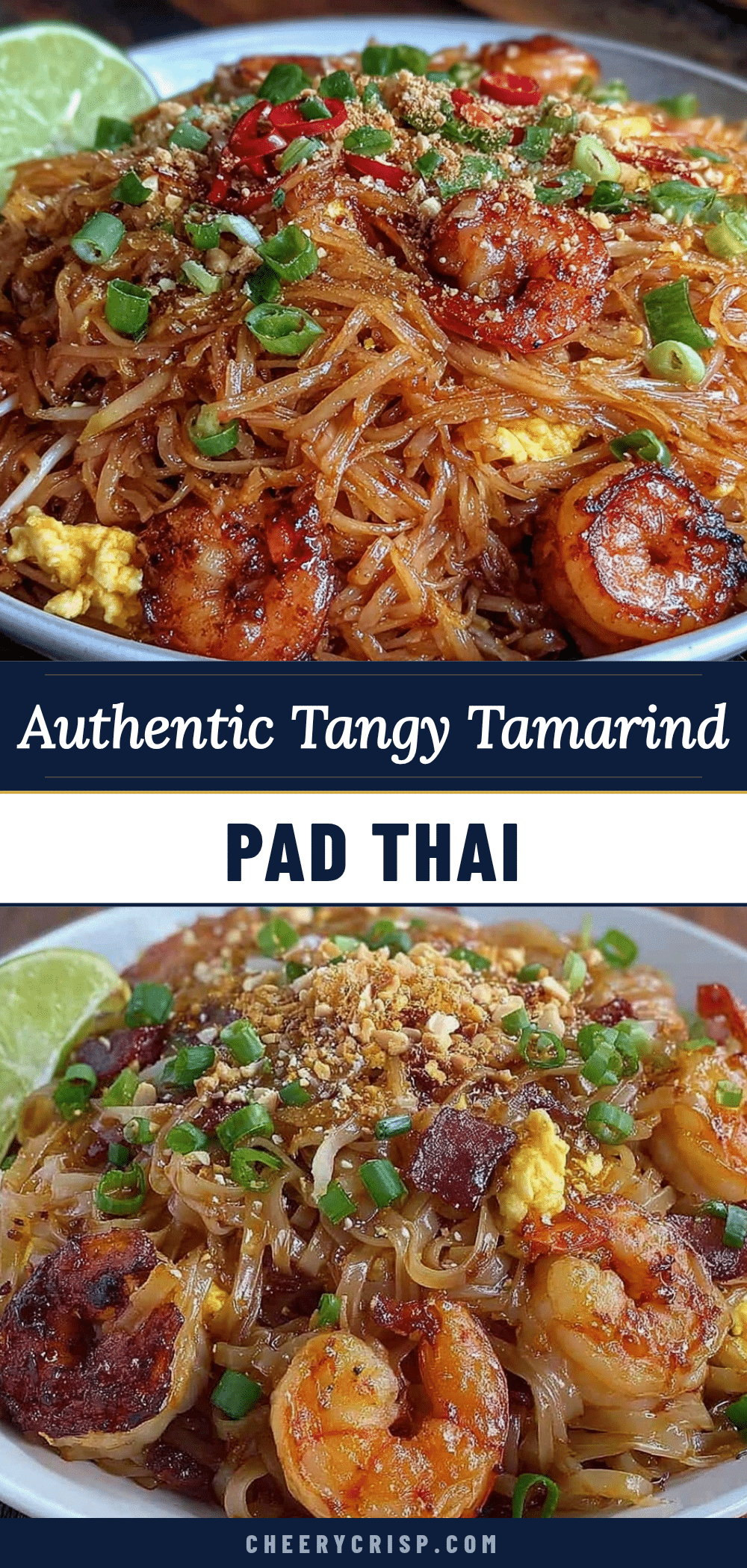
Flavorful Pad Thai with Tamarind Sauce

An authentic and easy Thai pad thai recipe featuring a tangy tamarind sauce, perfect for quick weeknight dinners and bursting with balanced sweet, sour, and salty flavors.
- Prep Time: 10 minutes
- Cook Time: 15 minutes
- Total Time: 25 minutes
- Yield: 4 servings 1x
- Category: Main Course
- Cuisine: Thai
Ingredients
- 8 oz (225 g) dry flat rice noodles, about ¼ inch wide
- 3 tablespoons tamarind paste
- 3 tablespoons fish sauce
- 2 tablespoons palm sugar, grated
- 3 cloves garlic, minced
- 2 small shallots, thinly sliced
- 2 large eggs, beaten
- 6 oz (170 g) firm tofu, cut into small cubes
- 8 oz (225 g) shrimp, peeled and deveined (optional)
- 3 stalks green onions, chopped
- 1 cup bean sprouts
- ½ cup roasted peanuts, coarsely chopped
- Lime wedges, for serving
- Crushed red pepper flakes, optional, to taste
- Oil for cooking (vegetable or peanut oil recommended)
- Splash of water (about 2 tablespoons) for tamarind sauce
Instructions
- Soak the dry rice noodles in a large bowl with warm water (about 110°F/43°C) for 20-25 minutes until pliable but still firm to the bite. Drain and set aside.
- In a small bowl, whisk together tamarind paste, fish sauce, palm sugar, and about 2 tablespoons of water until smooth. Taste and adjust for balance; set aside.
- Heat 1 tablespoon of oil in a wok or large skillet over medium-high heat. Add cubed tofu and cook until golden on all sides, about 4-5 minutes. Remove and set aside.
- In the same pan, add shrimp and cook until pink and opaque, about 2 minutes per side. Remove and set aside with tofu.
- Add another tablespoon of oil to the pan. Toss in minced garlic and sliced shallots, stirring constantly until fragrant and lightly golden, about 1-2 minutes.
- Push the aromatics to one side of the pan. Pour beaten eggs into the empty space and scramble gently until just set.
- Add the drained noodles and tamarind sauce to the pan. Toss quickly but gently to combine, ensuring every strand is coated. Cook for 2-3 minutes until noodles are tender and sauce is glossy. Add a tablespoon of water if the mixture looks dry.
- Return tofu and shrimp to the pan. Add bean sprouts and half the chopped green onions. Toss everything together for another minute until heated through.
- Plate the pad thai and garnish with roasted peanuts, remaining green onions, lime wedges, and crushed red pepper flakes if desired.
Notes
Do not over-soak the rice noodles to avoid mushiness; test after 20 minutes. Keep ingredients moving while stir-frying to prevent clumping. Adjust tamarind sauce balance by tasting as you go. Use a fan or good ventilation as stir-frying can produce smoke. For vegan version, substitute fish sauce with soy sauce or tamari and omit shrimp. For gluten-free, ensure all sauces and noodles are labeled gluten-free.
Nutrition
- Serving Size: 1 serving (approxima
- Calories: 450
- Fat: 12
- Carbohydrates: 55
- Protein: 24
Keywords: Pad Thai, Tamarind Sauce, Thai Recipe, Easy Dinner, Authentic Pad Thai, Stir-Fry Noodles, Gluten-Free Pad Thai, Vegetarian Pad Thai