Love this? Save it for later!
Share the inspiration with your friends
“I wasn’t expecting my late-night grocery run to turn into a Korean food adventure,” I confessed to my friend over the phone. It was a random Tuesday, and the small Asian market on the corner was about to close. I’d dashed in for some basics but got sidetracked by the vibrant colors of fresh vegetables and the familiar yet elusive container of gochujang paste. I grabbed a cracked ceramic bowl from home, still half-clean from dinner earlier, and began assembling what would become my go-to Flavorful Korean Bibimbap Bowl with Spicy Gochujang Sauce. Honestly, it felt like a little magic trick—throwing together simple ingredients I found scattered around my fridge into this gorgeous, bold-flavored bowl.
You know that feeling when you taste something that instantly transports you? That’s exactly what happened as I took my first bite. The warmth of the rice, the crisp yet tender sautéed veggies, the perfectly fried egg on top, and that punchy, spicy-sweet gochujang sauce all coming together was unforgettable. Maybe you’ve been there—standing in your kitchen at midnight, improvising dinner, and stumbling on a new favorite.
What stuck with me wasn’t just the flavor but the story behind it: how a simple, humble dish could feel so satisfying and nourishing. It’s not fancy, it’s not complicated, but it’s got heart and soul. So, let me tell you why this Flavorful Korean Bibimbap Bowl with Spicy Gochujang Sauce has been stealing the spotlight at my kitchen table ever since.
Why You’ll Love This Recipe
Having tested this recipe multiple times (including a few midnight kitchen experiments), I can say it’s a winner for so many reasons:
- Quick & Easy: Ready in under 30 minutes, perfect for those hectic weeknights when you want something delicious without fuss.
- Simple Ingredients: Uses everyday veggies and pantry staples, with gochujang sauce adding that authentic Korean kick.
- Perfect for Any Occasion: Whether it’s a casual dinner, a cozy weekend lunch, or a potluck dish that stands out, this bowl fits right in.
- Crowd-Pleaser: My friends who usually shy away from spicy food kept going back for seconds—proving this recipe balances heat and flavor just right.
- Unbelievably Delicious: The layers of texture—from tender rice to crunchy veggies and the silky fried egg—paired with the spicy-sweet sauce are truly comforting.
This isn’t just another bibimbap recipe. The secret is in the homemade spicy gochujang sauce that’s quick to whip up and perfectly balanced—no overpowering heat, just that signature depth. I also swap traditional ingredients for whatever I have on hand, making it flexible but never sacrificing flavor. Honestly, it’s the kind of bowl that makes you pause, close your eyes, and savor each bite.
What Ingredients You Will Need
This Flavorful Korean Bibimbap Bowl with Spicy Gochujang Sauce uses simple, wholesome ingredients to deliver bold flavor and satisfying texture without the fuss. Most of these are pantry staples or fresh produce you can find year-round, and substitutions are easy if you need them.
- For the Bowl:
- 2 cups cooked short-grain white rice (or brown rice for a nuttier flavor)
- 1 cup fresh spinach, washed and roughly chopped
- 1 medium carrot, julienned or thinly sliced
- 1 cup shiitake mushrooms, sliced (substitute cremini or button mushrooms if needed)
- 1 small zucchini, thinly sliced
- 2 cloves garlic, minced (adds aromatic depth)
- 2 large eggs (for frying sunny side up)
- 2 teaspoons sesame oil (to toast veggies and finish the bowl)
- 1 tablespoon vegetable oil (for frying eggs and veggies)
- 1 teaspoon toasted sesame seeds (optional, for garnish)
- For the Spicy Gochujang Sauce:
- 3 tablespoons gochujang (Korean chili paste) – I recommend Chung Jung One brand for authentic flavor
- 1 tablespoon soy sauce (or tamari for gluten-free)
- 1 tablespoon rice vinegar (adds a bright tang)
- 1 teaspoon honey or sugar (balances the heat)
- 1 teaspoon toasted sesame oil (for nuttiness)
- 1 teaspoon water (to thin the sauce if needed)
If you’re missing a veggie, no worries! Swap in bell peppers, bean sprouts, or even frozen peas. For a protein boost, shredded cooked chicken or tofu cubes work great too. For those avoiding eggs, a soft tofu topping is a nice alternative.
Equipment Needed
- Medium saucepan or rice cooker (for perfectly cooked rice)
- Non-stick skillet or cast iron pan (for sautéing veggies and frying eggs)
- Small mixing bowl (to whisk the gochujang sauce)
- Sharp knife and cutting board (for prepping vegetables)
- Measuring spoons and cups (to ensure accurate seasoning)
- Spatula or wooden spoon (for stirring and flipping)
If you don’t have a rice cooker, no problem—cooking rice on the stove works just fine. I personally love using a cast iron skillet for the eggs because it gives a nice crispy edge, but a good non-stick pan is equally effective. For the sauce, a simple whisk or fork works best—no fancy gadgets needed!
Preparation Method
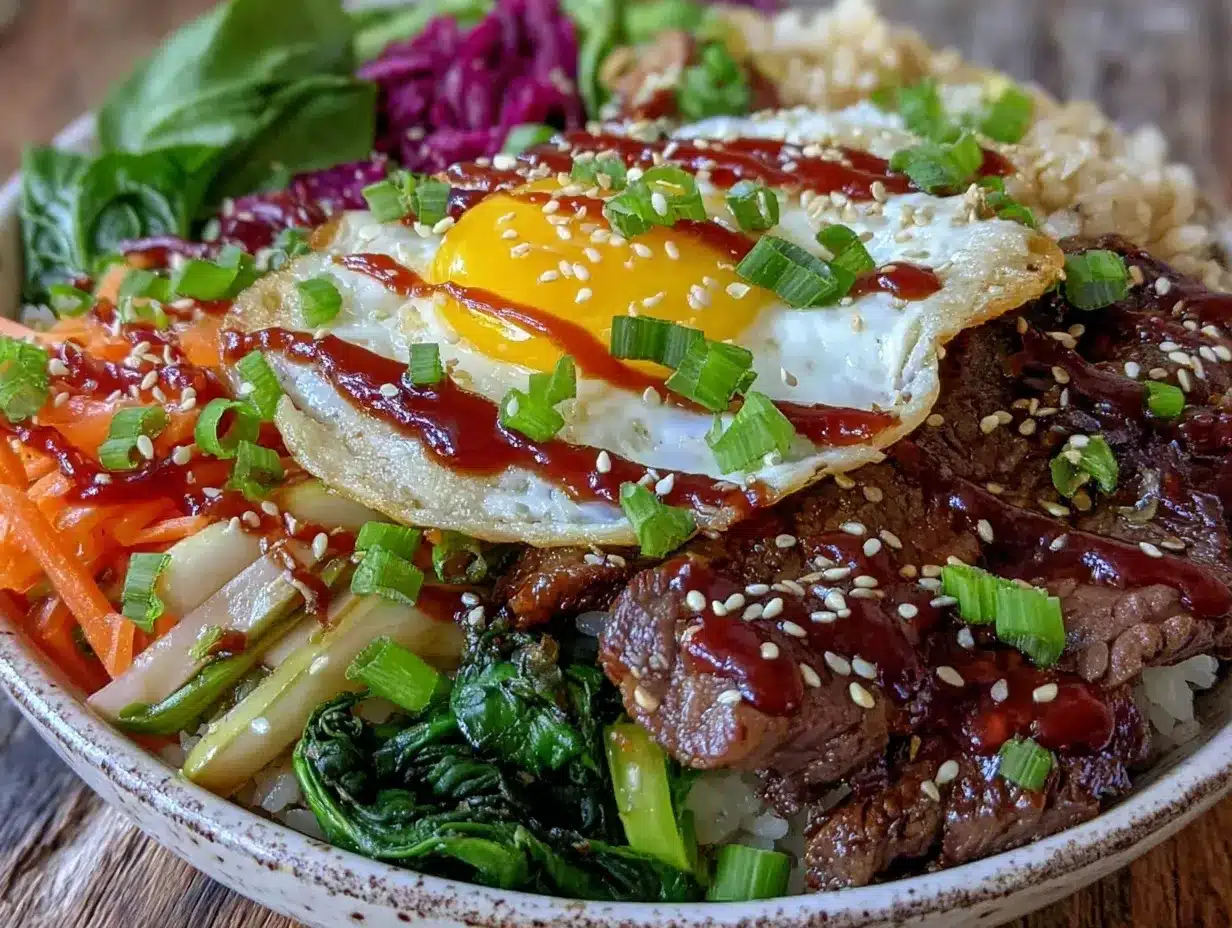
- Cook the Rice: Prepare 2 cups of short-grain rice according to package instructions (about 20 minutes). Fluff with a fork and keep warm. If you’re using a rice cooker, it frees up stove space, which is always a win!
- Prepare the Vegetables: While the rice cooks, wash and slice all veggies. Heat 1 teaspoon vegetable oil in a skillet over medium heat. Add minced garlic and sauté for 30 seconds until fragrant.
- Sauté Spinach: Add spinach and cook for about 1-2 minutes until wilted. Season lightly with salt, then remove and set aside.
- Cook Carrots and Zucchini: In the same skillet, add carrots and zucchini. Stir-fry for about 3-4 minutes until tender-crisp. Remove and set aside separately to keep colors vibrant.
- Sauté Mushrooms: Add a bit more oil if needed, then toss in mushrooms. Cook until golden and tender, about 5 minutes. Season lightly with salt and pepper.
- Make the Gochujang Sauce: In a small bowl, whisk together gochujang, soy sauce, rice vinegar, honey, sesame oil, and water until smooth. Adjust sweetness or tang by adding a bit more honey or vinegar to taste.
- Fry the Eggs: Heat 1 teaspoon vegetable oil in your skillet over medium heat. Crack eggs carefully and cook sunny side up until whites are set but yolks still runny (about 3-4 minutes). For a less runny yolk, cover skillet with lid for 1 minute.
- Assemble the Bowl: In each serving bowl, start with a base of warm rice. Arrange the sautéed spinach, carrots, zucchini, and mushrooms in separate sections on top of the rice for that classic bibimbap look.
- Add the Egg and Sauce: Place the fried egg in the center. Drizzle about 2 tablespoons of the spicy gochujang sauce over the bowl (or serve on the side for guests to add as much as they like).
- Finish with Sesame Oil and Seeds: Drizzle a little toasted sesame oil over the whole bowl and sprinkle sesame seeds for a nutty crunch.
Pro tip: If you want to save time, prep veggies ahead and store in airtight containers. Also, stirring everything together just before eating helps all those flavors mingle perfectly—messy but worth it!
Cooking Tips & Techniques
Here’s where the magic happens, and a few things I’ve learned along the way:
- Use Short-Grain Rice: It’s stickier and holds everything together better than long-grain varieties—trust me, it makes a difference in texture.
- Don’t Overcrowd the Pan: Sauté veggies in batches if needed to avoid steaming, which can make them soggy instead of crisp-tender.
- Mind Your Heat: Medium heat works best for veggies to get a nice sear without burning. For the eggs, medium-low keeps whites tender and yolks runny.
- Balance Your Sauce: Taste and adjust the gochujang sauce before serving. If it’s too spicy, a little extra honey or vinegar can calm it down.
- Multitasking: While rice cooks, prep and cook veggies simultaneously to save time. I like to start with mushrooms since they take the longest, then move to quicker greens.
- Personal Touch: Sometimes I add a splash of soy sauce or a sprinkle of crushed red pepper flakes to the veggies for an extra punch—feel free to experiment!
Variations & Adaptations
This Flavorful Korean Bibimbap Bowl with Spicy Gochujang Sauce is super adaptable:
- Vegetarian/Vegan: Skip the egg or replace it with crispy tofu cubes or a dollop of mashed avocado. Use tamari instead of soy sauce for gluten-free and vegan-friendly sauce.
- Protein Boost: Add grilled chicken, beef bulgogi, or shrimp for heartier bowls. Marinate the protein simply with soy sauce, garlic, and a touch of brown sugar.
- Seasonal Veggies: Swap zucchini for roasted sweet potatoes in fall, or add fresh cucumbers and bean sprouts in summer for a cool, refreshing crunch.
- Low-Carb Option: Use cauliflower rice instead of regular rice to keep it light and carb-conscious.
- Spice Level: Adjust the gochujang sauce by mixing in a little mayo or coconut yogurt to tame heat for sensitive palates.
One time, I whipped up a kimchi-infused version by adding chopped kimchi to the veggie mix—totally changed the flavor profile but was a hit with friends who love bold tastes!
Serving & Storage Suggestions
Serve this bibimbap bowl warm to enjoy the full range of textures and flavors. A drizzle of extra gochujang sauce on the side lets everyone customize their heat level.
Pair it with a light cucumber salad or a simple miso soup to round out the meal. For drinks, cold barley tea or a crisp lager complements the spicy sauce beautifully.
Leftovers store well in the fridge for up to 2 days. Keep sauce separate if possible to prevent soggy rice. To reheat, microwave gently or warm in a skillet. Adding a fresh fried egg on top when reheating always feels like a treat.
Flavors meld and deepen the next day, so if you’re making it ahead for lunch, it tastes even better after a few hours in the fridge.
Nutritional Information & Benefits
This bibimbap bowl offers a balanced mix of carbs, protein, and healthy fats. The veggies provide fiber, vitamins A and C, and antioxidants. Spinach and mushrooms add iron and potassium, too.
Gochujang paste contains fermented chili, which may support digestion and metabolism. Using brown rice boosts fiber content, making this a wholesome choice. It’s naturally gluten-free if you choose tamari and mindful soy sauce options.
For those watching calories, you can lighten the dish by using less oil or swapping the egg for plant-based proteins. Overall, it’s a nourishing meal that’s satisfying without feeling heavy.
Conclusion
So, there you have it—my favorite Flavorful Korean Bibimbap Bowl with Spicy Gochujang Sauce that came from an unexpected midnight grocery run but quickly became a staple. It’s a dish that feels like a warm hug, full of vibrant colors and bold flavors, yet surprisingly simple to pull together.
Feel free to tweak the veggies, protein, or spice level to suit your taste buds. Honestly, once you start making this, you’ll find your own little twists and favorite combos too. I’d love to hear how your version turns out—drop a comment below or share your photos!
Thanks for cooking along with me—here’s to many more bowls of comfort and spice in your kitchen!
FAQs
- What can I substitute for gochujang if I can’t find it? You can try a mix of chili paste and miso or a spicy sriracha with a touch of soy sauce, though the flavor won’t be quite the same.
- Can I make this bibimbap bowl vegan? Yes! Omit the egg and replace with tofu or extra veggies. Use tamari instead of soy sauce to keep it vegan.
- How spicy is the gochujang sauce? It has a moderate heat level—spicy but balanced with sweetness and tang. You can adjust by adding more honey or mixing with mayo.
- Can I prepare parts of this recipe ahead? Absolutely! Cook the rice and prep veggies in advance. Store sauce separately and fry the egg fresh before serving.
- What’s the best rice to use for bibimbap? Short-grain white rice is traditional because it’s sticky and holds the bowl together well, but brown rice is a nutritious alternative.
Flavorful Korean Bibimbap Bowl Recipe with Easy Spicy Gochujang Sauce
A quick and easy Korean bibimbap bowl featuring sautéed veggies, a sunny side up egg, and a homemade spicy-sweet gochujang sauce. Perfect for a nourishing and flavorful meal in under 30 minutes.
- Prep Time: 10 minutes
- Cook Time: 20 minutes
- Total Time: 30 minutes
- Yield: 2 servings 1x
- Category: Main Course
- Cuisine: Korean
Ingredients
- 2 cups cooked short-grain white rice (or brown rice for a nuttier flavor)
- 1 cup fresh spinach, washed and roughly chopped
- 1 medium carrot, julienned or thinly sliced
- 1 cup shiitake mushrooms, sliced (substitute cremini or button mushrooms if needed)
- 1 small zucchini, thinly sliced
- 2 cloves garlic, minced
- 2 large eggs (for frying sunny side up)
- 2 teaspoons sesame oil
- 1 tablespoon vegetable oil
- 1 teaspoon toasted sesame seeds (optional)
- 3 tablespoons gochujang (Korean chili paste)
- 1 tablespoon soy sauce (or tamari for gluten-free)
- 1 tablespoon rice vinegar
- 1 teaspoon honey or sugar
- 1 teaspoon toasted sesame oil
- 1 teaspoon water
Instructions
- Cook 2 cups of short-grain rice according to package instructions (about 20 minutes). Fluff with a fork and keep warm.
- Wash and slice all vegetables. Heat 1 teaspoon vegetable oil in a skillet over medium heat. Add minced garlic and sauté for 30 seconds until fragrant.
- Add spinach and cook for 1-2 minutes until wilted. Season lightly with salt, then remove and set aside.
- In the same skillet, add carrots and zucchini. Stir-fry for 3-4 minutes until tender-crisp. Remove and set aside separately.
- Add more oil if needed, then sauté mushrooms until golden and tender, about 5 minutes. Season lightly with salt and pepper.
- In a small bowl, whisk together gochujang, soy sauce, rice vinegar, honey, sesame oil, and water until smooth. Adjust sweetness or tang to taste.
- Heat 1 teaspoon vegetable oil in skillet over medium heat. Crack eggs and cook sunny side up until whites are set but yolks still runny, about 3-4 minutes. Cover skillet for 1 minute for less runny yolks.
- Assemble the bowl by placing warm rice as base. Arrange sautéed spinach, carrots, zucchini, and mushrooms in separate sections on top of rice.
- Place fried egg in the center. Drizzle about 2 tablespoons of spicy gochujang sauce over the bowl or serve on the side.
- Finish with a drizzle of toasted sesame oil and sprinkle sesame seeds for garnish.
Notes
Use short-grain rice for best texture. Sauté veggies in batches to avoid steaming. Adjust gochujang sauce sweetness or heat by adding honey or vinegar. Prep veggies ahead to save time. For vegan, omit egg and use tofu. Leftovers keep well for 2 days; store sauce separately to avoid soggy rice.
Nutrition
- Serving Size: 1 bowl
- Calories: 450
- Sugar: 8
- Sodium: 700
- Fat: 18
- Saturated Fat: 4
- Carbohydrates: 55
- Fiber: 6
- Protein: 15
Keywords: bibimbap, Korean food, gochujang sauce, spicy sauce, easy dinner, healthy bowl, vegetarian option