Love this? Save it for later!
Share the inspiration with your friends
“You have to try this,” my boat captain said, handing me a rustic plate without ceremony as the sun dipped low over the Aegean Sea. We were anchored near Santorini, and honestly, I wasn’t expecting much from a simple seaside lunch after a long morning of sailing. But that first bite of tender grilled octopus, drizzled with fragrant lemon oil and paired with the smooth Santorini fava bean purée, stopped me mid-chew. The way the octopus was perfectly charred on the outside yet silky inside—it was like the sea itself whispered a secret recipe just for me.
That day, I learned that cooking octopus is an art, and the Greeks have mastered it with patience and love. I remember juggling my camera and fork as the waves gently rocked the boat, trying not to drop either. The fava bean purée, with its golden hue and velvety texture, balanced the smoky octopus beautifully. It was a meal that felt effortless yet unforgettable—honestly, one of those rare moments where food and place merge into pure magic.
Maybe you’ve been there—tasting something so simple yet profound that it stays with you, urging you to recreate it at home. I kept asking that captain for the details, scribbling notes on the back of a napkin while the rest of the crew laughed at my obsession. Since then, I’ve spent evenings perfecting this recipe in my own kitchen, sometimes burning a tentacle or two, but always ending up with that same tender, juicy bite that makes you close your eyes and smile. If you love summer and crave a dish that’s both elegant and laid-back, this tender grilled octopus recipe with lemon oil and Santorini fava bean purée is definitely one to keep in your repertoire.
Why You’ll Love This Tender Grilled Octopus Recipe
Having tested this recipe countless times, I can tell you it’s not just about fancy ingredients—it’s about technique, timing, and a touch of patience. This dish has become a favorite for so many reasons:
- Quick & Easy: After the initial prep, the grilling takes less than 10 minutes—perfect for impressing guests without spending hours in the kitchen.
- Simple Ingredients: You only need a handful of quality ingredients like fresh octopus, lemons, olive oil, and dried fava beans, which are pantry staples if you love Mediterranean cooking.
- Perfect for Summer: Light, fresh, and bursting with citrus, it’s a go-to for warm evenings and outdoor meals.
- Crowd-Pleaser: The smoky char on the octopus combined with creamy fava purée always gets rave reviews—even from friends who are usually wary of seafood.
- Unbelievably Delicious: The texture contrast between the tender octopus and the velvety fava purée, finished with bright lemon oil, hits all the right notes.
What makes this recipe stand out is the slow simmering of the octopus before it hits the grill, which transforms what could be a tough bite into something melt-in-your-mouth tender. Plus, the lemon oil isn’t just a drizzle—it’s infused with fresh zest and herbs, giving the dish a fragrant, vibrant finish. Honestly, this isn’t just another grilled octopus recipe; it’s the version I keep coming back to, especially when I want to impress without stress.
What Ingredients You Will Need
This recipe uses simple, wholesome ingredients to deliver bold flavor and satisfying texture without fuss. Most are easy to find, and a few pantry staples make a huge difference in taste and authenticity.
- For the octopus:
- 1 whole octopus (about 2 to 3 pounds / 900g to 1.4kg), cleaned
- 1 lemon, halved (for simmering and zesting)
- 2 bay leaves (adds subtle herbal aroma)
- 1 teaspoon black peppercorns
- Salt, to taste
- For the lemon oil:
- 1/2 cup extra virgin olive oil (I prefer Kalamata brand for its rich flavor)
- Zest of 1 lemon (freshly grated)
- 1 small garlic clove, thinly sliced
- 1 teaspoon fresh thyme or oregano leaves
- For the Santorini fava bean purée:
- 1 cup dried yellow split peas or Santorini fava beans (if you can find them)
- 1 small onion, peeled and halved
- 2 cups water or vegetable broth (for cooking the fava)
- 3 tablespoons extra virgin olive oil
- Juice of half a lemon
- Salt and freshly ground black pepper, to taste
Pro tip: For the fava beans, look for small, firm dried split peas—this makes a difference in texture. If you want a gluten-free version, this recipe is naturally suitable, and swapping olive oil with avocado oil works well, too. If you can’t find Santorini fava beans, yellow split peas are a good stand-in.
Equipment Needed
- Large pot or Dutch oven – essential for simmering the octopus gently
- Grill or grill pan – for that beautiful char and smoky flavor
- Blender or food processor – to make the smooth Santorini fava bean purée
- Fine grater or zester – for lemon zest in the lemon oil
- Slotted spoon – helpful to fish out octopus without losing the broth
- Small saucepan – to infuse the lemon oil gently
If you don’t have a grill, a grill pan works just fine, though you’ll miss a bit of the smoky aroma. I’ve also used a cast iron skillet in a pinch, but be sure to watch the heat to avoid burning. For the lemon oil, a small saucepan with a heavy bottom prevents burning the garlic slices. Honestly, investing in a good blender makes a world of difference for the purée’s texture.
Preparation Method
- Prepare the octopus: Rinse the octopus under cold water. In a large pot, add the octopus, lemon halves, bay leaves, peppercorns, and a generous pinch of salt. Cover with water (about 6 cups / 1.5 liters) and bring to a gentle simmer over medium heat. Simmer the octopus for 45 to 60 minutes until it’s tender when pierced with a fork. You’ll know it’s ready when the tentacles curl and the flesh feels soft.
- While the octopus cooks, prepare the fava bean purée: Rinse the dried fava beans or split peas. In a separate pot, combine with water or broth and the halved onion. Bring to a boil, then reduce heat and simmer gently for about 40 minutes, stirring occasionally, until the beans are very soft and starting to break down.
- Drain the fava beans: Remove the onion and set aside. Use a blender or food processor to purée the beans until smooth, adding olive oil and lemon juice gradually. Season with salt and pepper to taste. The purée should be silky and spreadable but not runny. Keep warm or cover and set aside.
- Prepare the lemon oil: In a small saucepan, combine olive oil, lemon zest, garlic slices, and fresh herbs. Warm gently over low heat for about 10 minutes—don’t let it boil or fry. Remove from heat and let infuse for 10 more minutes. Strain if desired, or leave the zest and herbs for a rustic look.
- Grill the octopus: Once tender, remove the octopus from the pot and pat dry with paper towels. Preheat your grill or grill pan to medium-high. Cut the octopus tentacles apart for even grilling. Grill for 3-4 minutes per side until charred spots appear and the surface crisps slightly.
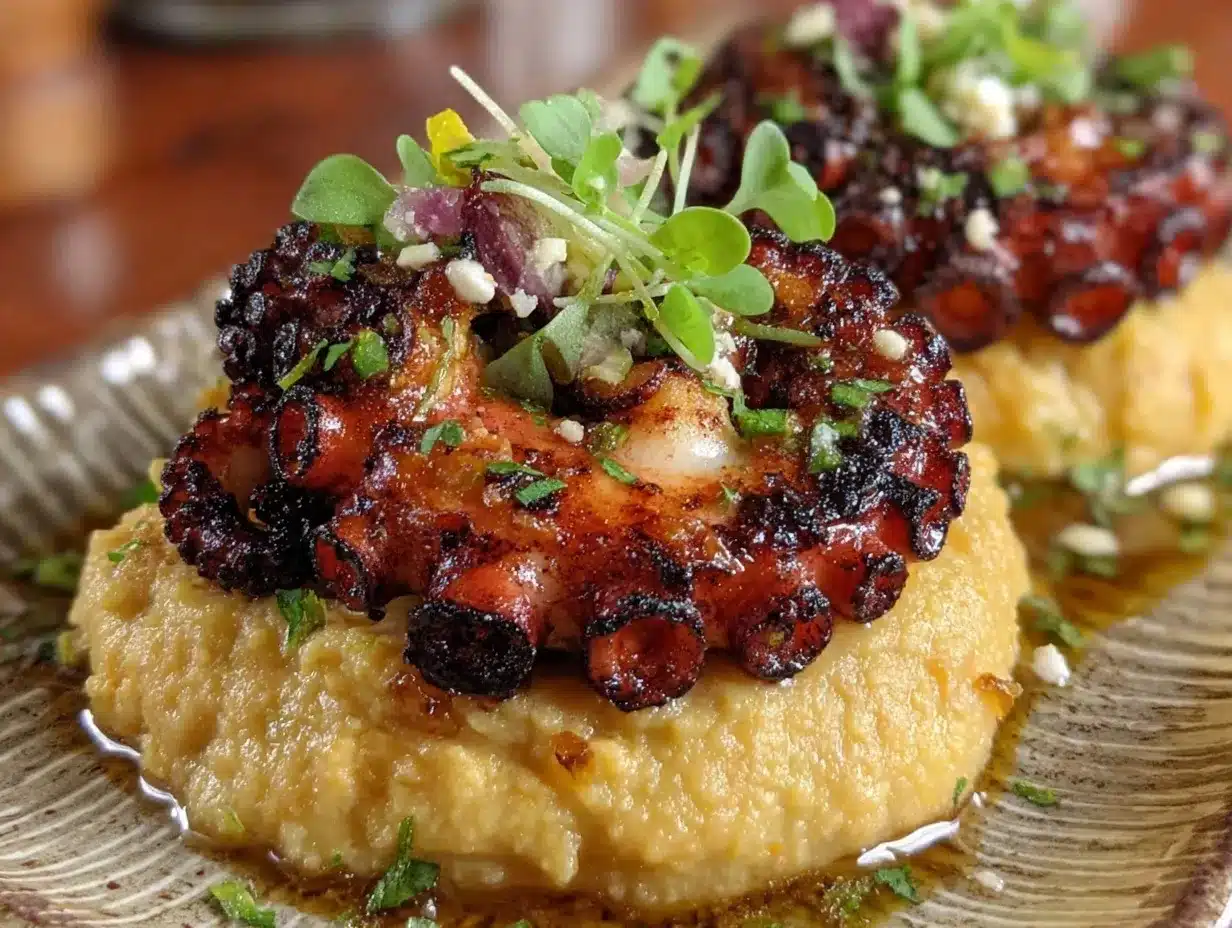
- Plate and serve: Spread a generous spoonful of Santorini fava bean purée on plates. Arrange grilled octopus tentacles on top. Drizzle with the fragrant lemon oil and finish with a sprinkle of flaky sea salt and a squeeze of fresh lemon juice. Serve immediately.
Tip: Resist the urge to rush the simmering step—it’s the key to tenderness. If the octopus starts to feel rubbery when grilling, it probably needs more simmering time. The lemon oil should smell bright and fresh, not burnt or bitter.
Cooking Tips & Techniques
Grilling octopus can be intimidating, but a few tricks have saved me many times. First, simmering low and slow is crucial. I’ve learned the hard way that rushing this step results in chewy octopus that no amount of lemon oil can fix.
When grilling, make sure the octopus is dry—wet tentacles steam instead of char. Patting it dry is a small step but game-changing. Also, don’t overcrowd the grill; give each piece room for those beautiful grill marks to develop.
If you’re multitasking, start the fava purée early. It’s forgiving if kept warm and can even taste better the next day, but fresh lemon oil is best made right before serving to keep those vibrant notes intact.
One common mistake is over-seasoning the fava bean purée early on. Salt lightly during cooking, then adjust at the end—this preserves the purée’s creamy texture and lets the natural sweetness shine. I once over-salted a batch and had to scramble to balance it with extra lemon juice and oil!
Variations & Adaptations
- Spicy Twist: Add a pinch of smoked paprika or red chili flakes to the lemon oil for a subtle kick that pairs beautifully with the smoky octopus.
- Herb Variations: Swap thyme or oregano in the lemon oil for fresh dill or parsley to change the flavor profile.
- Vegan Adaptation: Replace grilled octopus with charred king oyster mushrooms or grilled tofu and serve over the same Santorini fava purée for a plant-based take.
- Seasonal Swaps: In winter, try the fava purée with a handful of cooked chestnuts blended in for a richer taste.
- Alternative Beans: If you can’t find Santorini fava beans or yellow split peas, try chickpeas or white beans for a different but delicious purée base.
I once tried adding a quick balsamic glaze drizzle over the octopus—it was unexpected but surprisingly good, adding a sweet tang that cut through the richness. Don’t be afraid to experiment!
Serving & Storage Suggestions
This dish shines best served warm, right off the grill, to enjoy the contrast between the smoky octopus and the creamy purée. Present it on a simple white plate to let the colors pop, and garnish with a few fresh herb sprigs or lemon wedges for a bright finish.
Pair it with a chilled glass of Assyrtiko wine or a crisp white like Sauvignon Blanc to complement the citrus and seafood notes. For sides, a crisp salad or grilled seasonal vegetables work beautifully.
Leftovers keep well in the fridge for up to two days. Store the octopus and fava purée separately in airtight containers. When reheating, gently warm the octopus in a pan to avoid drying it out, and reheat the purée slowly on the stovetop or microwave, stirring occasionally.
Flavors tend to meld and deepen overnight, so if you have time, try making the fava purée a day ahead—it really improves the taste.
Nutritional Information & Benefits
This tender grilled octopus dish is a lean source of protein, low in fat but rich in essential minerals like iron and zinc. Octopus is also an excellent source of vitamin B12, important for energy and brain health.
Santorini fava bean purée adds fiber and plant-based protein, which supports digestion and keeps you full. Olive oil contributes heart-healthy monounsaturated fats and antioxidants.
This recipe is naturally gluten-free and low in carbs, making it suitable for many dietary preferences. Just watch the salt levels if you’re monitoring sodium intake. For anyone who loves seafood but wants a nutritious, wholesome meal that feels indulgent, this one fits the bill perfectly.
Conclusion
If you’re looking to bring a touch of Mediterranean sunshine to your table, this tender grilled octopus recipe with lemon oil and Santorini fava bean purée is a winner. It’s approachable yet impressive, and honestly, it feels like a little celebration every time I make it. I love how it captures the essence of summer—simple ingredients coming together to create something deeply satisfying.
Feel free to tweak the herbs or spice level to suit your taste—cooking should be fun and personal, after all. I’d love to hear how your version turns out or what twists you add to make it your own. So go ahead, fire up the grill and treat yourself to this unforgettable dish!
Frequently Asked Questions
How do I know when the octopus is tender enough?
Use a fork to gently pierce the thickest part of the tentacle. It should slide in easily without resistance. If it feels rubbery, simmer a bit longer.
Can I use frozen octopus for this recipe?
Yes! Freezing helps break down some of the fibers, making the octopus more tender. Just thaw it completely before cooking.
What if I don’t have a grill? Can I bake the octopus instead?
Absolutely. After simmering, you can broil the octopus in the oven for 3-5 minutes per side to get a similar char effect.
How long can I store leftover fava bean purée?
Stored in an airtight container in the fridge, it will keep for up to 3 days. It’s great spread on toast or as a dip.
Is Santorini fava bean purée the same as regular fava beans?
Not exactly. Santorini fava beans are yellow split peas unique to the island, producing a smoother, sweeter purée compared to regular broad fava beans.
For more dishes that celebrate Mediterranean flavors, you might enjoy my recipe for crispy garlic chicken or the fresh simplicity of classic Greek salad with feta.
Pin This Recipe!

Tender Grilled Octopus Recipe with Lemon Oil and Santorini Fava Bean Purée

A tender grilled octopus dish served with fragrant lemon oil and smooth Santorini fava bean purée, perfect for summer and Mediterranean-inspired meals.
- Prep Time: 15 minutes
- Cook Time: 1 hour 10 minutes
- Total Time: 1 hour 25 minutes
- Yield: 4 servings 1x
- Category: Main Course
- Cuisine: Mediterranean, Greek
Ingredients
- 1 whole octopus (about 2 to 3 pounds / 900g to 1.4kg), cleaned
- 1 lemon, halved (for simmering and zesting)
- 2 bay leaves
- 1 teaspoon black peppercorns
- Salt, to taste
- 1/2 cup extra virgin olive oil
- Zest of 1 lemon (freshly grated)
- 1 small garlic clove, thinly sliced
- 1 teaspoon fresh thyme or oregano leaves
- 1 cup dried yellow split peas or Santorini fava beans
- 1 small onion, peeled and halved
- 2 cups water or vegetable broth
- 3 tablespoons extra virgin olive oil
- Juice of half a lemon
- Salt and freshly ground black pepper, to taste
Instructions
- Rinse the octopus under cold water. In a large pot, add the octopus, lemon halves, bay leaves, peppercorns, and a generous pinch of salt. Cover with about 6 cups (1.5 liters) of water and bring to a gentle simmer over medium heat. Simmer the octopus for 45 to 60 minutes until tender when pierced with a fork.
- While the octopus cooks, rinse the dried fava beans or split peas. In a separate pot, combine with water or broth and the halved onion. Bring to a boil, then reduce heat and simmer gently for about 40 minutes, stirring occasionally, until the beans are very soft and starting to break down.
- Remove the onion from the beans and set aside. Use a blender or food processor to purée the beans until smooth, gradually adding olive oil and lemon juice. Season with salt and pepper to taste. Keep warm or cover and set aside.
- Prepare the lemon oil by combining olive oil, lemon zest, garlic slices, and fresh herbs in a small saucepan. Warm gently over low heat for about 10 minutes without boiling or frying. Remove from heat and let infuse for 10 more minutes. Strain if desired.
- Remove the octopus from the pot and pat dry with paper towels. Preheat grill or grill pan to medium-high. Cut the octopus tentacles apart for even grilling. Grill for 3-4 minutes per side until charred spots appear and the surface crisps slightly.
- Spread a generous spoonful of Santorini fava bean purée on plates. Arrange grilled octopus tentacles on top. Drizzle with lemon oil and finish with flaky sea salt and a squeeze of fresh lemon juice. Serve immediately.
Notes
Simmer the octopus low and slow to ensure tenderness. Pat the octopus dry before grilling to avoid steaming. Lemon oil should be infused gently without boiling to preserve fresh flavors. The fava purée can be made ahead and tastes better the next day. For gluten-free, swap olive oil with avocado oil if desired. If no grill is available, broil the octopus for 3-5 minutes per side.
Nutrition
- Serving Size: Approximately 1/4 of
- Calories: 320
- Sugar: 2
- Sodium: 350
- Fat: 18
- Saturated Fat: 3
- Carbohydrates: 15
- Fiber: 5
- Protein: 30
Keywords: grilled octopus, lemon oil, Santorini fava bean purée, Mediterranean seafood, summer recipe, grilled seafood, healthy seafood dish