Love this? Save it for later!
Share the inspiration with your friends
“I never thought a little jar of lavender from the farmer’s market would change my roast chicken game,” I confessed to my friend last Thursday, as we shared a lazy afternoon on the porch. It was just an ordinary weeknight, nothing special planned, but I had this urge to try something different with my usual roast chicken. The Provençal poulet rôti with lavender and tarragon was born out of that casual impulse and a slightly chaotic kitchen moment.
See, the recipe came together while I was juggling grocery bags, a toddler’s nap schedule, and a half-forgotten phone call. I accidentally grabbed the wrong herb — lavender instead of thyme — and thought, “Well, why not?” The result was surprisingly delightful: the gentle floral notes paired with the bright, anise-like tarragon created a roast chicken that was fragrant, tender, and just a bit unexpected. Honestly, it felt like a little trip to the South of France without leaving my kitchen.
Maybe you’ve been there — staring at your spice rack wondering how to shake things up. This Perfect Provençal Poulet Rôti with Lavender and Tarragon isn’t just another roast chicken recipe. It’s that comforting, soul-warming dish that brings a touch of rustic elegance to your table, with flavors that linger and make you want to savor every bite. So, let me tell you how this recipe stole my heart and why it could become your new favorite too.
Why You’ll Love This Recipe
After dozens of trials (and a few burnt edges along the way), I’m confident this Provençal poulet rôti is a keeper. Here’s why it won’t just sit on your recipe list but jump into weekly rotation:
- Quick & Easy: Ready in about 1 hour and 15 minutes, this recipe fits perfectly into busy weeknights or unplanned dinner invites.
- Simple Ingredients: No need for exotic shopping trips — pantry staples like garlic, lemon, and fresh herbs do most of the heavy lifting.
- Perfect for Cozy Dinners: Whether it’s a quiet night or a small gathering, the aromatic flavors bring a touch of French countryside charm to your plate.
- Crowd-Pleaser: The subtle lavender aroma surprises and delights guests, while the juicy chicken keeps everyone coming back for seconds.
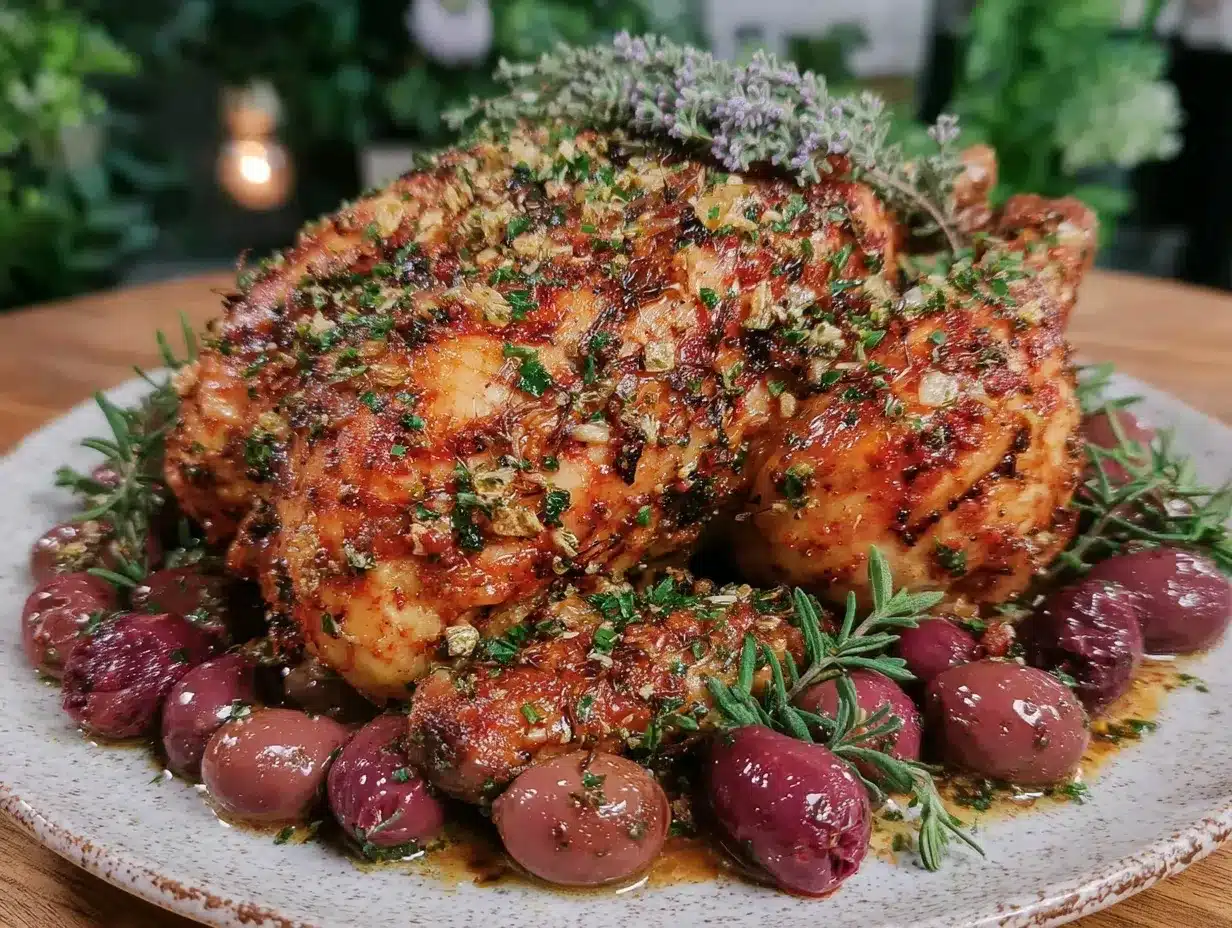
- Unbelievably Delicious: Tender, juicy meat with a crispy golden skin, kissed by the herbal complexity of tarragon and the floral hint of lavender — it’s a flavor combo that’s hard to forget.
This isn’t your everyday roast chicken. The lavender adds a whisper of Provence, while the tarragon cuts through with a fresh, slightly sweet bite. Plus, roasting the lemon inside the cavity infuses the meat with citrusy brightness that makes every forkful sing. Trust me, once you make this, you’ll understand why it’s become my go-to when I want something both simple and special.
What Ingredients You Will Need
This recipe uses simple, wholesome ingredients to deliver bold flavor and satisfying texture without the fuss. Most are pantry staples, and a few fresh herbs bring it all together with that authentic Provençal flair.
- Whole chicken (about 4–5 lbs / 1.8–2.3 kg): Choose organic or free-range for best flavor and texture.
- Fresh lavender buds (1 tsp): Dried works too, but fresh gives a more delicate aroma (I prefer the ones from Provence Herb Co. when I can get them).
- Fresh tarragon (2 tbsp, chopped): Adds that subtle anise note essential to Provençal dishes.
- Garlic cloves (4, smashed): For deep, savory layers.
- Lemon (1, halved): Roasted inside the chicken for a bright, citrusy punch.
- Olive oil (3 tbsp): Use a good-quality extra virgin olive oil for richness and depth.
- Sea salt (1½ tsp) and freshly ground black pepper (1 tsp): To season and enhance all the flavors.
- Fresh rosemary sprigs (2 sprigs): Optional but adds another layer of herbal fragrance.
- White wine (¼ cup / 60 ml): Optional splash for the roasting pan to keep the chicken moist and add subtle flavor.
Pro tip: If you can’t find fresh lavender, dried culinary lavender from your spice aisle will do just fine. Also, swapping tarragon for fresh thyme gives the roast a more classic but still delightful twist. I’ve tried both, and honestly, each brings something special to the table.
Equipment Needed
- Roasting pan or oven-safe skillet: A sturdy pan with sides helps catch drippings and makes basting easier.
- Meat thermometer: Essential for perfectly cooked chicken — I use a digital instant-read one that never fails me.
- Kitchen twine: To truss the chicken, which helps it cook evenly and keeps the lemon snug inside.
- Basting brush or spoon: For drizzling olive oil and pan juices back over the chicken.
- Sharp chef’s knife: For prepping garlic and herbs.
Don’t have a meat thermometer? No worries — I’ve included visual cues in the recipe steps to guide you. For roasting pans, a heavy-duty cast iron skillet works beautifully and keeps the heat even. Plus, it’s easy to clean and versatile for other dishes like the crispy garlic chicken I made last week.
Preparation Method
- Preheat your oven to 425°F (220°C). This high temperature crisps the skin beautifully while keeping the meat juicy.
- Prepare the chicken: Remove any giblets from the cavity and pat the bird dry with paper towels. Dry skin means crispier roast!
- Season inside the cavity: Sprinkle a pinch of salt and pepper inside, then stuff with the halved lemon and two smashed garlic cloves. Tuck in the rosemary sprigs if using.
- Mix the herb oil: In a small bowl, combine olive oil, chopped tarragon, lavender buds, remaining garlic cloves, salt, and pepper. Stir until fragrant — you’ll notice the lavender’s floral scent blooming.
- Rub the herb mixture all over the chicken: Don’t be shy — get under the skin where you can, especially on the breasts and thighs, for maximum flavor.
- Truss the chicken: Tie the legs together with kitchen twine and tuck the wings under. This helps cook the bird evenly and keeps it juicy.
- Place the chicken breast-side up in your roasting pan. If you want, pour the white wine into the pan — it keeps things moist and adds a subtle acidity to balance the herbs.
- Roast for 15 minutes at 425°F (220°C). This initial blast sets the crispy skin.
- Lower the oven temperature to 350°F (175°C) and continue roasting for 45–50 minutes. Baste the chicken every 15 minutes with pan juices for extra moistness.
- Check doneness: Insert a meat thermometer into the thickest part of the thigh without touching bone — it should read 165°F (74°C). If you don’t have a thermometer, pierce the thigh; juices should run clear, not pink.
- Rest the chicken: Tent loosely with foil and let it rest for 10–15 minutes before carving. This lets the juices redistribute for tender, juicy meat.
Quick note: I once forgot to baste midway, and the skin was still crispy but less flavorful — so don’t skip that step if you can help it! Also, if your chicken starts browning too fast, loosely cover with foil after the first 20 minutes.
Cooking Tips & Techniques
Honestly, roasting chicken is deceptively simple but easy to mess up if you rush or skip steps. Here’s what I’ve learned:
- Patting dry is key: Moisture on the skin steams the chicken instead of roasting it, so take the extra minute to get it dry.
- Truss it tight: Keeps the bird compact so it cooks evenly — no floppy wings or dry breast meat.
- Don’t overcrowd the pan: Give the chicken space for the heat to circulate and skin to crisp.
- Basting helps: It’s like giving the bird a mini spa treatment, keeping it juicy and flavorful.
- Use a thermometer: It’s the only way to be sure you don’t overcook or undercook — I never roast without mine.
- Rest before carving: I can’t stress this enough; cutting too soon lets all the juices run out, leaving dry meat.
One time, I tried roasting at a lower temp from the start, thinking it would be gentler. Nope — the skin never crisped right. High heat at the beginning is your friend here.
Variations & Adaptations
Feel free to put your spin on this Provençal poulet rôti! Here are some ideas I’ve played around with:
- Low-carb twist: Swap lemon with orange for a sweeter citrus note and sprinkle some smoked paprika on the skin for a smoky kick.
- Herb swap: Use fresh rosemary and thyme instead of tarragon if you want a more classic roast flavor.
- Allergy-friendly: Skip lavender if floral flavors aren’t your thing and add a teaspoon of herbes de Provence blend instead.
- Grilled version: Butterfly the chicken and grill it over medium heat for about 45 minutes, basting often. It gives a lovely smoky char while keeping those Provençal flavors.
- Stuffed style: Add sautéed mushrooms and shallots with the lemon inside the cavity for extra umami depth.
My favorite personal variation is adding a splash of white wine vinegar to the herb oil — it brings a slight tang that balances the floral lavender beautifully.
Serving & Storage Suggestions
Serve your Perfect Provençal Poulet Rôti warm, carved into generous slices. The aroma alone makes it a showstopper, so I like to keep the presentation simple:
- Arrange on a platter garnished with fresh tarragon sprigs and lemon wedges.
- Pair with rustic roasted vegetables or a light green salad dressed with vinaigrette.
- A chilled glass of dry white wine or rosé complements the herbal notes perfectly.
Leftovers? Store in an airtight container in the fridge for up to 3 days. Reheat gently in the oven at 325°F (160°C) to keep the skin from getting rubbery. The flavors actually deepen overnight, so sometimes I prefer the cold slices in a salad the next day.
Nutritional Information & Benefits
Per serving (based on 6 servings), this roast chicken provides approximately:
| Nutrient | Amount |
|---|---|
| Calories | 320 kcal |
| Protein | 35 g |
| Fat | 20 g |
| Carbohydrates | 1 g |
| Fiber | 0.5 g |
Chicken is a fantastic source of lean protein and essential nutrients like B vitamins and selenium. Lavender and tarragon bring antioxidant properties and can aid digestion. Plus, this recipe is naturally gluten-free and low-carb, fitting nicely into many dietary preferences.
Personally, I appreciate that this dish feels indulgent without being heavy or processed — a wholesome, mindful meal that nourishes both body and soul.
Conclusion
If you’re looking for a roast chicken recipe that’s both comforting and a little bit special, the Perfect Provençal Poulet Rôti with Lavender and Tarragon should be at the top of your list. It’s easy to make, packed with fresh herb flavors, and always impresses without stress. I love that it turns a simple weeknight dinner into something that feels like a celebration.
Go ahead, tweak it to your taste, try the variations, and make it your own. And when you do, I’d love to hear how it turned out for you — did you get that perfect crispy skin? The floral notes just right? Leave a comment or share your favorite twists!
Remember, cooking is as much about the journey as the result, so enjoy every aromatic moment of this Provençal classic.
FAQs
Can I use dried lavender instead of fresh?
Yes, dried culinary lavender works well, but use about half the amount to avoid overpowering the dish. Fresh lavender offers a more delicate aroma.
How do I know when the chicken is fully cooked?
The safest way is using a meat thermometer; the internal temperature should reach 165°F (74°C) in the thickest part of the thigh. Without a thermometer, the juices should run clear when pierced.
Can I prepare this recipe ahead of time?
You can season the chicken and refrigerate it overnight to let the flavors deepen. Just bring it to room temperature before roasting for even cooking.
What sides pair well with Provençal poulet rôti?
Roasted vegetables, ratatouille, crusty bread, or a simple green salad dressed with vinaigrette all complement the herbal, citrusy chicken beautifully.
Is this recipe suitable for grilling?
Absolutely! Butterfly the chicken and grill over medium heat for about 45 minutes, basting often to keep it moist and flavorful.
Pin This Recipe!
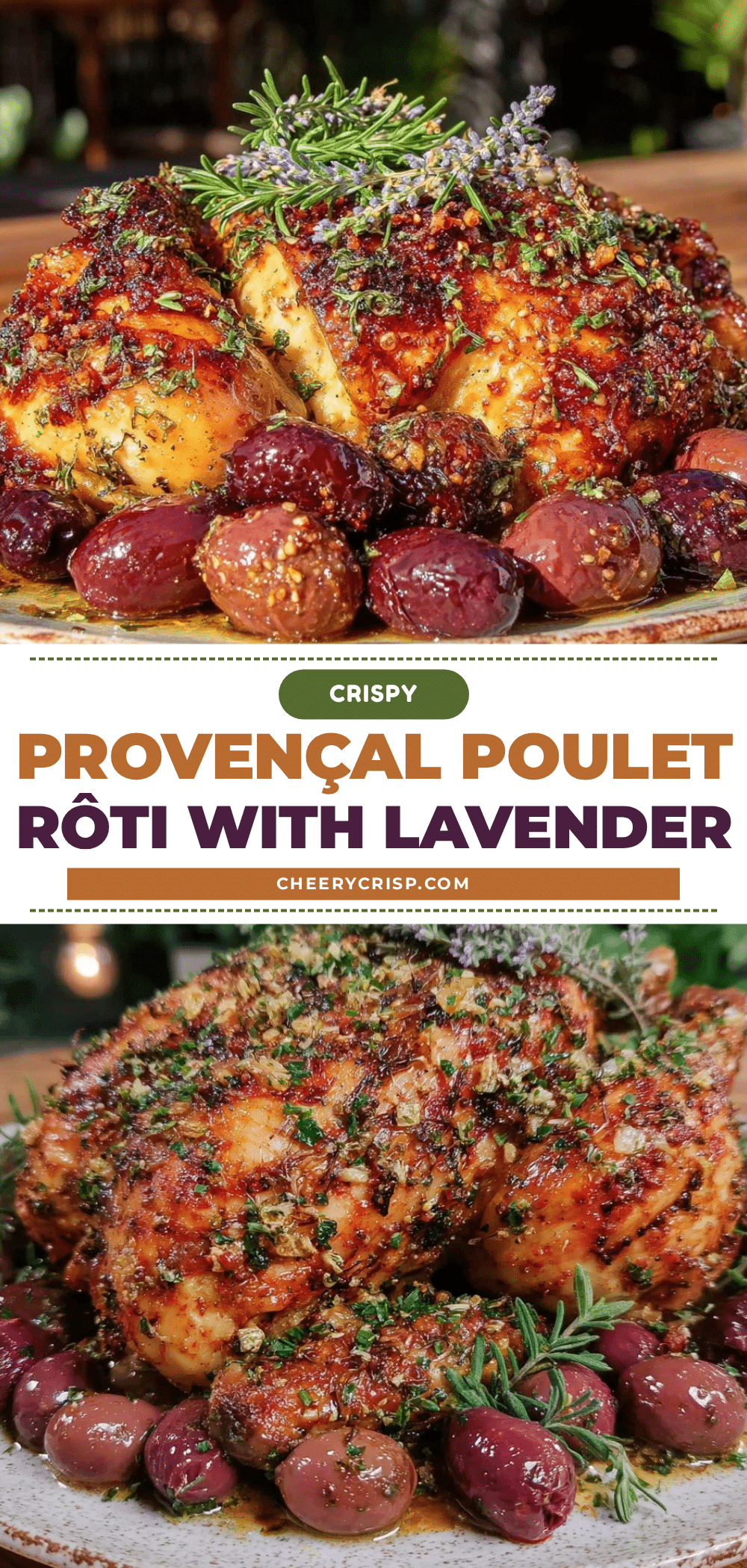
Perfect Provençal Poulet Rôti Recipe Easy Lavender Tarragon Roast Chicken

A fragrant and tender roast chicken infused with floral lavender, bright tarragon, and roasted lemon, bringing a touch of rustic French elegance to your table.
- Prep Time: 15 minutes
- Cook Time: 1 hour
- Total Time: 1 hour 15 minutes
- Yield: 6 servings
- Category: Main Course
- Cuisine: French
Ingredients
- Whole chicken (about 4–5 lbs / 1.8–2.3 kg)
- Fresh lavender buds (1 tsp)
- Fresh tarragon (2 tbsp, chopped)
- Garlic cloves (4, smashed)
- Lemon (1, halved)
- Olive oil (3 tbsp)
- Sea salt (1½ tsp)
- Freshly ground black pepper (1 tsp)
- Fresh rosemary sprigs (2 sprigs, optional)
- White wine (¼ cup / 60 ml, optional)
Instructions
- Preheat your oven to 425°F (220°C).
- Remove any giblets from the cavity and pat the bird dry with paper towels.
- Sprinkle a pinch of salt and pepper inside the cavity, then stuff with the halved lemon and two smashed garlic cloves. Tuck in the rosemary sprigs if using.
- In a small bowl, combine olive oil, chopped tarragon, lavender buds, remaining garlic cloves, salt, and pepper. Stir until fragrant.
- Rub the herb mixture all over the chicken, including under the skin on breasts and thighs.
- Tie the legs together with kitchen twine and tuck the wings under to truss the chicken.
- Place the chicken breast-side up in your roasting pan. Pour white wine into the pan if using.
- Roast for 15 minutes at 425°F (220°C) to crisp the skin.
- Lower the oven temperature to 350°F (175°C) and continue roasting for 45–50 minutes, basting every 15 minutes with pan juices.
- Check doneness by inserting a meat thermometer into the thickest part of the thigh; it should read 165°F (74°C). If no thermometer, pierce the thigh and ensure juices run clear.
- Tent loosely with foil and let rest for 10–15 minutes before carving.
Notes
Patting the chicken dry is key for crispy skin. Truss the chicken tightly to ensure even cooking. Baste every 15 minutes for moistness and flavor. Use a meat thermometer for best results. If the chicken browns too fast, loosely cover with foil after 20 minutes. Rest the chicken before carving to keep it juicy.
Nutrition
- Serving Size: 1/6 of the whole chi
- Calories: 320
- Fat: 20
- Carbohydrates: 1
- Fiber: 0.5
- Protein: 35
Keywords: roast chicken, Provençal poulet rôti, lavender chicken, tarragon roast chicken, French roast chicken, easy roast chicken, herb roast chicken