Love this? Save it for later!
Share the inspiration with your friends
“You know, I never thought making authentic Italian pasta at home could be this simple,” my friend Luca said one Friday evening as we stood around his tiny kitchen in Brooklyn. I was watching him toss together what he called his “go-to lifesaver” dish—an easy creamy authentic cacio e pepe recipe that smelled like a cozy Roman trattoria. Honestly, I expected a complicated process, maybe a dozen ingredients, but nope. Just three main players—pasta, Pecorino Romano, and black pepper—coming together in a way that blew me away.
This recipe actually came from an unexpected source: Luca’s old college roommate, a no-fuss cook who swore by this rustic dish when they were broke and desperate for comfort food. I was skeptical at first. How could something so simple taste so rich and velvety? But there I was, spoon in hand, savoring the creamy, peppery goodness that somehow felt both humble and indulgent.
Maybe you’ve been there—you want a quick dinner that feels special but doesn’t demand a culinary degree. That’s exactly why this easy creamy authentic cacio e pepe recipe stuck with me. It’s like a warm hug on a plate, perfect for those nights when you crave something real, flavorful, and effortlessly satisfying. And trust me, even if you’ve never made pasta like this before, I’ll walk you through every step so it turns out just right.
Why You’ll Love This Recipe
After testing this easy creamy authentic cacio e pepe recipe countless times, I’m convinced it deserves a spot in your regular rotation. It’s not just about convenience; it’s about making something that tastes like you spent hours in the kitchen when you barely had fifteen minutes. Here’s what makes it a winner:
- Quick & Easy: Ready in under 20 minutes—perfect for busy weeknights or when you need a delicious meal, stat.
- Simple Ingredients: No need to scour specialty stores; you likely have Pecorino Romano, black pepper, and pasta in your pantry already.
- Perfect for Casual Dinners: Whether you’re cooking just for yourself or sharing with friends, this dish feels cozy and comforting without the fuss.
- Crowd-Pleaser: The creamy texture and sharp, peppery kick make it a hit, even with skeptical eaters.
- Unbelievably Delicious: The magic comes from the technique—mixing starchy pasta water with cheese and pepper to create a silky sauce that clings to every strand.
This isn’t just another take on cacio e pepe. The secret lies in balancing the cheese and pepper perfectly and using the pasta water to get that signature creaminess without any cream (yes, really!). Plus, it’s a recipe I’ve refined after many attempts, tweaking timing and quantities to help you avoid the common pitfalls like clumpy sauce or bland flavor.
So, if you’re ready to impress yourself with a classic Italian dish that’s genuinely easy to pull off, you’re in the right place. Let me guide you through it—step by step.
What Ingredients You Will Need
This easy creamy authentic cacio e pepe recipe relies on a handful of pantry essentials that come together to create big flavor. Each ingredient plays a crucial role—from the sharp saltiness of the cheese to the bold warmth of freshly cracked pepper.
- Spaghetti or tonnarelli pasta (about 400g or 14 oz) – I prefer De Cecco spaghetti for its firm texture that holds up well in this dish.
- Pecorino Romano cheese, finely grated (1 ½ cups or 150g) – This sheep’s milk cheese brings that authentic tangy, salty bite. Look for a finely grated version or grate it yourself for best melting results.
- Freshly cracked black pepper (2 teaspoons, plus extra for garnish) – Don’t skimp here; freshly cracked pepper has a more vibrant, floral aroma than pre-ground.
- Salt (for pasta water) – Use enough to make the water taste like the sea; it seasons the pasta perfectly.
- Extra virgin olive oil (optional, 1 tablespoon) – Some like to add a splash for richness, but traditionalists skip it.
Since this recipe is so reliant on just a few ingredients, quality really matters. If you can find a good Pecorino Romano from a trusted Italian import store, it really shines. For a gluten-free option, rice or corn pasta works, but the texture changes slightly.
Equipment Needed
- Large pot for boiling pasta – A roomy pot prevents the pasta from sticking and allows it to cook evenly.
- Large skillet or sauté pan – For mixing pasta with cheese and pepper without clumping.
- Fine grater – To grate Pecorino Romano finely; a microplane works wonders.
- Wooden spoon or tongs – For stirring and tossing the pasta gently.
- Measuring spoons and cups – Accurate measurements help nail the balance of flavors.
- Colander – To drain pasta, but reserve some pasta water!
Don’t worry if you don’t have a fancy microplane; a box grater’s fine side will do. And if your skillet isn’t non-stick, just be gentle when tossing the pasta to avoid scraping.
Preparation Method
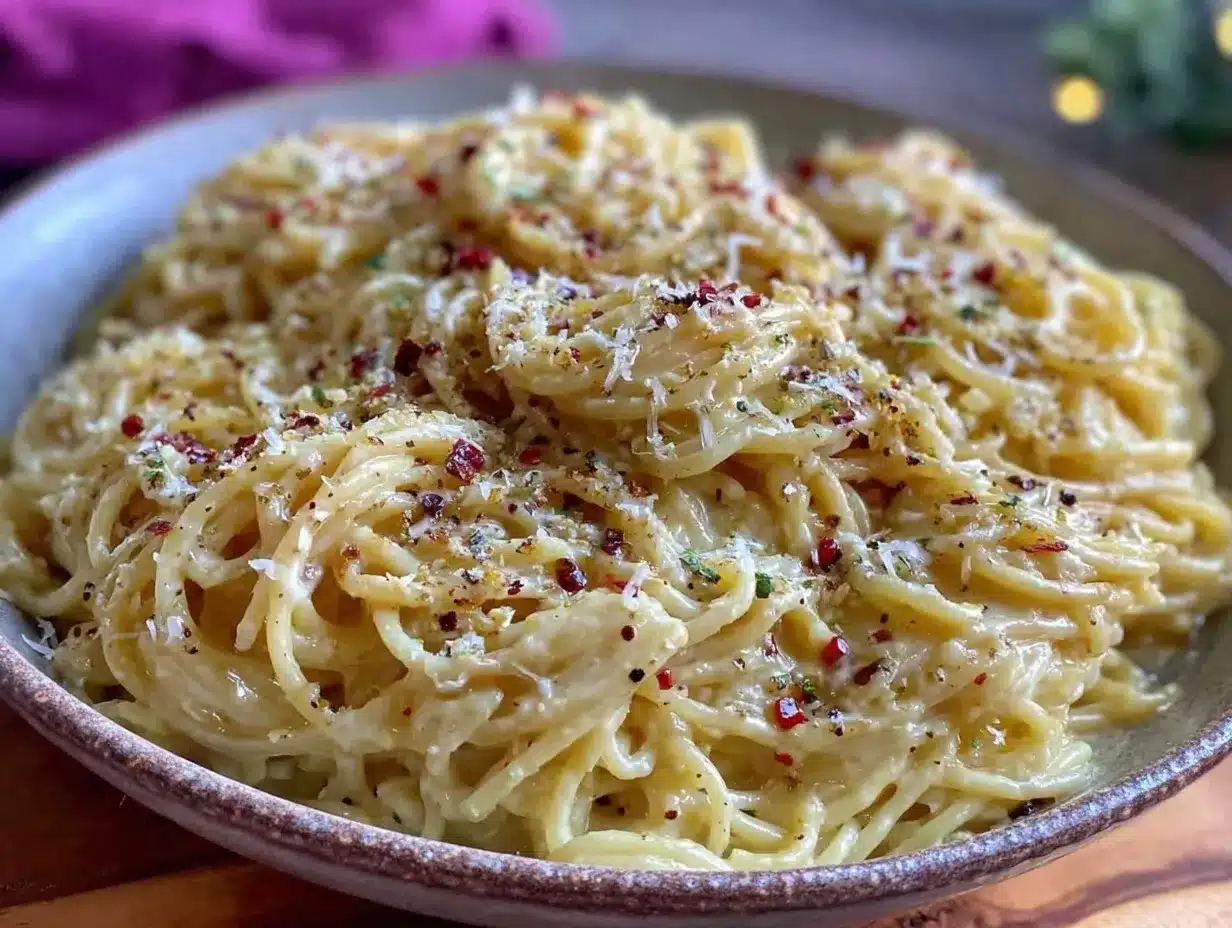
- Bring a large pot of salted water to a rolling boil. Use about 4 quarts (3.8 liters) of water and 1 tablespoon of salt. The water should taste like the sea, which seasons the pasta nicely. This might take 8-10 minutes depending on your stove.
- Add the pasta and cook until just shy of al dente. Usually about 7-8 minutes for spaghetti. You want it slightly undercooked because it will finish cooking in the sauce. Stir occasionally to prevent sticking.
- Reserve about 1 ½ cups (350 ml) of pasta water before draining. This starchy water is key to creating the creamy sauce. Don’t skip this step!
- In a large skillet over medium heat, toast the freshly cracked black pepper. Stir it gently for 1-2 minutes until fragrant. The warmth intensifies the pepper’s flavor, which is the star of the show.
- Add a splash (about ½ cup/120 ml) of reserved pasta water to the skillet. Let it warm for 30 seconds. This loosens the pepper and starts the sauce base.
- Add the drained pasta to the skillet. Toss to coat it with the pepper water mixture. Keep the heat on low to prevent burning.
- Gradually sprinkle in the finely grated Pecorino Romano. Stir continuously with tongs or a wooden spoon to combine. Slowly add more pasta water, a few tablespoons at a time, to loosen the sauce and achieve a smooth, creamy texture. This step is all about patience!
- Keep tossing until the cheese melts and clings to the pasta, forming a silky sauce. If it looks dry or clumpy, add more pasta water bit by bit. Avoid adding too much or the sauce gets watery.
- Optional: drizzle 1 tablespoon of extra virgin olive oil for extra richness. This step is up to you—sometimes I do it, sometimes I don’t.
- Remove from heat, plate immediately, and finish with an extra sprinkle of black pepper and Pecorino if you like. Serve warm.
Pro tip: If the sauce is stubbornly clumpy, adding a splash of warm water and stirring vigorously usually smooths it out. I remember one night I forgot to save pasta water and had to scramble to boil more—lesson learned!
Cooking Tips & Techniques
Let me tell you, nailing this easy creamy authentic cacio e pepe recipe is all about technique and timing. Here are the tips I’ve learned the hard way:
- Use freshly cracked pepper: It makes a huge difference in flavor and aroma compared to pre-ground pepper.
- Don’t overcook your pasta: Undercooked pasta helps the cheese melt evenly without turning gummy.
- Reserve enough pasta water: The starch is the secret to the sauce’s creaminess. Too little water, and your sauce clumps.
- Grate cheese finely: Chunky cheese struggles to melt smoothly, so patience with grating pays off.
- Toss continuously off the heat: Residual heat melts the cheese gently; direct heat risks clumping or burning.
- Don’t rush adding pasta water: Add a little at a time until the sauce reaches that perfect silky texture.
One time, I got distracted mid-toss and the sauce started sticking to the pan—lesson: stay focused! Also, if you find your sauce too thick, a splash of warm water or olive oil can rescue it quickly.
Variations & Adaptations
Though this classic recipe is simple, there’s room to make it your own. Here are some variations I’ve tried or recommend:
- Gluten-Free Version: Swap traditional spaghetti for gluten-free pasta like brown rice or chickpea-based noodles. The sauce works just as well.
- Vegan Adaptation: Use a vegan Pecorino-style cheese alternative and nutritional yeast for depth. Add a splash of plant-based milk to help melt the cheese substitute.
- Extra Creamy: Stir in a spoonful of mascarpone or ricotta cheese at the end for an ultra-luxe feel.
- Spicy Kick: Add a pinch of red pepper flakes when toasting the black pepper for some heat.
- Herb Twist: Finish with chopped fresh parsley or basil to brighten the dish.
Once, I added sautéed mushrooms to the mix for a heartier meal. It wasn’t traditional, but it worked surprisingly well with the peppery sauce.
Serving & Storage Suggestions
This easy creamy authentic cacio e pepe recipe is best enjoyed fresh and hot, right off the stove. Serve it on warmed plates to keep the sauce creamy longer. A simple green salad or roasted vegetables balance the richness nicely.
Leftovers? Store them in an airtight container in the refrigerator for up to 2 days. The sauce will thicken as it cools, so when reheating, add a splash of water or olive oil and gently warm on the stove or microwave, stirring to revive creaminess.
Interestingly, some say the flavors deepen after resting, but honestly, I prefer it fresh. If you want to prepare ahead, cook the pasta just shy of al dente and toss with a little oil to prevent sticking, then finish the sauce right before serving.
Nutritional Information & Benefits
Each serving of this easy creamy authentic cacio e pepe recipe provides approximately:
| Calories | 450-500 kcal |
|---|---|
| Protein | 18-20 g |
| Fat | 15-18 g |
| Carbohydrates | 60-65 g |
| Fiber | 2-3 g |
Pecorino Romano offers a good dose of calcium and protein, while black pepper contains antioxidants and may aid digestion. For those watching sodium, note that Pecorino is quite salty, so adjust pasta water salt accordingly.
This dish fits well into vegetarian diets but contains dairy and gluten by default. With simple swaps, it can also be vegan or gluten-free.
Conclusion
If you’re searching for an easy creamy authentic cacio e pepe recipe that’s both approachable and delicious, this one is a keeper. It’s the kind of meal that feels like a special occasion but comes together in practically no time. I love how it reminds me of that Brooklyn kitchen and Luca’s laid-back cooking style—no fuss, just pure flavor.
Feel free to tweak the pepper level or cheese amounts to suit your taste. And if you try adding your own twist, let me know! I’m always curious about new takes on this classic.
Give it a shot tonight—you might surprise yourself with how simple and satisfying Italian cooking can be. Don’t forget to leave a comment sharing your experience or any questions. Happy cooking!
FAQs
What type of cheese is best for cacio e pepe?
Pecorino Romano is traditional and gives the dish its signature tangy, salty flavor. Make sure it’s finely grated for smooth melting.
Can I use black pepper powder instead of freshly cracked pepper?
Freshly cracked black pepper is preferred for its stronger aroma and flavor, but if you only have ground pepper, use it sparingly to avoid bitterness.
How do I prevent the cheese sauce from clumping?
Gradually add warm pasta water to the cheese while tossing the pasta off heat. This helps the cheese melt smoothly without clumps.
Is it necessary to use spaghetti pasta?
Spaghetti or tonnarelli are ideal due to their shape and texture, but you can use other long pasta like bucatini or linguine if needed.
Can I prepare cacio e pepe ahead of time?
It’s best served fresh, but you can cook pasta slightly underdone, toss with a little oil, and finish the sauce just before serving for best results.
Pin This Recipe!
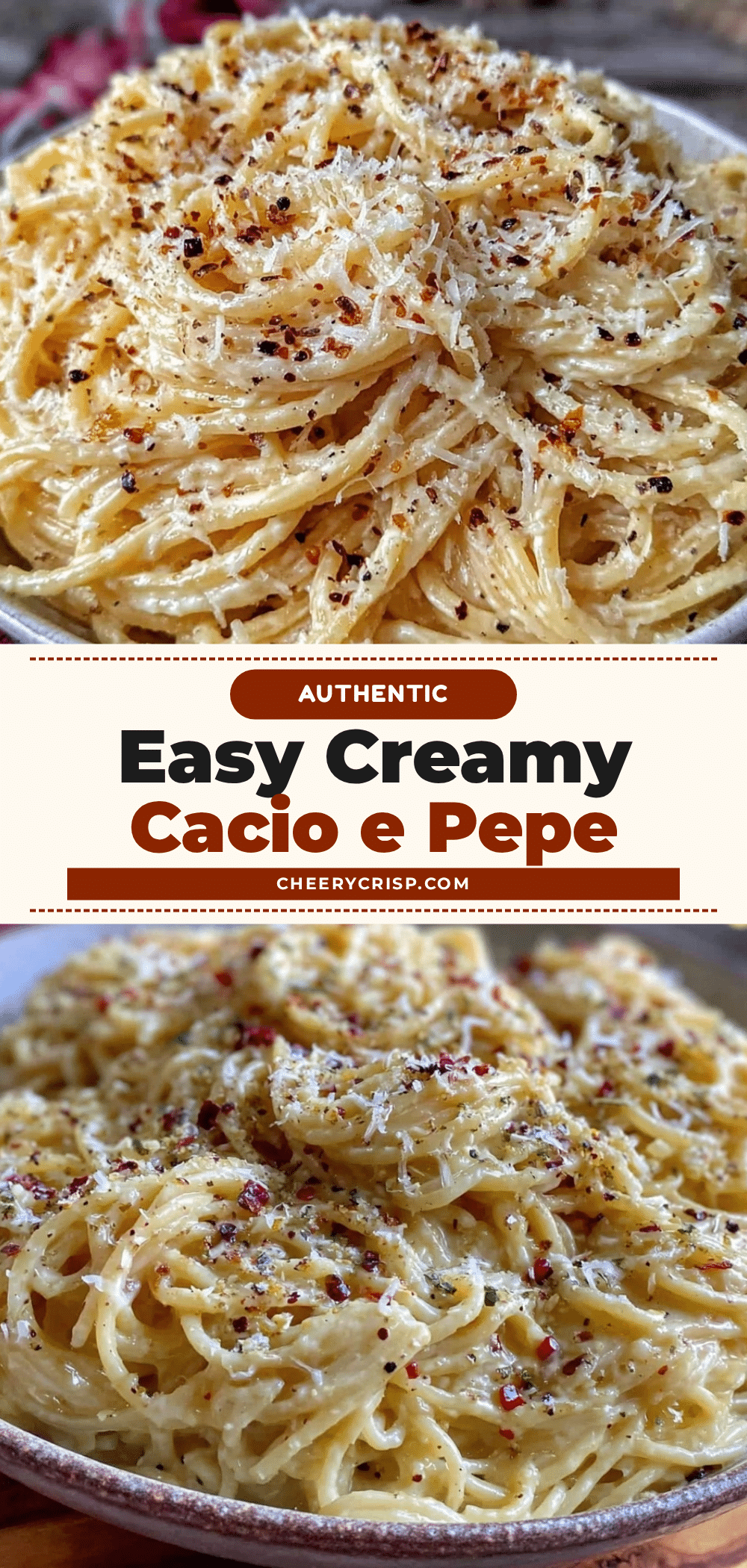
Easy Creamy Authentic Cacio e Pepe Recipe Perfect for Beginners
A simple and authentic Italian pasta dish made with just pasta, Pecorino Romano cheese, and freshly cracked black pepper, delivering a creamy and peppery sauce without any cream. Perfect for quick, comforting dinners.
- Prep Time: 10 minutes
- Cook Time: 8 minutes
- Total Time: 18 minutes
- Yield: 4 servings 1x
- Category: Main Course
- Cuisine: Italian
Ingredients
- 400g (14 oz) spaghetti or tonnarelli pasta
- 1 ½ cups (150g) finely grated Pecorino Romano cheese
- 2 teaspoons freshly cracked black pepper, plus extra for garnish
- Salt for pasta water (about 1 tablespoon)
- 1 tablespoon extra virgin olive oil (optional)
Instructions
- Bring a large pot of salted water (about 4 quarts) to a rolling boil. The water should taste like the sea.
- Add the pasta and cook for 7-8 minutes until just shy of al dente, stirring occasionally.
- Reserve about 1 ½ cups (350 ml) of pasta water before draining the pasta.
- In a large skillet over medium heat, toast the freshly cracked black pepper for 1-2 minutes until fragrant.
- Add about ½ cup (120 ml) of reserved pasta water to the skillet and warm for 30 seconds.
- Add the drained pasta to the skillet and toss to coat with the pepper water mixture over low heat.
- Gradually sprinkle in the finely grated Pecorino Romano cheese, stirring continuously with tongs or a wooden spoon. Add more pasta water a few tablespoons at a time to loosen the sauce and achieve a smooth, creamy texture.
- Keep tossing until the cheese melts and clings to the pasta, forming a silky sauce. Add more pasta water if the sauce looks dry or clumpy.
- Optional: drizzle 1 tablespoon of extra virgin olive oil for extra richness.
- Remove from heat, plate immediately, and finish with an extra sprinkle of black pepper and Pecorino Romano if desired. Serve warm.
Notes
Use freshly cracked black pepper for best flavor. Do not overcook pasta; it should be slightly under al dente. Reserve enough pasta water to create a creamy sauce. Grate cheese finely to avoid clumping. Toss pasta off direct heat to melt cheese gently. Add pasta water gradually to achieve silky sauce consistency. If sauce clumps, add warm water and stir vigorously.
Nutrition
- Serving Size: 1 serving (about 1/4
- Calories: 475
- Sugar: 1
- Sodium: 700
- Fat: 16.5
- Saturated Fat: 8
- Carbohydrates: 62.5
- Fiber: 2.5
- Protein: 19
Keywords: cacio e pepe, Italian pasta, creamy pasta, Pecorino Romano, black pepper pasta, easy pasta recipe, authentic Italian, quick dinner